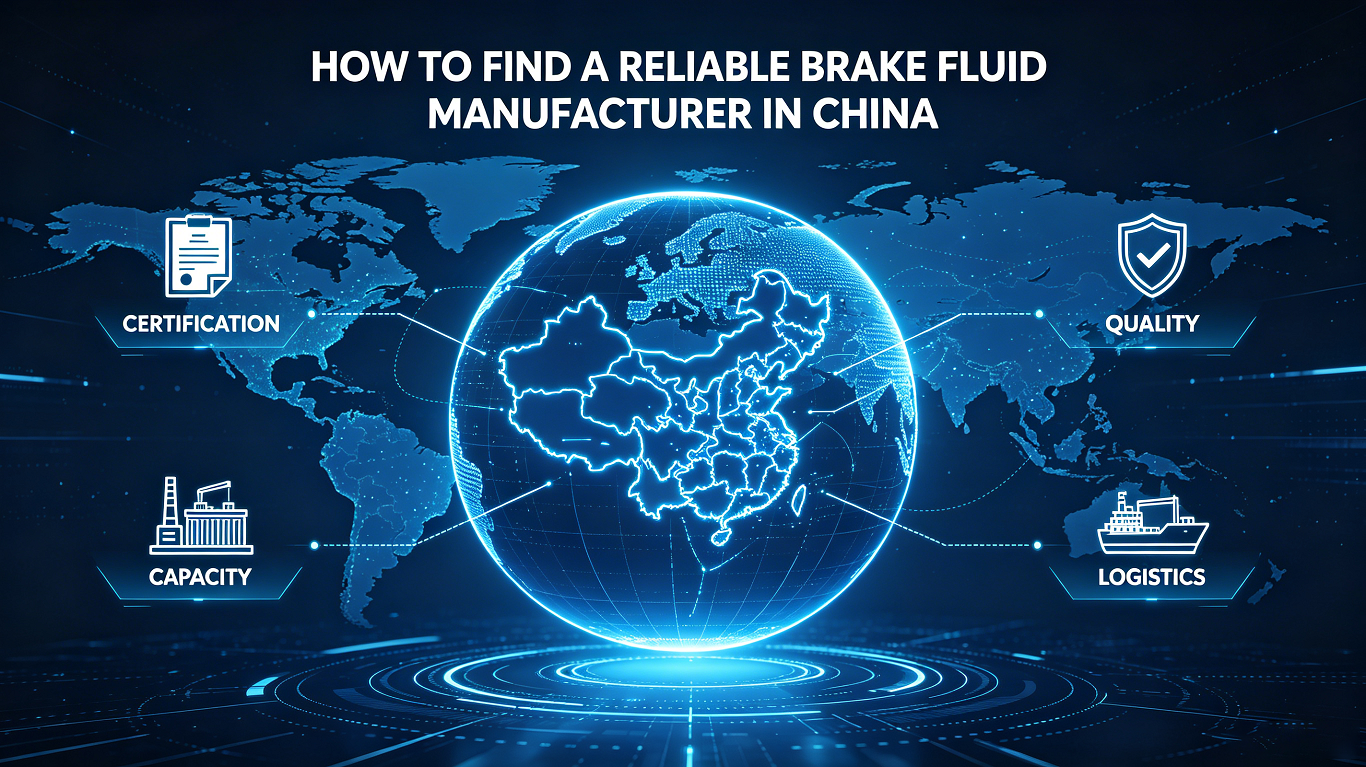
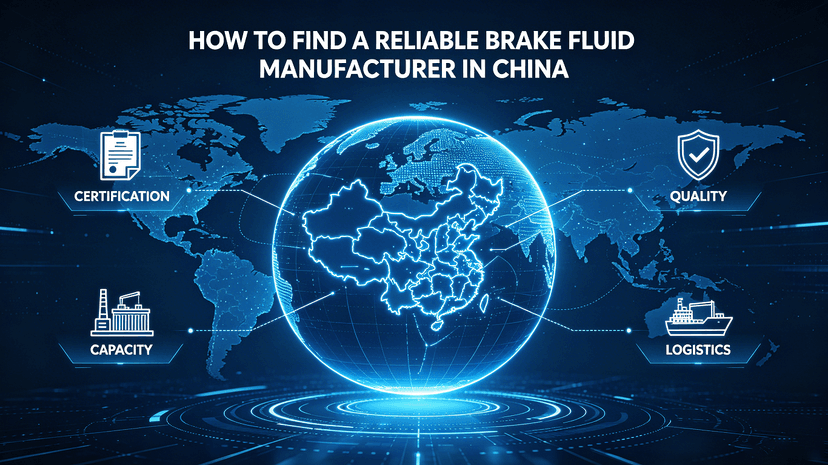
A stable, qualified Chinese brake fluid factory determines your long-term aftermarket profit, product safety and brand reputation. Many overseas importers encounter frequent problems including unstable boiling point indicators, water content exceeding limits, delayed delivery and incomplete certification when cooperating with small workshops. This article summarizes 6 core audit dimensions to help global buyers screen trustworthy manufacturers efficiently.
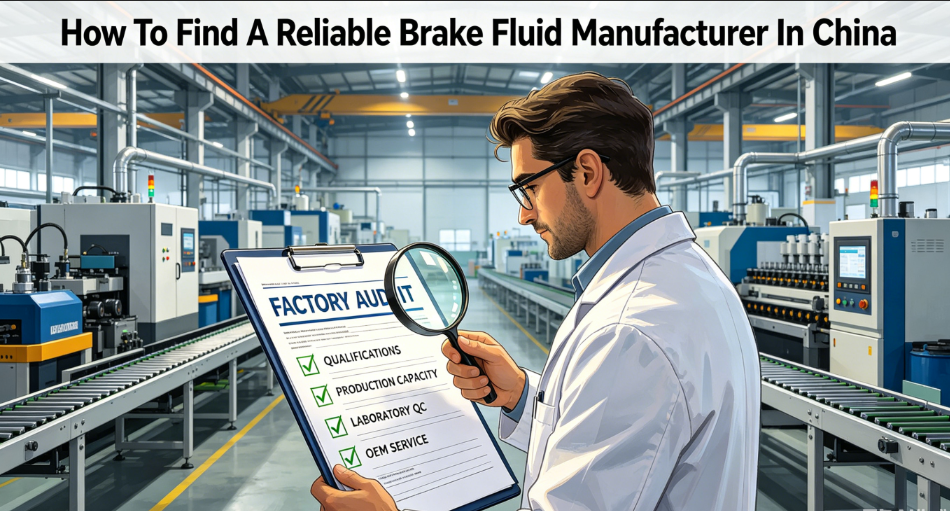
1. Qualification Audit: National Standard Drafting & Complete Certifications
The top threshold for high-quality suppliers is authoritative industry qualifications:
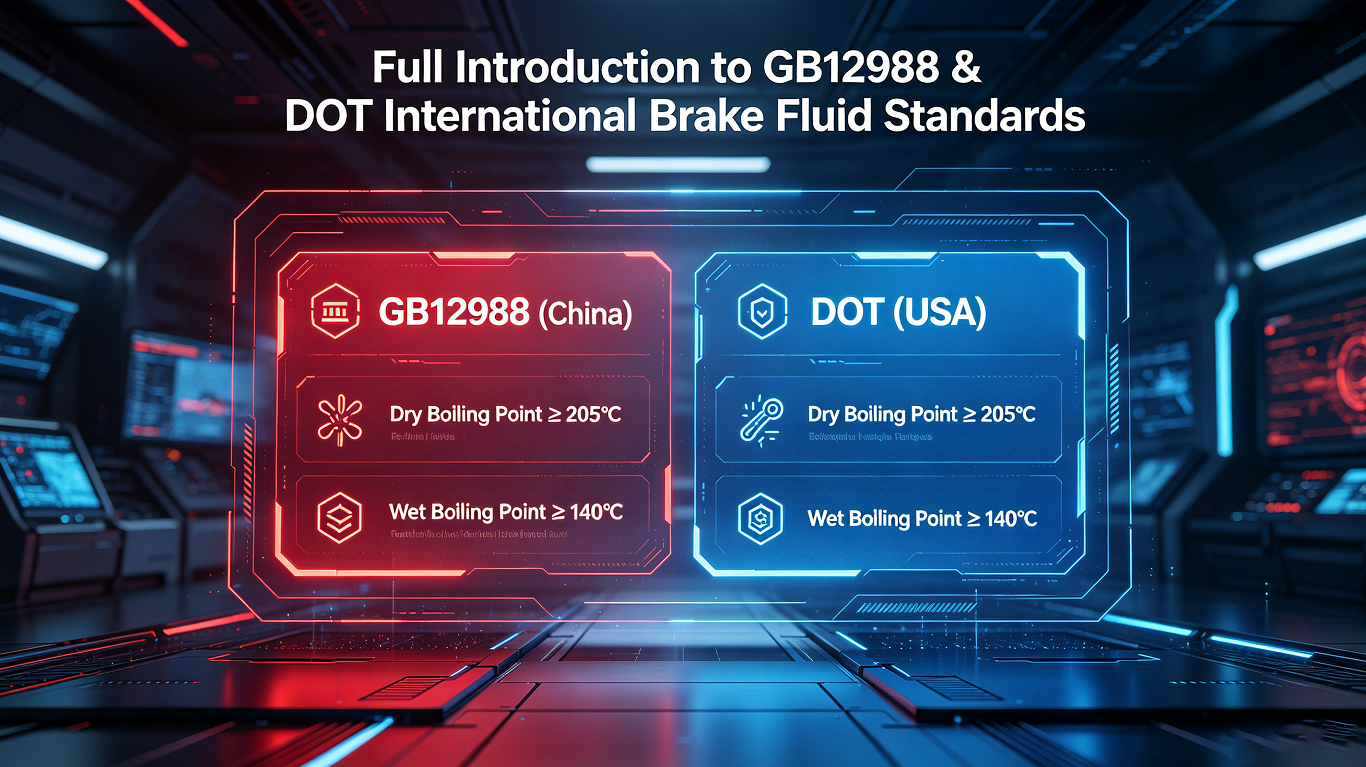
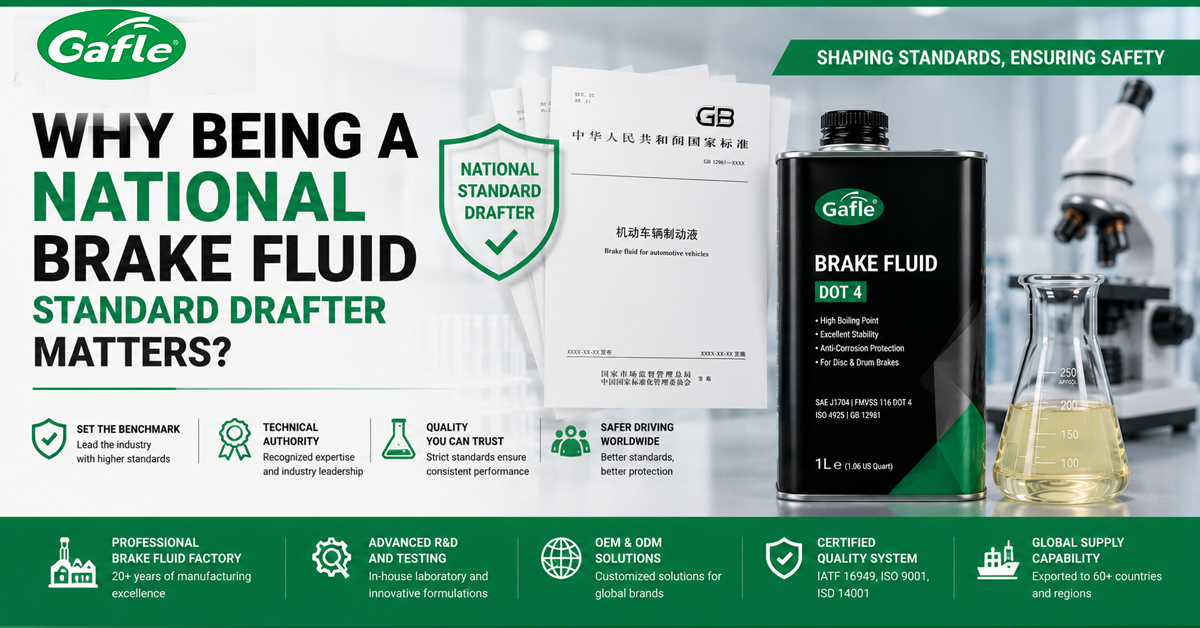
- National standard drafting enterprise priority: Manufacturers participating in compiling GB12988 brake fluid standard possess mature formula R&D and strict internal control systems, such as GAFLE;
- Mandatory certificates to verify: GB production license, SGS third-party test reports, AMECA certification, MSDS safety data sheet;
- Reject small factories without formal production permits: Their products often fail boiling point and low-temperature viscosity tests, causing mass after-sales compensation for distributors.
2. Production Capacity & Workshop Environment Inspection
- Production scale: Automatic batching, filling and sealing production lines with daily output above 100,000L support stable full-container delivery without long delays;
- Clean workshop requirement: Low-humidity sealed filling workshops effectively control raw material water absorption, ensuring finished product water content ≤0.2%; open semi-manual workshops cannot guarantee long-term quality stability;
- Raw material storage warehouse: Independent sealed storage area for imported high-purity glycol ether raw materials; factories using recycled waste solvents will produce substandard brake fluid.
3. Laboratory & Full-Batch QC System Verification
A trustworthy factory must own an independent professional laboratory:
- Complete testing equipment: Reflux boiling point tester, capillary viscometer, Karl Fischer water content analyzer, PH & conductivity detector (consistent with the lab records we provided);
- Full closed-loop inspection process: Raw material incoming test → production mid-term sampling test → finished product full batch inspection → pre-shipment random recheck;
- Original record retention: Each batch retains laboratory test records, inspection sheets and sample oil for more than 6 months to realize full batch traceability. Avoid suppliers that can only provide simple test certificates without original data.
4. Formula Stability & Product Parameter Consistency
- Fixed raw material supply chain: Long-term cooperation with top-tier chemical raw material suppliers to avoid formula fluctuation caused by changing cheap raw materials;
- Batch data consistency: The dry/wet boiling point, -40℃ viscosity of each batch should fluctuate within a tiny fixed range; irregular large numerical differences indicate unstable blending technology;
- Compatibility test data: Provide complete mutual solubility test reports of DOT3/DOT4/DOT5.1, reminding customers of silicone DOT5 mixing risks.
5. OEM & Export Service Capacity
For private label wholesalers, factory one-stop customization capability is critical:
- Customization support: Free label design, customizable can volume, color, brand printing, adjustable formula according to regional market demand (cold region high-performance formula, regular cost-effective formula);
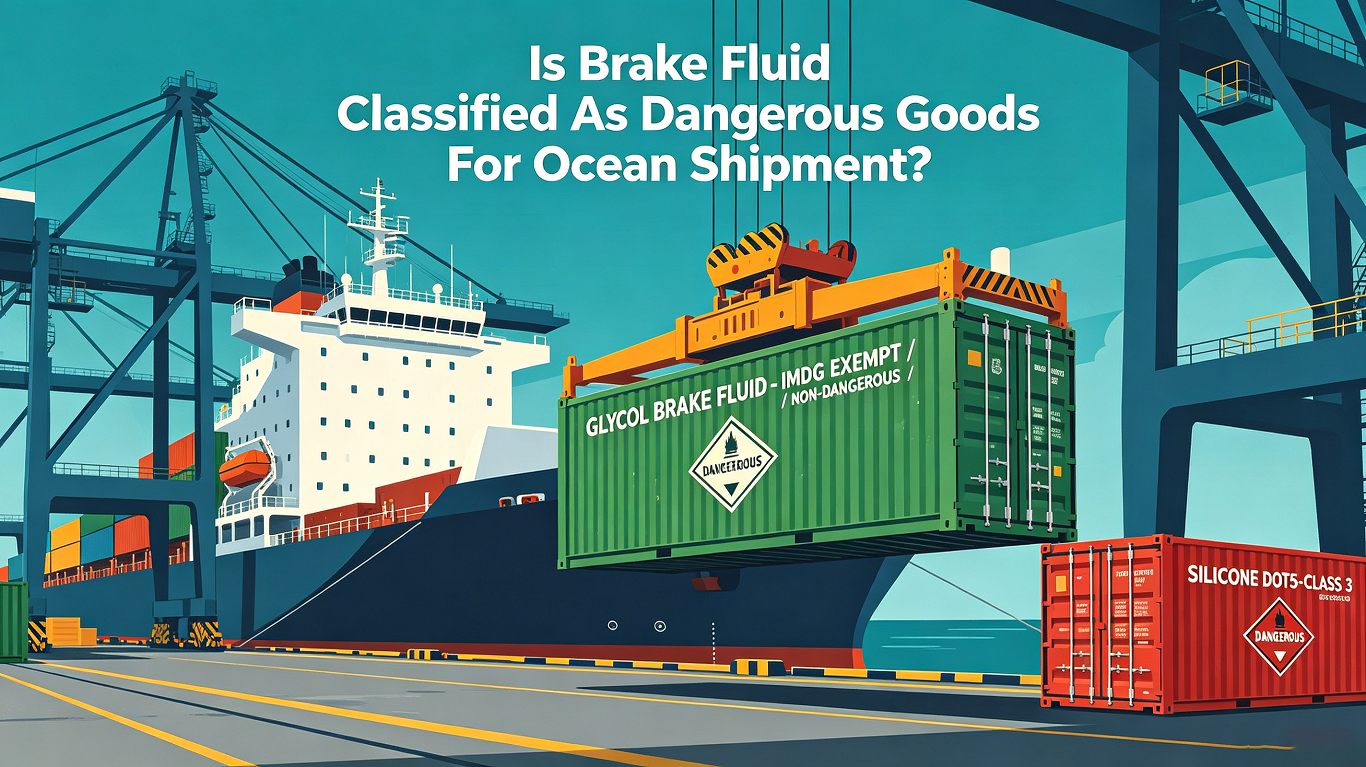
- Export document capability: Able to provide commercial invoices, packing lists, dual-standard inspection reports, non-dangerous MSDS, flash point certificates for global customs clearance;
- Professional foreign trade team: Familiar with ocean shipping rules, IMDG exemption clauses, container loading standards and leak-proof packaging solutions for long-distance transport.
6. After-sales & Supply Chain Risk Control
- Delivery cycle guarantee: Clear production scheduling cycle, raw material safety stock to avoid order delay caused by raw material price fluctuation or shortage;
- Quality problem solution mechanism: Clear compensation terms for unqualified batches, support re-production and free supplementary shipment;
- Overseas market case verification: Ask suppliers for long-term cooperative distributor cases in your target market (South America, Southeast Asia, Russia, Africa) to confirm their market adaptability.
Final Screening Operation Checklist For Buyers
- Request factory business license, production license and standard drafting certificate;
- Apply for free sample testing and send to local third-party laboratory to verify boiling point, viscosity and water content;
- Ask for original batch laboratory records of recent export orders to audit QC management;
- Conduct online factory live tour to check automatic production line and laboratory equipment;
- Confirm OEM customization range, export document list and delivery cycle before signing formal cooperation contract.
Closing Remarks
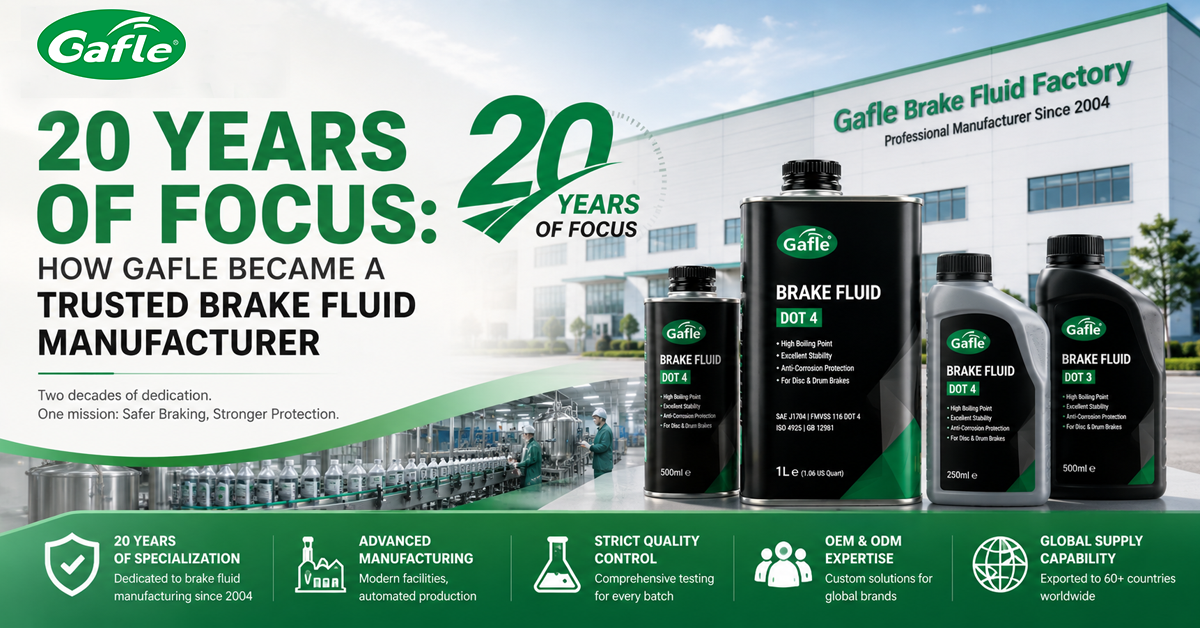
As a GB12988 standard drafting manufacturer with over 20 years of export experience, GAFLE passes all the above audit standards. We support global bulk wholesale and private label OEM orders, providing complete qualification documents, full batch test reports and professional foreign trade logistics guidance for every partner. Selecting a formal standardized factory can fundamentally eliminate quality, delivery and customs clearance risks for your auto fluid business.
Welcome to contact GAFLE for more information & cooperation!
peter
ZHEJIANG GAFLE AUTO CHEMICL CO.,LTD
Tel:86-579-8222 1665
Fax:86-579-8246 4690
Cel/Wechart:86-13335993986
E-mail:peter@gafle.net
Web:www.gafle.net
peter
ZHEJIANG GAFLE AUTO CHEMICL CO.,LTD
Tel:86-579-8222 1665
Fax:86-579-8246 4690
Cel/Wechart:86-13335993986
E-mail:peter@gafle.net
Web:www.gafle.net