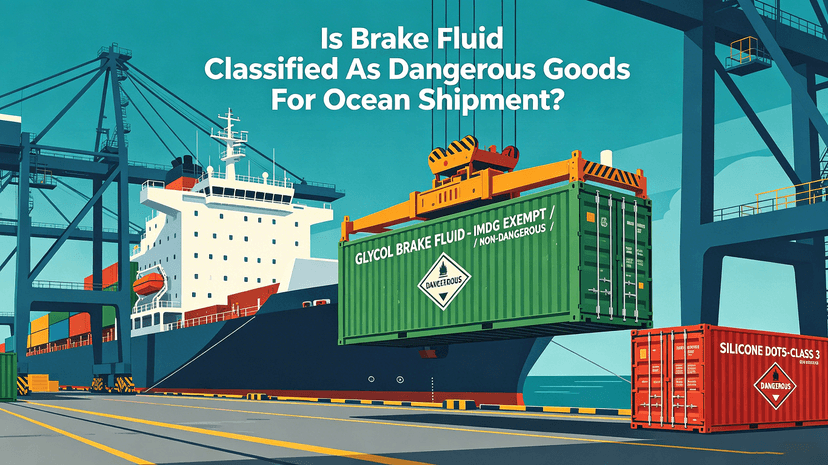
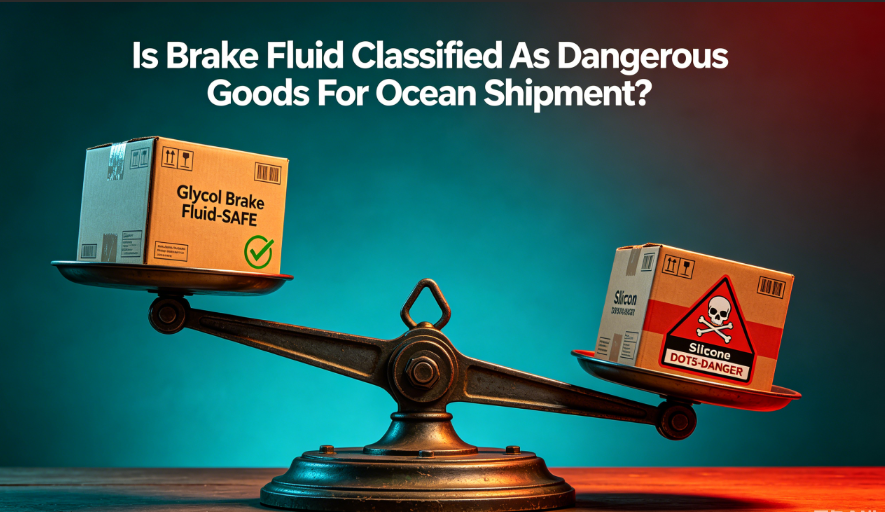
Is Brake Fluid Classified As Dangerous Goods For Ocean Shipment?
This is the most frequently asked logistics question from overseas brake fluid bulk buyers: Does glycol-based DOT3/DOT4/DOT5.1 brake fluid need dangerous goods packaging, DG declaration and special tank containers during ocean transportation? This article interprets IMDG Code classification standards, official exemption clauses and standardized export operation processes.
1. UN Classification of Two Types of Brake Fluid
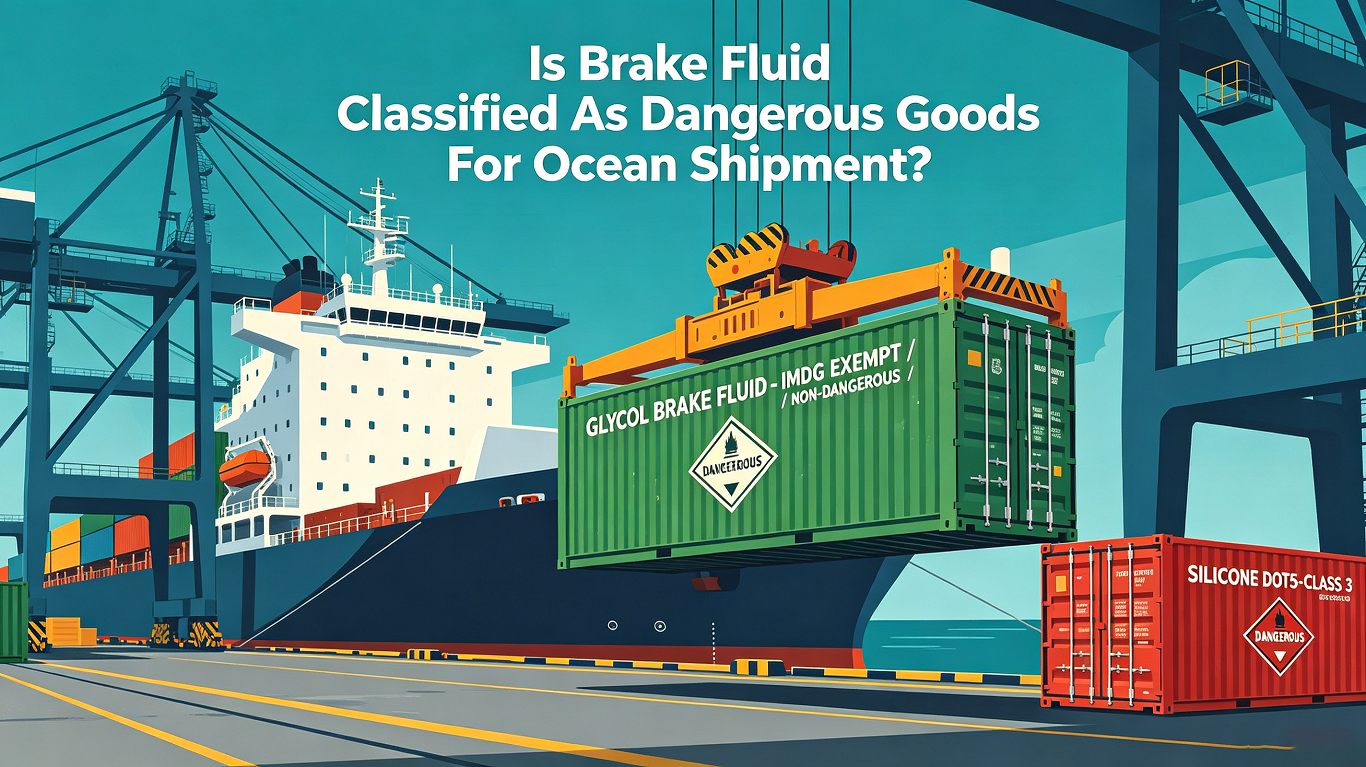
1.1 Glycol Ether Brake Fluid (DOT3/DOT4/DOT5.1, mainstream export product)
Raw material: Polyalkylene glycol ether mixture, flash point generally higher than 120℃.
UN classification: Not classified as hazardous goods under IMDG Code.
Exemption basis: The International Maritime Dangerous Goods Code clearly exempts glycol brake fluid with flash point over 93℃ from dangerous goods supervision. Ordinary general cargo containers, common carton packaging and regular customs declaration procedures are applicable.
1.2 Silicone DOT5 Brake Fluid
Raw material: Polydimethylsiloxane, with low flash point variants.
UN classification: Partial formulations are categorized as Class 3 flammable liquid dangerous goods (UN1993), requiring DG packaging, dangerous goods declaration and designated dangerous goods containers, with extra logistics costs and complicated clearance procedures. This is why most bulk importers only purchase glycol brake fluid for ocean shipment.
2. Key Preconditions for Enjoying the IMDG Exemption Clause
Exemption is not unconditional; exporters must meet all four standards simultaneously:
- Flash point test report of finished brake fluid ≥93℃, issued by qualified laboratory;
- Packaging specification: Sealed metal tin cans, 0.25L~20L single container, reinforced 5-layer export carton with anti-leakage protection;
- Single pallet and full container without leakage risk: Complete stretch film wrapping + plastic corner protectors;
- MSDS safety data sheet marked "Non-hazardous for marine transport", consistent with flash point test data.
If any condition fails, the shipping company will classify the cargo as dangerous goods and refuse general container loading.
3. Export Customs Clearance & Shipping Operation Standards
3.1 Required Documents for General Cargo Shipment
- Commercial invoice, packing list, bill of lading;
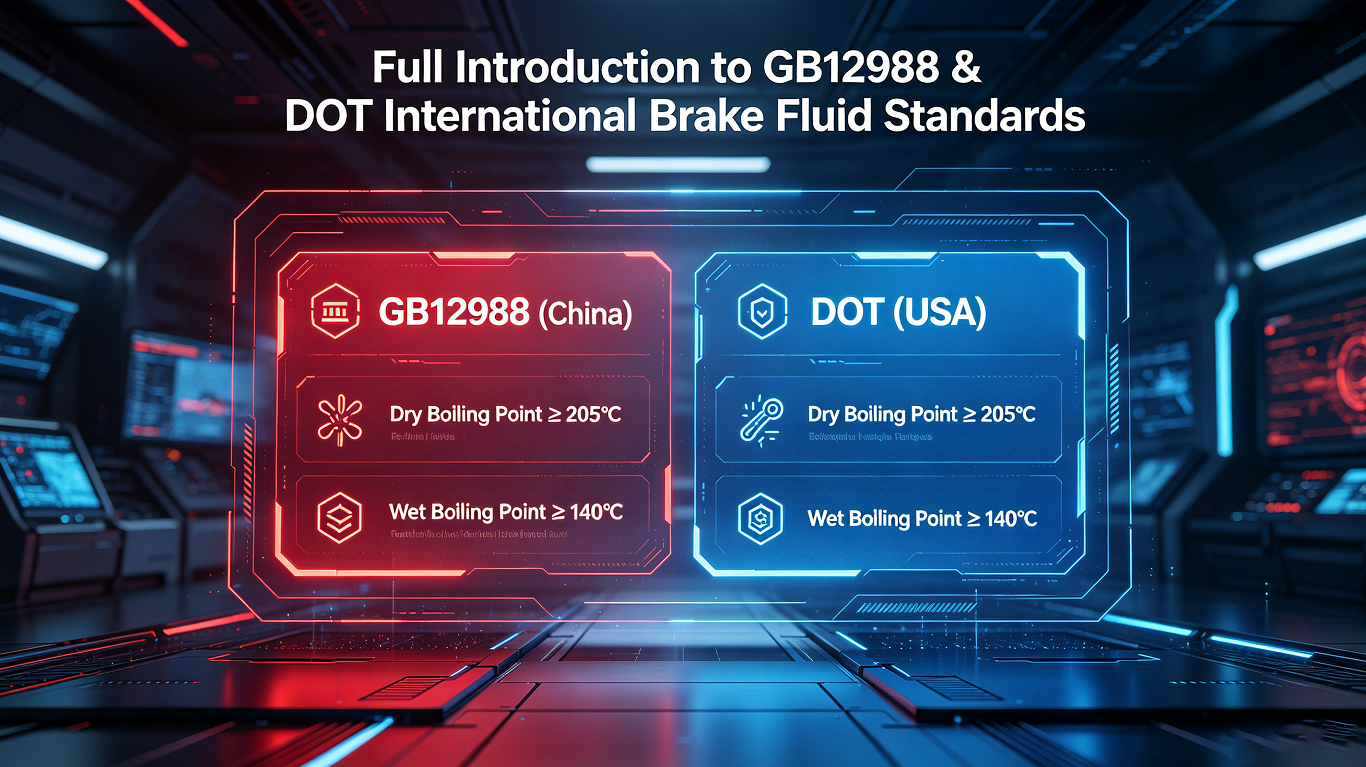
- Batch inspection report of brake fluid (GB12988 / DOT standard);
- MSDS Material Safety Data Sheet (non-dangerous version);
- Flash point laboratory test certificate.
No dangerous goods identification report, DG packaging certificate or DG declaration form is required, greatly simplifying customs clearance and cutting logistics expenses by 30%~60% compared with hazardous goods transport.
3.2 Prohibited Misoperations That Will Trigger DG Reclassification
- Using thin plastic bottles with poor sealing, which may leak during transit;
- Mixing brake fluid with low-flash-point solvents in the same container;
- Failing to provide formal flash point test documents when the carrier inspects goods;
- Damaged cartons without leak-proof packaging.
4. Risk Reminders for Cross-Border Buyers
- Confirm with suppliers that the product is glycol-based DOT series, not silicone DOT5 fluid before placing bulk orders;
- Ask the factory to attach flash point test reports and non-dangerous MSDS for each batch to avoid port detention;
- Avoid small factories with unqualified packaging: Leakage during sea transport will lead to the shipping company reclassifying the whole consignment as dangerous goods, resulting in huge fines and delivery delays;
- For countries with strict port supervision (EU, Australia, Middle East), prioritize manufacturers with complete dual-standard test documents and standardized leak-proof packaging.
5. GAFLE Export Logistics Support
All GAFLE glycol DOT3/DOT4/DOT5.1 brake fluid meets IMDG general cargo exemption standards. We provide unified non-dangerous MSDS, flash point test certificates and batch QC reports for every full container order. Our multi-layer leak-proof export packaging fully complies with carrier loading requirements, eliminating the risk of goods being detained at ports. Our foreign trade team can supply standardized document templates to help overseas distributors complete customs clearance quickly.
Conclusion
Mainstream glycol DOT brake fluid is non-dangerous goods for ocean shipping and eligible for IMDG exemption, while silicone DOT5 may fall under flammable dangerous goods. Bulk importers should confirm raw material type, flash point data and complete supporting documents before shipment to save logistics costs and avoid transport risks.
Welcome to contact GAFLE for more information & cooperation!
peter
ZHEJIANG GAFLE AUTO CHEMICL CO.,LTD
Tel:86-579-8222 1665
Fax:86-579-8246 4690
Cel/Wechart:86-13335993986
E-mail:peter@gafle.net
Web:www.gafle.net
peter
ZHEJIANG GAFLE AUTO CHEMICL CO.,LTD
Tel:86-579-8222 1665
Fax:86-579-8246 4690
Cel/Wechart:86-13335993986
E-mail:peter@gafle.net
Web:www.gafle.net