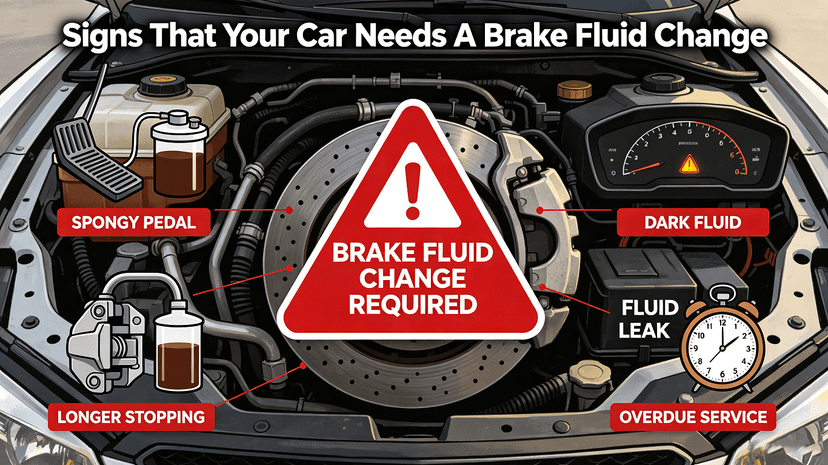
Signs That Your Car Needs A Brake Fluid Change
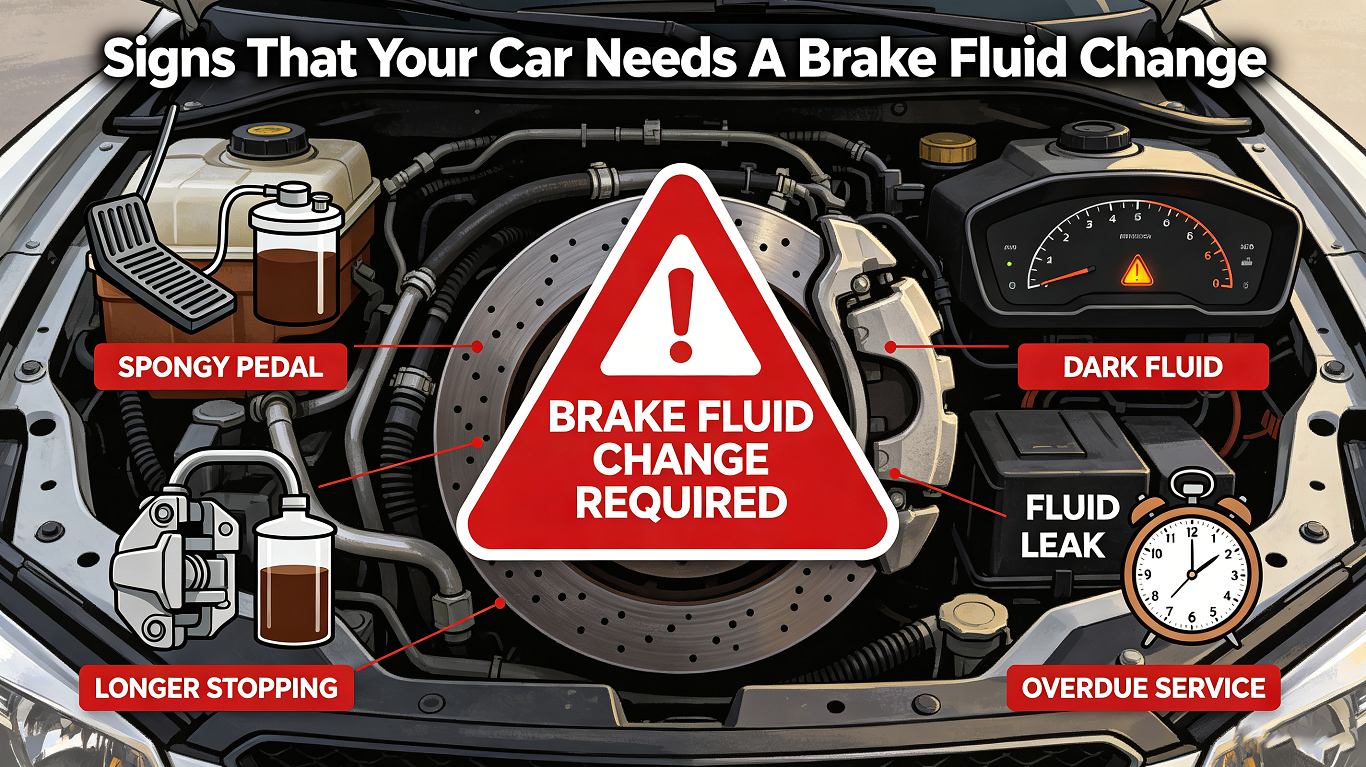
Brake fluid is the core hydraulic medium of your vehicle’s braking system, directly controlling stopping performance. Glycol-based DOT3, DOT4 and DOT5.1 brake fluid absorbs moisture continuously over time, gradually degrading its boiling point and anti-corrosion properties. Delaying replacement leads to dangerous brake failure risks. This article summarizes 5 obvious warning signs indicating you must flush and replace your brake fluid immediately, plus official recommended service intervals.
1. Spongy, Soft Brake Pedal Feel
This is the most intuitive warning sign of deteriorated brake fluid. When you step on the brake pedal, it sinks deeper than normal with a soft, mushy feel, requiring extra foot force to achieve sufficient stopping power.
Root Cause
Absorbed water boils into vapor bubbles under high braking temperatures. These air bubbles compress when pressure is applied, delaying hydraulic power transmission. In extreme downhill or emergency braking scenarios, vapor lock can completely cut off brake response.
Solution
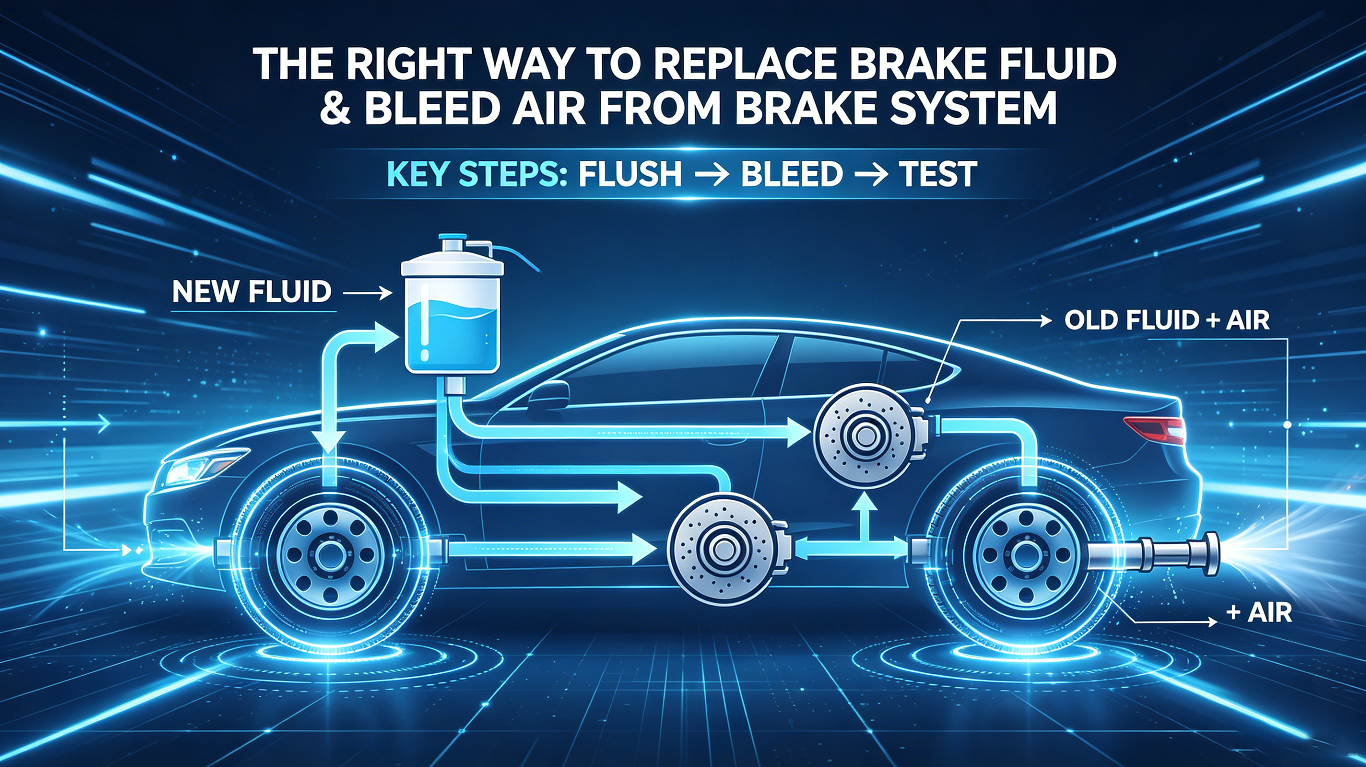
Schedule full brake fluid bleeding and replacement immediately; partial topping-up cannot remove trapped moisture inside the circuit.
2. Dark, Murky Brake Fluid Color
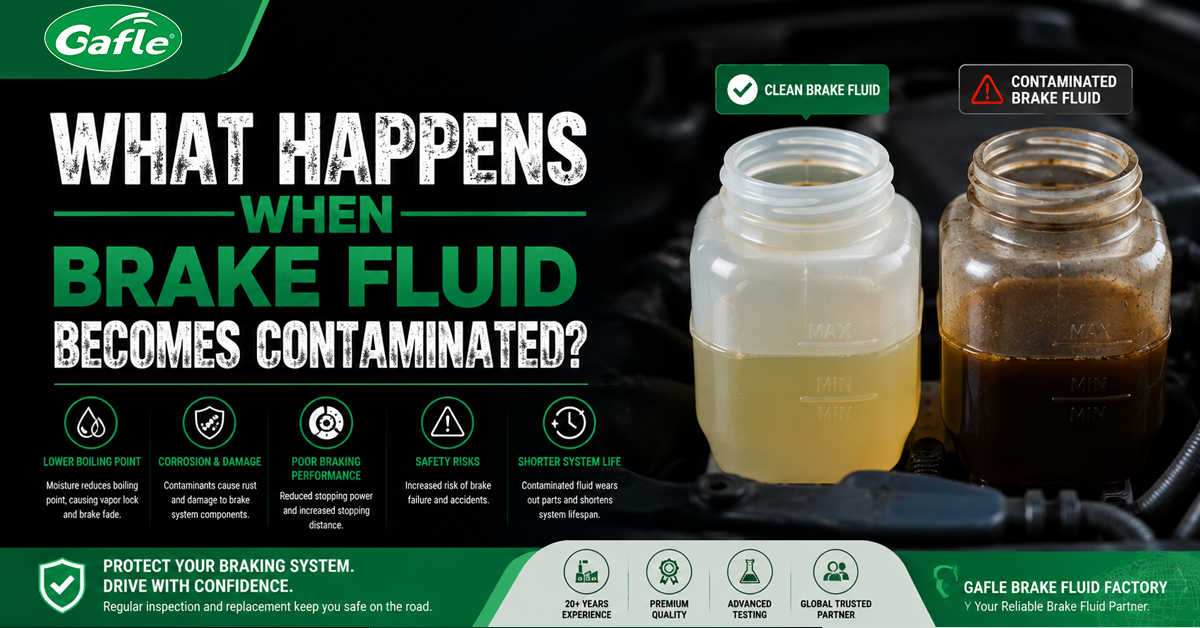
Fresh qualified brake fluid is transparent, clear light amber or pale blue. If you check the reservoir and find the fluid turns dark brown, black, or contains suspended sludge particles, replacement is mandatory.
Degradation Reasons
- Internal metal corrosion generates tiny rust particles mixed into the fluid;
- Aging additives lose efficacy and form sediment;
- Long-term moisture absorption accelerates fluid oxidation and contamination.
Dirty abrasive particles scratch caliper pistons and wear rubber seals, creating permanent brake system damage.
3. Longer Stopping Distance During Braking
If you notice your car takes noticeably more distance to stop when hitting the brakes, especially when carrying heavy loads or driving downhill, degraded brake fluid is a primary suspect.
Moisture reduces the wet boiling point drastically. Under repeated hard braking, vapor pockets form inside pipelines, weakening hydraulic pressure output and extending stopping distance—this creates severe collision risks in high-speed traffic.
4. Visible Brake System Corrosion & Fluid Leakage
Check brake calipers, wheel hoses, master cylinder and reservoir for two abnormal conditions:
- Rust, pitting and white corrosion residue on metal brake components;
- Wet fluid stains around hose joints, cylinder seals or reservoir caps.
Low anti-corrosion performance of aged brake fluid eats away metal parts and causes seal swelling/cracking, triggering persistent leaks. Leaked fluid reduces hydraulic volume and impairs braking efficiency.
5. Exceeded Manufacturer Recommended Service Interval
Even without obvious abnormal symptoms, glycol brake fluid has a fixed service lifespan determined by moisture absorption limits:
- DOT3/DOT4: Full replacement every 2 years or 40,000 kilometers (25,000 miles), whichever comes first;
- DOT5.1: Full replacement every 3 years or 60,000 kilometers (37,000 miles).
After this period, internal water content will exceed the 3.5% safety threshold specified by SAE standards, sharply reducing high-temperature braking safety margin. Vehicles operating in humid coastal or mountainous areas require earlier replacement cycles.
Hidden Safety Risks Of Delaying Brake Fluid Replacement
Many vehicle owners ignore regular fluid flushing, unaware of severe potential consequences:
- Sudden total brake failure under continuous heavy braking;
- Permanent expensive damage to master cylinders, ABS modulators and brake calipers requiring full component replacement;
- Higher risk of traffic accidents and liability claims if brake failure causes a collision.
Quick Daily Inspection Tip
You can self-check brake fluid condition in 2 minutes at home:
- Park on level ground, turn off the engine and wait 30 minutes for the system to cool;
- Locate the transparent plastic brake fluid reservoir under the engine bay;
- Observe fluid clarity, color and liquid level between MIN/MAX marking lines.
If any of the above 5 warning signs appear, visit a professional auto repair shop for full-system brake fluid bleeding and replacement without delay.
Closing Remarks
Regular brake fluid replacement is an affordable critical vehicle maintenance item that protects driving safety. Recognizing these 5 key warning signs lets you avoid catastrophic brake system failure. Always use matching grade certified DOT brake fluid from reputable manufacturers during replacement, and never mix incompatible DOT grades to prevent secondary contamination.
Welcome to contact GAFLE for more information & cooperation!
peter
ZHEJIANG GAFLE AUTO CHEMICL CO.,LTD
Tel:86-579-8222 1665
Fax:86-579-8246 4690
Cel/Wechart:86-13335993986
E-mail:peter@gafle.net
Web:www.gafle.net
peter
ZHEJIANG GAFLE AUTO CHEMICL CO.,LTD
Tel:86-579-8222 1665
Fax:86-579-8246 4690
Cel/Wechart:86-13335993986
E-mail:peter@gafle.net
Web:www.gafle.net