 What Happens When Brake Fluid Becomes Contaminated?
Brake fluid plays a critical role in every vehicle's braking system. It transfers hydraulic pressure from the brake pedal to the brake calipers, allowing the vehicle to stop safely and efficiently. However, many drivers and even some maintenance professionals overlook one important issue—Brake Fluid Contamination.
Contaminated brake fluid can significantly reduce braking performance, damage expensive brake components, and increase the risk of accidents. Understanding what causes contamination and how to prevent it is essential for maintaining vehicle safety.
At Gafle Brake Fluid Factory, we have specialized in brake fluid manufacturing for more than 20 years. As a professional Brake Fluid Manufacturer, we focus on producing high-performance brake fluids that help customers around the world achieve safer and more reliable braking systems.
What Is Brake Fluid Contamination?
Brake Fluid Contamination occurs when unwanted substances enter the brake fluid and alter its physical or chemical properties.
The most common contaminants include:
- Moisture (water)
- Dirt and dust particles
- Rust and metal debris
- Rubber particles from aging seals
- Oxidized or degraded brake fluid
Over time, these contaminants reduce the fluid's effectiveness and may compromise the entire braking system.
Why Does Brake Fluid Become Contaminated?
Brake fluid is naturally hygroscopic, meaning it absorbs moisture from the surrounding air.
Even in a sealed braking system, small amounts of moisture can enter through:
- Rubber brake hoses
- Reservoir caps
- Rubber seals
- Routine maintenance
As moisture accumulates, the brake fluid gradually becomes Contaminated Brake Fluid, losing its original performance characteristics.
Other causes include:
- Delayed brake fluid replacement
- Poor maintenance practices
- Mixing incompatible brake fluids
- Dirty service equipment
- Low-quality brake fluid
What Happens When Brake Fluid Becomes Contaminated?
Ignoring contaminated brake fluid can lead to several serious problems.
1. Reduced Boiling Point
Fresh brake fluid is designed to withstand extremely high temperatures.
When moisture enters the fluid, the boiling point decreases significantly.
During heavy braking, contaminated brake fluid may begin to boil, creating vapor bubbles inside the hydraulic system.
This can result in:
- Soft brake pedal
- Reduced braking force
- Brake fade
- Increased stopping distance
2. Internal Corrosion
Water contamination promotes corrosion inside the braking system.
Corrosion may damage:
- Master cylinder
- Brake calipers
- ABS hydraulic unit
- Steel brake lines
Replacing these components can be expensive, making regular Brake Fluid Replacement a much more economical solution.
3. Poor Brake Response
As brake fluid deteriorates, hydraulic pressure becomes less stable.
Drivers may notice:
- Delayed braking response
- Increased pedal travel
- Reduced braking confidence
These are common symptoms of Contaminated Brake Fluid.
4. Damage to ABS Components
Modern braking systems rely on precise hydraulic control.
Contaminated brake fluid can clog small passages and valves inside the ABS module.
This may cause:
- Reduced ABS efficiency
- Warning lights
- Expensive repair costs
5. Shorter Brake Component Life
Dirty brake fluid accelerates wear on seals, pistons, and hydraulic components.
Without proper Brake Fluid Maintenance, contamination gradually shortens the lifespan of the entire braking system.
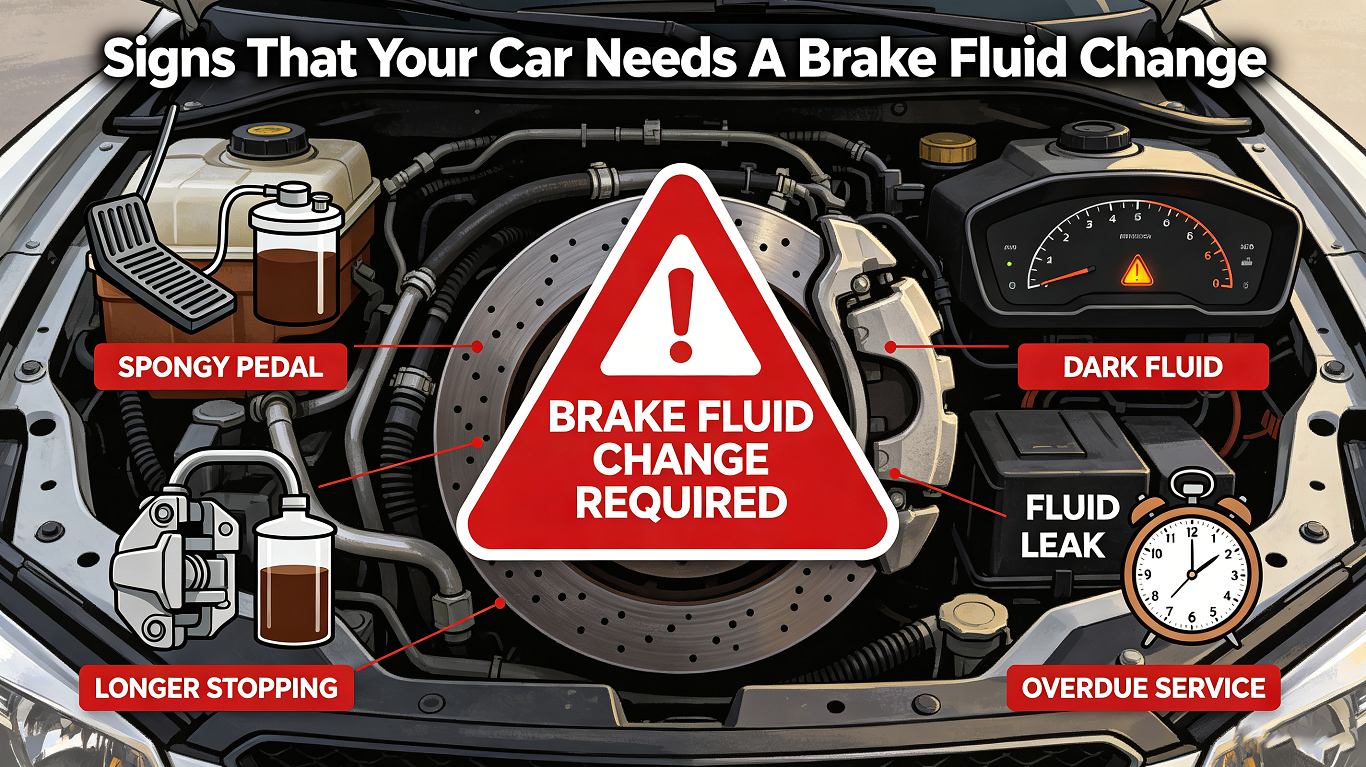
Signs of Bad Brake Fluid
Recognizing the Signs of Bad Brake Fluid early can help prevent serious braking problems.
Common warning signs include:
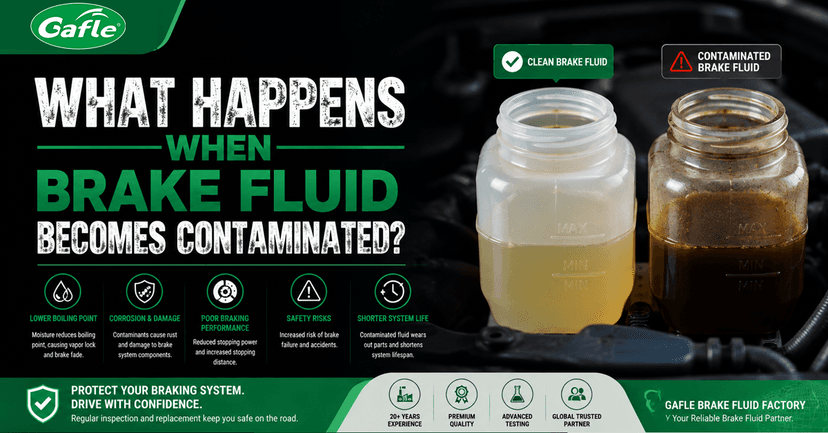
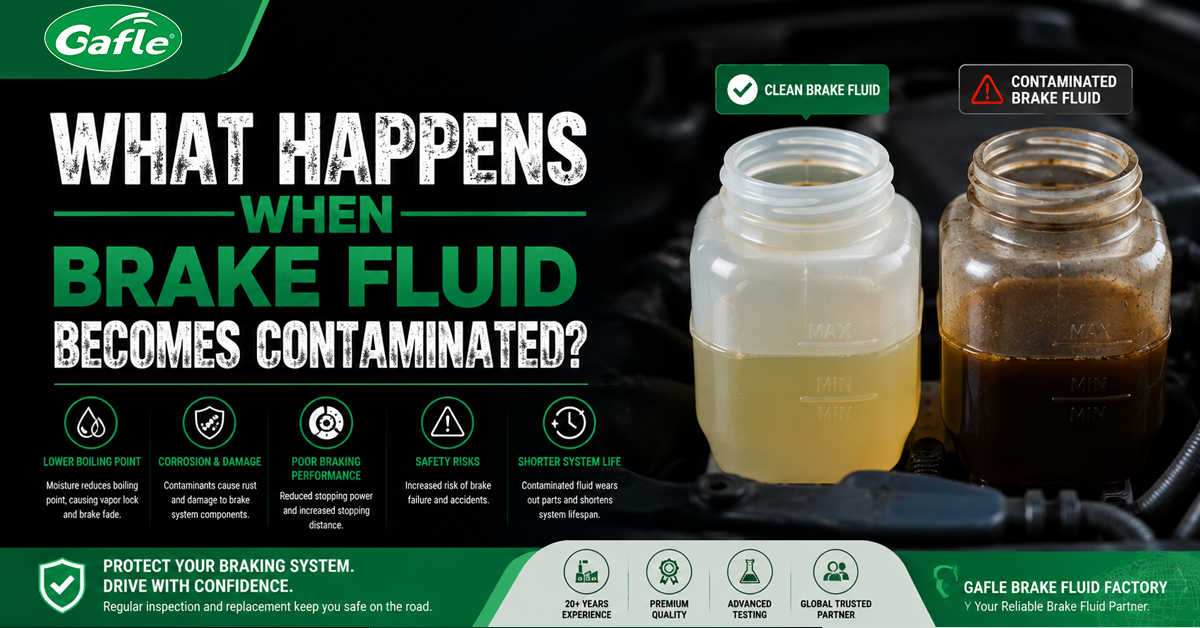
Dark or Cloudy Fluid
Fresh brake fluid is usually clear or light yellow.
Dark brown, black, or cloudy fluid often indicates contamination or oxidation.
Soft Brake Pedal
A spongy or soft brake pedal may indicate moisture contamination or air within the hydraulic system.
Poor Braking Performance
Longer stopping distances or delayed brake response often suggest deteriorated brake fluid.
Burning Smell During Heavy Braking
Overheated contaminated brake fluid may produce a noticeable odor after repeated braking.
Brake Warning Light
In some cases, contaminated brake fluid may contribute to hydraulic or ABS-related warning indicators.
How to Prevent Brake Fluid Contamination
Preventing contamination is much easier than repairing brake system damage.
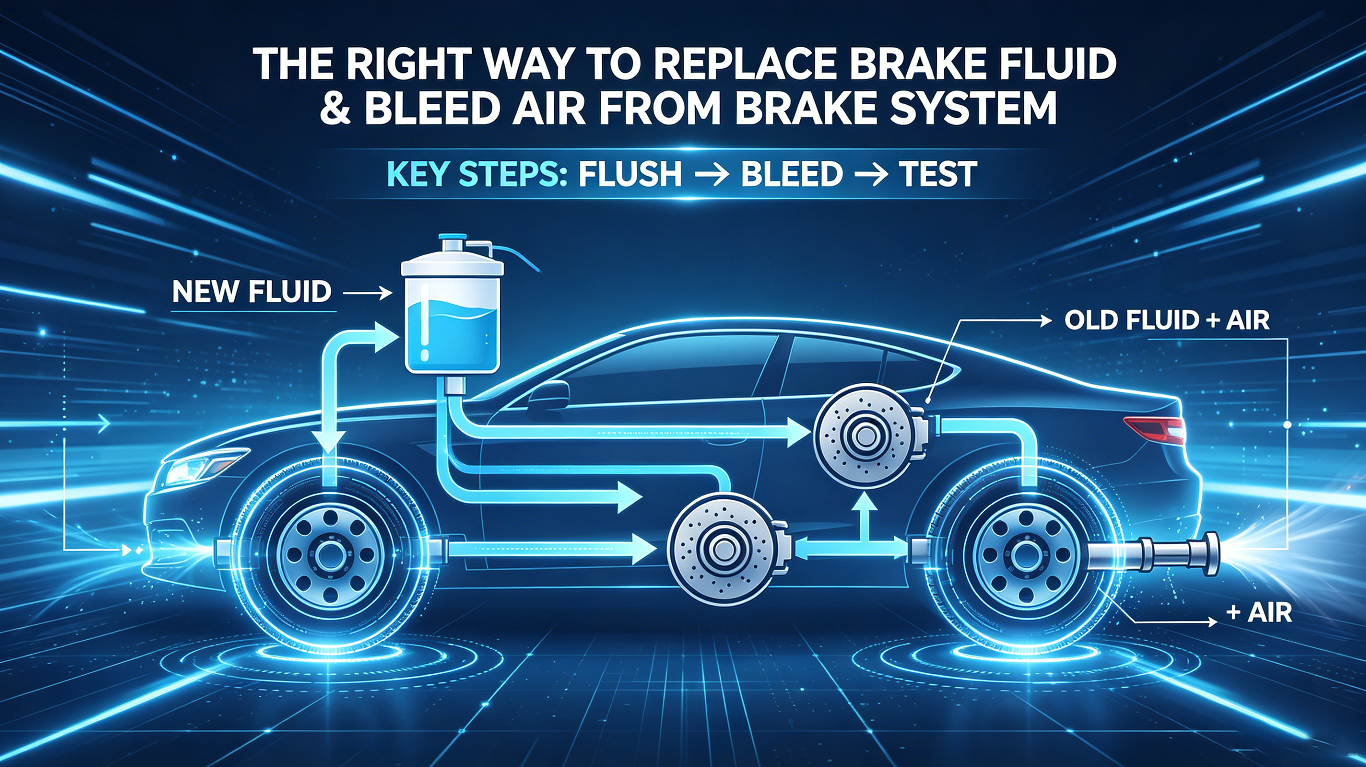
Replace Brake Fluid Regularly
Routine Brake Fluid Replacement removes moisture and contaminants before they affect braking performance.
Most vehicle manufacturers recommend replacing brake fluid every 2–3 years or according to the owner's manual.
Perform Regular Brake Fluid Maintenance
Proper Brake Fluid Maintenance includes:
- Inspecting fluid color
- Checking fluid level
- Testing moisture content
- Inspecting the brake reservoir
- Looking for leaks around hydraulic components
Preventive maintenance greatly improves brake system reliability.
Use High-Quality Brake Fluid
Not all brake fluids provide the same level of protection.
Premium brake fluid offers:
- Higher boiling points
- Better oxidation resistance
- Improved corrosion protection
- Longer service life
Choosing products from a professional Brake Fluid Manufacturer helps reduce contamination risks.
Avoid Mixing Different Brake Fluids
Mixing incompatible brake fluid types may reduce performance and cause chemical instability.
Always use the brake fluid grade recommended by the vehicle manufacturer.
Why Gafle Brake Fluid Factory?
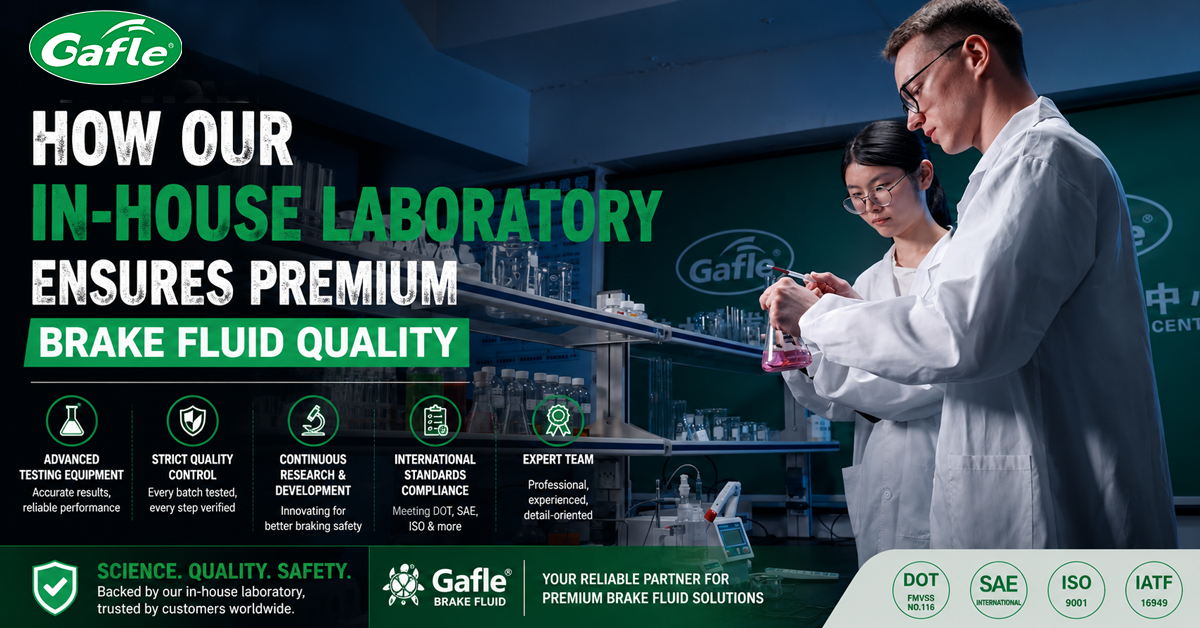
At Gafle Brake Fluid Factory, quality begins long before production starts.
Our manufacturing process includes:
- Strict raw material inspection
- Advanced laboratory testing
- Modern clean production facilities
- Comprehensive quality control
- Batch traceability system
- Continuous product performance verification
As an experienced Brake Fluid Manufacturer, we help OEM customers, distributors, and automotive brands deliver safe and reliable brake fluid products worldwide.
Why Quality Brake Fluid Matters
High-quality brake fluid provides more than reliable braking—it also protects the entire braking system.
Premium brake fluid helps:
- Resist moisture absorption
- Reduce internal corrosion
- Maintain a high boiling point
- Improve hydraulic stability
- Extend brake component life
Choosing the right brake fluid is one of the simplest ways to improve long-term vehicle safety.
Conclusion
Brake Fluid Contamination is one of the most common yet overlooked causes of brake system problems. Moisture, dirt, oxidation, and degraded fluid can reduce braking performance, damage expensive components, and increase safety risks.
By recognizing the Signs of Bad Brake Fluid, following a regular Brake Fluid Replacement schedule, and practicing proper Brake Fluid Maintenance, vehicle owners can protect both their braking systems and their safety.
At Gafle Brake Fluid Factory, we are committed to producing premium brake fluids that meet international quality standards. As a trusted Brake Fluid Manufacturer, we provide reliable brake fluid solutions that help customers around the world deliver safer, longer-lasting braking performance.