 What Should You Do If You Use the Wrong Brake Fluid?
Brake fluid is a critical component of every hydraulic braking system. It transfers the force from the brake pedal to the brake calipers, allowing a vehicle to stop safely and efficiently. However, using the wrong brake fluid is a common maintenance mistake that can affect braking performance and, in some cases, damage brake system components.
If you've accidentally used the wrong brake fluid, don't panic—but don't ignore it either. The correct action depends on which type of brake fluid was added and whether it is compatible with the fluid already in the system. As a professional Brake Fluid Manufacturer with more than 20 years of manufacturing experience, Gafle helps customers understand brake fluid compatibility and provides high-quality brake fluid solutions for OEM customers worldwide.
What Happens If You Use the Wrong Brake Fluid?
Not all brake fluids are the same.
Different brake fluids are designed with different chemical formulations and performance characteristics. Using the wrong specification may affect:
- Braking performance
- Boiling point
- Low-temperature viscosity
- Compatibility with seals and rubber components
- Long-term reliability of the braking system
The severity depends on the type of fluid used and whether it is chemically compatible with the existing brake fluid.
Understanding Brake Fluid Compatibility
Before deciding what to do, it's important to understand Brake Fluid Compatibility.
DOT 3, DOT 4 and DOT 5.1
DOT 3, DOT 4, and DOT 5.1 are glycol-based brake fluids.
They are chemically compatible with one another, although they have different performance levels, particularly regarding boiling point. If different glycol-based grades are mixed temporarily, the system will generally function, but manufacturers typically recommend replacing the fluid with the correct specification during scheduled maintenance to restore the intended performance.
DOT 5
DOT 5 is completely different.
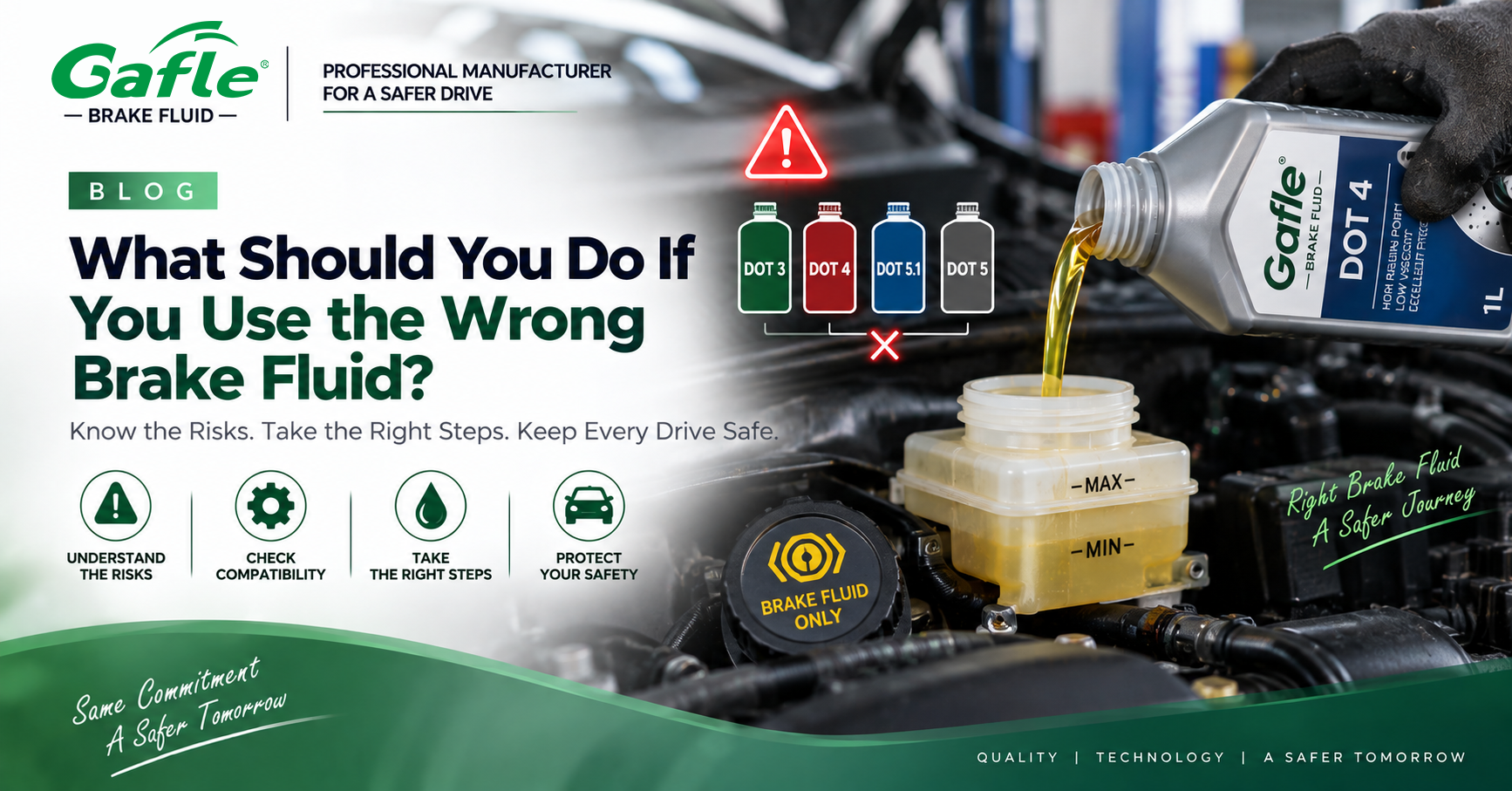
It is silicone-based and must not be mixed with DOT 3, DOT 4, or DOT 5.1.
Mixing silicone-based DOT 5 with glycol-based brake fluids may damage seals, reduce braking reliability, and require a complete brake system inspection and cleaning.
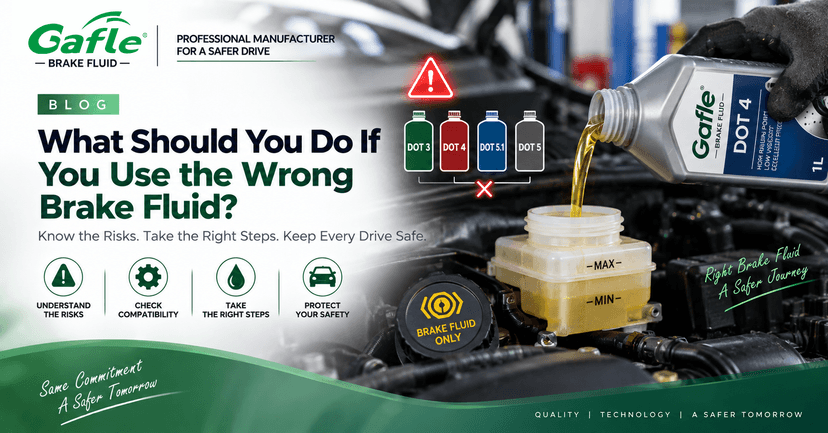
What Should You Do If You Use the Wrong Brake Fluid?
If you realize the wrong brake fluid has been added, follow these general recommendations.
Step 1: Stop Adding More Fluid
Do not continue topping up the brake system until you know which brake fluid has been added.
Step 2: Identify the Brake Fluid Type
Check:
- The brake fluid container
- The vehicle owner's manual
- The brake reservoir cap
- Manufacturer service information
Knowing whether the fluid is DOT 3, DOT 4, DOT 5.1, or DOT 5 is essential before deciding the next step.
Step 3: Determine Compatibility
If the wrong fluid is another glycol-based brake fluid (DOT 3, DOT 4, or DOT 5.1), the system may continue to operate, but using the specification recommended by the vehicle manufacturer remains the best practice. A complete fluid replacement is generally recommended during maintenance to restore the intended performance.
If silicone-based DOT 5 has been introduced into a glycol-based system, the vehicle should be inspected by qualified technicians as soon as possible. The braking system will generally require a complete flush and cleaning before the correct brake fluid is installed.
Step 4: Inspect the Brake System
After correcting the fluid, inspect the braking system for:
- Brake pedal feel
- Fluid leaks
- Seal condition
- Brake system performance
If any abnormalities are noticed, the vehicle should be professionally serviced before returning to normal operation.
How to Prevent Brake Fluid Mistakes
The easiest way to avoid problems is to follow a few simple practices.
Always Use the Recommended Specification
Use the brake fluid grade specified by the vehicle manufacturer rather than selecting a product based only on availability.
Clearly Label Storage Containers
Repair shops should keep different brake fluid types in clearly identified containers to prevent accidental mixing.
Keep Brake Fluid Sealed
Brake fluid absorbs moisture from the air after opening.
Always store containers tightly sealed in a cool, dry environment.
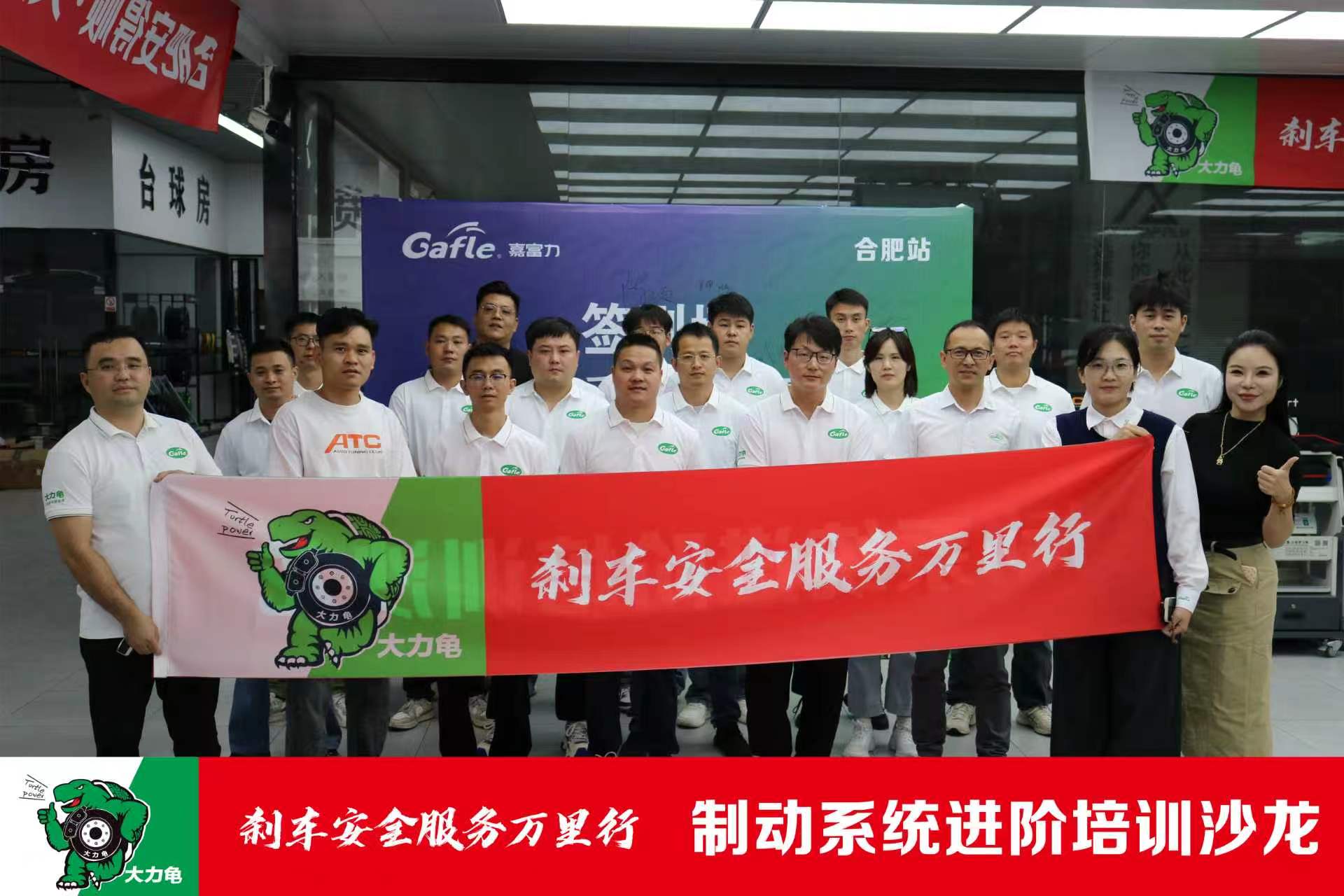
Train Service Personnel
Proper technician training helps reduce filling mistakes and improves maintenance quality.
How Gafle Ensures Brake Fluid Quality
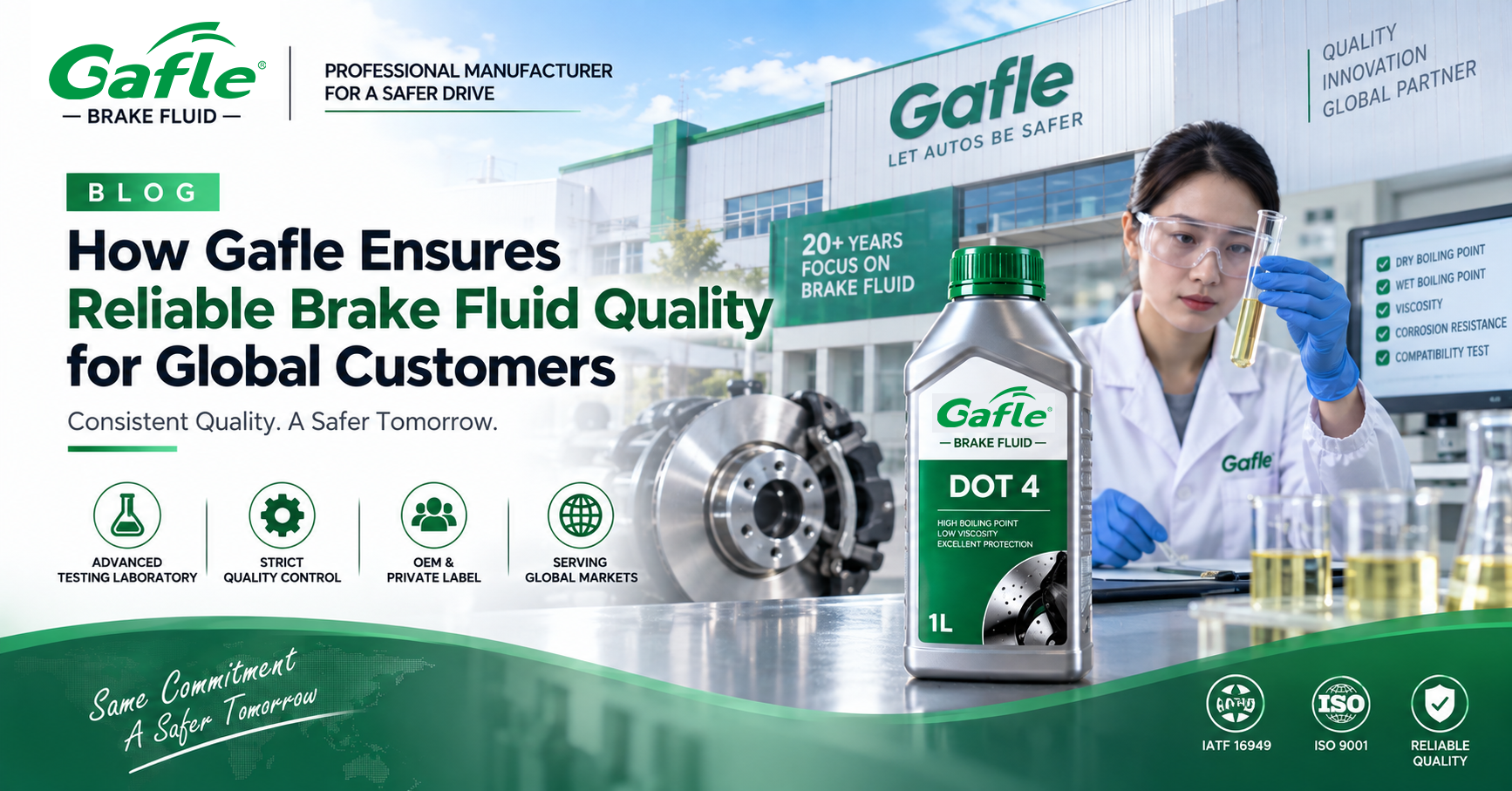
At Gafle, every brake fluid is manufactured under strict quality management procedures to ensure consistent performance.
Advanced Formula Development
Our R&D team develops brake fluid formulations that comply with international performance requirements.
Professional Testing Laboratory
Every production batch undergoes comprehensive testing, including:
- Dry boiling point
- Wet boiling point
- Low-temperature viscosity
- Moisture content
- Corrosion resistance
- Material compatibility
- Appearance inspection
Strict Quality Control
From raw material inspection to finished product testing, standardized procedures help maintain consistent quality across every production batch.
OEM & Private Label Manufacturing
Gafle provides flexible OEM and private label services, including:
- DOT 3
- DOT 4
- DOT 5.1
- Customized formulations
- Bottle design
- Label customization
- Carton packaging
- Technical documentation
Why Global Customers Choose Gafle
As a trusted Brake Fluid Manufacturer, Gafle supplies premium brake fluids to distributors, importers, wholesalers, and automotive brands worldwide.
Our strengths include:
- 20+ Years of Brake Fluid Manufacturing Experience
- Professional Brake Fluid Laboratory
- Advanced Research & Development Team
- Strict Quality Control
- Modern Automated Production Facilities
- Stainless Steel Storage Tank System
- Clean Manufacturing Environment
- IATF 16949 Quality Management System
- OEM & Private Label Manufacturing
- Customized Packaging Solutions
- Stable Large-Scale Production
- Global Export Experience
- Participant in Drafting China's National Brake Fluid Standards
These capabilities allow Gafle to deliver reliable brake fluid solutions while supporting long-term partnerships with customers around the world.
How to Choose the Best Brake Fluid Manufacturer in China
Many international buyers searching for the Best Brake Fluid Manufacturer in China understand that selecting the right supplier involves much more than comparing prices.
A reliable manufacturer should provide:
- Extensive manufacturing experience
- Professional laboratory facilities
- Advanced testing equipment
- Strict quality management
- Stable production capacity
- OEM & ODM capability
- Private label services
- International certifications
- Global export experience
- Technical support
These strengths help ensure every shipment delivers consistent quality and dependable braking performance.
Frequently Asked Questions
What happens if I use the wrong brake fluid?
It depends on the fluid used. Mixing compatible glycol-based fluids (DOT 3, DOT 4, and DOT 5.1) is generally less serious than introducing silicone-based DOT 5 into a glycol-based system. The safest approach is always to use the brake fluid specified by the vehicle manufacturer.
Can DOT 3 and DOT 4 brake fluid be mixed?
DOT 3 and DOT 4 are both glycol-based and are chemically compatible. However, using the specification recommended by the vehicle manufacturer is recommended to maintain the intended braking performance.
Is DOT 5 compatible with DOT 4?
No. DOT 5 is silicone-based and should not be mixed with DOT 4 or other glycol-based brake fluids.
Should I flush the brake system after using the wrong brake fluid?
If incompatible brake fluids have been mixed, a complete inspection and system flush by qualified technicians is generally recommended before refilling with the correct specification.
How should buyers choose the Best Brake Fluid Manufacturer in China?
Buyers should evaluate manufacturing experience, laboratory capability, quality management systems, OEM expertise, production consistency, export experience, and technical support—not simply compare prices.
Conclusion
Using the correct brake fluid is essential for maintaining safe and reliable braking performance. If the wrong brake fluid is added, the appropriate response depends on the fluid type and its compatibility with the existing brake fluid. Identifying the fluid, confirming compatibility, and restoring the system to the manufacturer's recommended specification are the best ways to protect long-term brake system performance.
With more than 20 years of manufacturing experience, Gafle continues to provide premium brake fluid solutions through advanced laboratory testing, modern production facilities, and strict quality control.
For businesses searching for the Best Brake Fluid Manufacturer in China, Gafle offers reliable products, flexible OEM and private label services, and long-term partnerships built on quality, consistency, and innovation.
At Gafle, we believe that using the right brake fluid—and using it correctly—is the foundation of every safe journey.