Why ABS module brake fluid problems deserve attention
When technicians talk about abs module brake fluid, they are usually dealing with a much narrower issue than a routine service reminder. The concern is not just the fluid in the reservoir. It is the fluid that sits inside the hydraulic control unit, the valves, and the passages of the ABS module itself. If that fluid degrades, moisture and debris can affect braking feel, trigger warnings, or leave a vehicle with uneven hydraulic response after service.
For fleets, repair shops, and parts buyers, the real question is simple: what does a standard flush actually remove, and what stays behind? That matters because a brake system can look serviced on paper while still carrying old brake fluid trapped inside abs unit passages. In some vehicles, that leftover fluid is harmless for a while. In others, it becomes part of a recurring complaint that keeps coming back after the customer leaves.
What the ABS module does differently from the rest of the brake system
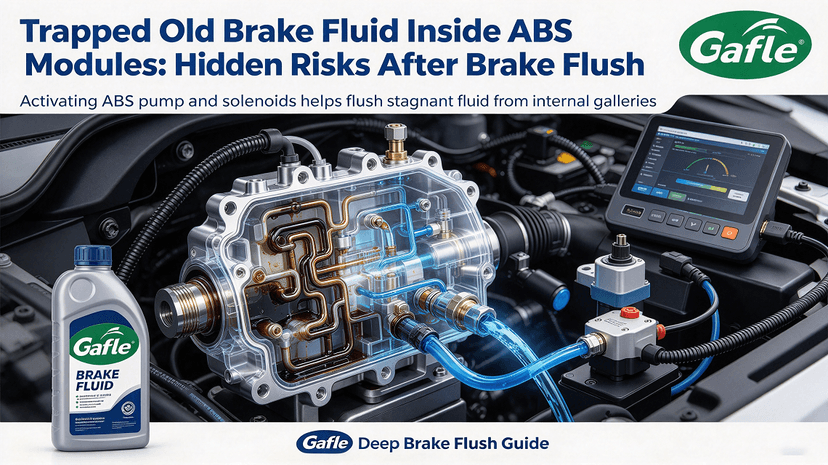
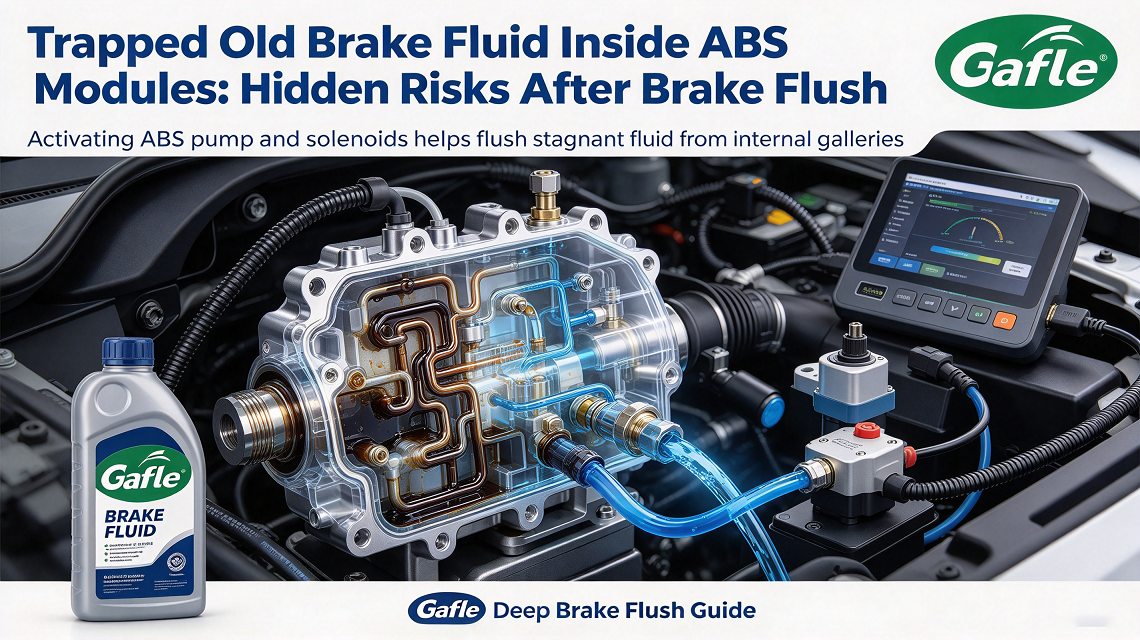
Normal hydraulic brake service focuses on replacing fluid in the lines, calipers, wheel cylinders, and reservoir. The ABS module adds another layer. It contains solenoids, channels, and an electronic control element that can isolate, open, or modulate pressure during a skid event. Those internal passages are not always fully exchanged during a basic gravity bleed or pressure bleed.
This is why technicians ask, can standard brake flush clean abs module internals? The cautious answer is: sometimes partially, but not reliably enough to assume full renewal. A conventional flush usually improves overall system condition, yet it may not force fresh fluid through every corner of the ABS hydraulic unit unless the procedure includes ABS activation or a scan-tool guided bleed, and even then results depend on vehicle design.
Quick comparison: routine flush vs ABS-aware service
A routine brake flush is meant to renew the system’s working fluid and remove contamination from the main hydraulic circuit. An ABS-aware service goes one step further by trying to cycle the module so trapped fluid can move out of internal cavities.
That difference sounds minor until you are trying to prevent repeat complaints. The brake flush limitation is not that flushing is useless. It is that a basic flush may stop short of the areas most likely to hold degraded fluid, especially if the ABS unit has never been commanded to cycle during service.
Why old fluid matters inside the ABS unit
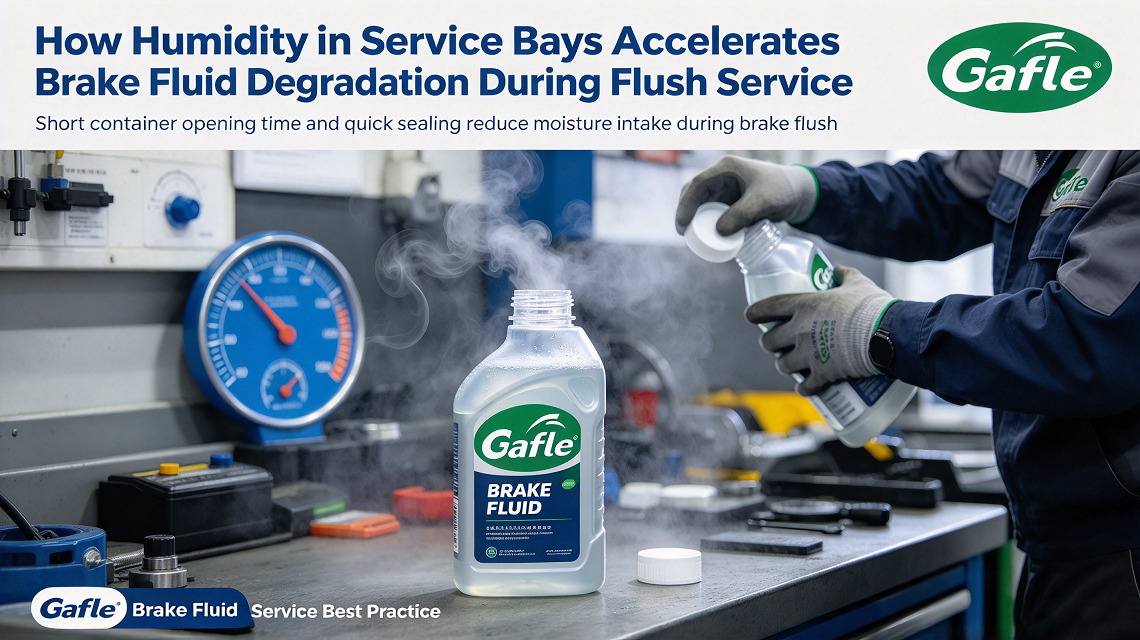
Brake fluid is hygroscopic, meaning it absorbs moisture over time. As moisture content rises, boiling performance drops and corrosion risk increases. Inside an ABS module, that can be more than a theoretical issue. Fine passages and valve components are less forgiving than a straight steel line. Contaminated fluid can also carry wear particles from aging hoses, seals, or prior maintenance mistakes.
The result is not always dramatic failure. More often it shows up as inconsistent pedal feel, noisy ABS activation, warning lights, or a system that behaves differently after brake work than it did before. That is frustrating for the driver and expensive for a service department trying to avoid comebacks.
Practical selection criteria for service planning
If you are deciding whether to recommend a standard flush, an ABS-guided procedure, or a deeper repair, the first filter is vehicle behavior. If the pedal feel is normal, the fluid is relatively fresh, and there are no codes or warnings, a routine flush may be adequate for maintenance. But if the vehicle has neglected service history, contaminated fluid, or ABS-related symptoms, the safer route is usually a more complete procedure.
It is also worth checking whether the service information for that platform specifies a scan tool activation routine. Not every vehicle does, but on systems that do, skipping it can leave you with the impression of fresh fluid while some pockets in the abs module remain unchanged. That is the kind of detail that separates efficient service from a guess.
Common mistakes shops still make
One common mistake is treating every brake flush as interchangeable. Another is assuming that a strong pressure bleed automatically reaches every valve cavity. A third is replacing parts before verifying whether the complaint is hydraulic, electronic, or simply maintenance related.
There is also a practical caution here: aggressive flushing on a neglected system can sometimes uncover problems that were already present but hidden by old, viscous fluid. That does not mean the service caused the fault, only that the repair conversation needs to be honest about what the flush can and cannot do.
Buyer-facing takeaway
For sourcing managers and service planners, the decision is less about buying “a flush” and more about defining the service outcome. If your goal is basic maintenance, a standard brake fluid exchange may be enough. If your goal is to clear lingering fluid from the ABS hydraulic unit, then the process must account for module cycling and the possibility that some volume remains inaccessible without the correct procedure.
In short, brake fluid maintenance is not just a calendar item. On modern braking systems, the procedure matters as much as the fluid itself.
FAQ
Can a standard brake flush clean the ABS module?
Not fully in every case. It may improve the system overall, but some internal cavities can still retain old fluid unless the ABS unit is cycled during the service.
Why is fluid trapped in the ABS module a concern?
Because old fluid can carry moisture and debris, which may affect valve response, pedal feel, and long-term corrosion risk.
What is the safest service approach?
Follow the vehicle-specific procedure. If the platform calls for ABS activation during bleeding, use it. If symptoms suggest module contamination, evaluate the system rather than relying on a basic flush alone.
What to do next
If you are writing service instructions, stocking maintenance parts, or defining a repair quote, make the ABS step explicit. That small addition often prevents misunderstandings later. For vehicles with complex hydraulic control units, the difference between a flush and a complete service can be the difference between a one-time repair and a repeat visit.
Welcome to contact GAFLE for more information & cooperation!
peter
ZHEJIANG GAFLE AUTO CHEMICL CO.,LTD
Tel:86-579-8222 1665
Fax:86-579-8246 4690
Cel/Wechart:86-13335993986
E-mail:peter@gafle.net
Web:www.gafle.net