Why off-highway cooling choices matter more than they look
Specifying off highway coolant is not just a maintenance line item. For construction, mining, agricultural, and other field equipment, the coolant chemistry can influence corrosion control, heat transfer, service intervals, and—more quietly but just as importantly—what happens inside the hoses, seals, and wet-end components that spend their lives in contact with the fluid. That is why buyers and maintenance teams need to think beyond “will it protect against freeze and boil?” and ask a better question: how will this coolant behave in a heavy-duty system over time?
On paper, most coolants promise the same basic outcomes. In practice, off-highway duty cycles are harsher, contamination is more common, and machines may run hot for long periods before being shut down and restarted in dust, vibration, and wide ambient swings. Those conditions make the interaction between coolant and elastomers worth a closer look. If you are sourcing coolant for a fleet or selecting materials for a cooling system, this is where rubber hose aging starts to become a real procurement issue, not a lab note.
How coolant chemistry reaches the hose wall
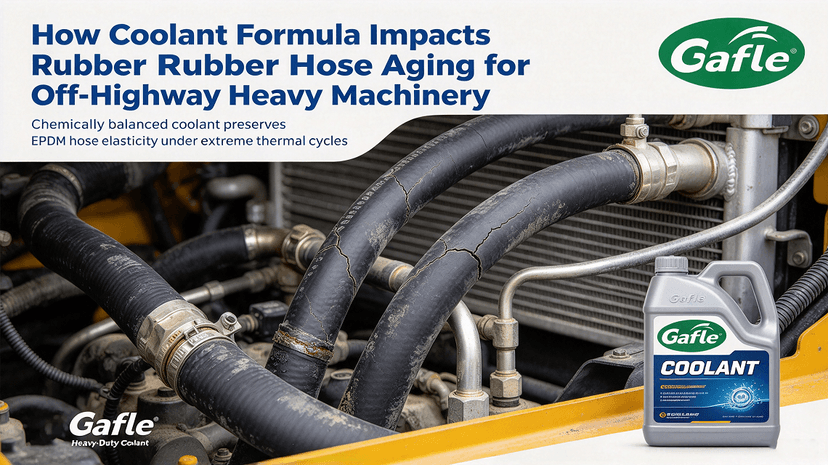
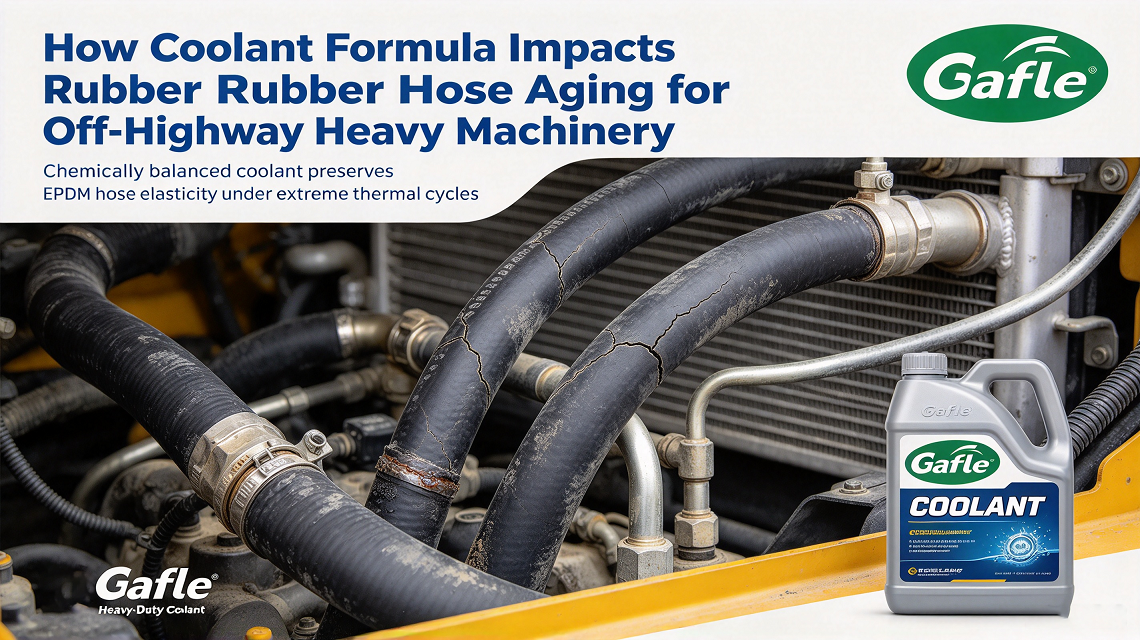
Rubber hoses in construction machinery are not passive bystanders. They are exposed to temperature cycling, pressure pulses, oxidation, and whatever the coolant itself carries—glycols, inhibitors, acids, and trace contamination. Over time, the wrong combination can change hose flexibility, surface condition, and long-term durability. This is the practical side of the question many teams ask in different words: how does coolant affect rubber hose for construction machinery?
The answer is usually not dramatic in the short term. A hose rarely fails because of one bad fill. More often, aging is cumulative. A coolant that degrades faster than expected, runs outside its intended service window, or mixes poorly with top-off fluid can create deposits and chemical conditions that shorten hose life. Heat accelerates the process. So does neglect, especially in machines where maintenance is irregular and fluid checks happen only when something already looks wrong.
What to watch for in heavy-duty service
Field equipment typically needs a heavy-duty cooling strategy, not a generic passenger-vehicle mindset. That means paying attention to compatibility with engine materials, the operating temperature range, and the expected interval between drains or top-offs. It also means watching hose condition during routine inspection rather than waiting for a leak.
Signs that coolant and rubber are not getting along may include hardening, softening, swelling, surface cracking, or a sticky residue around hose ends and clamps. None of these are automatic proof of a coolant problem, but they are enough to justify a closer look at fluid condition and replacement history.
Heavy machinery antifreeze is not all the same
People often use “antifreeze” as a catch-all, but heavy machinery antifreeze is really a family of formulations with different inhibitor packages and service philosophies. Some are designed for longer service life. Others prioritize simpler field use or compatibility with particular engine designs. The label alone does not tell the whole story.
For buyers, the key is to match the coolant to the machine population and the maintenance culture around it. A fleet with disciplined fluid management can usually support a more specific chemistry strategy. A mixed fleet, or one that lives in remote job sites, may need a more forgiving approach. Mixing coolant types without a plan is a common mistake and can create maintenance headaches that show up later as deposits, reduced protection, or hose deterioration.
Practical selection criteria for sourcing teams
When evaluating off-highway coolant, keep the discussion grounded in operating reality:
First, confirm material compatibility across the system, not just with the radiator. Hoses, gaskets, water pump components, and metal surfaces all matter.
Second, consider the temperature profile. A machine that idles, loads hard, and then shuts down repeatedly can stress coolant more than a unit that runs steadily.
Third, ask how the fluid will be serviced in the field. If top-off habits are inconsistent, the chemistry should be chosen with that risk in mind.
Fourth, treat contamination seriously. Dust, mixing errors, and water quality can affect performance and can indirectly accelerate rubber hose aging.
Common mistakes that shorten service life
The most common error is assuming all COOLANT products are interchangeable if the color looks similar. That is a shortcut, and usually a bad one. Color is not a specification. Another frequent problem is extending service too far because the machine is still running. “Still running” is not the same as “still protected.”
There is also the matter of overfocusing on engine internals while ignoring the soft components. A cooling system is only as durable as its weakest wear point, and hoses are often the first place small compatibility issues become visible. If a maintenance team is dealing with recurring hose replacements, it is worth asking whether the fluid strategy deserves some of the blame.
Buyer-facing takeaway
If you are choosing coolant for construction or other field equipment, look at the system as a whole. The right off highway coolant should support thermal control, corrosion protection, and long service life without quietly attacking rubber parts. That does not mean chasing the most complex formula on the market. It means choosing a fluid that fits the machine, the climate, and the maintenance discipline actually available on site.
For engineers and sourcing managers, the useful decision is not “which coolant is best in theory?” It is “which coolant will hold up in our machines, with our hoses, our service habits, and our operating conditions?” That narrower question usually leads to better outcomes—and fewer surprise failures when the equipment is far from the shop.
FAQ
Does coolant always damage rubber hoses?
No. A properly matched coolant is expected to work with hose materials. Problems usually come from degradation, contamination, mixing, or neglected service intervals.
Can coolant really influence hose aging?
Yes. Temperature, chemical stability, and additive behavior all play a role in how rubber hoses age over time.
What should a buyer ask before switching coolant?
Check compatibility across the full cooling system, review service practices, and make sure the new fluid suits the machine’s duty cycle and climate.
Next step
If your fleet is seeing repeated hose issues, or if you are standardizing fluids across mixed equipment, review the coolant specification alongside hose material compatibility before the next fill. A small amount of upfront checking can prevent a lot of expensive roadside or jobsite troubleshooting later.
Welcome to contact GAFLE for more information & cooperation!
peter
ZHEJIANG GAFLE AUTO CHEMICL CO.,LTD
Tel:86-579-8222 1665
Fax:86-579-8246 4690
Cel/Wechart:86-13335993986
E-mail:peter@gafle.net
Web:www.gafle.net