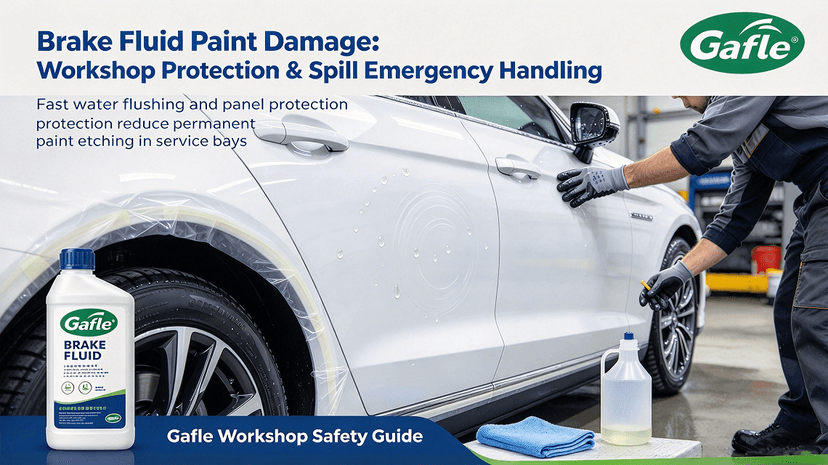
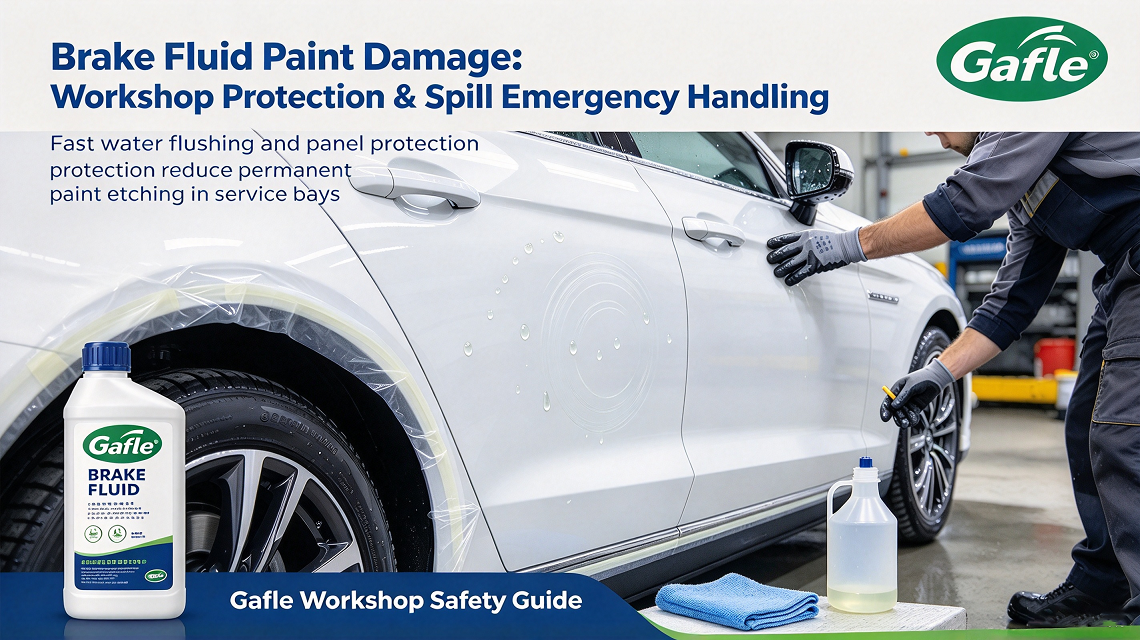
Why brake fluid on painted surfaces deserves immediate attention
Brake fluid is one of those workshop liquids that seems harmless until it lands on a fender, door edge, or freshly refinished panel. Then the real issue becomes obvious: brake fluid can soften, stain, or lift automotive paint if it is left in place. For anyone handling brake service, the question is not whether a spill can happen, but how quickly and calmly it gets dealt with. That matters to technicians, body shop staff, fleet maintenance teams, and even owners doing their own maintenance at home.
A small brake fluid spill may look like a minor nuisance at first. The trouble is that the damage can escalate fast, especially on modern clearcoat systems and on repainted surfaces that may be more vulnerable than factory finishes. If you are trying to protect a vehicle’s appearance and avoid a second repair bill, the response window is short.
What makes brake fluid so aggressive on paint
Most discussions about brake fluid focus on braking performance, moisture absorption, and service intervals. Those are important, but they are not the only concerns. Brake fluid is hygroscopic, which means it absorbs water from the air. It is also chemically active enough to attack certain coatings. When it sits on paint, it can begin to dull the surface, leave a hazy mark, or cause more visible paint damage if the spill is not removed promptly.
The risk is especially high when the spill happens on warm body panels, on older paint systems, or near edges where the coating is thinner. Freshly painted vehicles and repaired panels can be even more sensitive. That is why body shops often treat brake fluid handling as both a mechanical and cosmetic risk.
What to do first after a brake fluid spill on paint
The practical rule is simple: act immediately, but do not make the situation worse. If you are wondering how to clean brake fluid spill on paint, start with a gentle rinse using clean water if the area is accessible. Then blot, do not rub, with a clean microfiber cloth. Rubbing can spread the fluid and grind contaminants across the finish.
After the initial rinse, wash the area with a mild automotive soap and water. Dry it carefully. If the spill was minor and removed quickly, the finish may recover with no lasting trace. If any dulling or discoloration remains, that is a sign the coating has already been affected and a more careful paint correction process may be needed. At that point, force is a bad strategy.
Things to avoid
Do not reach for harsh solvents unless a paint professional recommends them. Do not use abrasive pads. Do not let brake fluid dry while you finish another task. And do not assume that a quick wipe with a dirty shop rag counts as cleanup. In practice, that is how a small spill becomes a larger refinishing job.
How workshop teams reduce the risk
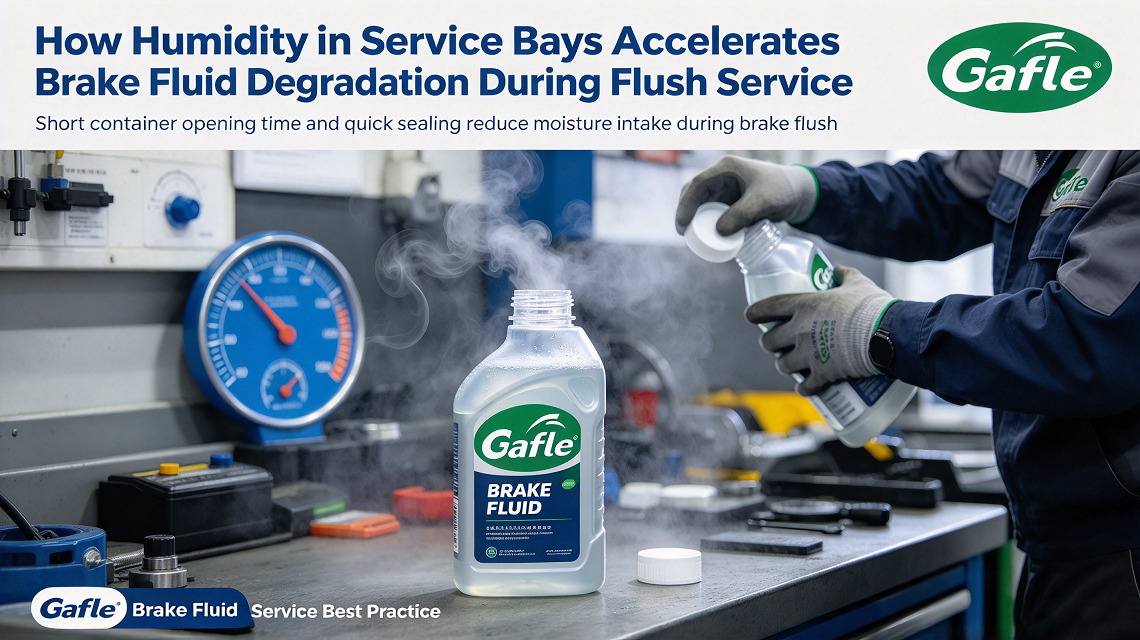
Good workshop safety for brake fluid handling is mostly about discipline and layout. Keep caps on containers when they are not in use. Use funnels and catch cloths during filling and bleeding. Protect adjacent panels with clean covers when working in tight engine bays. These are small habits, but they reduce the odds of a spill landing where it should not.
It also helps to train technicians to recognize the difference between brake fluid and other shop liquids. Some fluids are less aggressive on paint, which can create a false sense of security. Brake fluid is not one to treat casually. A quick spill response procedure should be part of the normal brake service workflow, not an afterthought.
Common mistakes that lead to bigger damage
One common mistake is waiting to see whether the stain will disappear on its own. Another is using too much water pressure and driving fluid into seams or trim gaps. A third is assuming that factory paint and aftermarket paint behave the same way; they often do not. Refinished panels can be less forgiving, and that is worth keeping in mind when a vehicle has already seen collision work.
There is also a documentation angle in fleet and dealership environments. If a spill occurs during service, record it promptly and note the response taken. That may sound bureaucratic, but it creates accountability and helps separate pre-existing paint issues from service-related ones.
Buyer and service team takeaways
For sourcing managers and workshop leaders, the issue is not just cleaning products. It is process control. Brake service work should assume that a spill can happen and plan for it. That means having absorbent cloths available, clear cleanup steps posted, and staff who understand that paint damage can begin before anyone notices visible discoloration.
If you are evaluating service practices, ask a simple question: how fast can the team respond to a brake fluid spill on paint without guessing? That answer usually tells you more than a long list of equipment.
When to stop and seek refinishing advice
If the paint is already soft, visibly etched, or peeling, standard wash-and-wipe cleanup will not be enough. At that stage, a body shop or refinishing specialist should assess the panel. The sooner that happens, the better the odds of limiting the repair to a localized correction rather than a full respray.
Brake fluid is common, but the damage it can cause is not trivial. Quick action, careful handling, and a realistic view of what the coating can tolerate make the difference between a minor incident and a cosmetic repair that should have been avoidable.
Welcome to contact GAFLE for more information & cooperation!
peter
ZHEJIANG GAFLE AUTO CHEMICL CO.,LTD
Tel:86-579-8222 1665
Fax:86-579-8246 4690
Cel/Wechart:86-13335993986
E-mail:peter@gafle.net
Web:www.gafle.net