Why brake fluid moisture matters more than many shops admit
Brake fluid moisture is one of those small shop-floor problems that can quietly become a big one. A brake system may leave a bay feeling solid and ready to go, yet a few percent of water absorbed into the fluid can change how that system behaves under heat, during long downhill braking, or after months of service in a humid climate. For engineers, sourcing teams, and service managers, the real question is not whether brake fluid is hygroscopic—that is well known. The question is how moisture gets in, how much risk it creates, and what controls actually prevent it.
That matters because brake fluid is not just a consumable. It is part of the safety chain. If moisture content climbs, boiling point drops, corrosion risk rises, and service intervals become less predictable. In practice, the issue often shows up not as a dramatic failure, but as inconsistent pedal feel, fluid discoloration, or premature maintenance complaints that are expensive to chase down.
Quick takeaways for buyers and shop managers
The central decision is simple: treat brake fluid handling as a contamination-control process, not a pouring task. The fluid can be compromised during storage, transfer, and especially during service operations that expose it to air for too long. A clean drum is not enough if the dispensing equipment, open container time, or ambient conditions are poorly controlled.
Three practical realities tend to drive most problems: humidity in the workshop, repeated opening of containers, and poor flush discipline. These are mundane causes, which is exactly why they are overlooked.
How moisture enters brake fluid during flush and service work
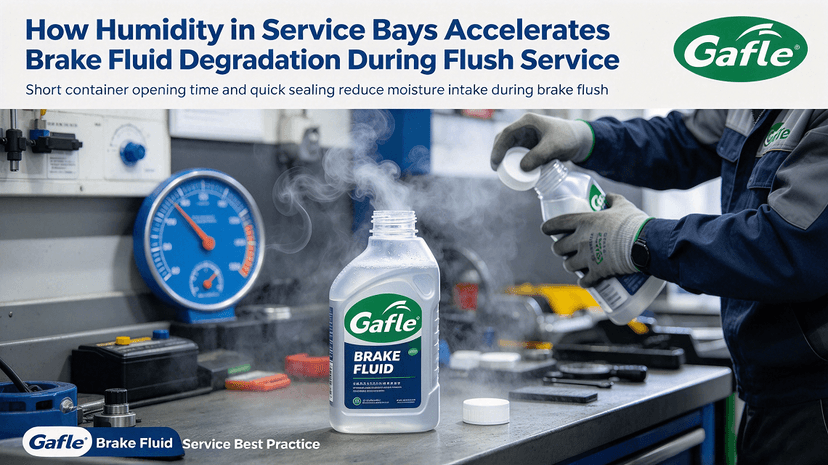
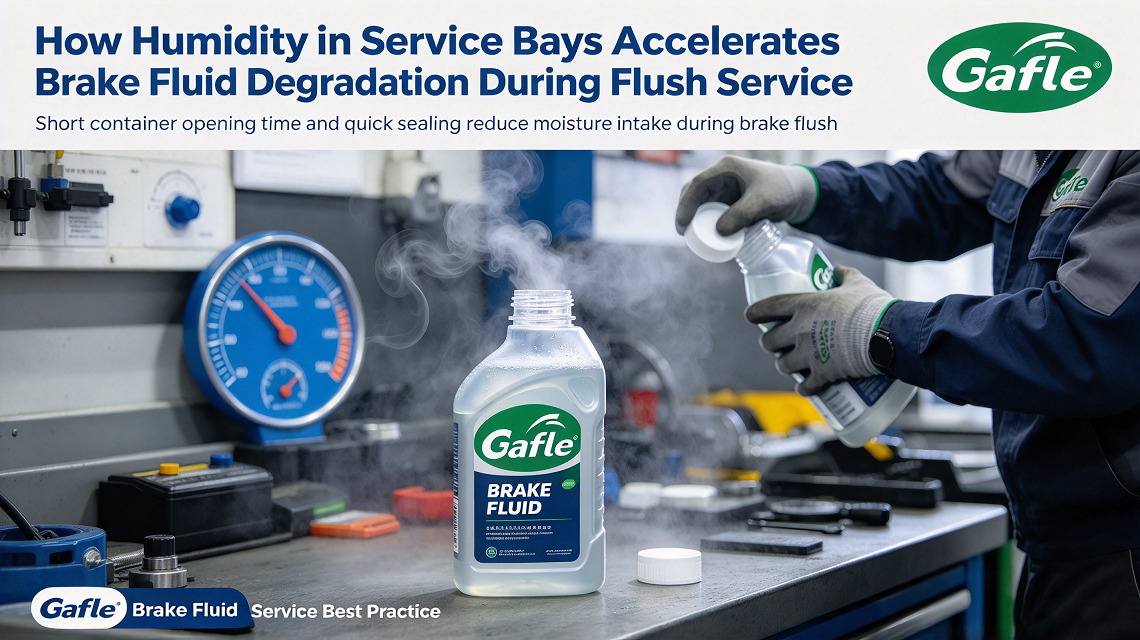
When people ask how moisture enters brake fluid during flush, the answer is usually a combination of exposure and time. Brake fluid readily absorbs water from the surrounding environment. During a flush, the fluid may be sitting in an open reservoir, moved through hoses and bottles, or held in temporary containers while the system is bled. Each of those steps creates an opportunity for moisture pickup.
Air exchange is the quiet culprit. Every time a container is opened, humid air gets in. Every time a hose or bottle is left uncapped, the fluid has more surface area exposed. If the job runs long, the effect compounds. Even when the flushed-out fluid is discarded, the new brake fluid can still be contaminated before it ever reaches the vehicle.
Workshop conditions are not neutral
High workshop humidity contaminate new brake fluid more easily than many teams expect. On hot, damp days, open handling becomes riskier. A fluid container that seems harmless on a dry morning can behave differently by afternoon if the bay is warm and air movement is constant. This is especially relevant in fleets and multi-bay service centers where containers may be opened repeatedly across shifts.
That does not mean every humid shop is doomed to contamination. It does mean the margin for sloppy handling gets very thin.
What moisture does inside the brake system
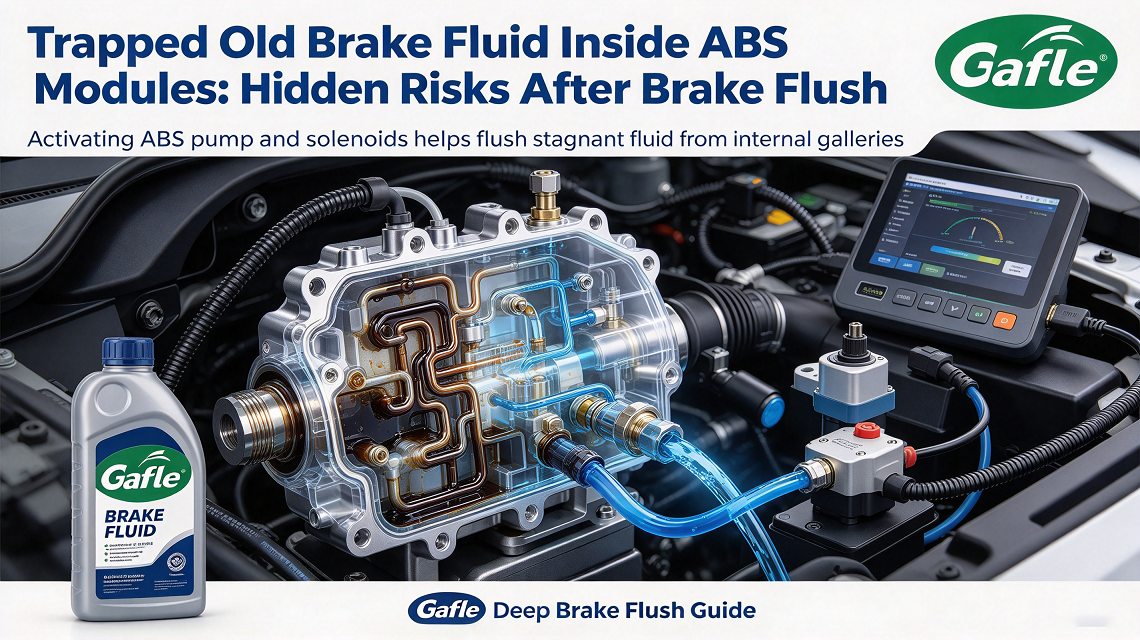
Water in brake fluid lowers boiling resistance. Under hard braking, that can contribute to vapor formation and a spongy pedal. Long before that, moisture can promote internal corrosion in master cylinders, calipers, wheel cylinders, ABS components, and lines. The damage is often uneven, which makes diagnosis frustrating. One vehicle may return with a complaint while another, treated the same way, seems fine for months.
There is also a maintenance angle. Moisture-heavy fluid ages faster, so service intervals based only on mileage can miss what time and climate are doing to the system. For fleet operators, that can turn into unexpected downtime. For OEM and aftermarket sourcing teams, it becomes a quality perception issue even when the root cause sits in the field.
Common mistakes that lead to flush contamination
Flush contamination usually does not come from one dramatic error. It comes from a series of small ones: leaving caps off too long, reusing questionable transfer bottles, storing opened containers near dirty tools, or using fluid from a container that has already been sitting in a humid room. A rushed bleed procedure can make things worse, especially if technicians pause mid-job and return later to an open reservoir.
A practical caution: if a shop treats brake fluid like oil or washer fluid, it will probably handle it too casually. That assumption costs money later.
What good contamination control looks like
Better handling does not require elaborate equipment in every case, but it does require discipline. Keep containers sealed until use. Minimize open time. Use clean, dedicated transfer tools. Train technicians on moisture pickup as part of flush work, not as a separate chemistry lesson. In higher-volume operations, it is worth reviewing storage layout, container rotation, and the time fluid spends exposed during service.
For buyers, the selection criteria should include more than brand and price. Ask how the fluid will be stored, whether the shop has a standard flush process, and whether the environment is controlled enough to preserve fluid integrity. Those questions sound operational, but they are really product-quality questions in disguise.
FAQ: a few questions worth asking before the next flush
Is fresh brake fluid always safe to use?
Not necessarily. Fresh fluid can still pick up moisture if it is handled poorly after opening.
Does a short service job eliminate contamination risk?
No. Even short exposure can matter in humid conditions, especially if the workflow is interrupted.
Should workshops monitor humidity?
If brake work is frequent, it is a sensible control point. It will not solve everything, but it helps explain when handling risk is higher than usual.
What to do next
If your team is seeing repeat brake complaints, uneven flush results, or premature fluid replacement, start by auditing handling steps rather than blaming the vehicle first. Look at container discipline, time open to air, bay humidity, and the actual flush procedure used in the shop. The most useful fix is often boring: fewer open containers, cleaner transfer tools, and a process that assumes brake fluid moisture will increase the moment the seal is broken.
Welcome to contact GAFLE for more information & cooperation!
peter
ZHEJIANG GAFLE AUTO CHEMICL CO.,LTD
Tel:86-579-8222 1665
Fax:86-579-8246 4690
Cel/Wechart:86-13335993986
E-mail:peter@gafle.net
Web:www.gafle.net