Why brake fluid rubber damage matters more than many buyers expect
Brake fluid rubber damage is one of those issues that looks minor right up until a seal swells, a hose softens, or a cylinder starts leaking. For engineers, sourcing managers, and maintenance teams, the problem is not just whether a fluid can move through a brake system today. It is whether it can stay compatible with elastomers, hoses, and painted surfaces over the long run, under heat, moisture, and repeated cycling.
That matters because brake systems are built around tight material compatibility. A fluid that works on paper but attacks seals in service can lead to pressure loss, higher maintenance cost, and avoidable warranty claims. It can also create secondary damage: brake fluid corrosion on nearby metal parts and brake fluid car paint damage if a spill is not handled quickly. The decision this article helps with is simple but important: how to judge brake fluid compatibility risk before choosing, specifying, or servicing a system.
First principle: not all rubber behaves the same
When people ask, does brake fluid harm rubber components, the honest answer is that it depends on the fluid chemistry and the rubber formulation. Brake systems use different elastomers for seals, cups, hoses, and grommets, and those materials do not all respond the same way. Some are designed for glycol-based brake fluids, while others are used in applications where mineral oil or other hydraulic media are present.
The practical point is this: compatibility is not just “rubber versus chemical.” It is fluid, temperature, time, and the exact compound in the part. A component may appear fine after a short exposure but still harden, swell, or lose mechanical strength after months in service. That is why purchasing a generic “rubber-safe” component without checking media compatibility is a bad shortcut.
What brake fluid can do to elastomers and nearby surfaces
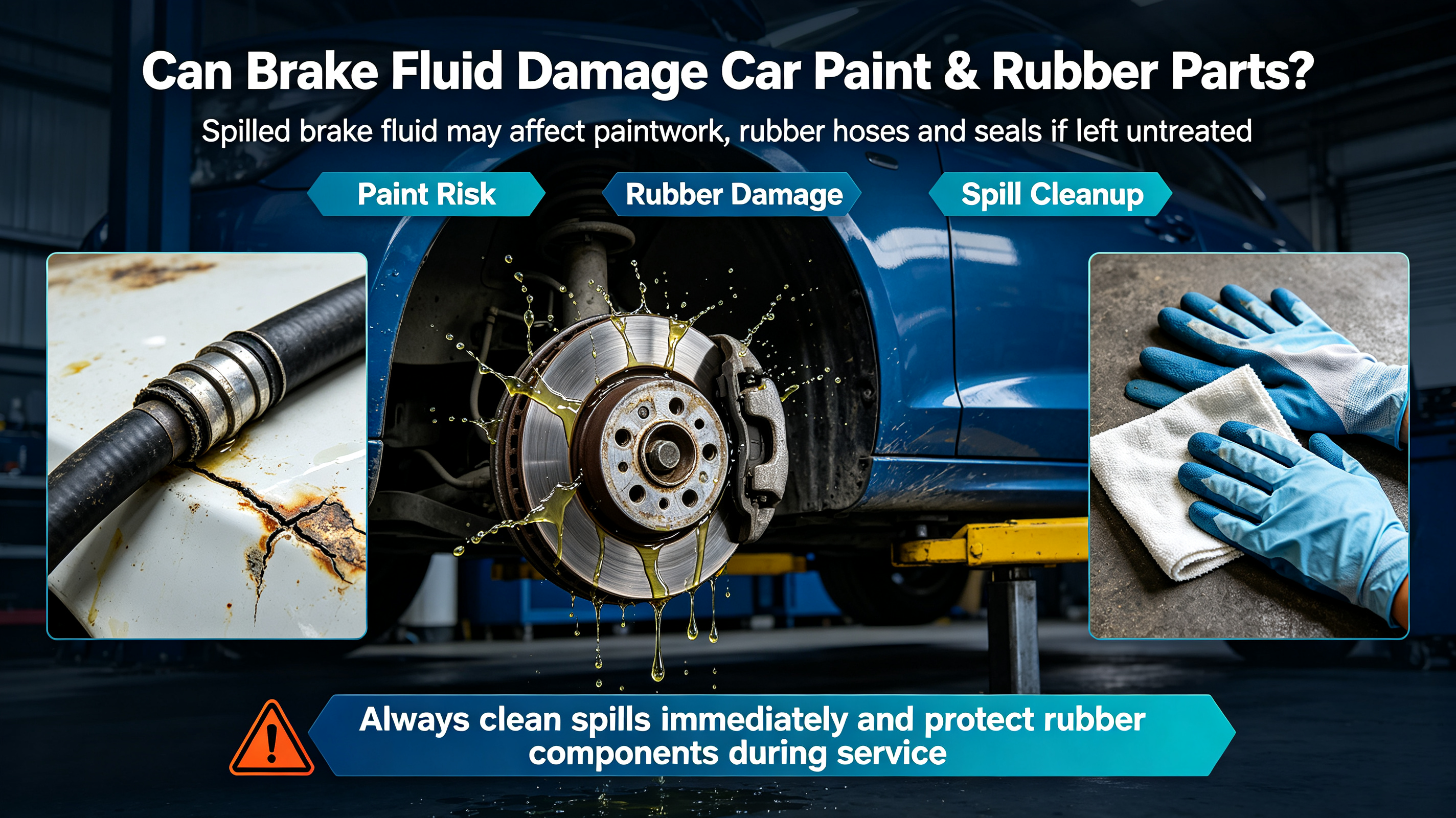
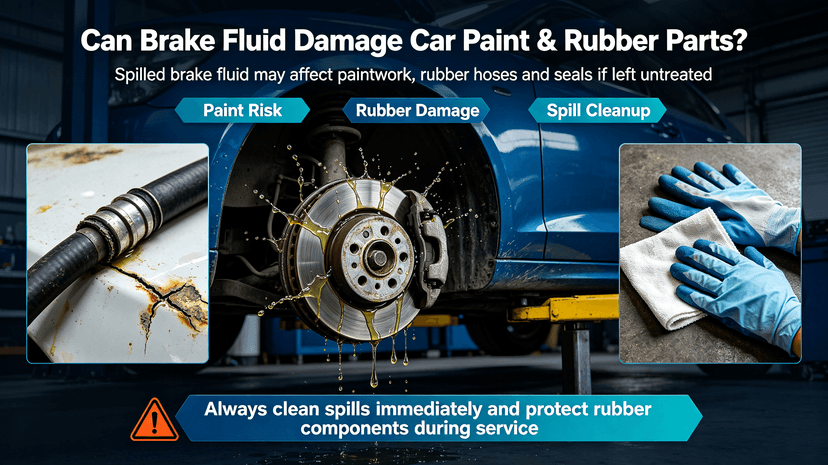
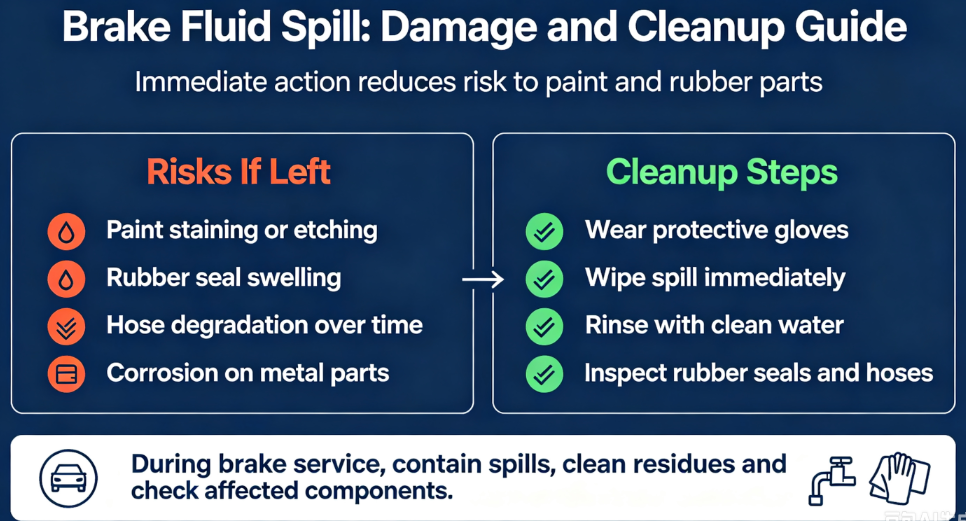
In field use, brake fluid rubber damage usually shows up in a few recognizable ways. Seals can swell and lose shape. Flexible hoses can soften or blister. External contamination can leave a sticky film that attracts dirt. If the spill sits too long, the fluid may also affect painted surfaces and some plastics.
There is also the less visible issue of brake fluid corrosion. Many brake fluids are hygroscopic, meaning they can absorb moisture over time. That moisture does not belong in the system. It can contribute to corrosion inside cylinders, lines, and fittings, especially when maintenance intervals are stretched or the fluid is contaminated.
For buyers, the caution is straightforward: chemical compatibility and corrosion resistance are linked, but they are not the same question. A material that survives brief contact may still fail the full service environment.
Quick-reference view: what to check before specifying or servicing
1. Fluid type
Confirm whether the system uses a glycol-based brake fluid or another hydraulic medium. Do not assume interchangeability.
2. Rubber compound
Verify that seals, boots, and hoses are formulated for the chosen fluid. Supplier data sheets matter here, even if they are not exciting reading.
3. Temperature exposure
Heat can accelerate swelling, softening, and degradation. A material that looks acceptable at room temperature may behave differently in a hot wheel-end environment.
4. Exposure time
Short spills and long-term immersion are very different conditions. Compatibility claims should match real operating exposure.
5. Cleanability
If there is a spill, the question becomes how to clean brake fluid off car paint without making the problem worse. Quick action matters more than aggressive scrubbing.
Common mistakes that create avoidable damage
The first mistake is treating all rubber components as universal. They are not. The second is assuming a part that survives installation will survive the whole lifecycle. The third is ignoring contamination on painted or coated surfaces because the spill looks small. That is often where the damage starts.
Another common miss is poor housekeeping during maintenance. Brake fluid left on a caliper, frame rail, or body panel can migrate into seams and finish defects. If a technician asks how to clean brake fluid off car paint, the safest answer is usually to remove it quickly with plenty of clean water and a mild wash, then inspect the finish. Rubbing a dry spill hard into paint is the wrong instinct.
How to evaluate compatibility with less guesswork
For sourcing and engineering teams, the best method is boring but effective: match the fluid specification to the elastomer family, then verify with the supplier’s material data. If the application is safety critical, ask for compatibility information tied to the exact part geometry and service conditions, not just a generic statement.
It also helps to think in terms of failure mode. Are you worried about seal swelling, hardness change, external surface attack, or corrosion around the system? Different concerns may point to different materials, coatings, or maintenance intervals. That keeps the discussion from becoming vague very quickly, which is a common trap in cross-functional meetings.
Practical buyer advice for brake-system components
When sourcing parts, look beyond the headline description. Ask what the rubber compound is intended to resist, whether the part is designed for occasional splash exposure or continuous contact, and whether the supplier can separate claim language from real application limits. If you are buying for multiple platforms, standardizing on one supposedly “good enough” seal or hose can backfire if the vehicles do not share the same fluid or temperature profile.
For maintenance and service teams, keep spill response basic and fast. Wipe, flush, inspect, and do not wait until the next shift if the fluid is on paint or around rubber components. Small delays are what turn a cleanup issue into a replacement job.
FAQ: short answers to common questions
Does brake fluid harm rubber components?
It can, if the rubber is not formulated for that fluid or if exposure is prolonged. Compatibility is material-specific.
Is every sign of softening a failure?
Not always, but swelling or loss of shape in a critical seal should be treated seriously. In brake systems, “probably fine” is not a great maintenance strategy.
Can brake fluid damage paint?
Yes. Brake fluid car paint damage can happen if the spill is left on the surface too long, especially on finished panels.
What to do next
If you are specifying brake components, auditing a service process, or evaluating supplier materials, start with fluid compatibility and elastomer selection before cost comparisons. That order saves time later. The wrong seal or hose is still the wrong part, even if it is inexpensive.
For teams trying to reduce warranty risk, the safest path is a simple one: verify the fluid, verify the rubber, and treat every spill as a surface-protection issue as well as a maintenance issue. In brake systems, material compatibility is not an optional detail. It is the difference between stable performance and a repair ticket that should never have happened.
Welcome to contact GAFLE for more information & cooperation!
peter
ZHEJIANG GAFLE AUTO CHEMICL CO.,LTD
Tel:86-579-8222 1665
Fax:86-579-8246 4690
Cel/Wechart:86-13335993986
E-mail:peter@gafle.net
Web:www.gafle.net