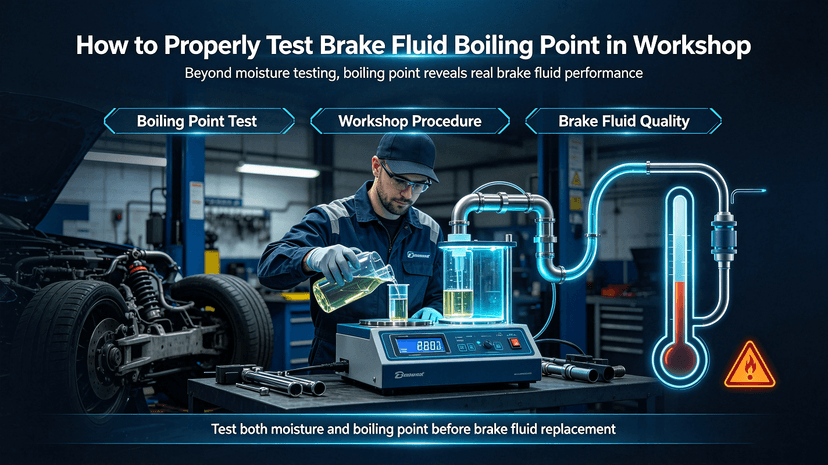
Why a brake fluid boiling point test matters
A brake fluid boiling point test is one of those shop-floor checks that sounds routine until a vehicle comes back with a soft pedal, warning lights, or longer stopping distances than anyone expected. For service teams, fleet managers, and parts buyers, the test helps answer a simple but important question: is the fluid still fit for hard braking, hot weather, and everyday stop-start use?
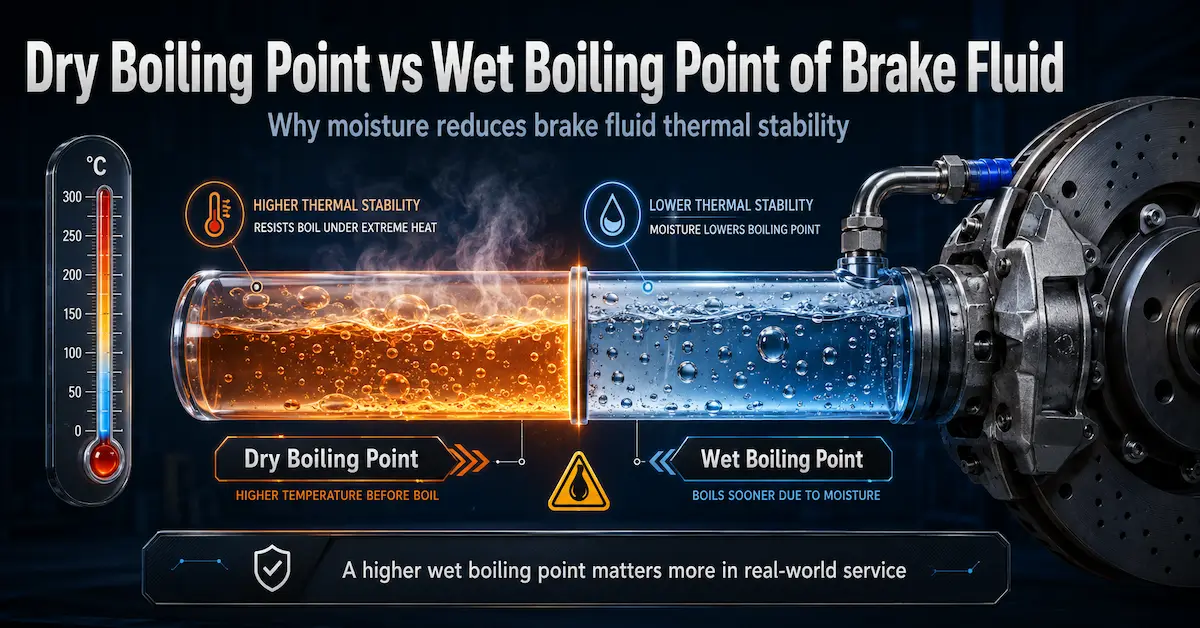
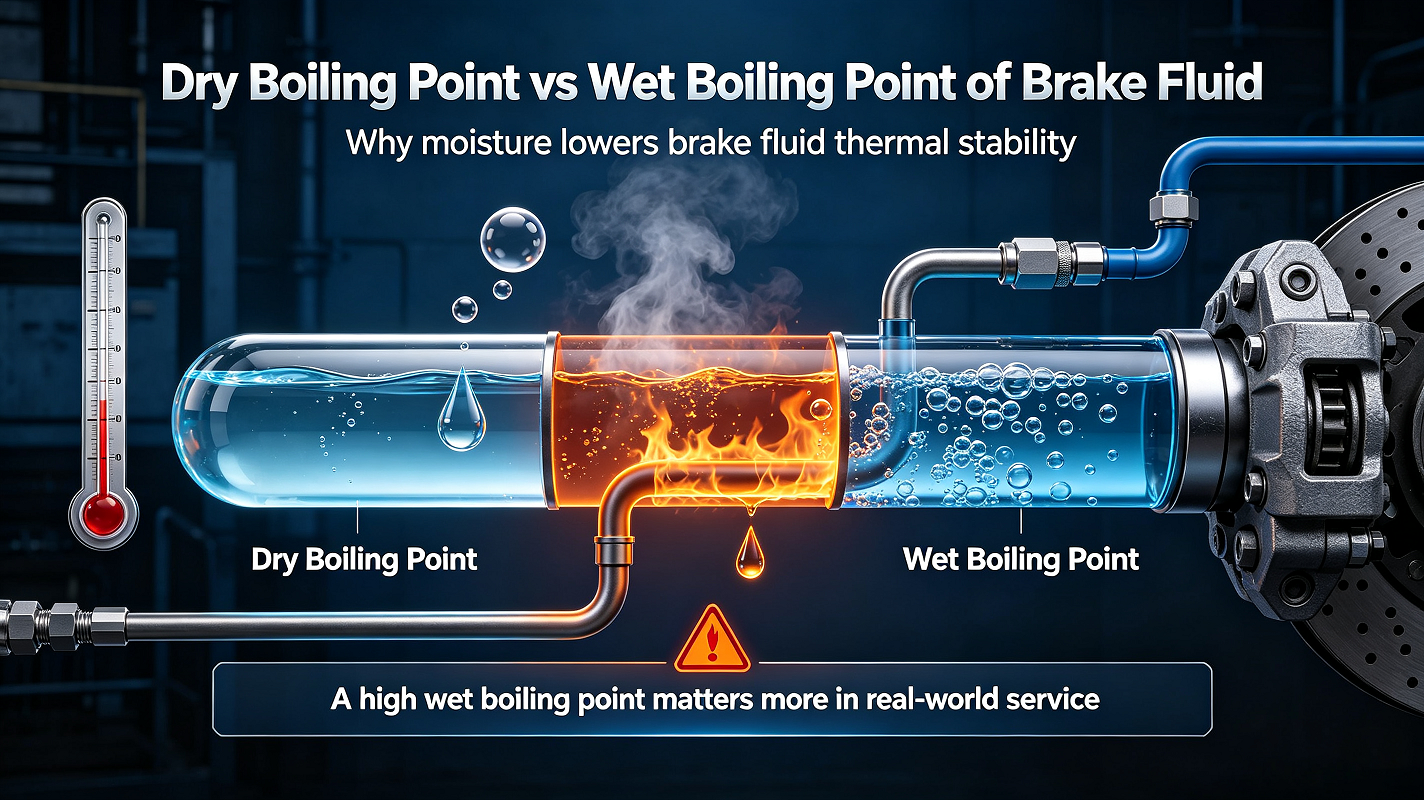
Brake fluid does not just move pressure through the hydraulic system. It also lives close to heat, moisture, and contamination. Over time, that environment can lower the fluid’s boiling point. When the fluid gets too hot, vapor bubbles can form. Unlike liquid, vapor compresses, and that is when pedal feel changes and braking performance becomes less predictable.
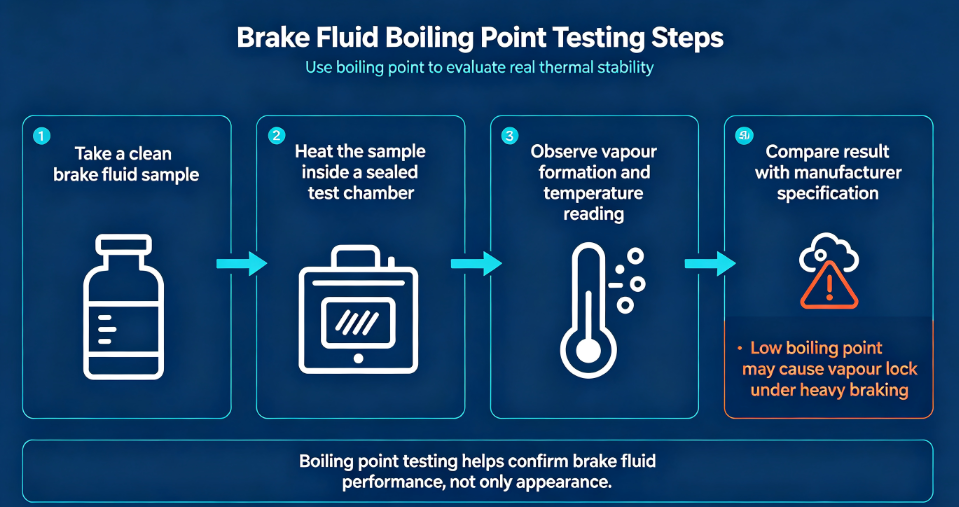
What the test tells you
The practical value of a brake fluid quality test is not only in the number itself, but in the maintenance decision it supports. A high reading suggests the fluid can still tolerate heat exposure. A poor reading suggests the vehicle may need fluid service sooner rather than later, especially if it sees towing, mountain driving, delivery duty, or repeated hard stops.
In many workshops, the result is used alongside visual checks and service history. That is sensible. Brake fluid can look acceptable and still have absorbed enough moisture to reduce thermal margin. A brake fluid inspection without any test method can miss the issue entirely.
How workshop testing is typically approached
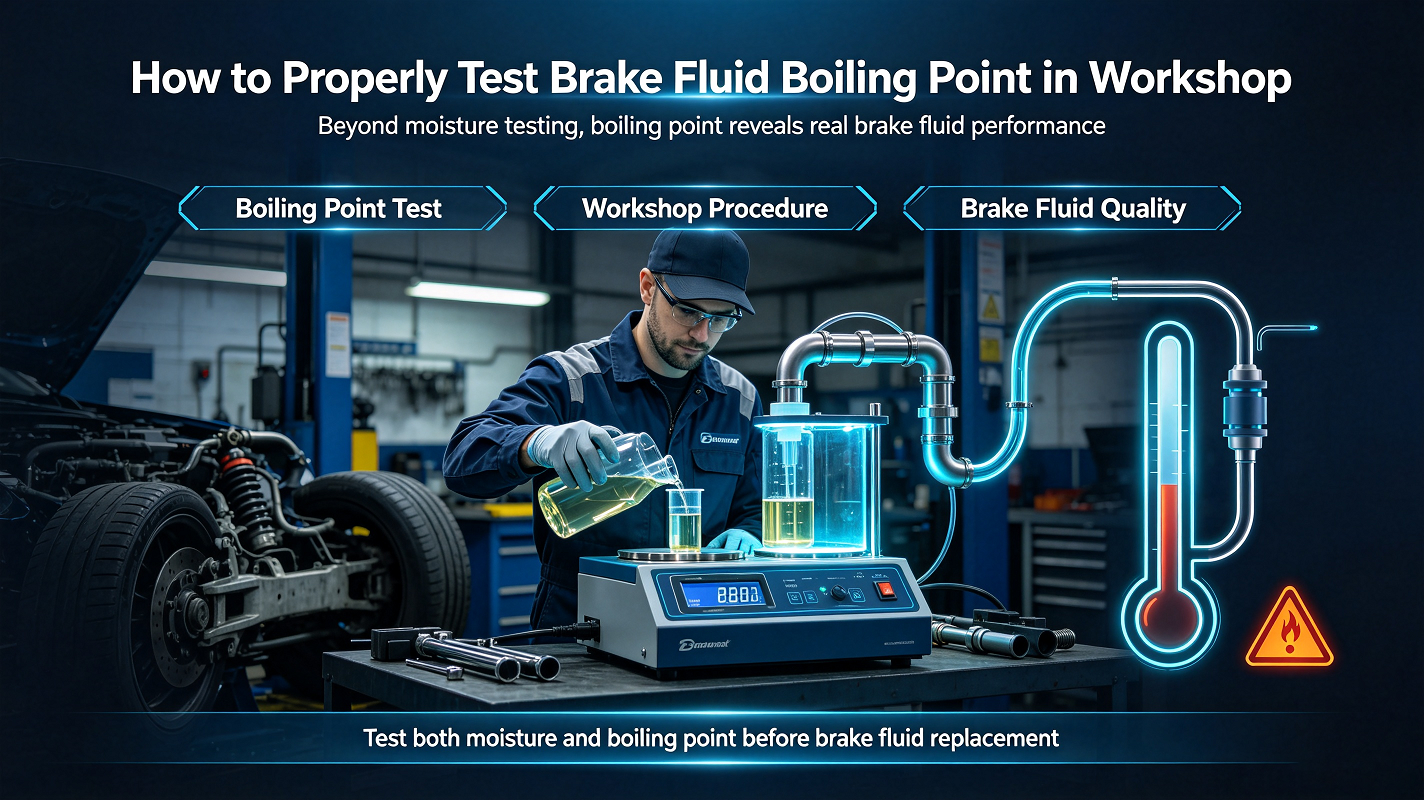
The exact method depends on the equipment in use, but the broad idea is consistent. A brake fluid workshop test measures how the fluid behaves under heat or estimates its condition based on moisture content and conductivity. A dedicated brake fluid tester may be handheld and designed for quick checks at the service bay, while more advanced setups can provide a more controlled reading.
Common shop uses
Most users rely on the test for one of three reasons: routine maintenance, diagnosis of suspected fluid degradation, or pre-service confirmation before a long-haul or high-load operating period. In fleet work, that last one matters more than people admit. A truck, van, or utility vehicle may not show obvious symptoms until it is already under heat stress.
What affects brake fluid boiling performance
Several factors can lower the margin between safe operation and boiling. Moisture absorption is the most widely known. Brake fluid is hygroscopic by nature, which means it tends to absorb water over time. That is not a defect in itself; it is simply part of how most brake fluids behave. The trouble starts when the absorbed moisture drags the boiling point down.
Contamination is another concern. Dirt, service debris, or mixing incompatible fluids can complicate the reading and the real-world behavior of the system. A contaminated system may need more than fluid replacement. That is where a careful inspection of seals, reservoir condition, and service records becomes useful.
Buyer considerations for workshop teams
If you are choosing a testing method or tool, think about how the result will be used. A service advisor needs a quick, explainable readout. A maintenance department may care more about consistency across a fleet. An engineering team may want repeatable data that can support internal standards or service intervals.
Do not overstate what the test can prove. A single result is not a full brake system diagnosis. Pads, rotors, calipers, hose condition, and ABS-related faults still matter. The test is best treated as one useful signal in a broader service picture.
Common mistakes to avoid
One frequent mistake is treating a low reading as proof that fluid alone is the problem. That can be true, but not always. Another is ignoring the service environment. Vehicles used in humid climates or severe-duty applications often need more attention than low-mileage passenger cars.
It is also a mistake to perform a brake fluid inspection and then stop there if the fluid is questionable. If the point of the check is to support a maintenance decision, the next action should be defined in advance: flush, monitor, re-test, or escalate to a fuller brake inspection.
Practical takeaways for sourcing and maintenance teams
For sourcing managers and workshop leads, the real decision is not whether the test is useful. It is how to build it into a maintenance process that people will actually follow. Keep the procedure simple, use the same testing logic across sites when possible, and make sure technicians understand what the result means in the context of vehicle duty cycle.
If your operation handles mixed fleets, write the action threshold down internally rather than relying on memory. That small bit of discipline can prevent uneven service decisions between bays or branches.
FAQ
How often should brake fluid be tested?
There is no universal interval that suits every vehicle. Usage severity, climate, and service history matter. Vehicles in harder duty cycles should be checked more frequently.
Does a low boiling point always mean the fluid must be replaced?
Not automatically, but it is a strong warning sign. The right next step depends on the vehicle’s workload, fluid age, and overall brake system condition.
Can a handheld tester be enough?
For routine workshop screening, often yes. For deeper diagnostics or fleet records, a more controlled process may be preferable.
Next step
If you are building a brake service routine, start with a clear testing method, a written response to failed results, and a technician-friendly workflow. A good brake fluid tester does not replace judgment, but it gives the shop a better basis for one of the most safety-sensitive maintenance decisions on the vehicle.
Welcome to contact GAFLE for more information & cooperation!
peter
ZHEJIANG GAFLE AUTO CHEMICL CO.,LTD
Tel:86-579-8222 1665
Fax:86-579-8246 4690
Cel/Wechart:86-13335993986
E-mail:peter@gafle.net
Web:www.gafle.net