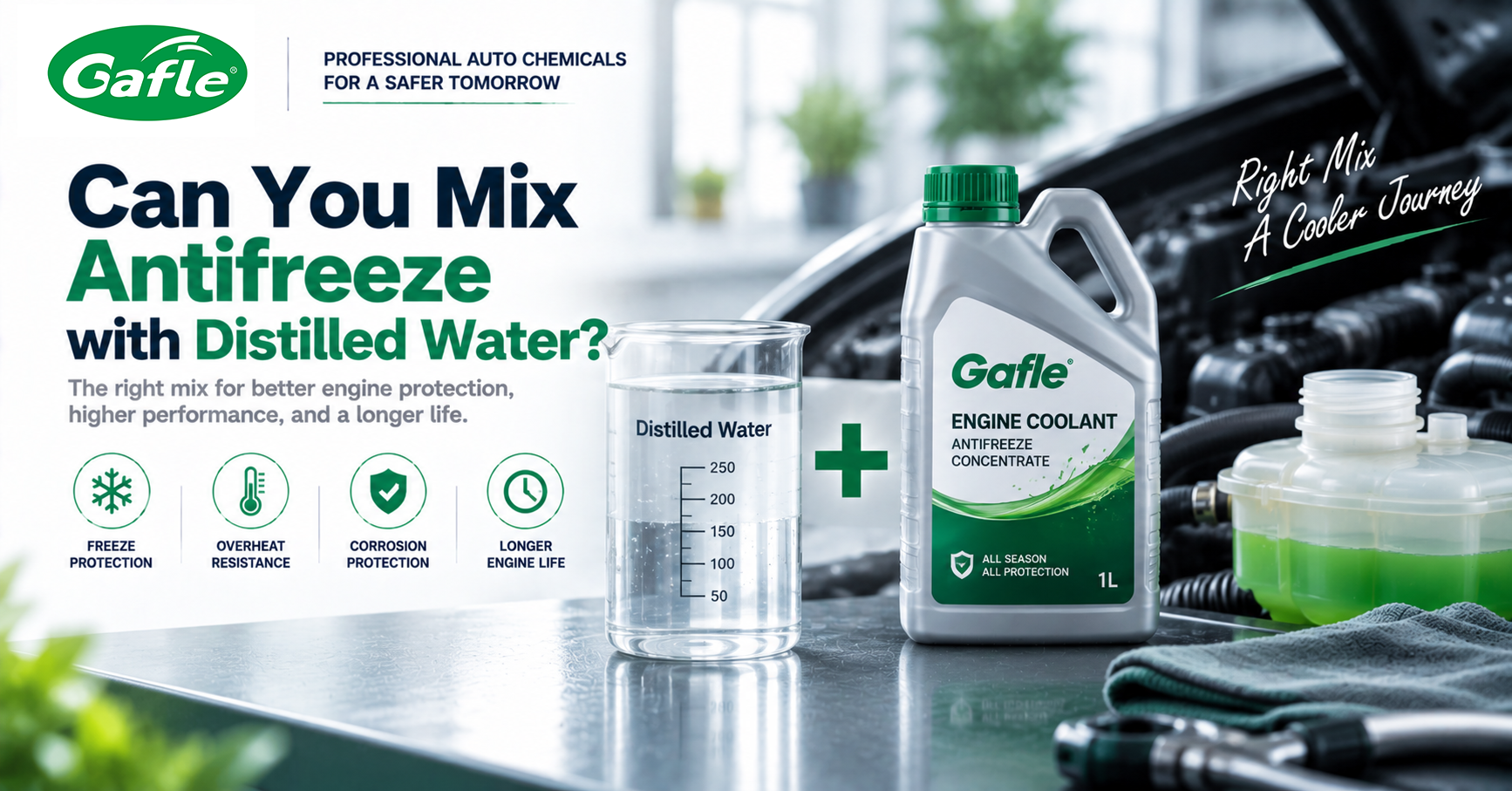
 Can You Mix Antifreeze with Distilled Water?
Engine coolant plays a critical role in protecting your vehicle from freezing, overheating, corrosion, and premature engine wear. One of the most common questions asked by vehicle owners, distributors, and workshops is: Can You Mix Antifreeze with Distilled Water?
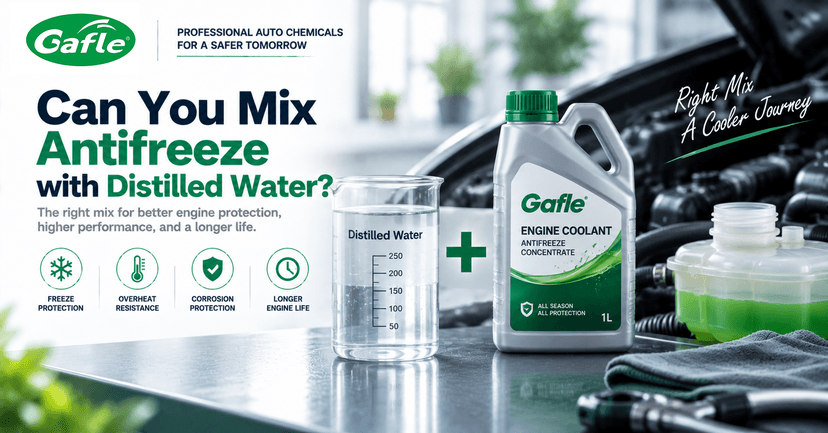
The short answer is yes—but only if you are using concentrated antifreeze that is designed to be diluted. Most coolant manufacturers recommend mixing concentrated antifreeze with distilled or deionized water, typically at a 50/50 ratio, because distilled water contains very few minerals that could otherwise cause scale buildup or corrosion inside the cooling system.
As a professional automotive fluid manufacturer with more than 20 years of manufacturing experience, Gafle supplies high-quality engine coolants and brake fluids to OEM customers, distributors, and automotive brands worldwide. This guide explains why distilled water is recommended, how to mix coolant correctly, and what buyers should know when choosing a reliable coolant supplier.
Why Is Distilled Water Recommended?
Water is an essential part of a coolant mixture because it improves heat transfer. However, not all water is suitable for use in an engine cooling system.
Distilled water has been purified to remove minerals such as calcium, magnesium, and iron. These minerals are commonly found in tap water and can accumulate inside radiators, water pumps, heater cores, and coolant passages over time.
Using distilled water helps:
- Reduce mineral deposits
- Improve cooling system cleanliness
- Protect the water pump
- Reduce corrosion
- Extend cooling system life
For these reasons, many vehicle manufacturers recommend distilled or deionized water when mixing concentrated coolant.
Can You Mix Antifreeze with Distilled Water?
The answer depends on the type of coolant you purchase.
Concentrated Antifreeze
Antifreeze Concentrate is designed to be mixed with water before use.
For most passenger vehicles, the recommended mixture is:
- 50% Antifreeze Concentrate
- 50% Distilled Water
This ratio provides an excellent balance of:
- Freeze protection
- Boil-over protection
- Corrosion resistance
- Efficient heat transfer
Some manufacturers recommend slightly different ratios for extremely cold climates, but 50/50 is the most common recommendation.
Premixed Coolant
Premixed coolant has already been blended with purified water at the factory.
It is ready to use and should not be diluted further, unless the manufacturer specifically instructs otherwise.
Adding extra water to premixed coolant can reduce its protective performance.
Why Not Use Tap Water?
Many people wonder whether ordinary tap water can replace distilled water.
Although tap water may work in some situations, it often contains dissolved minerals that can create long-term problems inside the cooling system.
Potential issues include:
- Scale buildup
- Mineral deposits
- Reduced heat transfer
- Corrosion
- Water pump wear
- Blocked coolant passages
These deposits can gradually reduce cooling efficiency and shorten the service life of engine components.
Why the Correct Mixing Ratio Matters
The ratio of antifreeze to water directly affects engine protection.
Freeze Protection
Too little antifreeze may reduce freeze protection in cold weather.
Boiling Protection
The correct mixture raises the coolant's boiling point, helping prevent overheating under heavy engine loads.
Corrosion Protection
Modern coolants contain additives that protect aluminum, steel, copper, and other cooling system materials.
The proper concentration helps these additives perform effectively.
Heat Transfer
A balanced mixture provides efficient heat transfer while maintaining chemical stability.
Using excessive antifreeze does not improve cooling performance and may actually reduce heat transfer efficiency.
How Gafle Ensures Coolant Quality
At Gafle, every coolant product is developed with a focus on performance, reliability, and long-term protection.
Professional Formula Development
Our engineering team develops coolant formulations that provide reliable freeze protection, corrosion resistance, and cooling efficiency.
Premium Raw Materials
Only carefully selected raw materials are used to ensure stable product performance.
Advanced Laboratory Testing
Each production batch undergoes comprehensive laboratory testing, including:
- Freeze protection
- Boiling protection
- Corrosion resistance
- pH stability
- Material compatibility
- Appearance inspection
Strict Quality Control
From raw material inspection to finished product testing, every manufacturing stage follows standardized quality management procedures to ensure consistent quality.
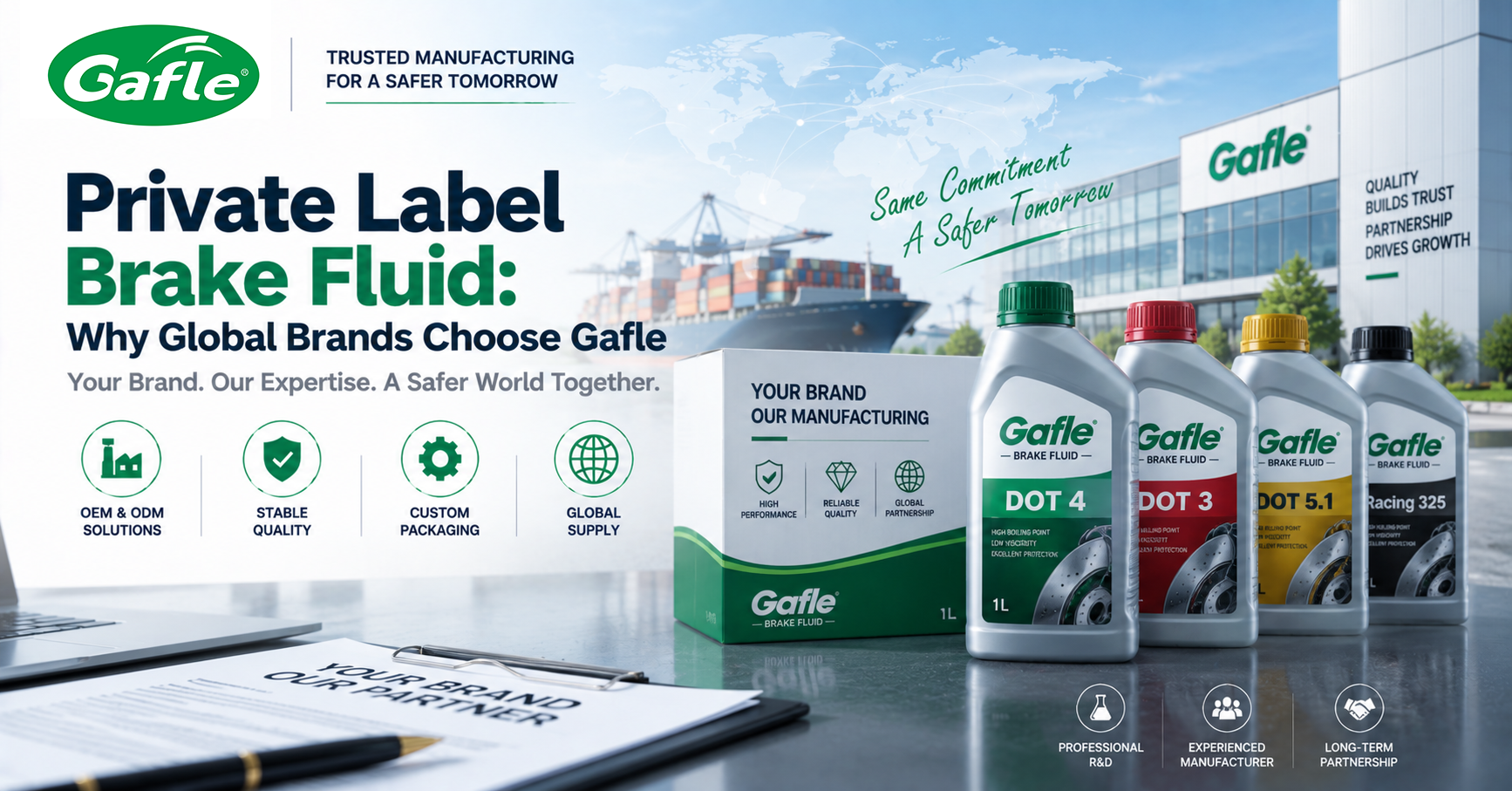
OEM & Private Label Support
Gafle offers complete OEM and private label coolant solutions, including:
- Customized formulations
- Bottle customization
- Label design
- Carton packaging
- Technical documentation
How to Choose a Reliable Coolant Manufacturer
Selecting the right Coolant Manufacturer is just as important as choosing the correct coolant.
A reliable supplier should provide:
- Professional laboratory facilities
- Formula development capability
- Strict quality management
- Stable production capacity
- OEM & ODM services
- Export experience
- Technical support
- Consistent product quality
Many international buyers searching for the Best Brake Fluid Manufacturer in China also choose manufacturers that can provide high-quality coolant products supported by advanced laboratories, strict quality control, and flexible OEM manufacturing services.
Why Global Customers Choose Gafle
As a trusted automotive fluid manufacturer, Gafle supplies both brake fluid and engine coolant to customers around the world.
Our advantages include:
- 20+ Years of Automotive Fluid Manufacturing Experience
- Professional Research & Development Team
- Advanced Laboratory Testing
- Modern Manufacturing Facilities
- Strict Quality Control
- IATF 16949 Quality Management System
- OEM & Private Label Manufacturing
- Customized Packaging Solutions
- Stable Large-Scale Production
- Global Export Experience
- Participant in Drafting China's National Brake Fluid Standards
These strengths allow Gafle to provide reliable automotive fluid solutions for distributors, importers, wholesalers, and automotive brands worldwide.
Frequently Asked Questions
Can you mix antifreeze with distilled water?
Yes. Concentrated antifreeze is generally intended to be mixed with distilled or deionized water according to the manufacturer's recommended ratio, commonly 50/50.
Should I use distilled water or tap water?
Distilled water is recommended because it contains very few minerals, helping reduce scale buildup and corrosion inside the cooling system.
What is the best antifreeze-to-water ratio?
For most passenger vehicles, a 50% antifreeze concentrate and 50% distilled water mixture provides excellent freeze protection, boil-over protection, and corrosion resistance. Always follow the vehicle or coolant manufacturer's recommendations.
Can premixed coolant be diluted?
Generally, no. Premixed coolant is already blended with purified water and is designed to be used directly. Adding extra water may reduce its performance.
How should buyers choose the Best Brake Fluid Manufacturer in China?
Buyers should evaluate a manufacturer's laboratory capability, quality management system, OEM experience, production consistency, export experience, and technical support rather than focusing only on price.
Conclusion
Understanding Can You Mix Antifreeze with Distilled Water helps ensure your engine cooling system delivers reliable performance throughout the year. When using Antifreeze Concentrate, mixing it with distilled water at the recommended ratio helps maximize freeze protection, corrosion resistance, and cooling efficiency while minimizing mineral deposits and component wear. Premixed coolant, however, should generally be used without additional dilution.
For distributors, importers, and automotive brands, choosing a manufacturer with strong technical expertise and strict quality control is just as important as selecting the right coolant formulation.
With more than 20 years of manufacturing experience, Gafle continues to provide premium engine coolant and brake fluid solutions backed by professional R&D, advanced laboratory testing, modern production facilities, and flexible OEM services.
For businesses searching for the Best Brake Fluid Manufacturer in China, Gafle offers reliable automotive fluid products, customized manufacturing solutions, and long-term partnerships built on quality, innovation, and trust.