
Racing Brake Fluid Is Not the Same Consumable as Road Brake Fluid
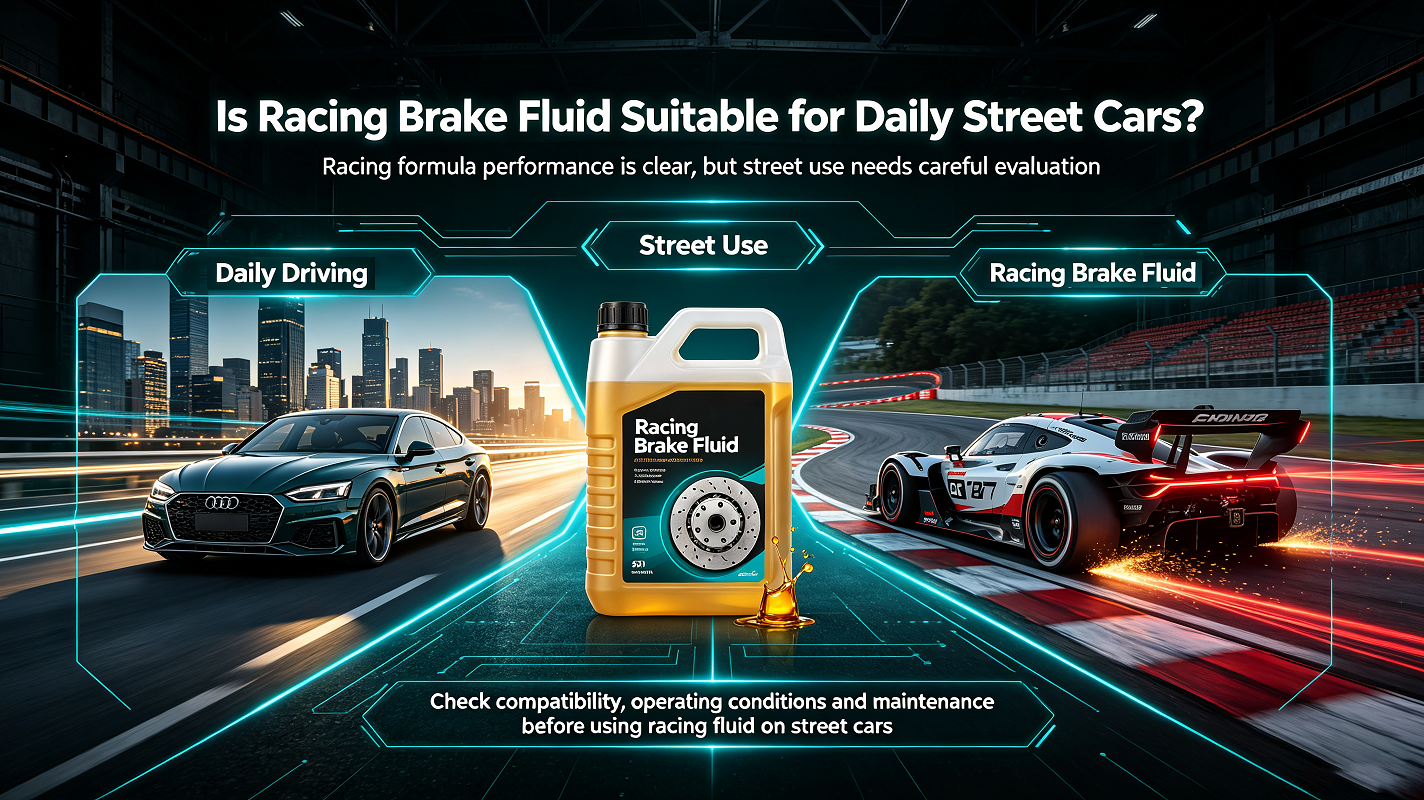
Anyone shopping for racing brake fluid is usually trying to solve one problem: stopping consistency under repeated hard use. That sounds simple until a car spends real time on track, where braking loads are higher, temperatures climb fast, and the fluid inside the lines becomes part of the performance story. A road car can get away with a broad safety margin. A track car usually cannot.
The practical question for engineers, sourcing managers, and performance teams is not just which fluid has the highest dry boiling point on paper. It is whether the fluid will keep a firm pedal through a session, resist moisture absorption over time, and support a maintenance schedule that fits the car’s duty cycle. That is where buying decisions often get messy, because brake fluid is one of those hidden consumables that can quietly determine whether a setup feels controlled or vague at the end of a stint.
Why Track Use Changes the Rules
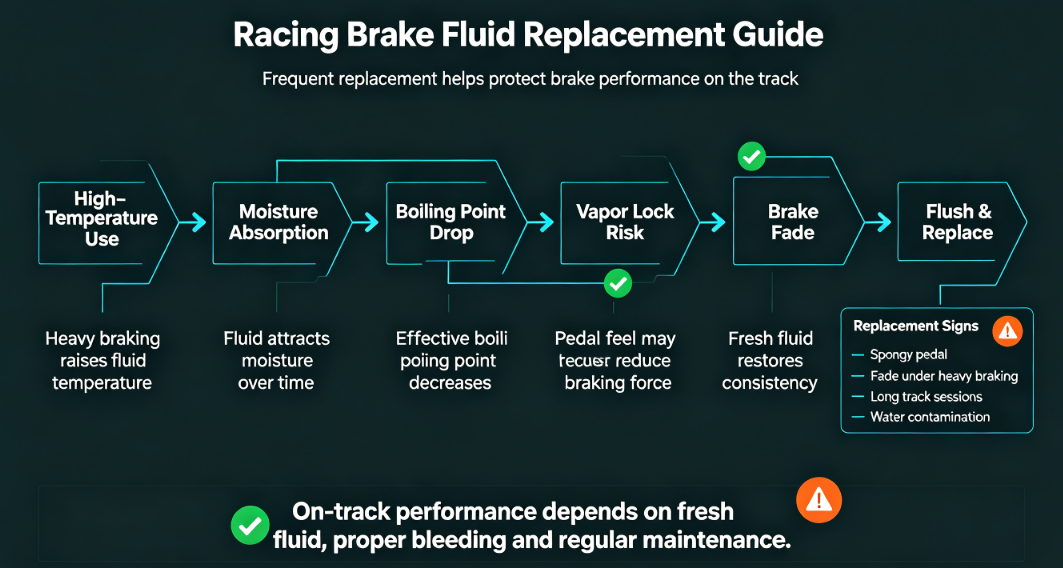
On track, brakes convert speed into heat in a way that passenger-car duty cycles rarely approach. Calipers, pads, rotors, and the fluid all share the thermal load. If the fluid gets too hot, vapor bubbles can form in the hydraulic system and the pedal goes long or soft. That is the familiar failure mode behind causes brake fade, although the phrase is often used too loosely. Pad fade, rotor heat soak, and fluid boil are not the same thing, even if the driver experiences them as one ugly loss of confidence.
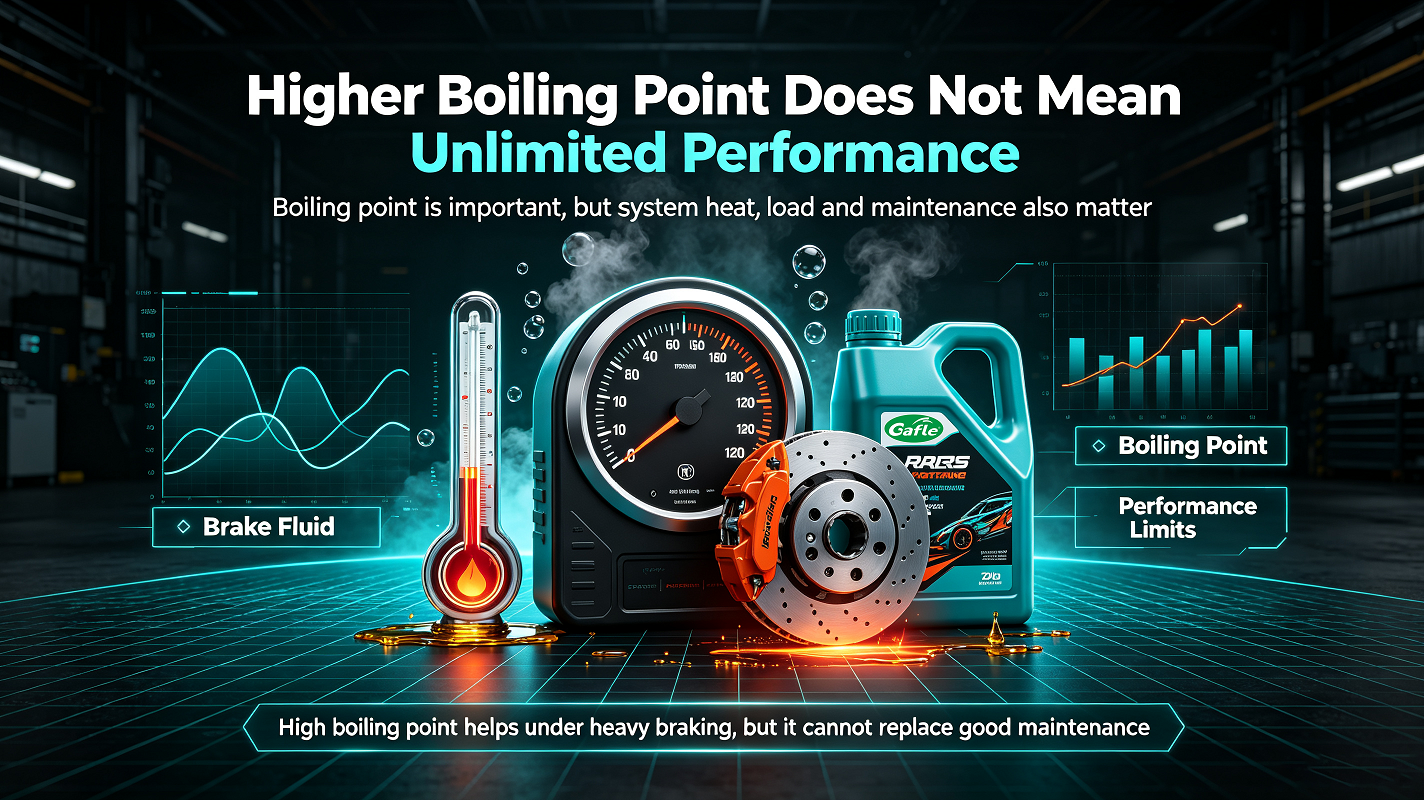
Racing formulations are designed to raise the boiling point and hold hydraulic integrity under abuse. But there is a tradeoff. Many performance fluids are still hygroscopic, which means they absorb water from the atmosphere over time. That is why track teams care so much about service intervals and storage conditions. A fluid that performed well when freshly opened may behave differently after months in a partially used bottle.
Key Takeaways for Buyers and Setup Teams
If you need a quick reference, the selection decision usually comes down to three practical questions:
1. What is the real operating temperature?
A fluid that looks excellent in a spec sheet may be more than enough for club sprint racing, but marginal for heavier cars, long downhill sections, or endurance use. Match the fluid to the hottest likely use case, not the easiest one.
2. How disciplined is the maintenance plan?
The question of how often to replace brake fluid matters more on track than on the street. Some teams change it before major events, others on a fixed season calendar, and some after any session that clearly overheated the brakes. The right answer depends on humidity exposure, event length, and whether the car sits idle between runs.
3. Is consistency more important than maximum boiling point?
In practice, drivers often prefer a fluid with predictable pedal feel and stable behavior over one that only looks impressive in a laboratory comparison. That may sound conservative, but reliability is usually what wins the day when a session runs long.
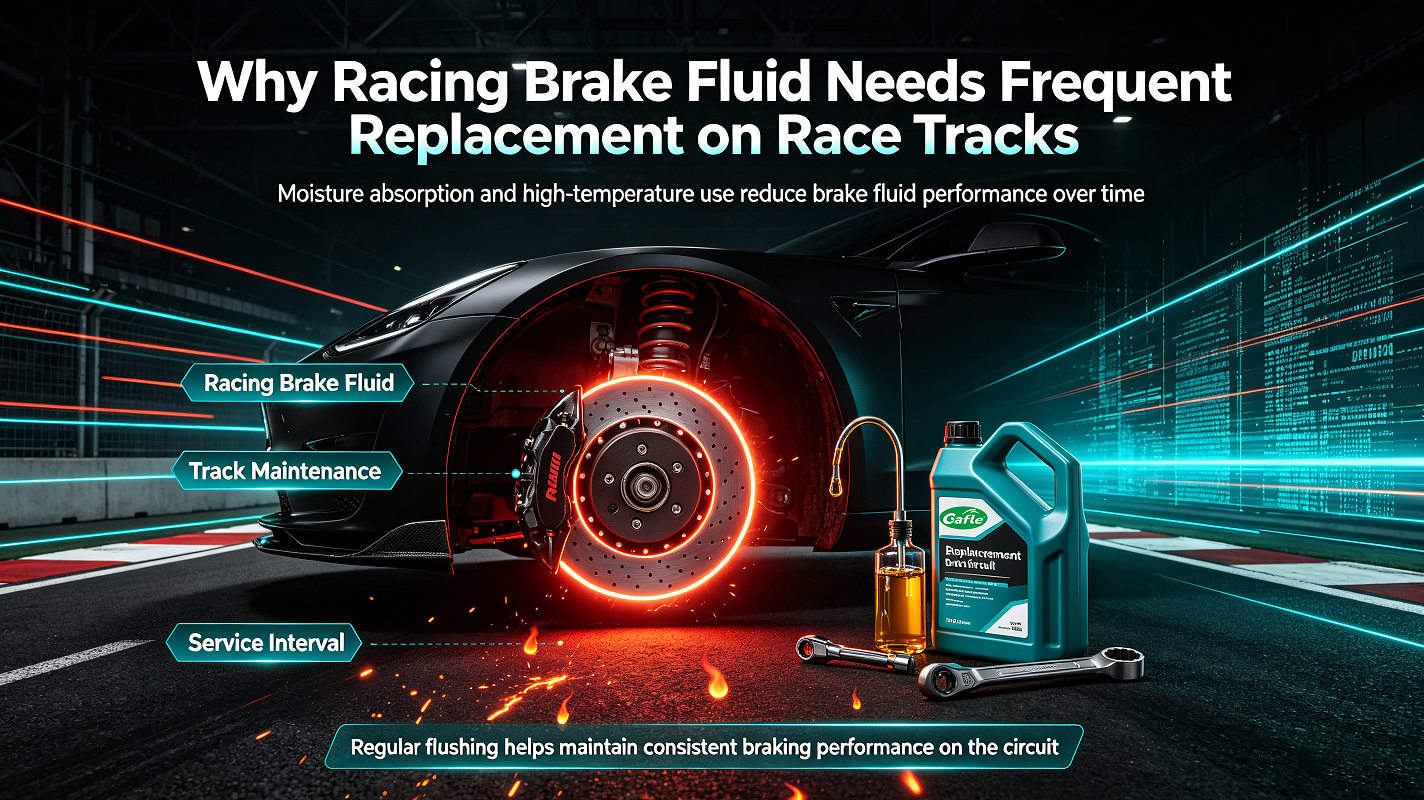
Why Racing Brake Fluid Must Be Changed Often on Track
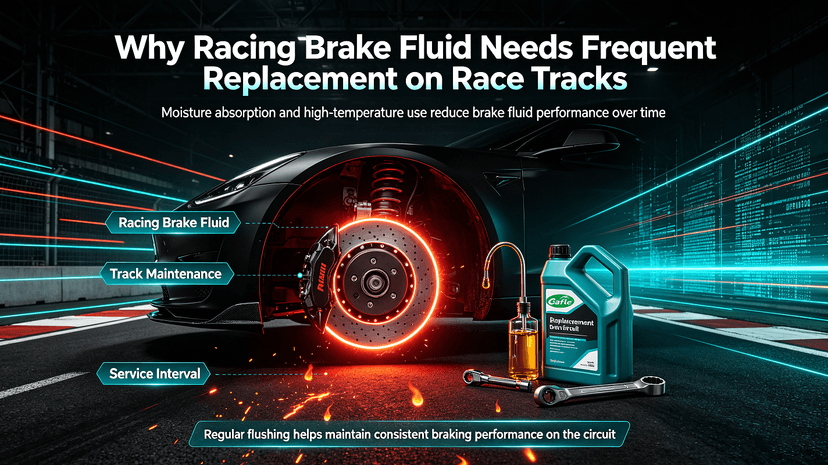
There is a reason experienced teams keep repeating why racing brake fluid must be changed often on track. Heat cycles age fluid quickly, and every exposure to air slowly increases water content. Even small amounts of moisture lower boiling performance. That is not a dramatic laboratory theory; it is a maintenance fact that shows up in pedal feel, especially after repeated hard stops or during humid race weekends.
The change interval is not a universal number. A lightweight track car that runs short sessions may tolerate longer service than a heavy car on endurance duty. The safe habit is to treat brake fluid as a wearable consumable, not a fill-and-forget item. Teams that push maintenance too far often find the problem only after the pedal starts moving farther than it should. By then, the car has already taught the lesson the hard way.
Selection Criteria That Actually Matter
When comparing racing fluids, focus on the details that affect the whole braking system, not just one headline figure. Dry boiling point is useful, but wet performance matters too because water contamination is unavoidable over time. Compatibility with seals, DOT classification, and service temperature range also deserve attention. If the car uses a mixed fleet of road and track vehicles, keep a clear separation in the maintenance shop so the wrong bottle does not end up in the wrong system.
Another practical caution: not every problem that feels like fluid boil really is fluid boil. Air in the system, old pads, overheated rotors, or caliper issues can create similar symptoms. Replacing brake fluid is necessary maintenance, but it is not a cure-all.
Common Mistakes Buyers Still Make
One common mistake is overbuying a premium fluid and then storing it too long after opening. Another is assuming all high-performance fluids behave the same in mixed-use fleets. A third is waiting until the pedal feels wrong before scheduling service. In motorsport, that usually means the schedule has already been missed.
Practical Buyer Advice
If you are sourcing for a team, build the decision around use case, service discipline, and storage control. Ask whether the fluid will be used for sprint racing, endurance events, testing, or dual-purpose street-track cars. Then set a replacement plan that matches the harshest expected condition rather than the average one. That is the part people skip, and it is often the part that matters most.
For teams evaluating racing brake fluid as part of a broader braking package, the best next step is to review the car’s thermal load, event calendar, and current service habits together. Fluid choice is not isolated from the rest of the system; it sits inside the whole maintenance strategy. Get that right, and the rest of the brake setup has a much better chance of doing its job when the track gets hot.
Welcome to contact GAFLE for more information & cooperation!
peter
ZHEJIANG GAFLE AUTO CHEMICL CO.,LTD
Tel:86-579-8222 1665
Fax:86-579-8246 4690
Cel/Wechart:86-13335993986
E-mail:peter@gafle.net
Web:www.gafle.net