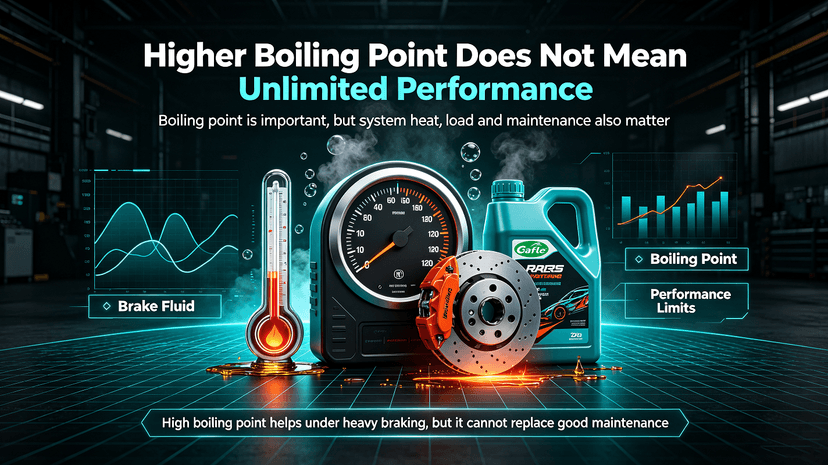
Why boiling point matters in brake fluid selection
The boiling point of brake fluid is one of those specifications that looks simple on a datasheet and becomes very important the moment a system starts working hard. For engineers, sourcing managers, and product teams, the question is not just whether a fluid meets a label claim. It is whether the fluid can keep hydraulic pressure stable when calipers, lines, and wheel-end hardware are running hot.
That matters because brake systems depend on an incompressible fluid column. Once moisture, heat soak, or repeated hard stops push the fluid toward vapor formation, pedal feel changes fast. The driver notices it as a long pedal, inconsistent response, or in the worst case, brake fluid vapor lock. When a buyer evaluates fluid types, the real decision is about thermal margin, not just specification language.
Dry and wet boiling point: the practical difference
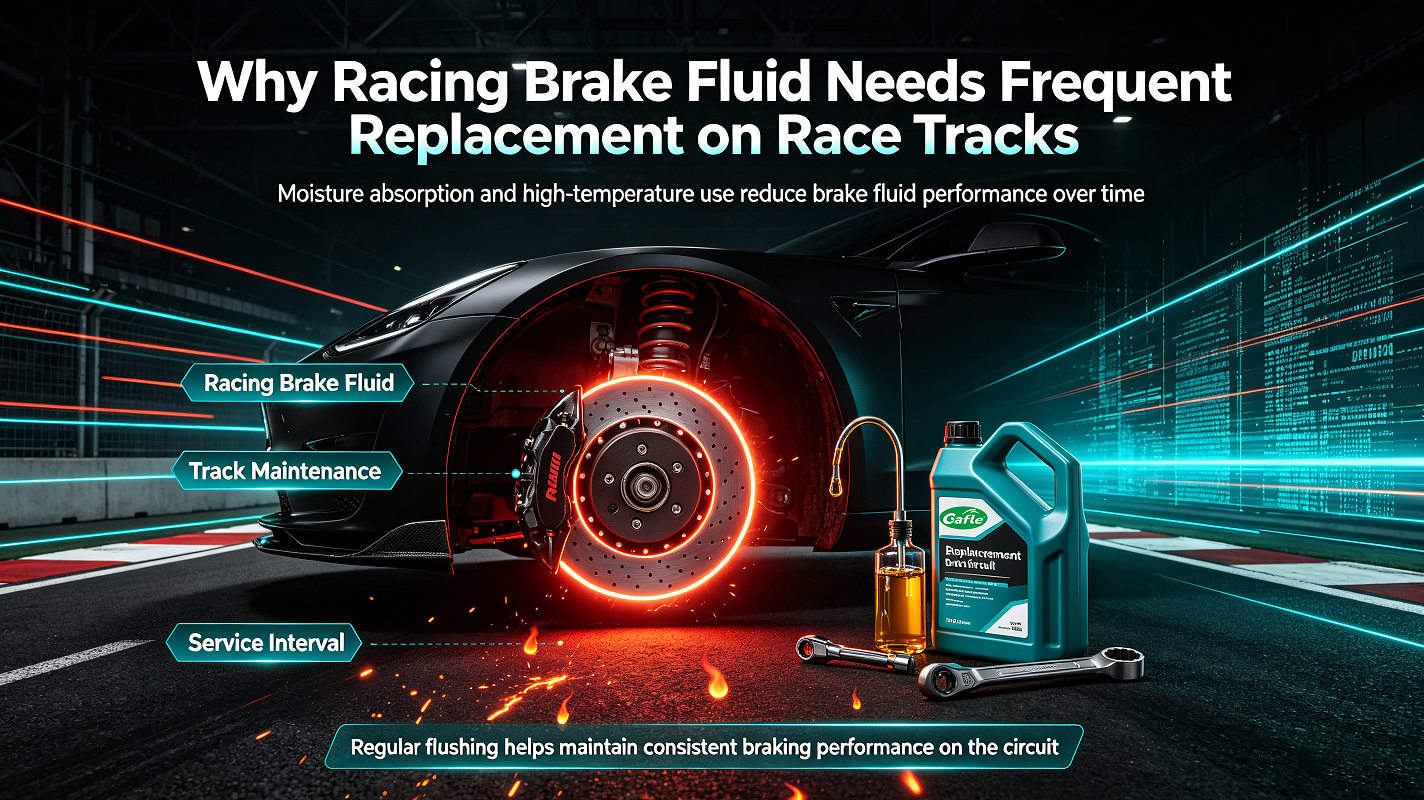
Most technical discussions separate boiling performance into dry and wet values. Dry boiling point refers to fresh fluid. Wet boiling point reflects fluid after it has absorbed moisture in service. That distinction is important because brake fluid is hygroscopic in common use, which means it gradually absorbs water from the environment.
In practice, a high fresh boiling point is helpful, but it is not the whole story. If the fluid degrades sharply after moisture uptake, the safety margin may disappear sooner than expected. This is one reason purchasing decisions should not focus only on the top number on the label.
What buyers should compare first
For a fair comparison, look at the intended service temperature, the vehicle duty cycle, and the maintenance interval. Track use, towing, mountain driving, performance road applications, and heavy stop-start fleets all create different thermal loads. A fluid suitable for commuting may be a poor fit for repeated hard braking.
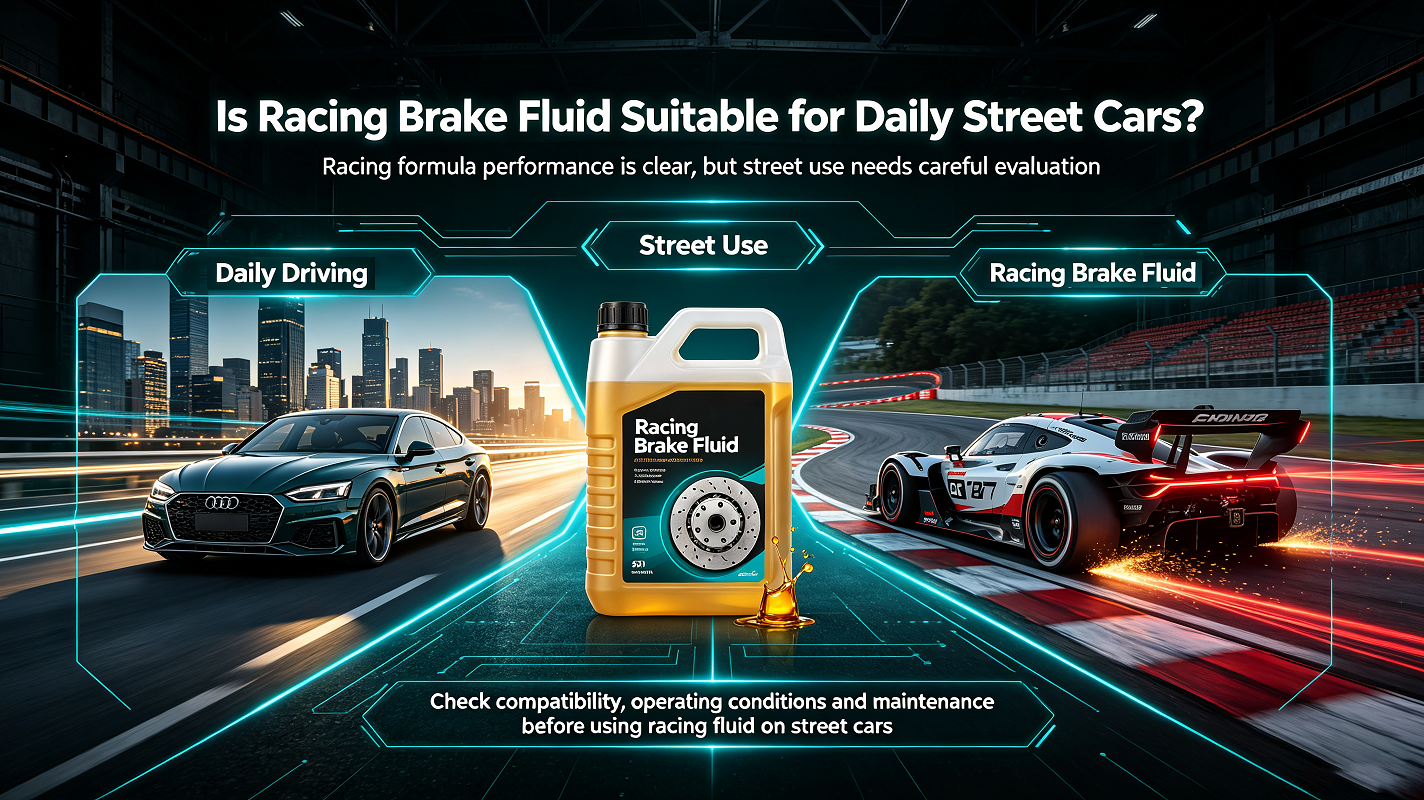
If you are evaluating racing brake fluid, remember that racing use often prioritizes extreme heat tolerance over long service life. That can be the right trade-off for motorsport, but it may not be ideal for a daily-driven vehicle that sits idle for long periods.
Is a higher boiling point always better?
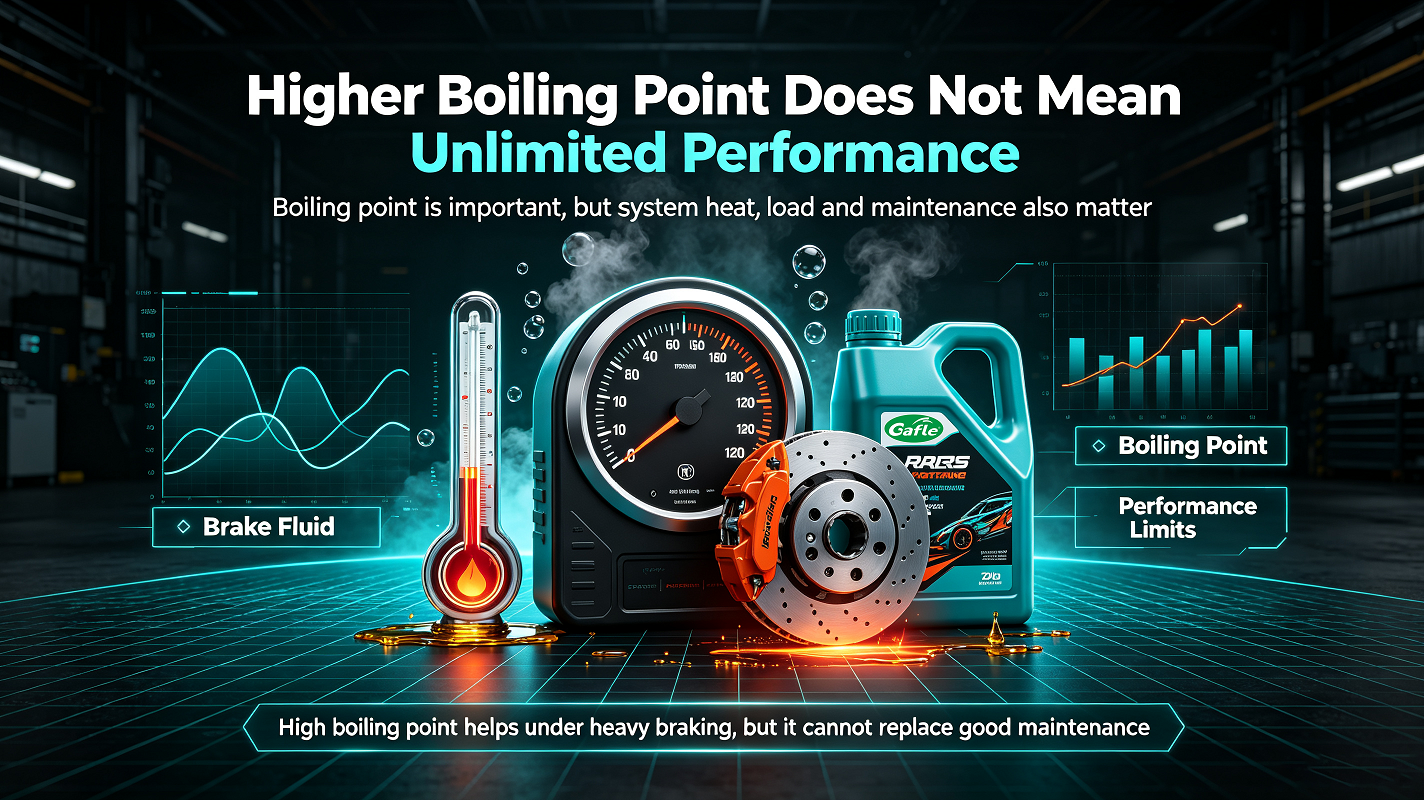
Not always. It is tempting to assume that the highest number wins, but higher boiling point brake fluid usually comes with trade-offs. The most obvious one is that the fluid may be more specialized for a narrow use case. Another is that performance at elevated temperature does not automatically mean the fluid is the best choice across all operating conditions.
There are also limitations of high boiling point formulations that buyers should keep in mind:
Compatibility and service behavior
Some fluids may be intended for specific brake system requirements. Mixing incompatible fluids can cause problems, and even when mixing is technically possible, it can dilute the expected performance profile. That is a small detail that gets ignored too often during maintenance planning.
Maintenance still matters
A fluid with a strong boiling point specification does not eliminate the need for inspection and replacement. If moisture has already entered the system, performance will still decline over time. The best fluid cannot fully compensate for neglected seals, old hoses, or poor maintenance intervals.
How boiling point connects to real braking performance
Heat is introduced in a brake system through pad friction, rotor mass, caliper design, line routing, and ambient conditions. If the fluid gets hot enough to form vapor pockets, the hydraulic system loses the firm transmission of force that makes braking predictable. The result is not just lower stopping confidence. It can also complicate pedal modulation, which matters for ABS behavior and driver control.
For product teams, this is why a fluid choice should be considered alongside hardware design. Rotor sizing, ventilation, pad compound, and duty cycle all influence whether the system stays within thermal limits. A fluid upgrade may help, but it should not be treated as a substitute for thermal engineering.
Selection guidance for technical buyers
A practical buying process usually starts with three questions. First, what is the actual operating profile? Second, what service interval is realistic? Third, what fluid specification is compatible with the existing system and maintenance practices?
From there, it helps to compare dry and wet performance, not just peak temperature claims. Review whether the application needs a fluid optimized for endurance, routine street use, or occasional high-load events. For fleets and service networks, consistency and ease of maintenance may matter more than the absolute top-end number.
One caution: do not overbuy performance you will not use. In many cases, a well-matched fluid with a sensible maintenance plan is better than chasing the highest boiling point available.
Common mistakes in brake fluid evaluation
A frequent mistake is treating all high-performance fluids as interchangeable. Another is assuming the label alone tells the full story. Packaging language can be broad, but brake system compatibility is more specific than that.
Buyers also sometimes focus on new-fluid performance and ignore what happens after service exposure. That is where wet boiling point, maintenance interval, and environment become decisive. If a vehicle lives in humidity, sees heavy brake use, or accumulates heat quickly, the margin shrinks faster than many teams expect.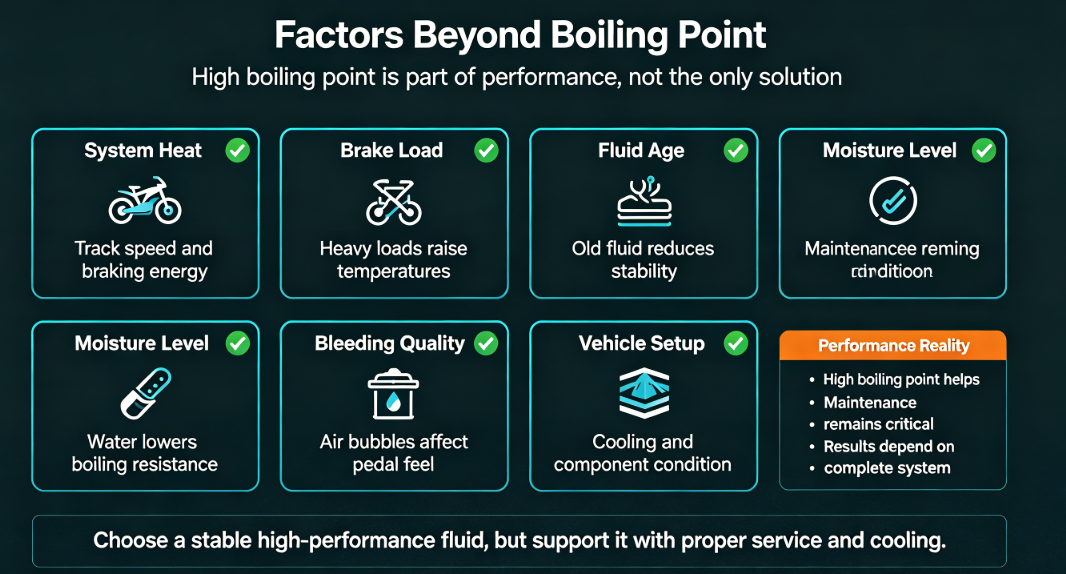
FAQ
What does boiling point tell me in brake fluid?
It indicates how much heat the fluid can tolerate before vapor begins to form. Higher resistance to boiling helps preserve pedal feel and hydraulic response under load.
Is higher boiling point brake fluid always better?
No. It may be better for high-heat applications, but it can be unnecessary or less practical for standard use. Compatibility and maintenance matter just as much.
What is brake fluid vapor lock?
It is the loss of hydraulic effectiveness caused by vapor bubbles in the brake fluid. Those bubbles compress, which makes the pedal feel soft and braking response less predictable.
What to do next
If you are selecting fluid for a vehicle program, fleet, or aftermarket line, start with the duty cycle and thermal demand, then confirm compatibility and service expectations. The boiling point should be one of the first numbers you check, but not the only one. That is usually where the better decision is hiding.
Welcome to contact GAFLE for more information & cooperation!
peter
ZHEJIANG GAFLE AUTO CHEMICL CO.,LTD
Tel:86-579-8222 1665
Fax:86-579-8246 4690
Cel/Wechart:86-13335993986
E-mail:peter@gafle.net
Web:www.gafle.net