
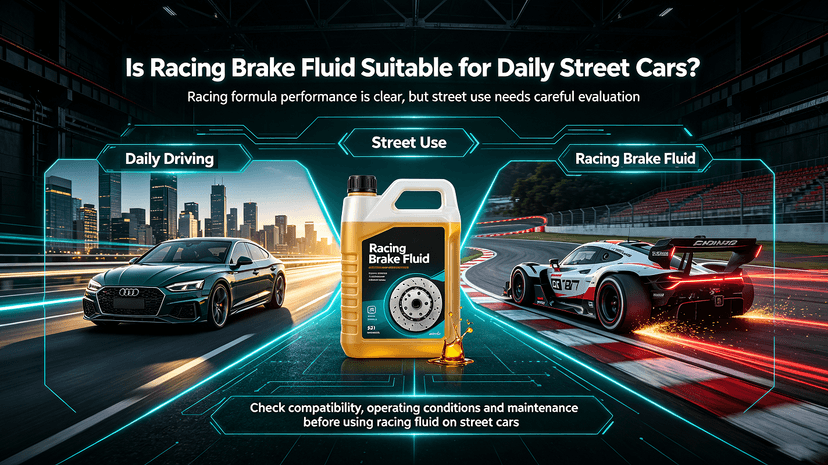
Can You Use Racing Brake Fluid on Daily Driven Cars?
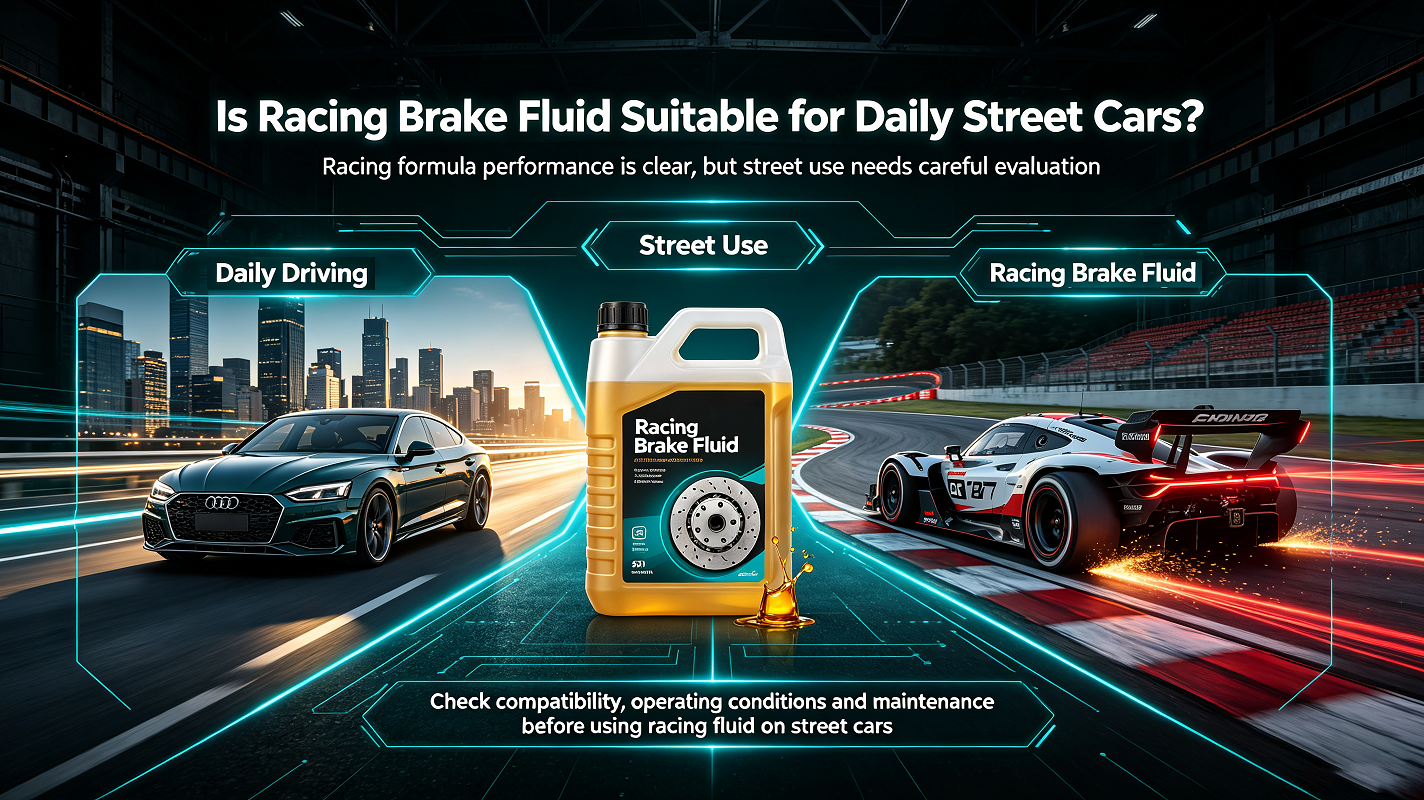
can you use racing brake fluid on daily driven cars is a fair question, especially if you are trying to sharpen pedal feel without turning a commuter into a weekend track project. The short answer is that sometimes you can, but whether you should depends on how the car is used, how often the system is serviced, and what trade-offs you are willing to accept. Brake fluid is not one of those parts where “higher performance” automatically means “better for every job.”
For engineers, sourcing managers, and shop teams, the real decision is less about marketing language and more about operating conditions. A fluid that behaves well at high temperature can still be a poor fit for daily use if it absorbs moisture quickly, needs more frequent changes, or creates pedal feel that is unnecessary for stop-and-go driving. That is the practical tension behind this topic.
What Racing Brake Fluid Is Built to Do
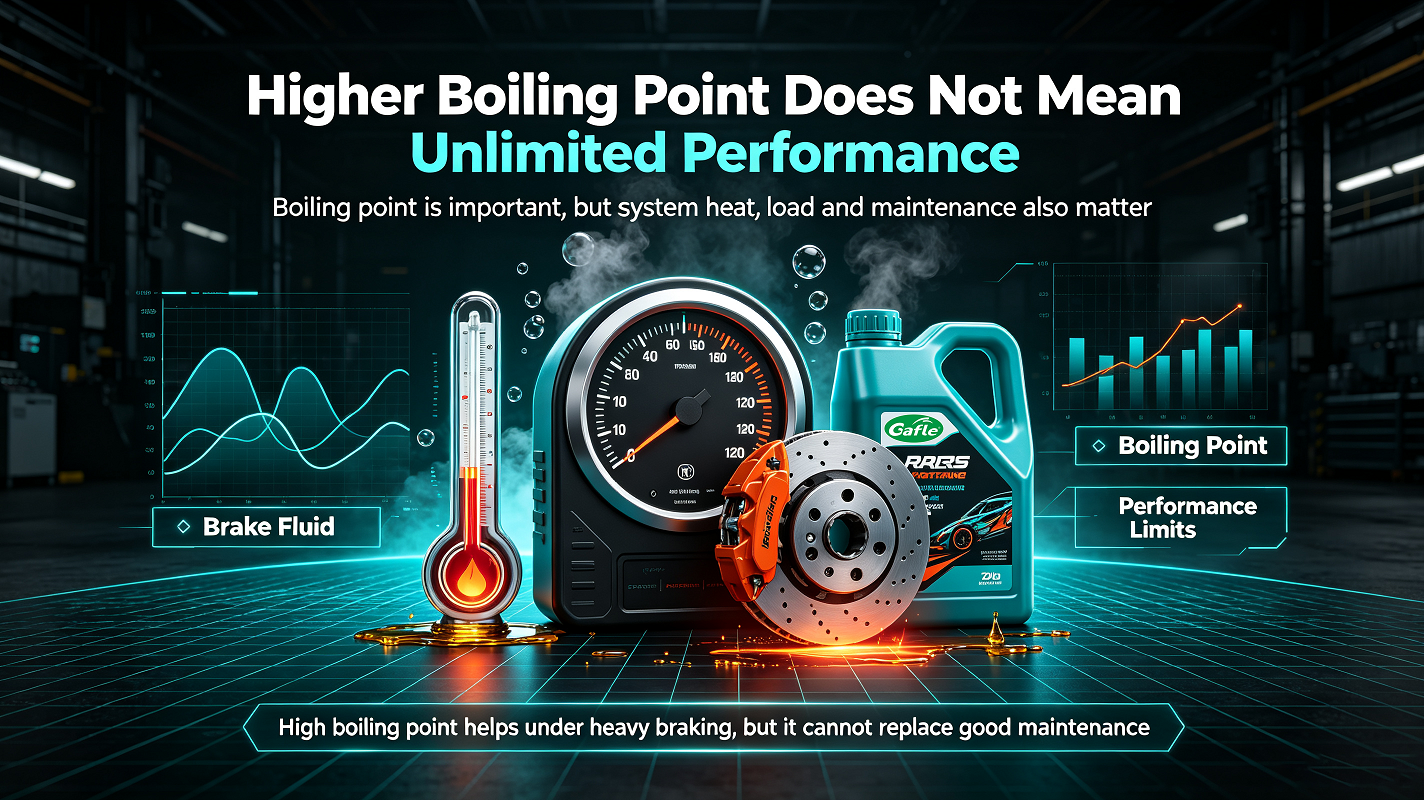
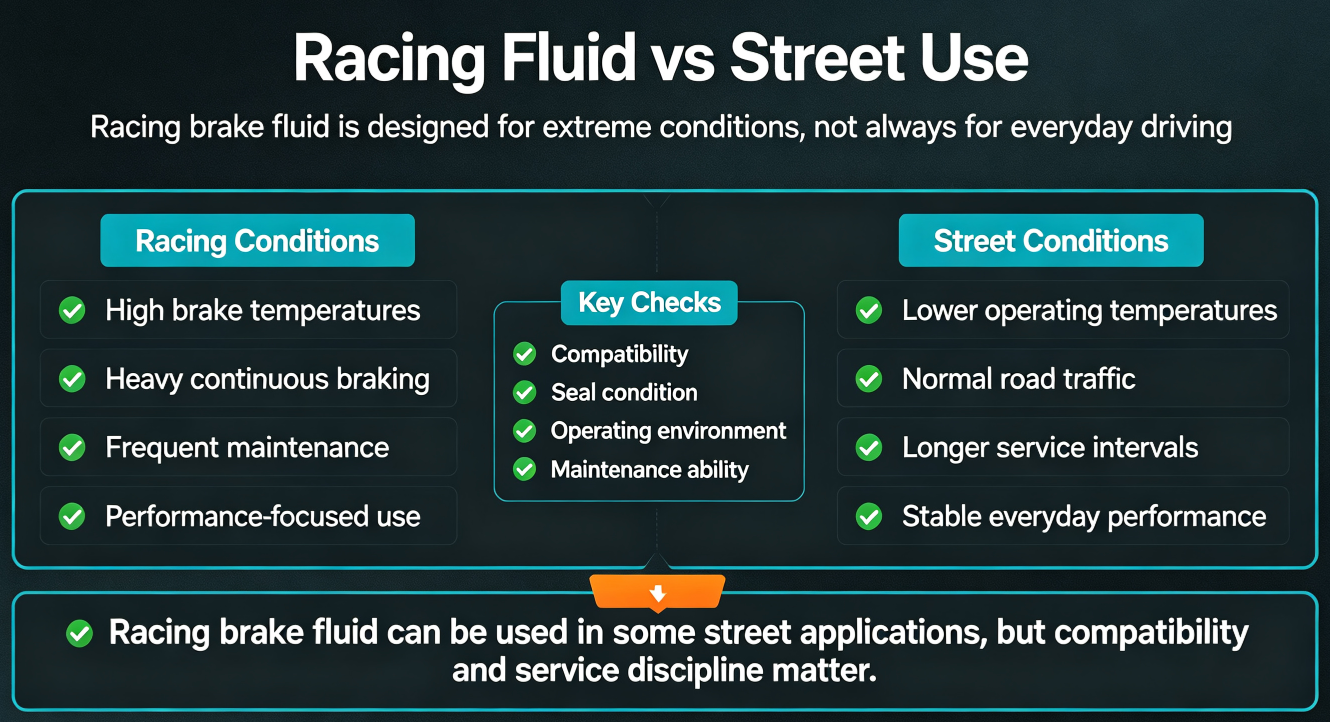
Racing brake fluid is generally formulated for elevated thermal stability and more consistent brake feel under hard, repeated stops. On track, brakes are exposed to high heat in a way that ordinary commuting rarely reproduces. The fluid’s job is to resist vapor lock and keep hydraulic response predictable when the system is being pushed hard.
That sounds ideal, and in a narrow use case it is. But the difference between racing brake fluid and street brake fluid is not only about maximum temperature. Street-focused formulas are typically selected for broader compatibility with daily temperatures, longer service intervals, and easier ownership. Racing formulas may ask more of the user in return for their performance margin.
What Changes in Daily Driving
In a daily driven car, brake demands are usually repetitive but not extreme. Urban traffic, school runs, highway exits, and parking maneuvers create many applications, yet the system cools between stops. That means a lot of drivers will never see the heat range where a racing fluid’s strengths matter much.
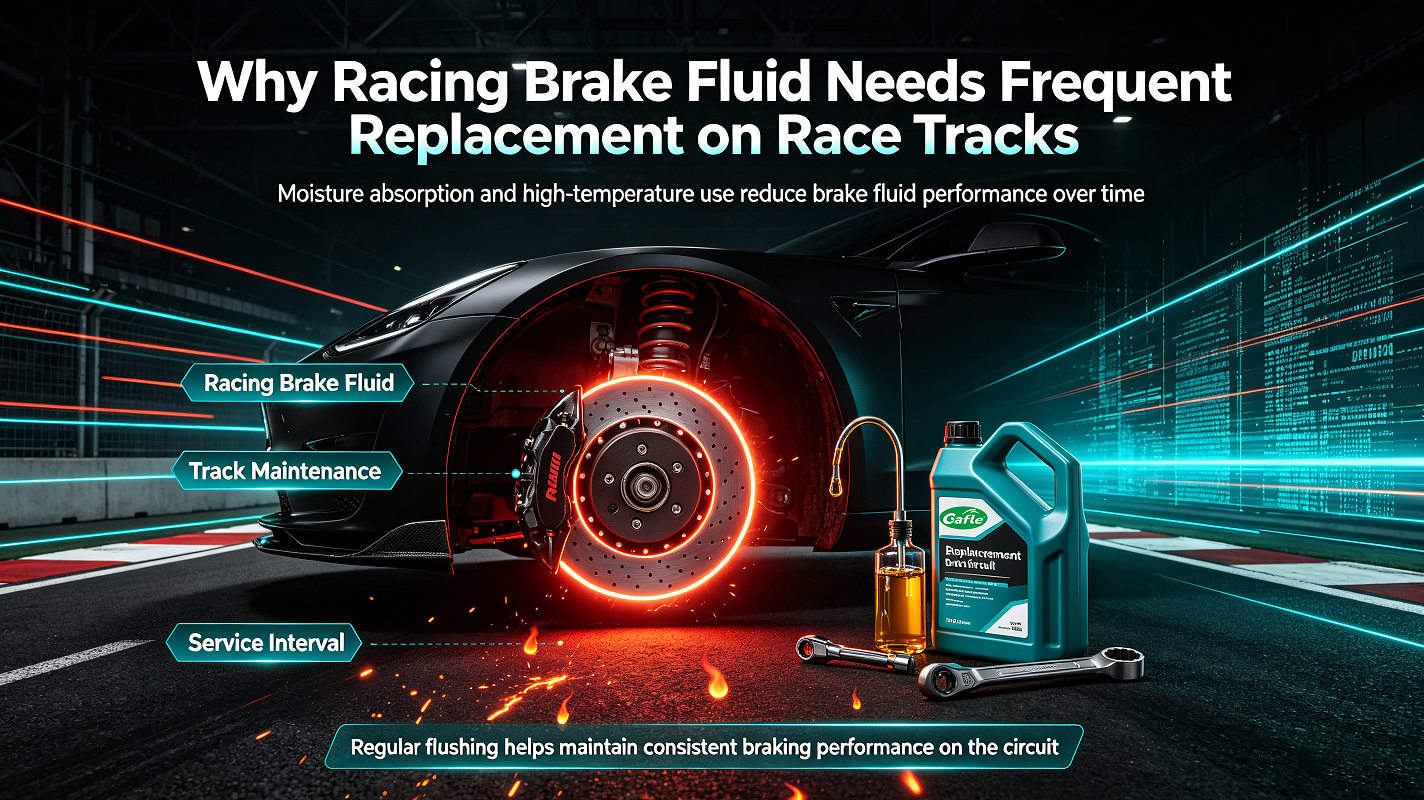
What they may notice instead is maintenance behavior. Some high-performance brake fluid products absorb moisture and degrade over time, which can lower the boiling point and gradually reduce the advantage they were bought for in the first place. For a commuter, that can turn a supposedly upgraded fluid into a more demanding maintenance item than regular DOT fluid.
Quick Reference: When It Makes Sense and When It Doesn’t
It may make sense if:
You drive spiritedly, tow occasionally, live in a mountainous area, or attend autocross or track days a few times a year. In those cases, a higher-temp fluid can provide a useful margin.
It may not make sense if:
Your car is a plain commuter, the brakes are seldom stressed, and you want the longest practical service interval with minimal fuss. In that case, a quality brake fluid matched to the vehicle specification is usually the smarter purchase.
Can You Mix Brake Fluid?
This is where people get careless. The question of can you use racing brake fluid on daily driven cars often leads to “can I just top it off with what I already have?” That is not a detail to gloss over. Mix brake fluid only when you are certain the chemistry and specification are compatible, and even then it is better to fully flush the system when changing fluid types.
Mixing does not magically create a better fluid. It can dilute performance, muddy the service record, and make it harder to know when the next change is due. In fleet work and shop settings, that uncertainty is exactly the kind of thing that causes avoidable warranty or comeback discussions later.
What Buyers Should Look For
If you are choosing between racing and street formulas, focus on the real operating profile:
1. Expected brake temperature during normal use and occasional hard use.
2. Service interval the owner or maintenance team can realistically support.
3. Vehicle OEM requirements and any compatibility notes.
4. Whether improved pedal feel is worth shorter maintenance cycles.
5. If the car sees both road and track use, whether a higher-performance street option might be enough.
One practical caution: many drivers chase a firmer pedal and overlook the rest of the brake system. Pads, hoses, caliper condition, and fluid age all affect feel. Fresh brake fluid can improve consistency, but it will not fix worn hardware.
Common Mistakes
The most common mistake is assuming all high-performance brake fluid is interchangeable. Another is leaving old fluid in the system too long after upgrading. A third is treating moisture contamination as a minor issue. It is not. Even a good racing formula loses value if it is neglected.
Another trap is buying for the label instead of the use case. A car that never sees hard braking does not need race-oriented chemistry just because it sounds premium. That is an easy way to spend more and maintain more for very little everyday gain.
Practical Buyer Advice
For most daily driven vehicles, a quality street-oriented brake fluid is the sensible baseline. If the car regularly sees aggressive driving or occasional track work, a racing or high-performance fluid can be appropriate, provided the owner accepts more frequent service and verifies compatibility before filling.
For sourcing teams, the key is to align the fluid spec with the end user’s real duty cycle rather than the loudest performance claim. For repair shops, the best advice is usually conservative: choose the fluid that fits the vehicle’s use, document the change, and flush rather than top off when moving between types.
FAQ
Is racing brake fluid safe for street use?
Often yes, if it matches the system requirements and is maintained properly. “Safe,” however, does not mean “best choice for every driver.”
Will it improve my daily commute?
Usually not in a dramatic way. Most commuters will not feel a major benefit unless their current fluid is old or their driving includes repeated hard stops.
Should I replace regular DOT fluid with racing fluid permanently?
Only if your driving pattern justifies it. Otherwise, a good regular DOT fluid is often the more practical answer.
What to Do Next
If the car is a pure commuter, stay with a suitable street fluid and keep it fresh. If it is a daily driver that also sees performance driving, evaluate the full brake system and choose a fluid based on temperature demand, maintenance discipline, and compatibility. That is the cleaner decision path, and it avoids turning a simple service item into an unnecessary compromise.
Welcome to contact GAFLE for more information & cooperation!
peter
ZHEJIANG GAFLE AUTO CHEMICL CO.,LTD
Tel:86-579-8222 1665
Fax:86-579-8246 4690
Cel/Wechart:86-13335993986
E-mail:peter@gafle.net
Web:www.gafle.net