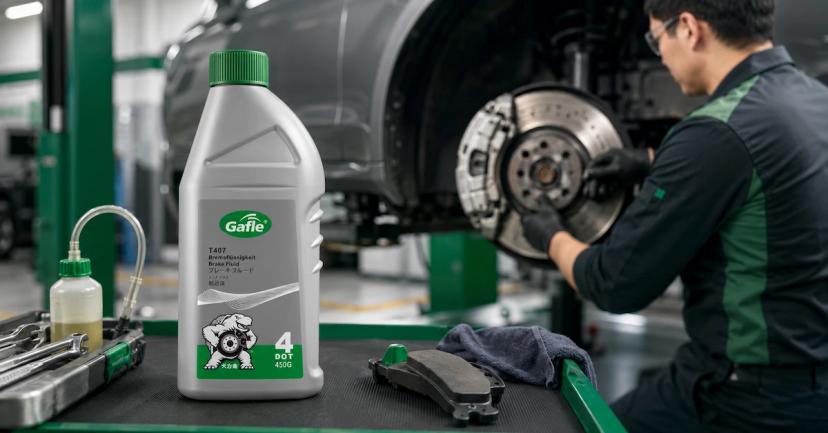
What Is Car Brake Oil?
Car brake oil is a commonly used market term for automotive brake fluid, a hydraulic fluid designed to transfer braking force from the brake pedal to the braking system components.
Although many buyers and distributors use the term “brake oil”, the product is technically a specialized hydraulic fluid rather than a lubricating oil.
Its main functions include:
- Transmitting hydraulic pressure
- Maintaining stable braking response
- Operating under high-temperature conditions
- Protecting internal braking components
- Maintaining compatibility with seals and metal parts
For automotive distributors, workshops and private-label brands, selecting the correct car brake oil is not only about product price.
The real purchasing decision involves:
- DOT specification
- Boiling performance
- Low-temperature viscosity
- Corrosion protection
- Rubber compatibility
- Vehicle application
- Packaging quality
- Supplier manufacturing capability
A reliable brake fluid supplier needs to provide consistent quality from the first sample to every future production batch.
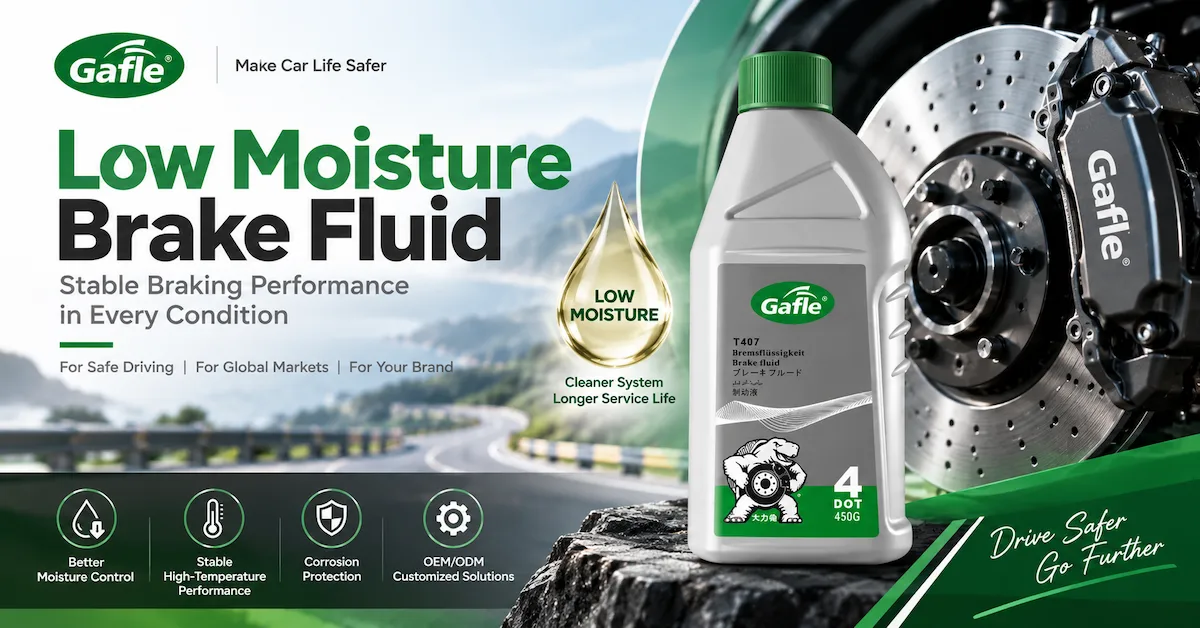
GAFLE provides automotive brake fluid solutions covering different application requirements, including DOT grades and OEM cooperation options. Buyers can review the complete GAFLE Brake Fluid Solutions portfolio when evaluating suitable products for their markets.
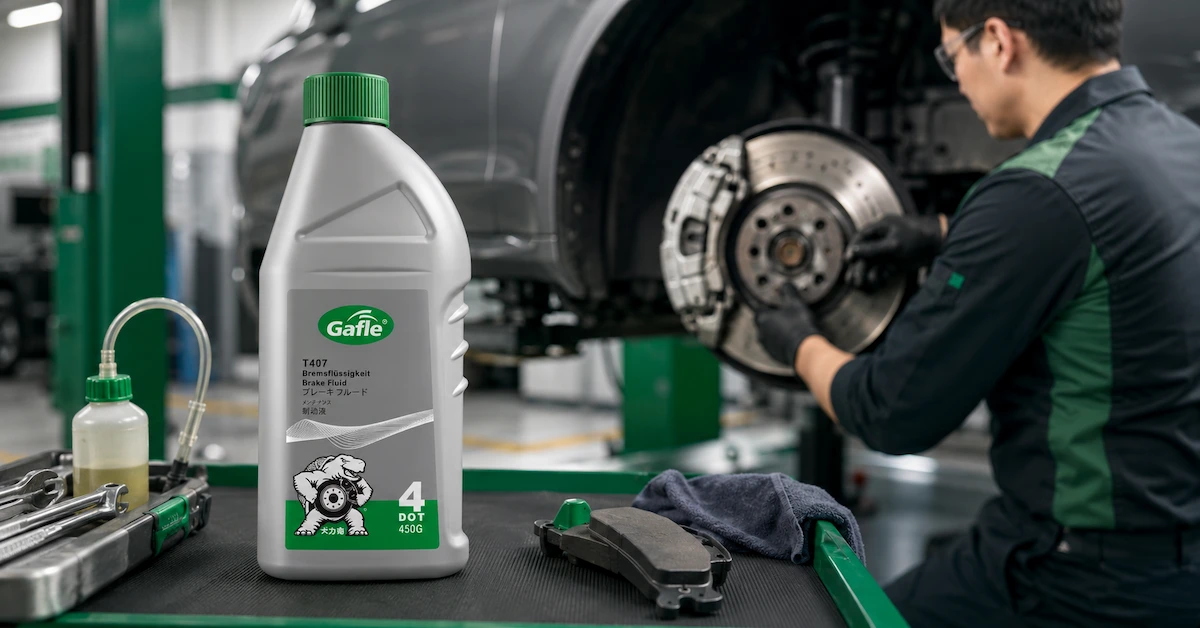
Why Car Brake Oil Is Important for Modern Vehicles
The braking system is one of the most safety-critical systems in any vehicle.
When the driver presses the brake pedal, hydraulic pressure transfers through the brake fluid to activate:
- Brake calipers
- Wheel cylinders
- Brake pads
- Other hydraulic braking components
During vehicle operation,brake fluid experiences:
- High temperature from braking friction
- Moisture absorption over time
- Pressure changes
- Different climate conditions
- Long-term contact with system materials
A suitable brake oil must maintain performance during:
- Daily city driving
- Highway operation
- Heavy traffic braking
- Mountain driving
- Commercial vehicle operation
For B2B buyers,inconsistent brake fluid quality can create larger business problems:
- Customer complaints
- Product returns
- Distributor disputes
- Brand reputation damage
This is why professional automotive chemical buyers focus on supplier capability instead of simply purchasing the lowest-cost product.
Car Brake Oil vs Brake Fluid: Understanding the Difference
In international automotive trade, car brake oil and brake fluid usually refer to the same product category.
However:
Brake fluid is the technical industry term.
Brake oil is the common search term used by:
- Automotive buyers
- Workshops
- Importers
- Online customers
- Aftermarket distributors
For SEO and international B2B communication, manufacturers often need to understand both terms.
A professional product description may include:
- Car brake oil
- Automotive brake fluid
- Hydraulic brake fluid
- DOT brake fluid
This allows suppliers to match customer search behavior while maintaining technical accuracy.
DOT 3, DOT 4 and DOT 5.1 Car Brake Oil Comparison
The most common automotive brake oil categories in global markets include:
- DOT 3
- DOT 4
- DOT 5.1
These classifications define minimum performance requirements rather than simply representing product quality levels.
| Product Type | Common Market Application | Buyer Consideration |
|---|---|---|
| DOT 3 Brake Fluid | Traditional passenger vehicles | Cost-effective replacement applications |
| DOT 4 Brake Fluid | Modern passenger vehicles and aftermarket channels | Mainstream global demand |
| DOT 5.1 Brake Fluid | Higher-performance applications | Specific vehicle requirements |
The correct choice depends on:
- Vehicle specification
- Climate conditions
- Brake system design
- Customer requirements
A higher DOT number does not automatically mean it can replace every other brake fluid.
For distributors, the best approach is to build a product portfolio based on market demand rather than offering only one specification.
Why DOT 4 Car Brake Oil Is the Mainstream Choice
Among automotive aftermarket products, DOT 4 brake fluid is one of the most widely requested categories.
Many distributors prefer DOT 4 because it provides a balance between:
- Broad vehicle compatibility
- Commercial demand
- Performance requirements
- Product positioning
For workshops and automotive parts suppliers, DOT 4 often becomes a core product because it supports a wide range of modern vehicles.
GAFLE's DOT 4 Brake Fluid is designed for customers requiring reliable automotive brake fluid supply, stable quality control and OEM-oriented cooperation.
When building a brake fluid product line, distributors can combine:
- DOT 3 for traditional applications
- DOT 4 for mainstream aftermarket demand
- DOT 5.1 for specific performance requirements
This creates a clearer product structure for different customer groups.
Key Performance Factors Buyers Should Evaluate
A professional buyer should evaluate more than the DOT label.
Important technical factors include:
Dry Boiling Point
Dry boiling point measures the boiling performance of fresh brake fluid.
It is often highlighted because it represents high-temperature capability under new-fluid conditions.
However, it should not be the only selection factor.
Wet Boiling Point
During service, brake fluid can absorb moisture from the environment.
As moisture increases, boiling performance may decrease.
Wet boiling point provides a more realistic reference for long-term service conditions.
For distributors, this matters because customers typically use brake fluid over time rather than immediately after opening a new container.
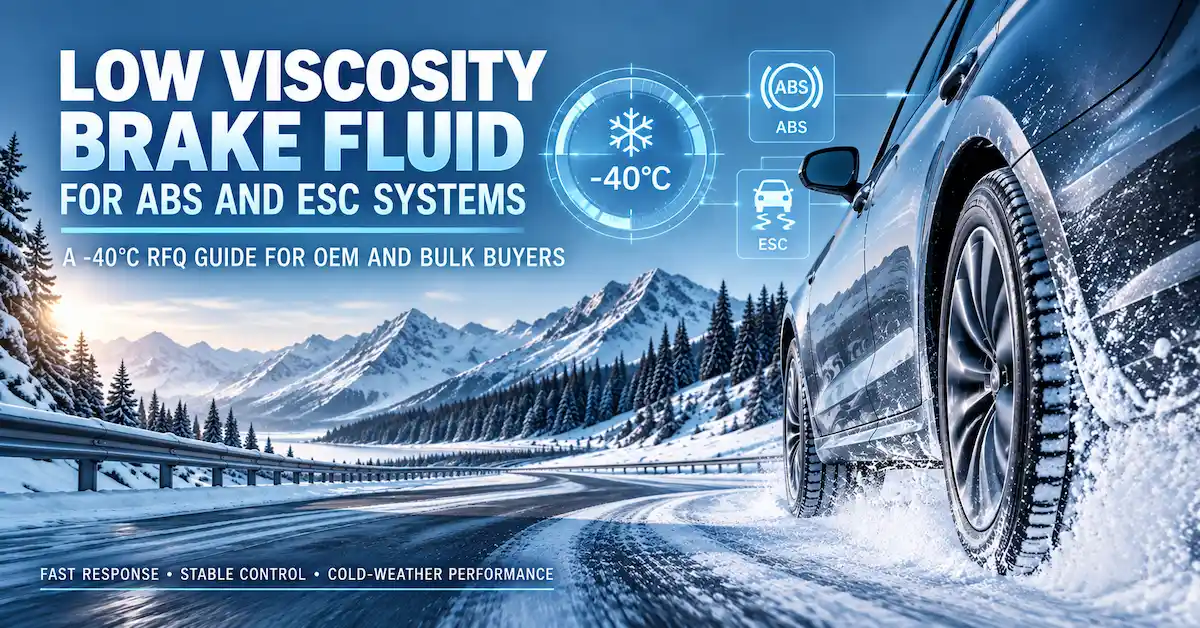
Low Temperature Viscosity
Modern braking systems often include:
- ABS
- ESP
- Electronic hydraulic control systems
These systems require stable fluid movement under different temperatures.
Low-temperature viscosity affects how quickly hydraulic systems respond in cold environments.
Corrosion Protection
Brake fluid contacts multiple materials:
- Steel
- Aluminum
- Copper alloys
- Rubber seals
A qualified formulation should protect these components throughout service life.
Rubber Compatibility
Brake systems depend on sealing components.
Brake fluid must maintain compatibility with:
- Rubber cups
- Seals
- Flexible hoses
Poor compatibility can affect system reliability.