Why supplier certification matters before a purchase order is signed
For engineering teams and sourcing managers, supplier certification is not a paper exercise. It is the difference between placing an order with a supplier that can repeatedly meet your requirements and discovering too late that the paperwork, process controls, or production habits were never strong enough. In manufacturing, that gap shows up as delayed shipments, inconsistent parts, missed inspections, and a lot of expensive follow-up.
The practical question is simple: how do you know whether a supplier is actually qualified, or just good at sending documents? That is where a disciplined review of supplier certification, supporting records, and production capability comes in. The goal is not to build a perfect file. The goal is to make a defensible buying decision.
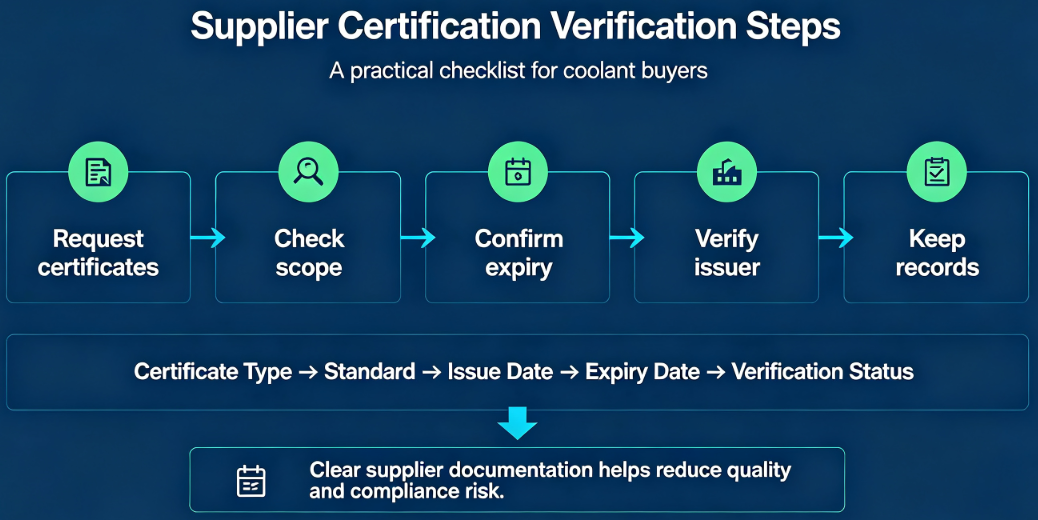
What buyers are really trying to confirm
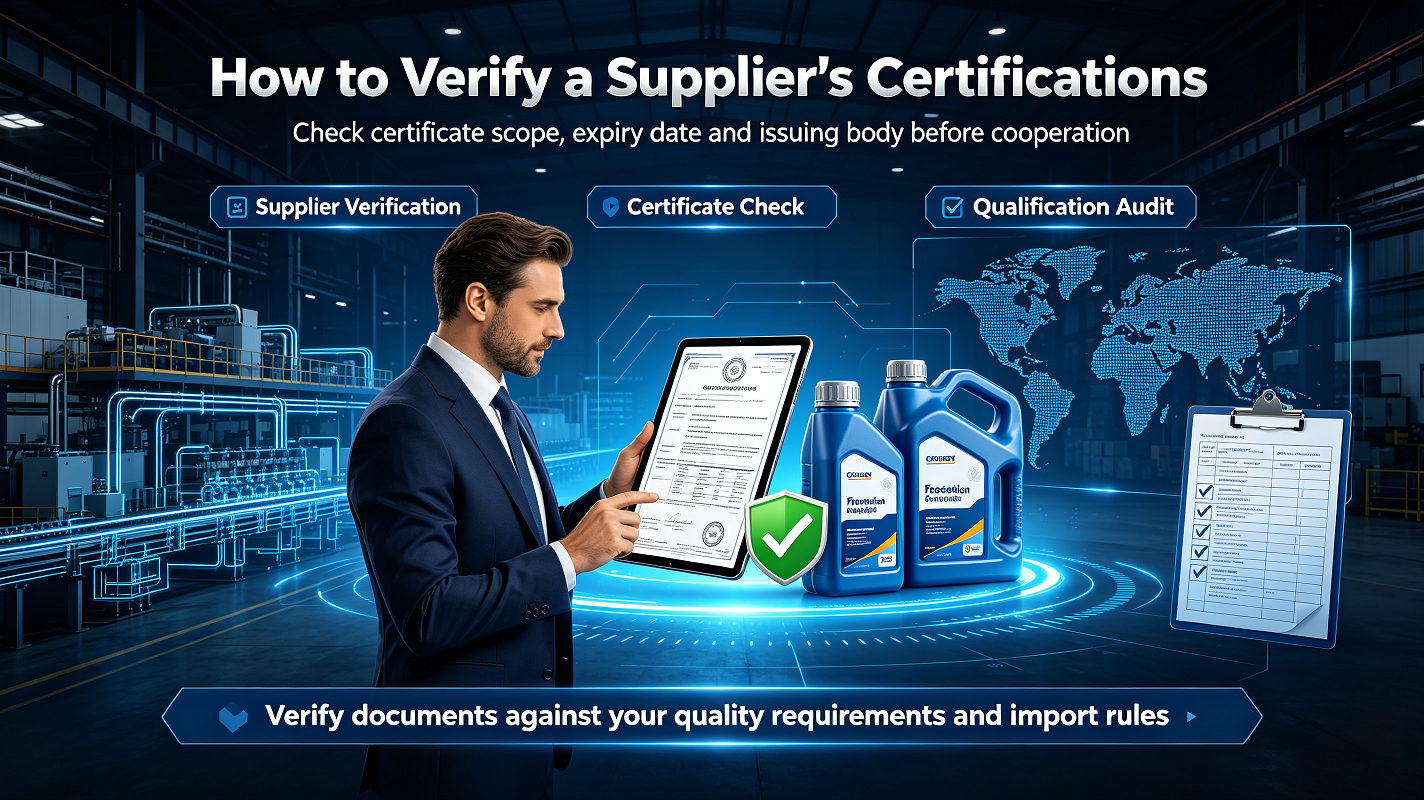
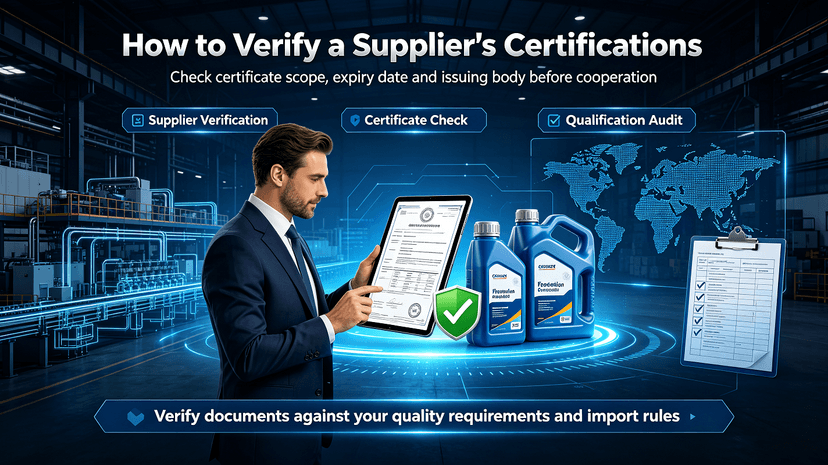
When a buyer asks to verify supplier certificate details, they are usually looking for more than a logo on a PDF. They want to know whether the certificate is current, whether it applies to the site making the parts, and whether the scope matches the work being purchased. A general certificate can look reassuring while still missing the actual process you care about.
That is why supplier qualification should look at three layers at once: the document, the process behind it, and the product being supplied. A supplier may be strong in one area and weak in another. For example, a vendor might have tidy documentation but weak change control, or a capable shop floor but poor traceability. Either one can become a problem once orders scale up.
Quick reference: what to check first
If you need a fast screen before moving a supplier forward, start here:
1. Is the certificate current and tied to the correct legal entity or plant?
2. Does the scope cover the product family, process, or service you need?
3. Can the supplier provide supporting records on request, not just the certificate itself?
4. Are there signs of active quality control, such as incoming checks, in-process checks, or corrective action handling?
5. Does the supplier answer questions clearly, or do they only send generic attachments?
That short screen will not replace a full audit, but it will quickly separate serious candidates from weak ones.
Documents matter, but only when they connect to the shop floor
To verify supplier documentation properly, buyers should think in terms of evidence chains. A certificate by itself is one point on the chain. Supporting documents may include quality manuals, inspection records, traceability logs, process flow charts, calibration records, or internal audit summaries. The point is not to collect paperwork for its own sake. The point is to see whether the supplier can show controlled work from order entry through shipment.
A cautious note here: documents can be polished. Some are built for sales conversations, not operations. A good sourcing team will ask how the supplier keeps records current, who approves changes, and how expired documentation is removed from circulation. Simple questions often expose the real level of discipline faster than a long checklist.
When an audit is worth the effort
An audit becomes especially useful when the part is critical, the volume is high, or the risk of failure is costly. Even a short audit can reveal whether the supplier follows the same process every day or merely performs well during a visit. It can also clarify practical issues that never show up in a certificate, such as staffing stability, equipment condition, material segregation, and how nonconforming parts are handled.
In many cases, buyers use a desktop review first and then escalate to an on-site audit if the risk justifies it. That sequence is sensible. Not every supplier needs a full plant visit, but high-risk categories usually deserve more than email exchanges and a scanned certificate.
Common mistakes buyers make
One common mistake is assuming that one certificate proves overall supplier qualification. It does not. Another is accepting old documentation because the supplier has “always been good.” Past performance matters, but it does not remove the need to re-check scope, ownership, and process changes.
A second mistake is treating every supplier the same. A commodity fastener source and a precision machining partner do not deserve identical scrutiny. The level of review should match the consequences of failure. A low-cost part that is easy to replace calls for a lighter touch than a part that affects assembly line uptime or product safety.
Finally, some teams focus on price too early. Low price can hide weak controls, unstable capacity, or informal subcontracting. Those issues rarely stay hidden for long once production ramps up.
Practical buyer advice for better supplier qualification
Keep the qualification process lean, but make it real. Ask for the minimum set of documents that lets you verify supplier certificate status, then compare those documents against the actual scope of work. If the supplier resists basic questions, take that as information rather than inconvenience.
It also helps to define what “qualified” means before the review starts. Some companies need only a document check and sample approval. Others need a formal audit, PPAP-style evidence, or a controlled trial order. The right path depends on product risk, internal resources, and how painful a failure would be on your line.
Do not forget change control. A supplier can pass qualification in March and still drift out of control by September if tooling, materials, staff, or subcontractors change without notice. Good buyers ask how the supplier communicates changes, not just how they document them after the fact.
FAQ: short answers buyers usually need
Is a certificate enough to approve a supplier?
No. It is useful evidence, but it should sit alongside process review, product requirements, and supplier qualification checks.
How often should documentation be reviewed?
At minimum, whenever the supplier is added, when scope changes, and during periodic requalification. High-risk suppliers usually need a more regular cadence.
What is the biggest red flag?
Inconsistent answers. If the certificate, scope, records, and production story do not line up, pause the approval and investigate further.
A better next step
If you are building or tightening a sourcing process, start with a simple rule: no approval without a current certificate, supporting records, and a clear explanation of how the supplier keeps control in production. Then scale the review based on risk. That approach is usually more useful than a giant checklist no one reads twice.
For most teams, the real win is not perfect paperwork. It is reducing surprises before they reach production. That is what supplier certification should help you do.
Welcome to contact GAFLE for more information & cooperation!
peter
ZHEJIANG GAFLE AUTO CHEMICL CO.,LTD
Tel:86-579-8222 1665
Fax:86-579-8246 4690
Cel/Wechart:86-13335993986
E-mail:peter@gafle.net
Web:www.gafle.net