The Science of Thermal Management: How Concentration Affects Antifreeze Boiling Point
For engineers managing high-performance thermal loops, the relationship between chemical additives and fluid physics is rarely a simple linear curve. Understanding how concentration affects antifreeze boiling point is a critical step in preventing catastrophic cavitation or vapor lock in pressurized cooling systems. When we discuss coolant concentration, we are really talking about the balance between heat transfer efficiency, corrosion inhibition, and the expansion of the fluid’s working temperature window.
The Role of Ethylene Glycol in Boiling Protection
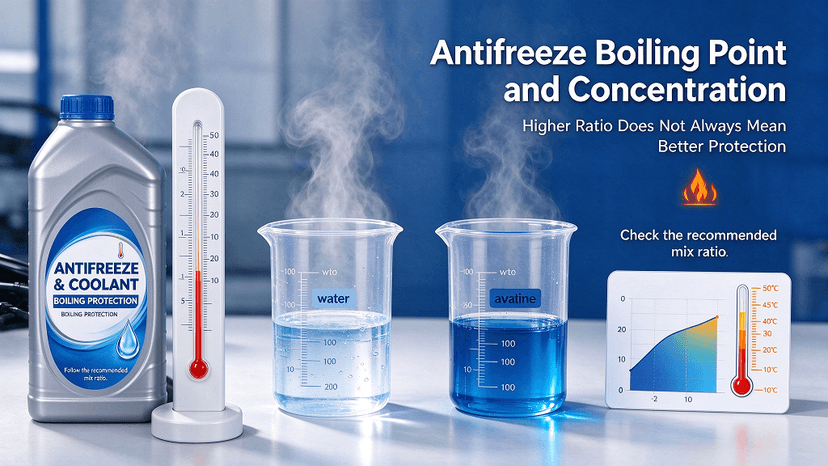
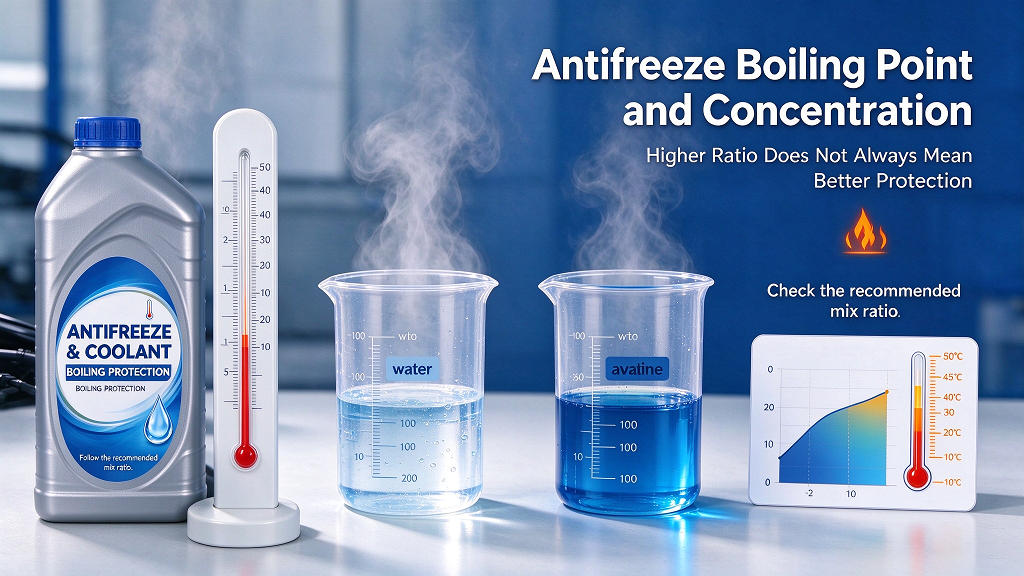
Pure water is an excellent heat transfer fluid, but it fails in industrial and automotive applications due to its relatively low boiling point of 100 degrees Celsius and its lack of freeze protection. By introducing ethylene glycol, we fundamentally alter the fluid’s vapor pressure. As you increase the glycol-to-water ratio, you effectively suppress the liquid’s tendency to turn into vapor at higher temperatures. This is the mechanism that provides reliable boiling protection in demanding environments.
However, it is a mistake to assume that simply adding more glycol leads to a higher boiling point indefinitely. Most engineers are familiar with the 50/50 coolant boiling temperature standard, which typically pushes the boiling point to approximately 106 to 108 degrees Celsius at atmospheric pressure. Once you move toward higher concentrations, the boiling point of the mixture actually begins to plateau and eventually decreases.
Practical Limits of Coolant Concentration
Most industrial guidelines suggest that a concentration exceeding 60 percent ethylene glycol becomes counterproductive. While the freeze protection might improve, the fluid's specific heat capacity drops. Water is significantly more efficient at absorbing and transferring heat than glycol is. If you run too high a concentration, you may find that while the coolant itself is not boiling, the metal components it is supposed to cool are running hotter than they should because the fluid is no longer shedding heat effectively.
There is also the matter of system pressure. In many closed-loop systems, the coolant is not boiling at its atmospheric limit because the system is pressurized. A standard radiator cap or pressure relief valve effectively raises the actual boiling point of the fluid significantly. When calculating your thermal headroom, ensure you account for both the chemical concentration and the operating pressure of the loop. Relying on chemical additives alone to handle heat spikes is a frequent cause of system failure.
Selection Criteria for Thermal Loops
When specifying a fluid for a new machine or process, consider the following:
If you are operating in extreme cold, you might be tempted to push toward a 70/30 or higher mix. Before doing so, check the viscosity of your mixture at low temperatures. High-glycol mixtures can become sluggish at startup, potentially leading to pump cavitation or motor strain until the system reaches operating temperature. Always prioritize the manufacturer’s recommended range for the specific hardware in use.
For most standard applications, a 50/50 mix is the industry sweet spot. It provides a balanced approach to corrosion inhibition, viscosity, and boiling protection. Deviating from this ratio should only be done after a thorough review of the fluid's thermal data sheet and the heat transfer requirements of the heat exchangers.
Common Misconceptions
A common mistake is adding neat antifreeze to an existing system without first verifying the concentration. If your system is already at an optimal 50/50 mix, adding more glycol shifts the chemistry away from the intended balance. Over-concentration can lead to sludge formation in some older systems and may interfere with the efficacy of the corrosion inhibitors. Always test the specific gravity or use a refractometer to determine the exact concentration of your coolant before making adjustments.
Next Steps for System Optimization
If you are currently experiencing overheating issues, check your coolant concentration before replacing hardware components. A simple test could reveal that the fluid is out of spec, causing inefficient thermal transfer. If your process requires operating temperatures that consistently push the limits of your coolant, talk to your fluid supplier about specialized inhibited glycols designed for higher thermal loads, rather than simply increasing the standard ethylene glycol ratio. Ensuring the fluid chemistry is perfectly tuned to your operating parameters is the most cost-effective way to extend component lifespan.
Welcome to contact GAFLE for more information & cooperation!
peter
ZHEJIANG GAFLE AUTO CHEMICL CO.,LTD
Tel:86-579-8222 1665
Fax:86-579-8246 4690
Cel/Wechart:86-13335993986
E-mail:peter@gafle.net
Web:www.gafle.net