Managing Chemical Risk: Ethylene Glycol Formulations and Pet Exposure
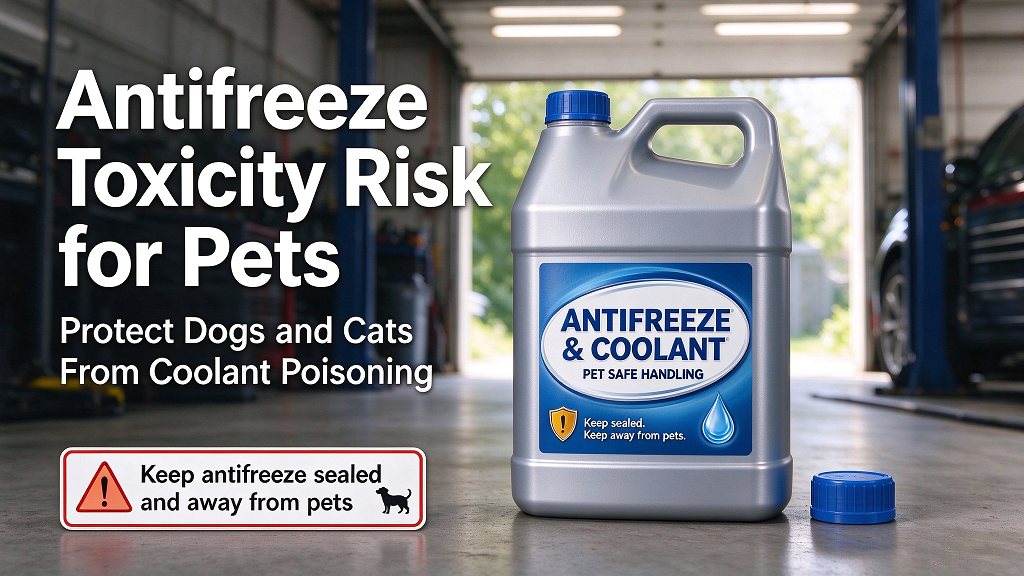
For facility managers, automotive service operators, and packaging specifiers in the automotive aftermarket, chemical stewardship often centers on worker safety and environmental compliance. Yet one persistent liability sitting on garage floors and loading docks is the antifreeze toxicity risk for pets and local domestic animals. Every year, veterinary emergency clinics treat thousands of casualties caused by standard radiator coolants. Understanding the mechanism behind this toxicity, the efficacy of chemical deterrents, and the trade-offs of substitute chemistries is essential for companies looking to minimize end-use hazards across their product lines and physical facilities.
The Chemistry of Ingestion: Why Ethylene Glycol Is Lethal
The primary compound in legacy coolants is ethylene glycol (EG). Structurally simple, colorless, and practically odorless, EG has one property that makes it an acute hazard around animals: a naturally sweet taste. Cats and dogs readily lap it up from unsealed collection pans, weeping water pumps, or minor driveway drips.
Once ingested, ethylene glycol undergoes rapid absorption through the gastrointestinal tract. The parent compound itself causes mild central nervous system depression, but the true damage stems from hepatic metabolism. Alcohol dehydrogenase converts EG into glycoaldehyde, which subsequently oxidizes into glycolic acid, glyoxylic acid, and finally oxalic acid. Glycolic acid causes profound metabolic acidosis, while oxalic acid binds with circulating calcium to precipitate insoluble calcium oxalate monohydrate crystals inside the renal tubules. This causes acute tubular necrosis and irreversible kidney failure.
The lethal threshold is remarkably low. A cat can ingest a fatal dose from as little as 1 to 1.5 milliliters per kilogram of body weight—less than a teaspoon for an average cat. For dogs, roughly 4.4 to 6.6 ml/kg represents the median lethal range. Because this coolant poison acts so quickly, veterinary intervention must occur within three to six hours before definitive renal damage sets in.
Clinical Progression: Antifreeze Poisoning in Dogs and Cats
Clinical signs typically unfold in three distinct stages, making early recognition critical for field personnel and pet owners alike:
- Stage 1 (0.5 to 12 hours post-ingestion): Neurological and gastrointestinal signs dominate. Animals appear intoxicated, showing ataxia, vomiting, polydipsia, and polyuria. Owners frequently assume the animal has stabilized as signs temporarily recede.
- Stage 2 (12 to 24 hours): Cardiopulmonary compromise begins. Tachycardia, tachypnea, and progressive metabolic acidosis occur as toxic metabolites circulate.
- Stage 3 (24 to 72 hours): Oliguric or anuric renal failure sets in. Clinical signs include severe lethargy, vomiting, seizures, oral ulcerations, and coma. At this stage, standard treatments such as fomepizole or ethanol infusion are generally ineffective, leaving hemodialysis as the only viable—and often cost-prohibitive—intervention.
Because antifreeze poisoning in dogs and cats moves from subtle neurological disturbance to catastrophic organ failure in hours, primary prevention remains the only scalable mitigation strategy.
Formulation Alternatives: Propylene Glycol vs. Ethylene Glycol
For operations specifying bulk coolants or developing consumer-packaged fluids, evaluating alternative base glycols is the most direct intervention for improving antifreeze pet safety.
| Parameter | Ethylene Glycol (EG) | Propylene Glycol (PG) |
|---|---|---|
| Relative Toxicity | High (Acute renal failure via oxalate crystals) | Low (Metabolized primarily to pyruvic and lactic acid) |
| Lethal Dose (Dogs, approx.) | ~5 ml/kg | ~9 to 20 ml/kg (significantly higher threshold) |
| Thermal Performance | Superior heat transfer; lower viscosity at sub-zero temperatures | Slightly higher viscosity; ~2-5% lower specific heat transfer |
| Cost / Availability | Lower raw-material cost; industry baseline | Historically 15-30% premium over EG |
While propylene glycol is not completely harmless—it can still induce metabolic acidosis and central nervous system signs if consumed in large volumes—it avoids the lethal tubular crystallization that defines traditional antifreeze toxicity. For municipal fleets, light commercial depots, and groundskeeping equipment, transitioning to a PG-based coolant substantially reduces environmental exposure risks without sacrificing freezing-point protection.
Bittering Agents: Efficacy and Technical Limitations
In response to legislative pressure, the aftermarket industry widely adopted denatonium benzoate (commonly known by trade names such as Bitrex) as an aversive additive, typically dosed at 30 to 50 parts per million. Denatonium benzoate imparts an intensely bitter taste intended to deter oral contact.
While effective as a deterrent for children and many dogs, formulators should not treat aversive agents as an absolute safety shield. Canine palates show variable sensitivity to bitter profiles; opportunistic scavengers may gulp spilled fluid before the taste registers. Furthermore, denatonium benzoate can degrade under prolonged thermal cycling and shear in high-mileage engines. While mandatory in many jurisdictions, bittering agents are an auxiliary control, not a replacement for physical containment and low-toxicity fluid selection.
Facility Best Practices and Sourcing Considerations
Whether managing a fleet maintenance bay or procuring packaged fluids for distribution, organizations should enforce strict handling and storage protocols:
- Closed-Loop Fluid Handling: Eliminate open drain pans. Air-operated diaphragm pumps and direct-plumbed waste tanks eliminate pooling fluid where shop animals or wildlife can reach it.
- Rapid Containment Sorbents: Avoid leaving clay granules sitting on glycol spills; saturated clay remains moist and attractive to animals. Utilize high-efficiency polypropylene pads or chemical neutralizers immediately.
- Packaging Integrity: If you package private-label coolants, specify child-resistant and tamper-evident closures, alongside clear warnings regarding domestic animal vulnerability on back-panel labeling.
Taking a proactive stance on glycol selection and garage storage reduces environmental liability and protects animal welfare. When reviewing coolant specifications for the upcoming maintenance cycle, consider requesting quotes for low-toxicity propylene glycol blends or auditing shop spill containment procedures to eliminate preventable risks.
Welcome to contact GAFLE for more information & cooperation!
peter
ZHEJIANG GAFLE AUTO CHEMICL CO.,LTD
Tel:86-579-8222 1665
Fax:86-579-8246 4690
Cel/Wechart:86-13335993986
E-mail:peter@gafle.net
Web:www.gafle.net