Choosing the Right Formulation for Aging Cooling Systems
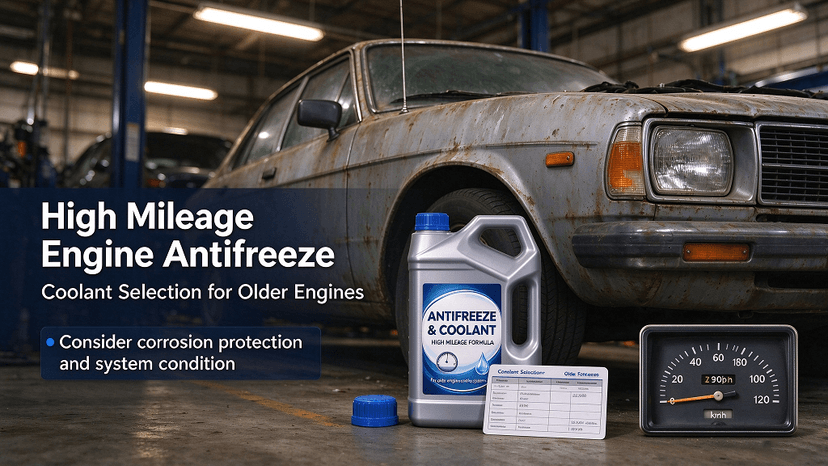
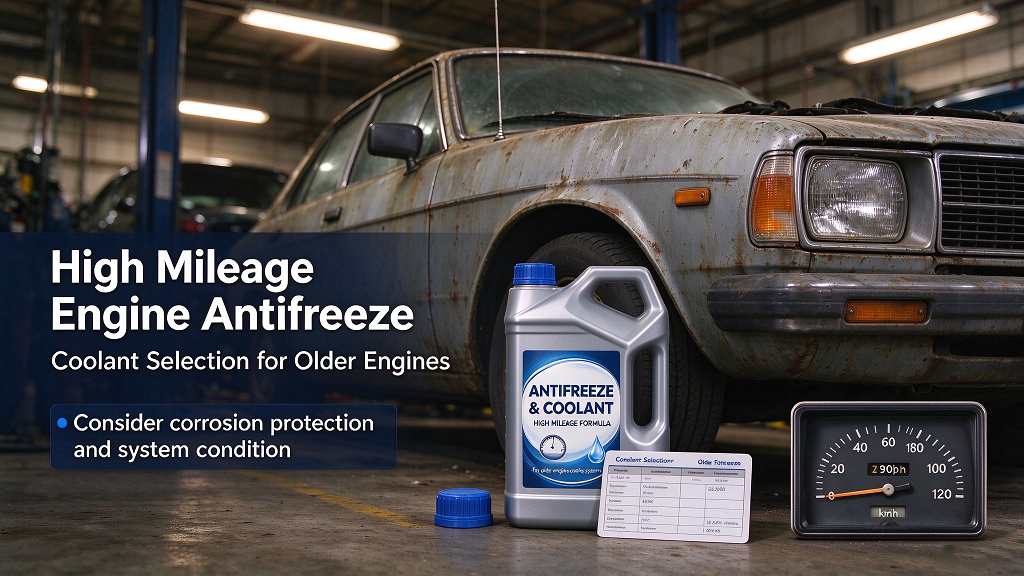
Finding the best antifreeze for high mileage engines is rarely about grabbing whatever yellow or green jug sits on the auto-parts endcap. Once a passenger car or fleet van crosses the 100,000-mile mark, its cooling circuit is no longer pristine. Core tubes in the radiator have thinned slightly, water pump bearings have endured tens of millions of revolutions, and internal elastomer seals—gaskets, O-rings, hose liners—have hardened from thousands of thermal cycles. Putting the wrong chemical chemistry into that environment can accelerate cavitation, trigger pinhole leaks, or slough off accumulated scale into the heater core.
For fleet managers, service shop directors, and vehicle owners maintaining vehicles well past their warranty periods, the choice of coolant directly impacts unscheduled downtime. Selecting the right fluid requires looking past marketing buzzwords and examining the actual additive chemistry inside the formulation.
The Real Chemistry: IAT, OAT, HOAT, and High-Mileage Packages
Coolants are fundamentally a mixture of glycol (usually ethylene glycol, occasionally propylene glycol) and water, balanced with an inhibitor package that typically constitutes less than 5% of the total volume. That tiny 5% determines how the fluid interacts with worn metals and aging rubber.
Traditional Inorganic Additive Technology (IAT) uses silicates and phosphates to lay down an immediate, relatively thick protective barrier over iron and aluminum. It works quickly, which is why older vehicles originally specified it, but the inhibitors deplete within 24,000 to 30,000 miles. Silicates can also become abrasive as they drop out of solution, speeding up mechanical seal wear on an already tired water pump.
Organic Acid Technology (OAT) provides longer service life by passivating metal surfaces chemically without heavy silicate coatings. However, pure OAT formulas rely on sebacate or 2-ethylhexanoic acid (2-EHA), which has documented tendencies to soften specific silicone- and nylon-based gasket materials found in certain late-1990s and early-2000s designs. If you pour standard OAT into an older engine with susceptible intake manifold gaskets, you might solve corrosion while causing an external fluid weep.
Hybrid OAT (HOAT) and phosphate-free or nitrite-free derivatives strike the practical middle ground. They combine an organic acid backbone with a stabilized, small dose of silicates or phosphates to offer rapid surface protection without aggressive abrasive fallout. Many modern blends marketed specifically as antifreeze for high mileage cars utilize targeted HOAT or POAT (Phosphated HOAT) chemistries, pairing extended longevity with seal-conditioning agents.
High Mileage Antifreeze Benefits: What Separates Them from Standard Blends?
Is high-mileage coolant genuinely distinct, or simply an exercise in relabeling? In well-engineered formulations, the differences are measurable in real shop conditions. The primary high mileage antifreeze benefits focus on degradation tolerance and elastomer management rather than raw heat dissipation:
Seal Swell and Conditioning Chemistry: Over years of exposure to 200°F glycol, synthetic rubber hoses lose plasticizers, becoming brittle and prone to micro-cracking at clamp junctions. Dedicated high-mileage formulations frequently incorporate mild conditioning additives that help keep aging gaskets pliable without over-softening them.
Enhanced Buffering Capacity: As engines age, trace combustion gases can seep past cylinder head gaskets long before an obvious failure occurs. These acidic gases drop coolant pH rapidly. A formula built for high mileage includes higher reserve alkalinity to neutralize acids before they etch brass heater cores or aluminum heads.
Anti-Cavitation Stabilizers: Cavitation erosion at the cylinder liner walls or water pump impeller increases as pump clearance widens and coolant passages narrow from debris. Robust molybdate or nitrite additions in heavy-duty or fleet-grade high-mileage fluids offer targeted protection against micro-bubble collapse.
Evaluating Old Engine Coolant: When to Drain, When to Flush
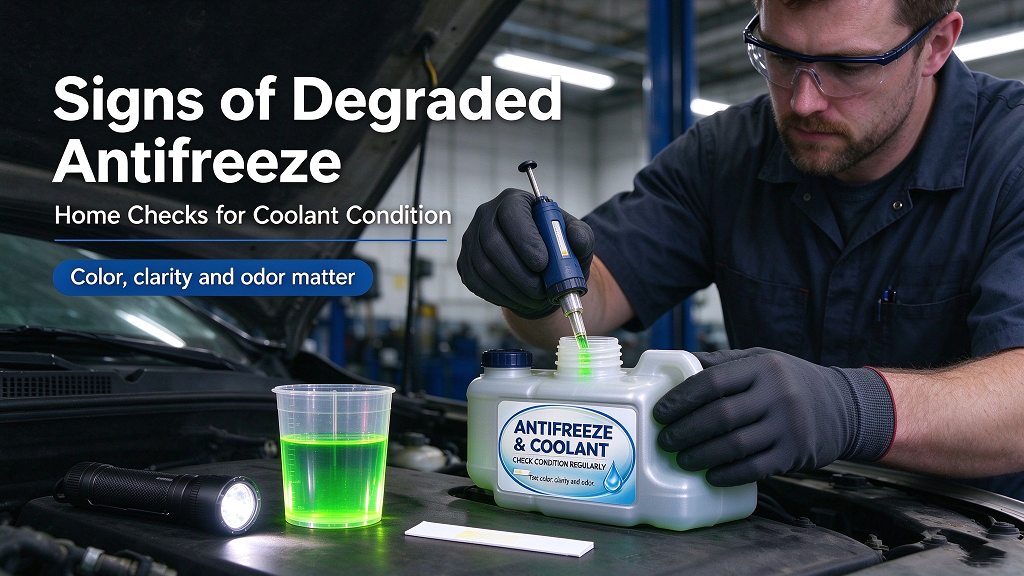
If you are servicing a vehicle with unknown maintenance history, do not simply top off the reservoir. Inspecting old engine coolant provides a diagnostic window into engine health:
A translucent green, orange, blue, or pink fluid with no floating particulate indicates stable inhibitor suspension, even if the freeze point has shifted slightly. If the fluid appears rusty, milky, or resembles muddy iced tea, the inhibitor package has fully depleted, allowing galvanic corrosion to proceed unchecked.
In high-mileage territory, aggressive chemical flushing with acid-based cleaners carries genuine risk. While a chemical flush strips scale, it can also remove the oxidation layer currently plugging a pinhole in an aged radiator or heater core. For vehicles with suspect histories, multiple low-pressure flushes with distilled or deionized water, followed by a full drain and fill with an appropriate HOAT or silicate-enhanced organic formulation, is generally the safest approach.
Selection Checklist for Aging Fleets and Older Vehicles
Before purchasing coolant in drums or cases, run through these operating criteria:
1. Verify OEM Base Specifications: Do not default to universal fluids if the original equipment manufacturer explicitly prohibited silicates (common in Asian brands) or phosphates (common in European brands). Even with 150,000 miles on the odometer, baseline metallurgy does not change.
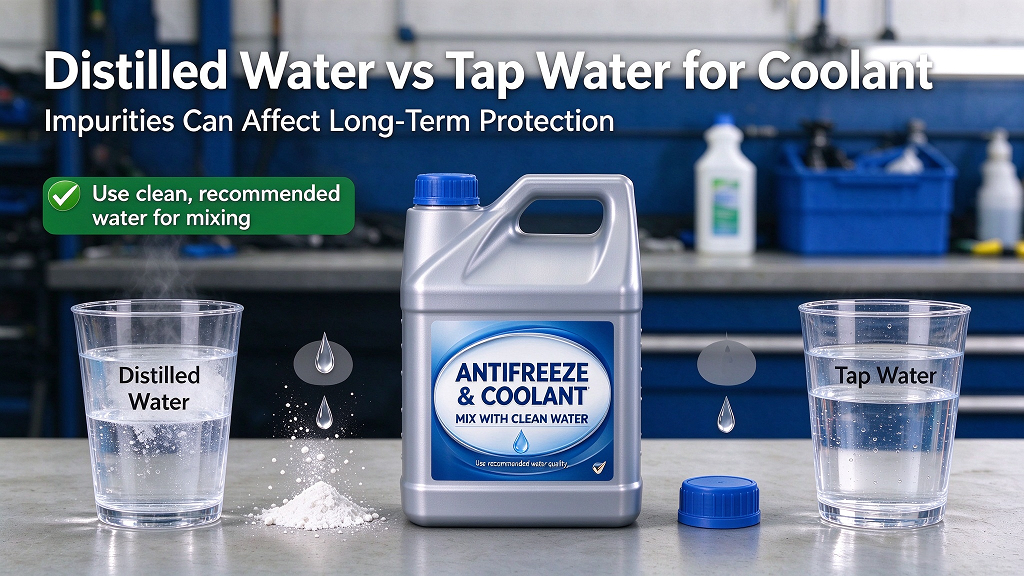
2. Check Water Quality: If buying concentrate instead of premix, never dilute with tap water. High mineral content (calcium, magnesium, chloride) accelerates scale buildup and neutralizes additives within months.
3. Evaluate Hose and Clamp Condition: A premium high-mileage antifreeze cannot compensate for a twenty-year-old vulcanized hose. Plan fluid changes alongside mechanical inspections of the thermostat, belt tensioner, and pressure cap.
Frequently Asked Questions
Can I use universal antifreeze in an engine with over 150,000 miles?
Universal coolants are generally formulated with all-makes OAT chemistry designed not to cause immediate catastrophic reactions. While safe for emergency top-offs, they may lack the specific silicate buffers or phosphate stabilizers an older engine's water pump and brazed aluminum joints prefer for long-term endurance.
Does a 50/50 premix matter more on high mileage engines?
Yes. Premixed coolants guarantee pure, deionized water dilution. Aging cooling jackets already have micro-scale deposits; introducing hard tap water compounds thermal transfer issues dramatically.
Will high-mileage coolant stop an active head gasket leak?
No. High-mileage formulas contain conditioners for rubber and synthetic elastomers, but they do not seal mechanical breaches or damaged multi-layer steel (MLS) head gaskets. Active pressure drops or oil-in-coolant contamination require mechanical repair.
Moving Forward with Fleet and Engine Care
Maintaining engine reliability past the six-figure mileage mark comes down to chemistry compatibility and proactive maintenance. Take time to audit the fluid specifications for your specific vehicle makes, sample existing coolant pH and freeze protection levels, and replace aging cooling system components before chemical depletion turns into mechanical failure.
Welcome to contact GAFLE for more information & cooperation!
peter
ZHEJIANG GAFLE AUTO CHEMICL CO.,LTD
Tel:86-579-8222 1665
Fax:86-579-8246 4690
Cel/Wechart:86-13335993986
E-mail:peter@gafle.net
Web:www.gafle.net