Hydraulic Fluid Longevity in Electrified Platforms
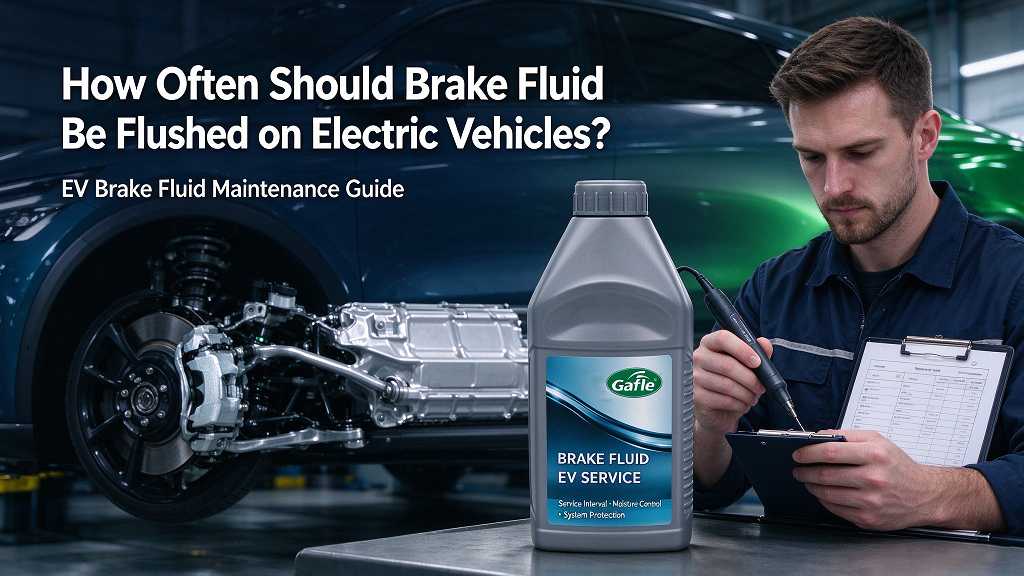
Operators and chassis engineers often arrive at a deceptively simple question: How often should brake fluid be flushed on electric vehicles? The transition to battery propulsion has stripped away engine oil flushes, spark plugs, and belt inspections. Because so much powertrain maintenance has vanished, chassis hydraulics often get sidelined until an inspection uncovers moisture contamination or an integrated electro-hydraulic actuator throws an error code.
Most original equipment manufacturers (OEMs) recommend a flush every two to three years, regardless of accumulated mileage. Unlike internal combustion platforms where mechanical wear and fluid boiling are driven by high rotor temperatures, battery-electric platforms introduce a different degradation curve. Understanding that curve is essential for maintaining braking predictability and safeguarding high-cost chassis components.
The Regenerative Paradox: Less Heat, More Moisture
In a conventional passenger vehicle, heavy friction braking generates substantial thermal energy at the wheel ends. That heat conducts back through the caliper pistons and fluid lines, regularly helping to drive away localized condensation that works past piston seals. An electric vehicle, by contrast, relies on regenerative braking for up to 90 percent of normal decelerations. The friction pads and calipers sit idle during typical city transit and highway cruising.
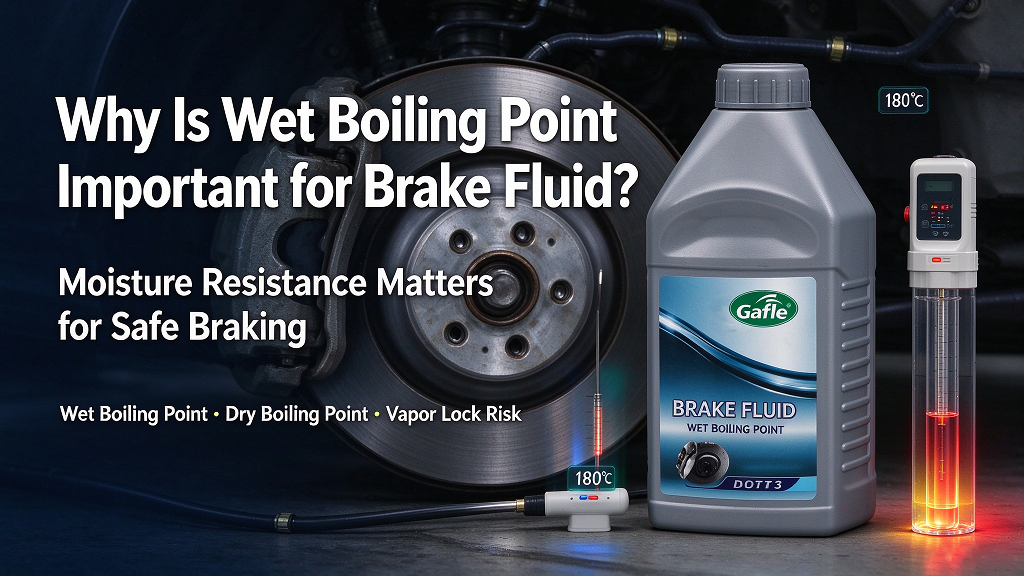
Because the mechanical brakes rarely reach elevated operating temperatures, the fluid in the wheel calipers remains cool and dormant. Glycol-ether formulations are naturally hygroscopic; they pull moisture through microscopic imperfections in elastomer seals, reservoir diaphragms, and flexible hoses. In an EV, that absorbed ambient water sits trapped in the caliper bores without regular thermal cycling. Over two to three years, moisture content climbs toward the critical 3 to 4 percent threshold, accelerating internal corrosion across caliper slides, pistons, and anti-lock hydraulic valves.
Baseline OEM Intervals: When to Service the Hydraulic Circuit
Determining when to flush brake fluid for electric vehicle platforms depends on the OEM's design philosophy and regional climate conditions:
- Tesla: Recommends testing moisture levels every two years and replacing the fluid only when water concentration exceeds roughly 2 to 3 percent. In humid operating regions, replacement typically occurs every 24 months.
- Volkswagen Group (MEB Architecture): Specifies an initial change at three years from delivery, followed by recurring flushes every two years, independent of mileage.
- Hyundai/Kia (E-GMP): Recommends inspection every 15,000 miles, with complete exchange recommended every 30,000 to 45,000 miles or two to three years.
For commercial fleets and regional service centers, managing by elapsed time rather than odometer readings is the safest protocol. An EV driven only 5,000 miles annually in coastal conditions will absorb just as much atmospheric moisture as one driven 25,000 miles in an arid climate.
Viscosity Demands in Integrated Electro-Hydraulic Units
Modern battery platforms do not use traditional vacuum-boosted master cylinders because electric powertrains produce no manifold vacuum. Instead, they rely on integrated brake-by-wire modules—such as the Bosch iBooster or Continental MK C1—that combine pedal feel simulators, electric motors, and hydraulic pressure generation into a single block.
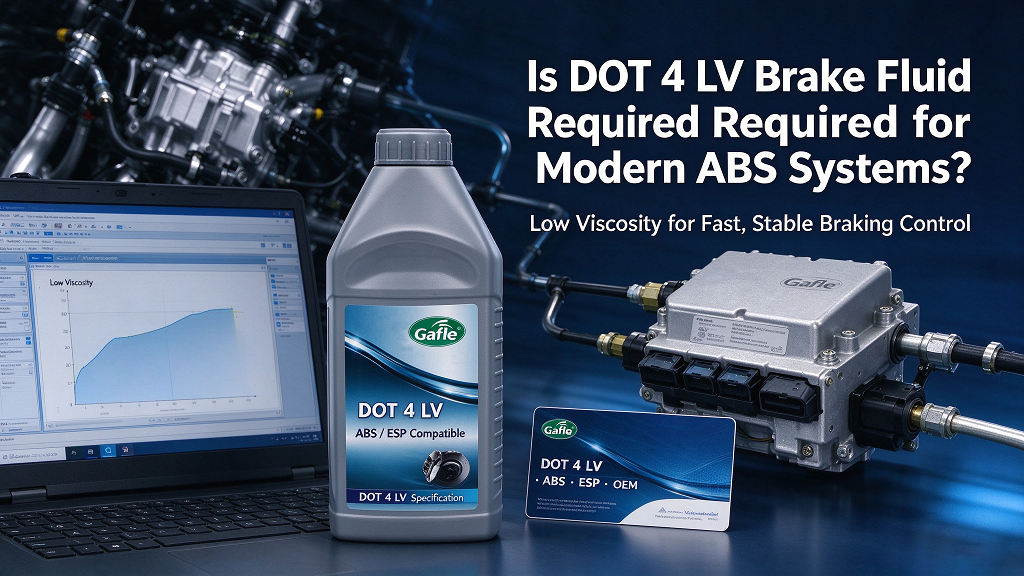
These modules utilize micro-valves with tolerances measured in single-digit microns. To guarantee rapid automated emergency braking (AEB) response, the system requires an ultra-low-viscosity fluid, universally specified as DOT 4 LV (Class 6). Standard DOT 4 or legacy DOT 3 fluids exhibit substantially higher kinematic viscosity at sub-zero temperatures, which slows motor actuation and creates perceptible lag during fast pedal-blending events.
Executing an EV brake fluid flush requires strict adherence to DOT 4 LV specifications. Introducing thick hydraulic blends can disrupt stability control modulation and trigger premature pump wear inside the primary control module.
Key Concerns for Fleet Operators and Tier Suppliers
For engineering and procurement teams focused on brake fluid maintenance for electric car supplier networks, component durability hinges on fluid condition:
- Conductivity and Galvanic Action: As moisture levels rise, copper inhibitors in the hydraulic medium deplete. Dissolved copper ions can plate onto aluminum housing walls inside expensive electro-hydraulic units, compromising valve seals.
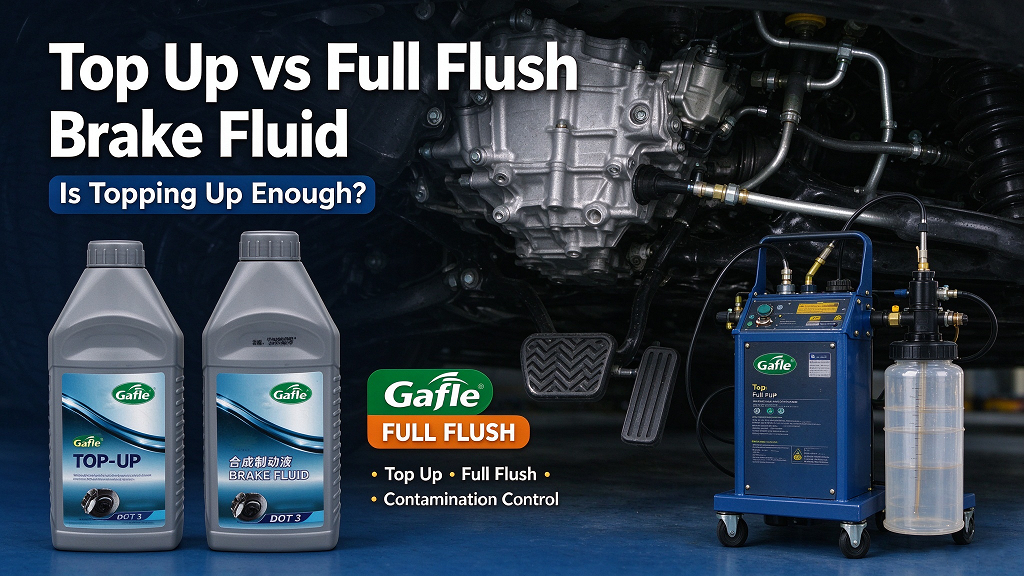
- Bleeding Pressures and Tooling: EV master cylinder reservoirs often feature complex internal baffling to prevent foaming during aggressive regen transitions. Technicians must use closed-loop pressure bleeders regulated between 1.0 and 2.0 bar (15 to 30 psi) and cycle electronic bleed routines via diagnostic software to purge secondary circuits.
- Test Methodology: Standard optical refractometers calibrated for ethylene glycol coolant are inadequate here. Maintenance crews should rely on boiling-point testers that physically heat a small fluid sample, or calibrated electrochemical strips that quantify copper content alongside moisture.
Frequently Asked Questions
Does driving in heavy rain require more frequent hydraulic flushes?
Frequent wet-weather driving does not inherently saturate the hydraulic system unless reservoir caps or caliper dust boots are damaged. However, high ambient humidity accelerates vapor diffusion through elastomeric hoses, making a two-year service interval non-negotiable in tropical or coastal environments.
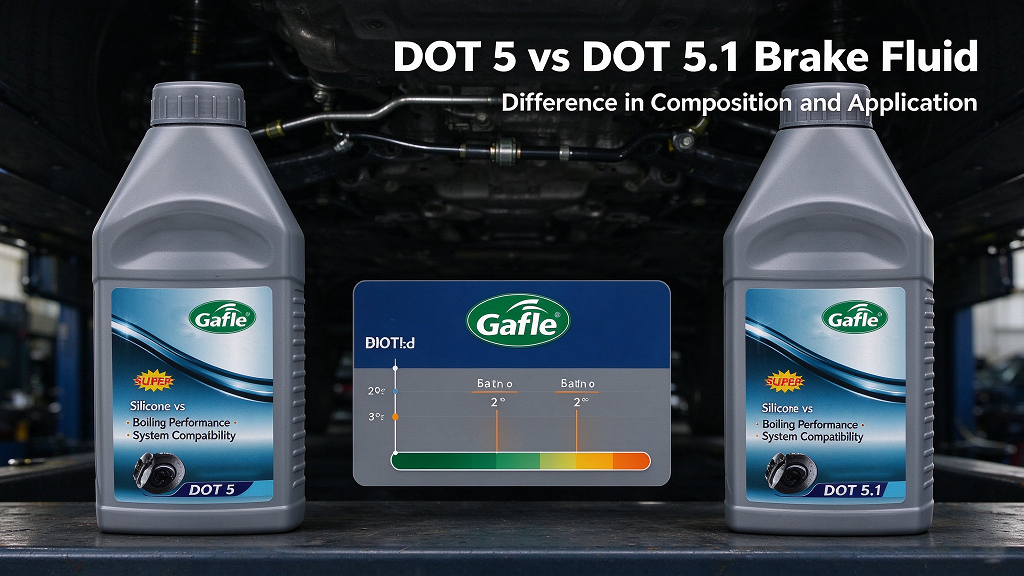
Can an EV use conventional DOT 5.1 instead of DOT 4 LV?
While DOT 5.1 offers a higher wet and dry boiling point, its kinematic viscosity at -40°C typically hovers around 900 mm²/s, compared to 700 to 750 mm²/s for dedicated Class 6 DOT 4 LV formulations. Unless the vehicle manufacturer explicitly approves DOT 5.1 in the service manual, sticking to low-viscosity Class 6 fluid is critical for stability control response.
Summary for Maintenance Decision-Makers
The absence of engine maintenance does not make hydraulic systems maintenance-free. Because regenerative braking leaves friction circuits thermally unexercised, hydraulic fluid absorbs atmospheric water without the benefit of passive heat burn-off. A firm calendar interval of 24 to 36 months—paired with Class 6 low-viscosity fluid and electronically assisted bleeding—remains the baseline requirement for maintaining braking performance and protecting electro-hydraulic hardware throughout the vehicle lifecycle.
Welcome to contact GAFLE for more information & cooperation!
peter
ZHEJIANG GAFLE AUTO CHEMICL CO.,LTD
Tel:86-579-8222 1665
Fax:86-579-8246 4690
Cel/Wechart:86-13335993986
E-mail:peter@gafle.net
Web:www.gafle.net