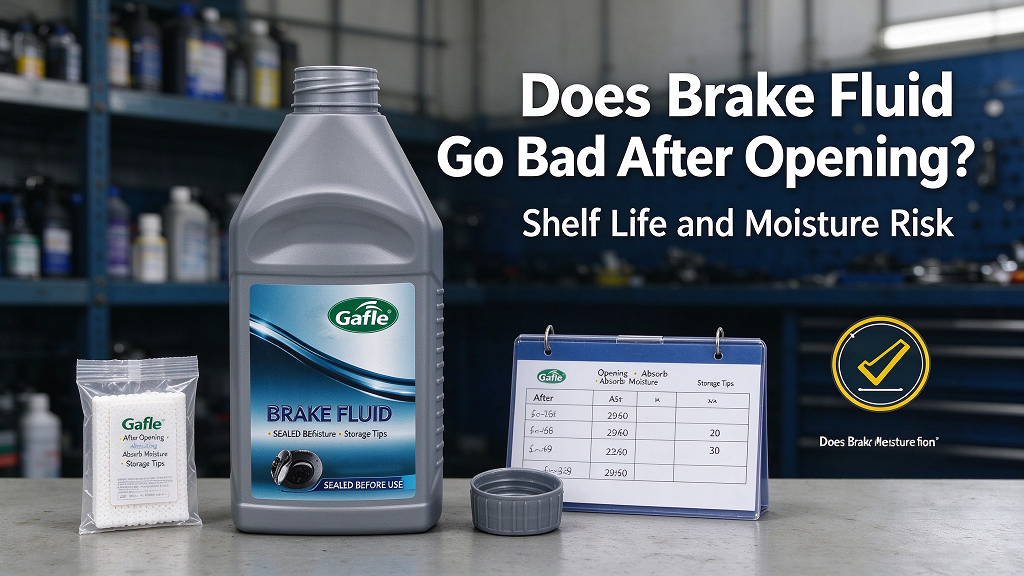
The Reality of Chemical Degradation in Glycol-Based Fluids
Ask any seasoned fleet technician or workshop supervisor, "Does brake fluid go bad after opening the bottle?" and the answer is an unequivocal yes. Unlike engine oil, hydraulic gear lubes, or transmission fluids that degrade primarily through thermal shear and oxidation over hundreds of operating hours, conventional glycol-based brake fluids start deteriorating the exact second their factory foil seal is punctured. For maintenance managers, quality assurance engineers, and service departments, relying on half-used bottles sitting on a shelf creates unnecessary liability and catastrophic hydraulic failure risks.
The Chemistry: Why Does Opened Brake Fluid Deteriorate?
Most commercial road vehicles run on Department of Transportation specifications DOT 3, DOT 4, or DOT 5.1. Chemically, these formulations consist of polyalkylene glycol ethers and borate esters. They are engineered to provide consistent viscosity, high boiling thresholds, and elastomer compatibility across wide operating temperatures. However, they are also inherently hygroscopic.
A common inquiry among technicians is: will brake fluid absorb moisture once opened? Yes, and aggressively so. Glycol molecules actively pull water vapor directly from ambient humidity. When a container is sealed at the packaging facility with nitrogen purging and an induction foil barrier, the fluid remains inert. Once that barrier is breached, the air pocket (ullage) introduced inside the bottle immediately exchanges moisture with the fluid. Every time the cap is removed, fresh humid air enters, accelerating the contamination rate even if the bottle appears tightly recapped.
Dry vs. Wet Boiling Points: The Margin for Error
To understand the danger of degraded fluid, consider standard minimum boiling temperatures mandated by federal motor vehicle safety standards:
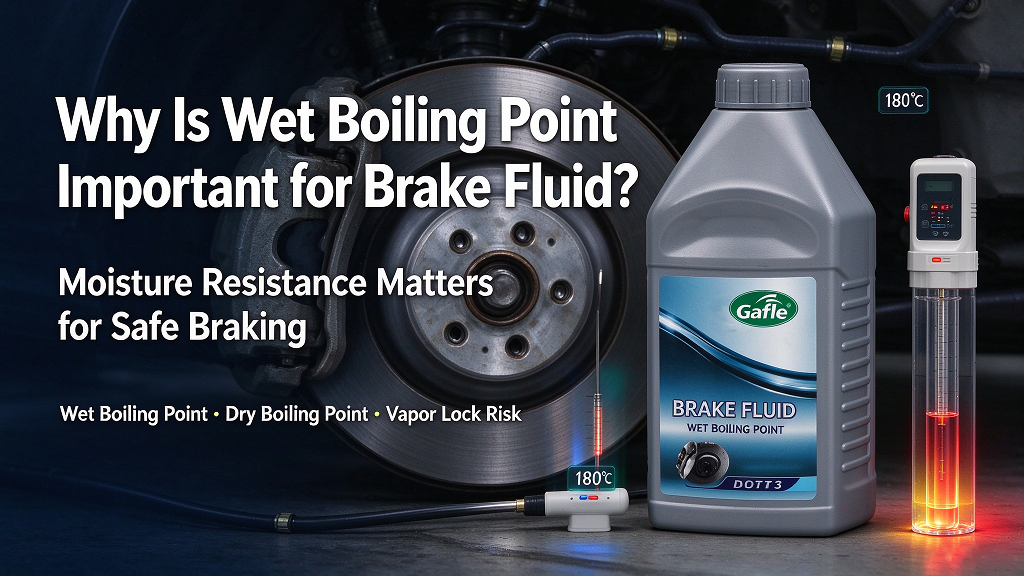
- DOT 3: Dry boiling point 205°C (401°F); Wet boiling point 140°C (284°F)
- DOT 4: Dry boiling point 230°C (446°F); Wet boiling point 155°C (311°F)
- DOT 5.1: Dry boiling point 260°C (500°F); Wet boiling point 180°C (356°F)
The "wet" boiling point reflects a water contamination level of just 3.7 percent by volume. When opened brake fluid draws moisture from the atmosphere, its boiling point drops rapidly toward that wet baseline. Under severe braking—such as prolonged mountain descents, heavy payload hauling, or repetitive emergency stops—caliper temperatures frequently surpass 150°C. Water in degraded fluid flashes into steam, creating compressible vapor pockets in the lines. The outcome is sudden vapor lock, a spongy pedal, and a sudden drop in clamping pressure.
Practical Shelf Life: Sealed vs. Opened Containers
The expected shelf life of brake fluid depends entirely on the integrity of its packaging:
| Packaging Condition | Typical Useful Life | Primary Risk Factor |
|---|---|---|
| Factory Sealed (Metal or HDPE with foil barrier) | 24 to 36 months | Micro-permeation through plastic walls over years |
| Opened (General shop environment, tightly capped) | 1 to 3 months | Trapped ambient moisture and repeated atmospheric exposure |
| Opened (Humid / unconditioned service bay) | Under 30 days | Accelerated moisture absorption via vapor pressure differential |
In aerospace, military, and rigorous commercial transit operations, internal standard operating procedures often mandate discarding any fluid remaining in a container after the initial bleed or flush. The cost of discarded fluid is negligible compared to rebuilding an ABS hydraulic control unit ruined by internal corrosion.
Storage Tips for Opened Brake Fluid Bottle Management
While industry consensus leans toward single-use procurement—buying smaller 250ml or 500ml bottles rather than five-liter jugs—there are instances where short-term staging cannot be avoided. If an opened container must be temporarily retained, follow these storage tips for opened brake fluid bottle maintenance:
- Minimize air volume: Squeeze flexible plastic bottles slightly before tightening the cap to purge excess headspace, reducing the volume of humid air trapped inside.
- Check the cap seal: Ensure the cap’s internal cardboard or polyethylene sealing liner is intact and free from grit. Torque it down firmly.
- Maintain climate control: Store containers in a dry, temperature-stable environment. Avoid concrete floors or unheated storage lockers, as diurnal temperature swings cause the bottle to breathe air through micro-gaps in the thread.
- Mark the date: Use an industrial marker to record the date and ambient humidity level at opening. Any bottle older than 90 days should be relegated strictly to clutch hydraulics (if permitted) or recycled.
Verification Tools: Testing Before Pouring
Never judge brake fluid by color alone. Clean, pale fluid can be dangerously wet, while amber-tinted fluid may still retain adequate thermal properties. Sourcing managers and shop leads should equip technicians with reliable testing instrumentation:
Inexpensive electrical conductivity pens are common, but they measure electrical resistance as an indirect proxy for water content. These pens often trigger false readings if additives or oxidation byproducts are present. For high-consequence commercial maintenance, opt for a thermal boiling point tester. These devices heat a small sample to its actual boiling threshold, providing an empirical boiling curve that eliminates guesswork.
Frequently Asked Questions
Does silicone-based DOT 5 fluid behave the same way?
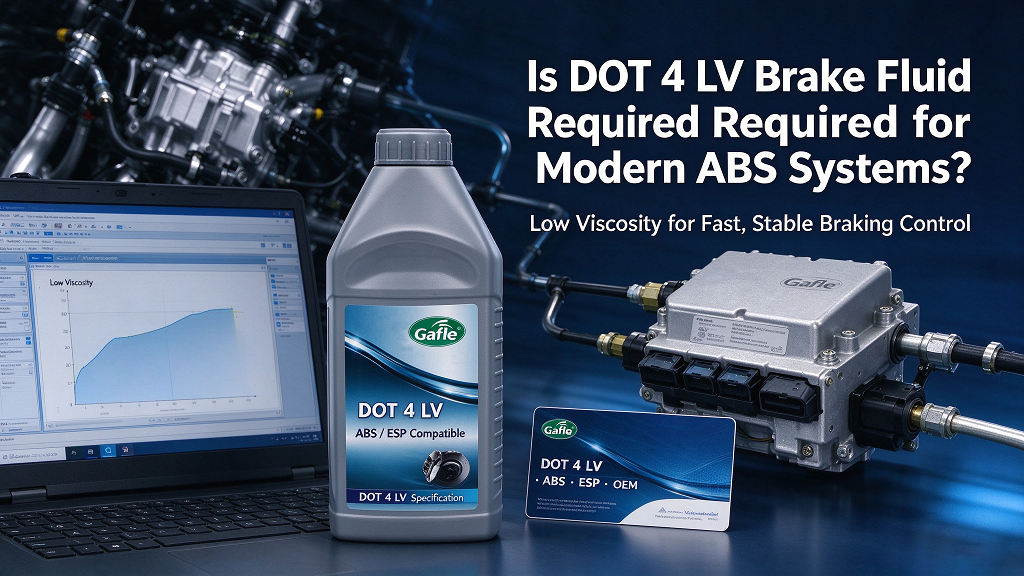
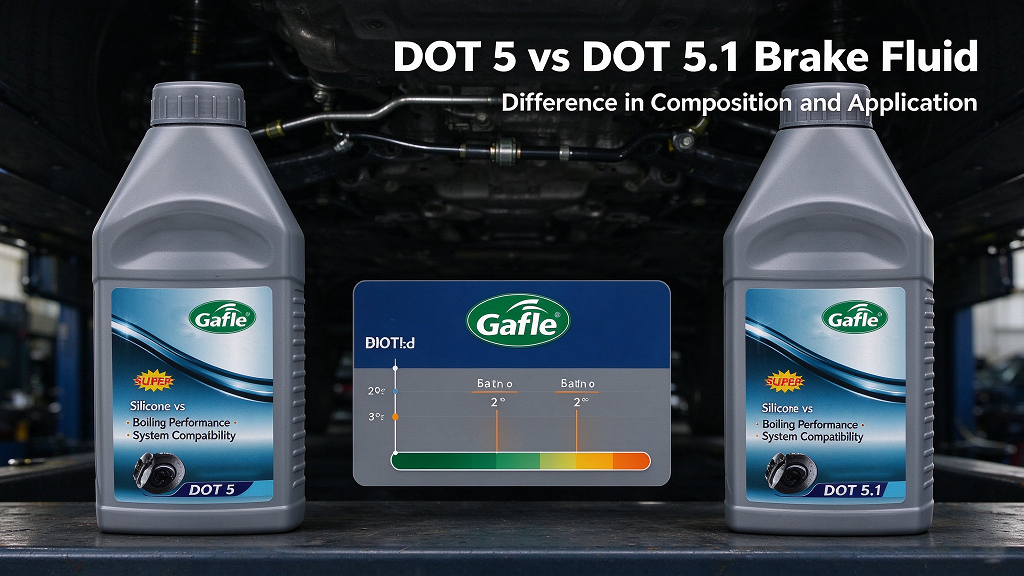
No. DOT 5 is based on polydimethylsiloxane, which is hydrophobic and does not absorb water. However, DOT 5 is incompatible with modern anti-lock braking systems (ABS) due to aeration risks and viscosity profiles, and it must never be mixed with glycol-based fluids.
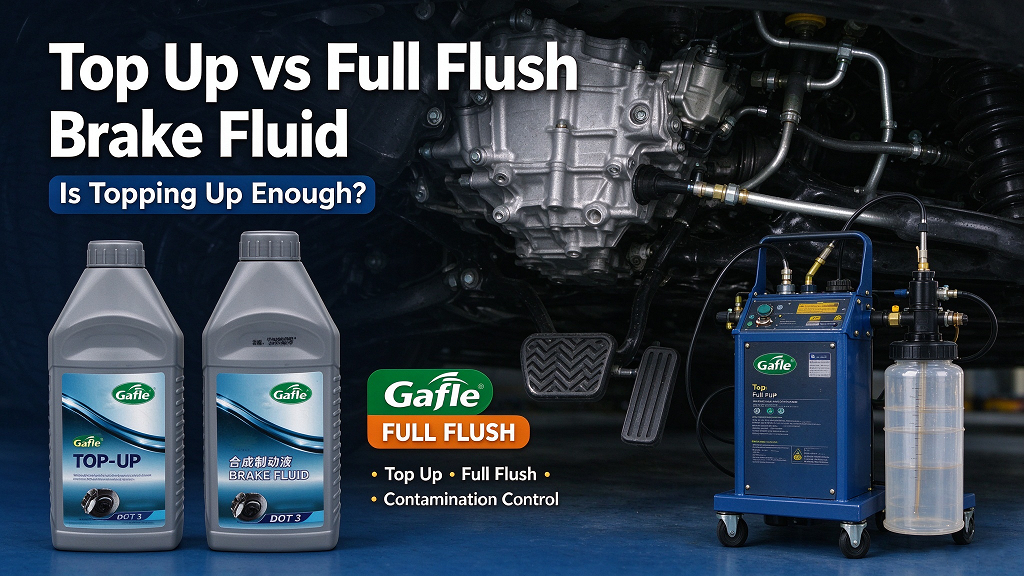
Can I use older opened fluid just for "topping off"?
It is not recommended. Adding even a small volume of water-laden fluid introduces moisture into the entire hydraulic circuit, diluting the dry boiling reserve of fresh fluid and initiating galvanic corrosion inside the master cylinder.
A Clear Operating Standard for Fleets
Fluid hygiene is cheap insurance. For product teams writing maintenance manuals or fleet directors overseeing preventive maintenance schedules, the policy should be explicit: procure fluid in container sizes matched to typical system fill volumes, break the seal immediately prior to service, and treat partial containers as disposable consumables rather than inventory.
Welcome to contact GAFLE for more information & cooperation!
peter
ZHEJIANG GAFLE AUTO CHEMICL CO.,LTD
Tel:86-579-8222 1665
Fax:86-579-8246 4690
Cel/Wechart:86-13335993986
E-mail:peter@gafle.net
Web:www.gafle.net