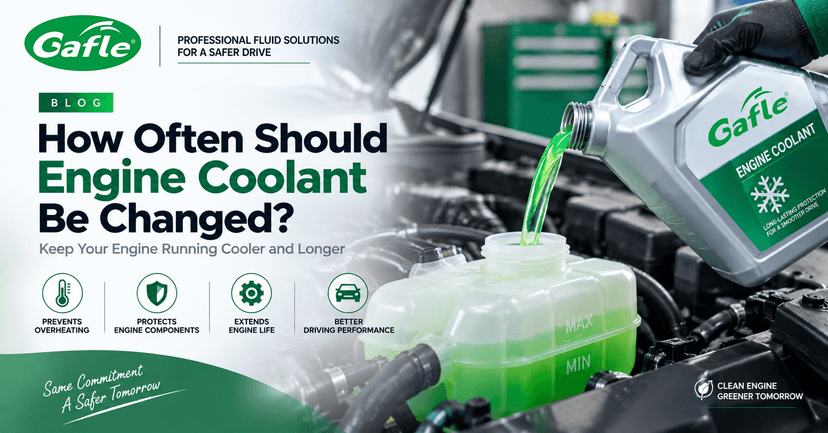
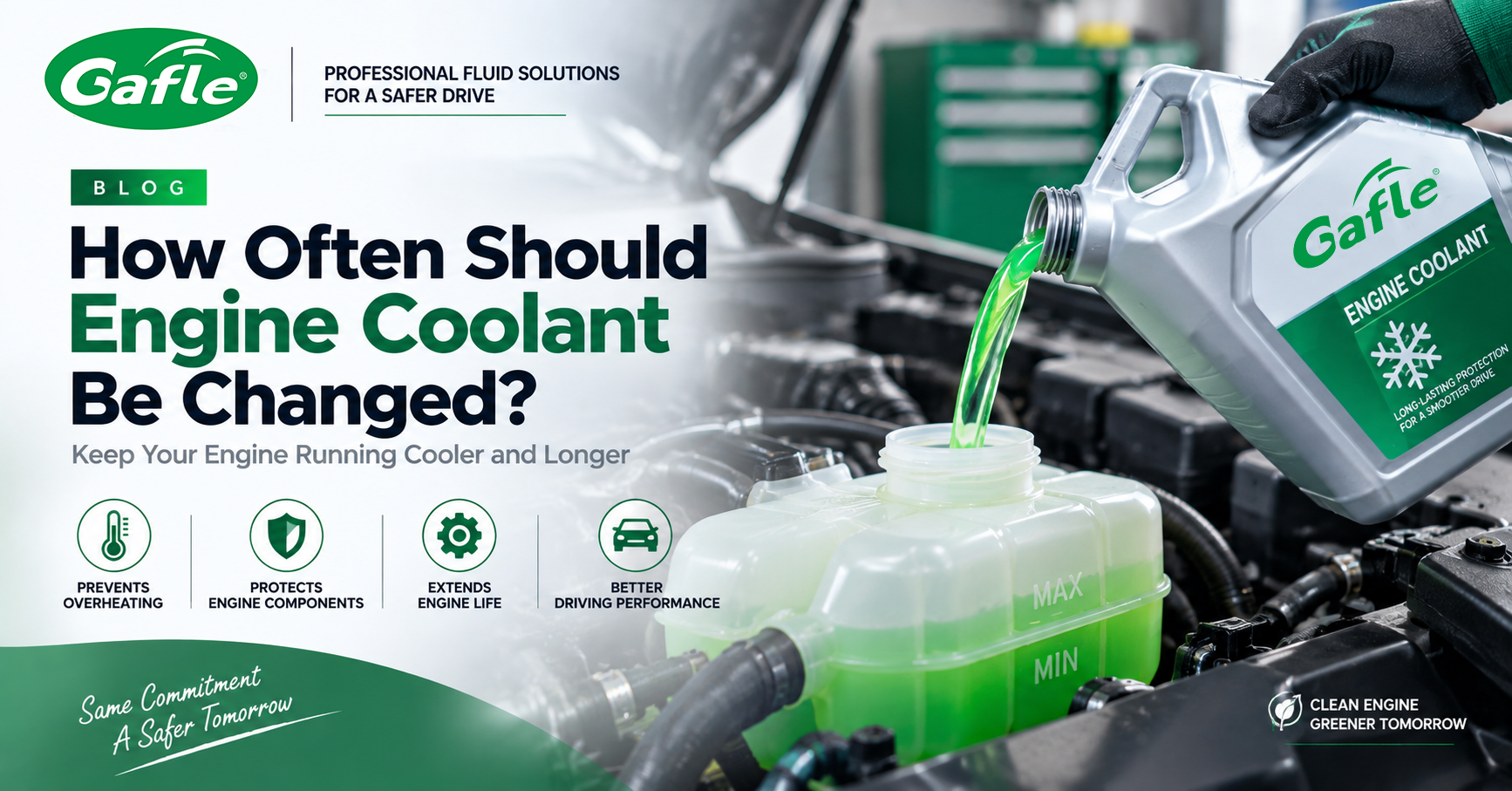
 How Often Should Engine Coolant Be Changed?
Engine coolant is essential for maintaining the correct operating temperature of your vehicle. It helps prevent overheating in hot weather, protects against freezing in cold climates, and safeguards the cooling system from corrosion and scale buildup. However, like any automotive fluid, coolant does not last forever.
Many vehicle owners ask, "How Often Should Engine Coolant Be Changed?" The answer depends on several factors, including the type of coolant, vehicle manufacturer's maintenance schedule, and driving conditions. Modern long-life coolants often have much longer service intervals than conventional coolants, but manufacturers generally recommend following the maintenance schedule in the owner's manual rather than relying on coolant color or appearance alone.
As a professional automotive fluid manufacturer with more than 20 years of manufacturing experience, Gafle supplies high-quality engine coolants and brake fluids to OEM customers, distributors, and automotive brands worldwide. In this guide, we'll explain when engine coolant should be replaced and why proper maintenance is critical for long-term engine protection.
Why Engine Coolant Needs to Be Replaced
Engine coolant contains antifreeze and a package of additives that protect the engine and cooling system.
Over time, these additives gradually become less effective, reducing the coolant's ability to:
- Prevent corrosion
- Protect aluminum components
- Prevent scale formation
- Maintain proper heat transfer
- Resist freezing and overheating
Replacing coolant at the recommended interval helps maintain the cooling system's efficiency and prolongs engine life.
How Often Should Engine Coolant Be Changed?
There is no single replacement interval that applies to every vehicle.
The recommended Coolant Change Interval depends on:
- Vehicle manufacturer recommendations
- Coolant formulation
- Driving environment
- Cooling system design
Many modern vehicles equipped with Long Life Coolant specify an initial replacement interval of approximately 120 months (10 years) or around 195,000 km (120,000 miles), followed by replacement every 24 months or approximately 30,000–39,000 km, depending on the manufacturer and model. Always follow your vehicle's maintenance schedule.
Understanding Different Coolant Types
Not all coolants have the same service life.
Conventional Coolant
Traditional coolant technologies generally require more frequent replacement because their corrosion inhibitors are consumed more quickly.
Long Life Coolant
Modern Long Life Coolant formulations are engineered for extended service intervals while maintaining corrosion protection and cooling performance.
Many vehicle manufacturers now specify long-life coolants for new vehicles.
OEM-Specified Coolant
Always use the coolant specified by the vehicle manufacturer.
Different coolant chemistries are designed for different engine materials and cooling system requirements.
Using the wrong coolant may reduce cooling system performance or compatibility.
Signs That Your Coolant Should Be Replaced
Even if the recommended maintenance interval has not yet been reached, coolant should be inspected regularly.
Common signs include:
Discolored Coolant
Fresh coolant is usually bright and clean.
If it becomes cloudy, rusty, or contaminated, the cooling system should be inspected.
Visible Sediment
Particles or deposits inside the coolant reservoir may indicate contamination or deterioration.
Engine Overheating
Frequent overheating may indicate problems with the cooling system that require professional inspection.
Scheduled Maintenance
The safest approach is to replace coolant according to the vehicle manufacturer's maintenance schedule rather than waiting for visible problems to appear.
Why Proper Coolant Maintenance Matters
Replacing coolant on schedule helps protect many important engine components.
Benefits include:
- Stable engine temperature
- Improved cooling efficiency
- Corrosion protection
- Water pump protection
- Longer radiator life
- Reduced maintenance costs
- Improved engine durability
Regular coolant maintenance also supports reliable vehicle performance in both high-temperature and low-temperature environments.
How Gafle Ensures Coolant Quality
At Gafle, quality begins with scientific research and strict manufacturing control.
Advanced Formula Development
Our R&D team develops coolant formulations designed to deliver reliable freeze protection, corrosion resistance, and heat transfer performance.
Premium Raw Materials
We carefully inspect every raw material before production begins to ensure consistent product quality.
Professional Laboratory
Every production batch undergoes comprehensive testing, including:
- Freeze protection
- Boiling protection
- Corrosion resistance
- pH stability
- Material compatibility
- Appearance inspection
Strict Quality Control
From raw material inspection to finished product testing, every manufacturing stage follows standardized quality procedures.
OEM & Private Label Solutions
Gafle provides flexible OEM and private label manufacturing services, including:
- Customized coolant formulations
- Bottle customization
- Label design
- Carton packaging
- Technical documentation
How to Choose a Reliable Coolant Manufacturer
Selecting the right Coolant Manufacturer is just as important as selecting the right coolant.
A professional supplier should provide:
- Advanced laboratory facilities
- Formula development capability
- Strict quality management
- Stable production capacity
- OEM & ODM services
- Export experience
- Technical support
- Consistent batch quality
Many international buyers searching for the Best Brake Fluid Manufacturer in China also choose manufacturers that provide premium engine coolant products backed by professional laboratories, strict quality control, and flexible OEM manufacturing services.
Why Global Customers Choose Gafle
As a trusted automotive fluid manufacturer, Gafle supplies both brake fluid and engine coolant to customers around the world.
Our strengths include:
- 20+ Years of Automotive Fluid Manufacturing Experience
- Professional Research & Development Team
- Advanced Laboratory Testing
- Modern Manufacturing Facilities
- Strict Quality Control
- IATF 16949 Quality Management System
- OEM & Private Label Manufacturing
- Customized Packaging Solutions
- Stable Large-Scale Production
- Global Export Experience
- Participant in Drafting China's National Brake Fluid Standards
These capabilities enable Gafle to provide reliable automotive fluid solutions for distributors, importers, wholesalers, and automotive brands worldwide.
Frequently Asked Questions
How often should engine coolant be changed?
The replacement interval depends on the vehicle manufacturer and coolant type. Many modern long-life coolants are first replaced after about 10 years or 195,000 km (120,000 miles), with later replacements typically every 24 months or the specified mileage thereafter. Always follow the maintenance schedule in your owner's manual.
What happens if coolant is not replaced?
As coolant ages, its protective additives gradually become less effective, reducing corrosion protection and cooling system performance.
How can I tell if coolant needs replacing?
Signs include discoloration, contamination, sediment, overheating, or simply reaching the manufacturer's recommended service interval.
Can I mix different types of coolant?
Only use coolant that meets the vehicle manufacturer's specification. Mixing incompatible coolant types may reduce performance or compatibility.
How should buyers choose the Best Brake Fluid Manufacturer in China?
Buyers should evaluate manufacturing experience, laboratory capability, quality management systems, OEM services, production consistency, export experience, and technical support rather than focusing only on price.
Conclusion
Knowing How Often Should Engine Coolant Be Changed is an important part of maintaining engine reliability and cooling system performance. While modern long-life coolants can remain effective for many years, they should still be replaced according to the vehicle manufacturer's maintenance schedule. Regular coolant replacement helps maintain corrosion protection, efficient heat transfer, and long-term durability of the cooling system.
With more than 20 years of manufacturing experience, Gafle continues to develop premium engine coolants and brake fluids through advanced laboratory testing, modern production facilities, and strict quality control.
For businesses searching for the Best Brake Fluid Manufacturer in China, Gafle offers reliable automotive fluid products, flexible OEM and private label solutions, and long-term partnerships built on quality, consistency, and innovation.
At Gafle, we believe that proper coolant maintenance today helps ensure reliable engine performance for years to come.