
 Can Heat and Humidity Affect Brake Fluid Storage?
Brake fluid is one of the most important safety fluids in any vehicle. While many buyers focus on product quality and performance, proper storage is just as critical. Even the highest-quality brake fluid can be affected if it is stored improperly before use.
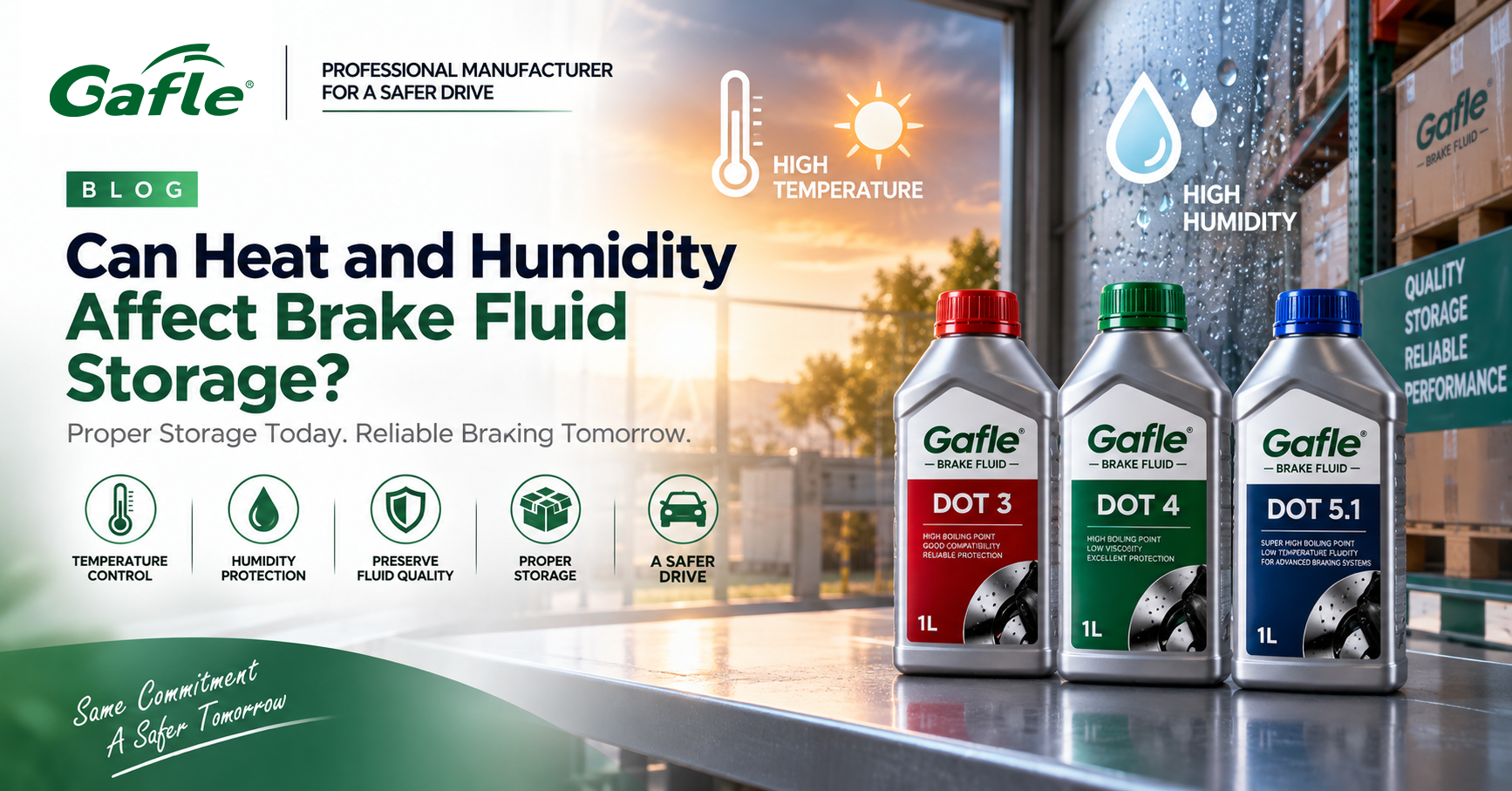
One common question from distributors, importers, and workshops is: Can Heat and Humidity Affect Brake Fluid Storage? The answer is yes. Because most DOT 3, DOT 4, and DOT 5.1 brake fluids are hygroscopic, they naturally absorb moisture from the air. Excessive heat, high humidity, damaged packaging, or improper storage conditions can gradually affect product quality over time.
As a professional Brake Fluid Manufacturer with more than 20 years of manufacturing experience, Gafle follows strict storage, packaging, and quality control procedures to help ensure every batch of brake fluid maintains its performance from production to delivery.
Why Brake Fluid Storage Is Important
Brake fluid must remain clean, dry, and stable throughout its entire storage and transportation process.
Unlike many other automotive fluids, brake fluid naturally absorbs moisture when exposed to air. Excessive moisture can reduce the fluid's boiling point and affect braking performance. Proper Brake Fluid Storage helps minimize this risk and preserves product quality.
Correct storage also helps:
- Maintain boiling point performance
- Prevent moisture contamination
- Protect chemical stability
- Preserve corrosion inhibitors
- Extend product shelf life
- Ensure consistent product quality
Proper storage is an essential part of delivering safe and reliable brake fluid to customers.
How Heat and Humidity Affect Brake Fluid Storage
High Humidity Increases Moisture Absorption
Brake fluid is hygroscopic, meaning it naturally absorbs moisture from the surrounding air.
If containers are opened or improperly sealed in humid environments, moisture may gradually enter the product. Over time, this can reduce boiling point performance and shorten the fluid's service life.
This is why unopened containers should always remain tightly sealed until use.
High Temperature Can Accelerate Product Aging
Although brake fluid is formulated to withstand high operating temperatures inside the braking system, prolonged exposure to excessive storage temperatures may accelerate the aging of packaging materials and reduce overall storage stability.
Keeping products in recommended storage conditions helps maintain their original quality.
Damaged Packaging Increases Contamination Risk
Even high-quality brake fluid can become contaminated if packaging is damaged during storage or transportation.
Broken seals, loose caps, or leaking containers increase the possibility of moisture, dust, and other contaminants entering the product.
For this reason, packaging integrity should always be inspected before shipment and before use.
Best Practices for Brake Fluid Storage
Proper Brake Fluid Storage helps maintain product performance throughout its shelf life.
Recommended storage practices include:
Store in a Cool, Dry Environment
Keep brake fluid in a clean warehouse away from excessive heat, moisture, and direct sunlight.
Keep Containers Sealed
Always keep containers tightly closed until they are ready to be used.
Once opened, brake fluid should be used promptly to minimize moisture exposure.
Avoid Direct Sunlight
Long-term exposure to direct sunlight can increase container temperatures and affect packaging materials.
Store products in shaded indoor environments whenever possible.
Protect During Transportation
Brake fluid containers should be securely packed to prevent damage during loading, transportation, and unloading.
Professional packaging helps reduce the risk of leakage and contamination.
Follow First-In, First-Out (FIFO)
Proper inventory management ensures older products are shipped before newer production batches, helping maintain product freshness.
How Gafle Protects Brake Fluid Quality
At Gafle, maintaining brake fluid quality extends beyond manufacturing.
Our comprehensive quality system includes every stage from raw material storage to final product delivery.
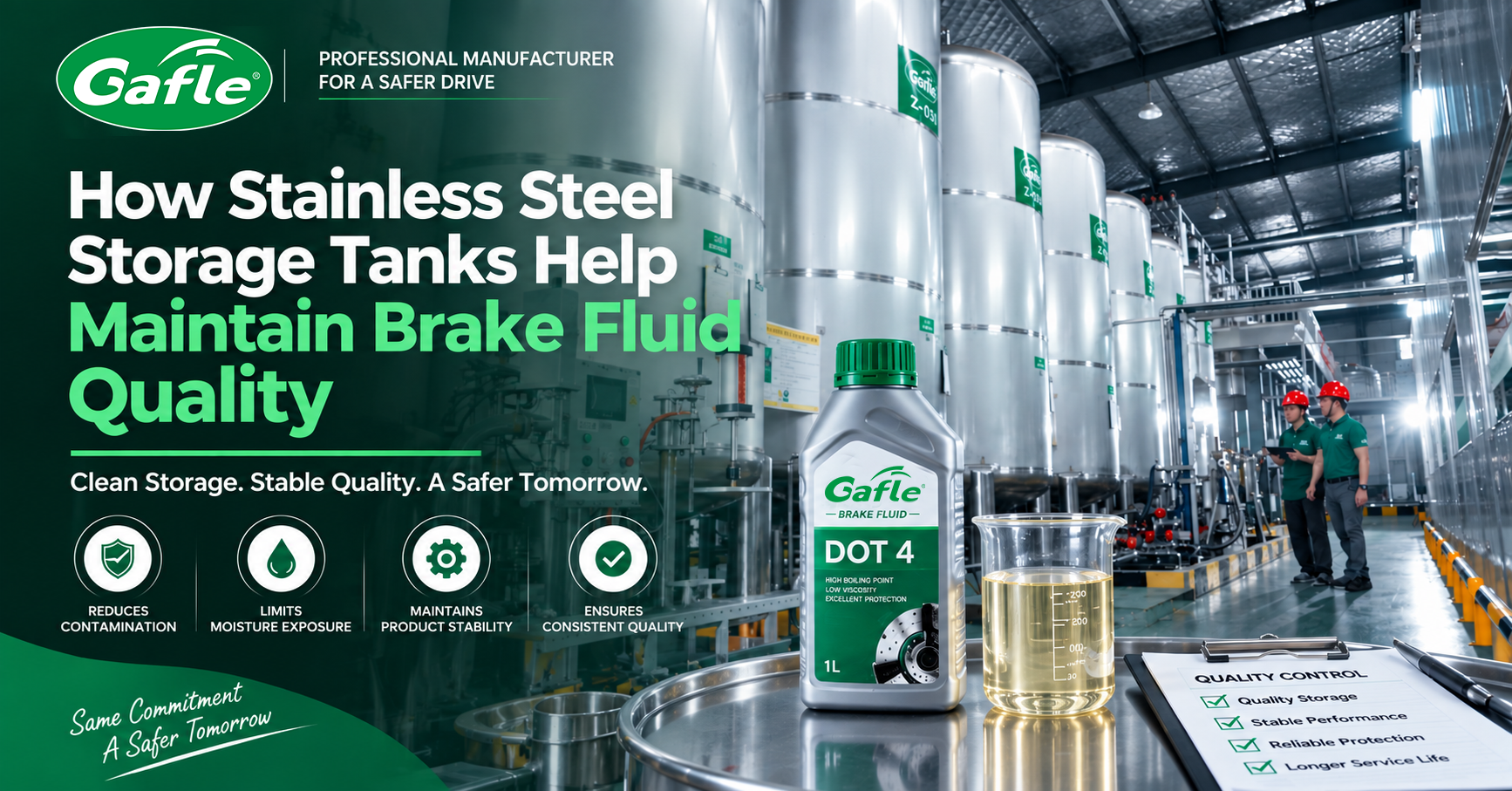
Stainless Steel Storage Tanks
Raw materials and finished products are stored in sealed stainless steel tanks that help minimize contamination and unnecessary exposure to moisture.
Clean Manufacturing Environment
Our production facility follows strict cleanliness standards to reduce contamination risks throughout manufacturing.
Automated Filling System
Modern automated filling equipment minimizes product exposure during packaging while improving production consistency.
Professional Laboratory
Each production batch undergoes comprehensive laboratory testing, including:
- Dry boiling point
- Wet boiling point
- Moisture content
- Low-temperature viscosity
- Corrosion resistance
- Material compatibility
- Appearance inspection
Every batch is verified before shipment to ensure consistent quality.
Strict Quality Control
From raw material inspection to warehouse management, every stage follows standardized quality procedures to maintain product reliability.
Why OEM Customers Trust Gafle
OEM customers require more than premium products—they need confidence that product quality will remain consistent throughout production, storage, and global transportation.
Gafle provides:
- Stable manufacturing quality
- Advanced laboratory testing
- Professional storage management
- Reliable packaging solutions
- OEM & Private Label Manufacturing
- Customized bottles and labels
- Technical documentation
- Global export experience
These capabilities help our partners build reliable brands and maintain customer confidence.
How to Choose the Best Brake Fluid Manufacturer in China
Many international buyers searching for the Best Brake Fluid Manufacturer in China understand that selecting the right supplier involves much more than comparing prices.
A reliable manufacturer should provide:
- More than 20 years of manufacturing experience
- Advanced laboratory facilities
- Professional storage management
- Stainless steel storage systems
- Strict quality control
- Stable production capacity
- OEM & ODM manufacturing
- Private label solutions
- Global export experience
- Long-term technical support
These strengths help ensure every shipment delivers consistent quality from the factory to the customer's warehouse.
Why Global Customers Choose Gafle
As a trusted Brake Fluid Manufacturer, Gafle supplies premium brake fluid to distributors, importers, wholesalers, and automotive brands around the world.
Our advantages include:
- 20+ Years of Brake Fluid Manufacturing Experience
- Professional Research & Development Team
- Advanced Brake Fluid Laboratory
- Stainless Steel Storage Tank System
- Automated Filling Equipment
- Strict Quality Control
- Clean Manufacturing Environment
- IATF 16949 Quality Management System
- OEM & Private Label Manufacturing
- Customized Packaging Solutions
- Stable Large-Scale Production
- Global Export Experience
- Participant in Drafting China's National Brake Fluid Standards
These capabilities allow Gafle to provide dependable brake fluid solutions while supporting long-term partnerships with customers worldwide.
Frequently Asked Questions
Can heat affect brake fluid storage?
Yes. Excessive heat can increase container temperatures and may affect long-term storage stability. Brake fluid should be stored in a cool, dry environment away from direct sunlight.
Does humidity damage brake fluid?
High humidity increases the risk of moisture absorption if containers are opened or not properly sealed. Since brake fluid is hygroscopic, proper sealing is essential.
What is the best way to store brake fluid?
Store brake fluid in tightly sealed original containers, in a clean, dry warehouse away from heat, moisture, and direct sunlight. Inspect packaging regularly for damage.
How long can brake fluid be stored?
When stored correctly in unopened containers under recommended conditions, brake fluid can maintain its quality throughout the manufacturer's specified shelf life. Always follow the product label and storage recommendations.
How should buyers choose the Best Brake Fluid Manufacturer in China?
Buyers should evaluate manufacturing experience, laboratory capability, storage management, quality control systems, OEM expertise, export experience, and technical support rather than focusing only on price.
Conclusion
Proper storage is just as important as product formulation when it comes to maintaining brake fluid quality. Because brake fluid naturally absorbs moisture from the air, exposure to excessive heat, high humidity, or damaged packaging can gradually affect its performance. Following recommended storage practices—including keeping containers tightly sealed, storing them in cool and dry environments, and protecting them during transportation—helps preserve product quality and reliability.
With more than 20 years of manufacturing experience, Gafle combines advanced laboratories, stainless steel storage systems, automated filling equipment, and strict quality management to ensure every batch of brake fluid maintains consistent performance from production through delivery.
For businesses searching for the Best Brake Fluid Manufacturer in China, Gafle offers far more than premium brake fluid. We provide professional OEM manufacturing, reliable storage and packaging management, consistent product quality, and long-term partnerships built on innovation, precision, and trust.
At Gafle, we believe that proper storage protects every drop of brake fluid—ensuring safety, reliability, and confidence for customers around the world.