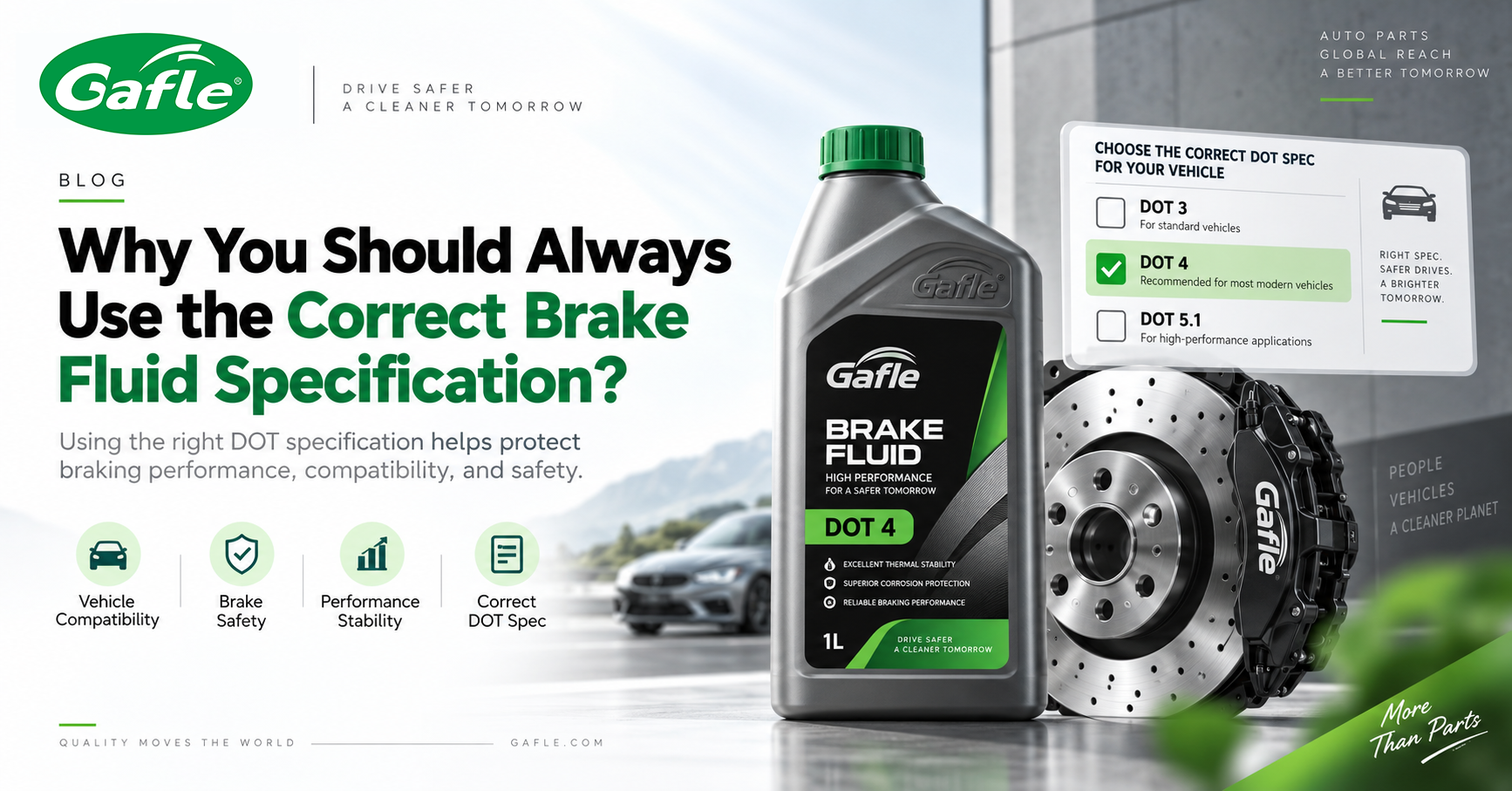
 Why You Should Always Use the Correct Brake Fluid Specification
Brake fluid is one of the most important safety fluids in any vehicle. It transfers hydraulic pressure from the brake pedal to the braking system, ensuring reliable stopping performance under a wide range of driving conditions. However, even high-quality brake fluid may not perform correctly if it does not meet the vehicle's required specification.
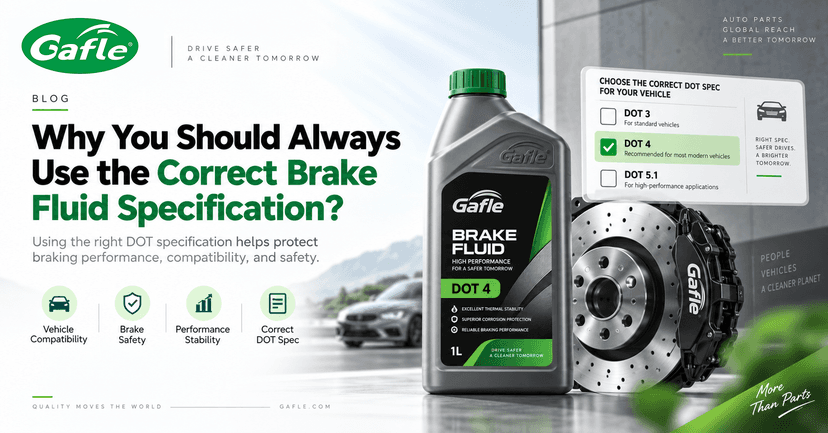
Many vehicle owners and even some buyers assume that all brake fluids are interchangeable. In reality, different vehicles are designed to use specific brake fluid standards, such as DOT 3, DOT 4, or DOT 5.1. Using the wrong specification may affect braking performance, component compatibility, and long-term system reliability. Vehicle manufacturers and FMVSS 116 labeling both emphasize following the manufacturer's recommended brake fluid specification and keeping brake fluid clean and dry.
As a professional Brake Fluid Manufacturer with more than 20 years of manufacturing experience, Gafle develops and manufactures high-quality brake fluids that comply with international standards and support OEM customers, distributors, and automotive brands worldwide.
What Is a Brake Fluid Specification?
A Brake Fluid Specification defines the minimum performance requirements a brake fluid must meet for a particular braking system.
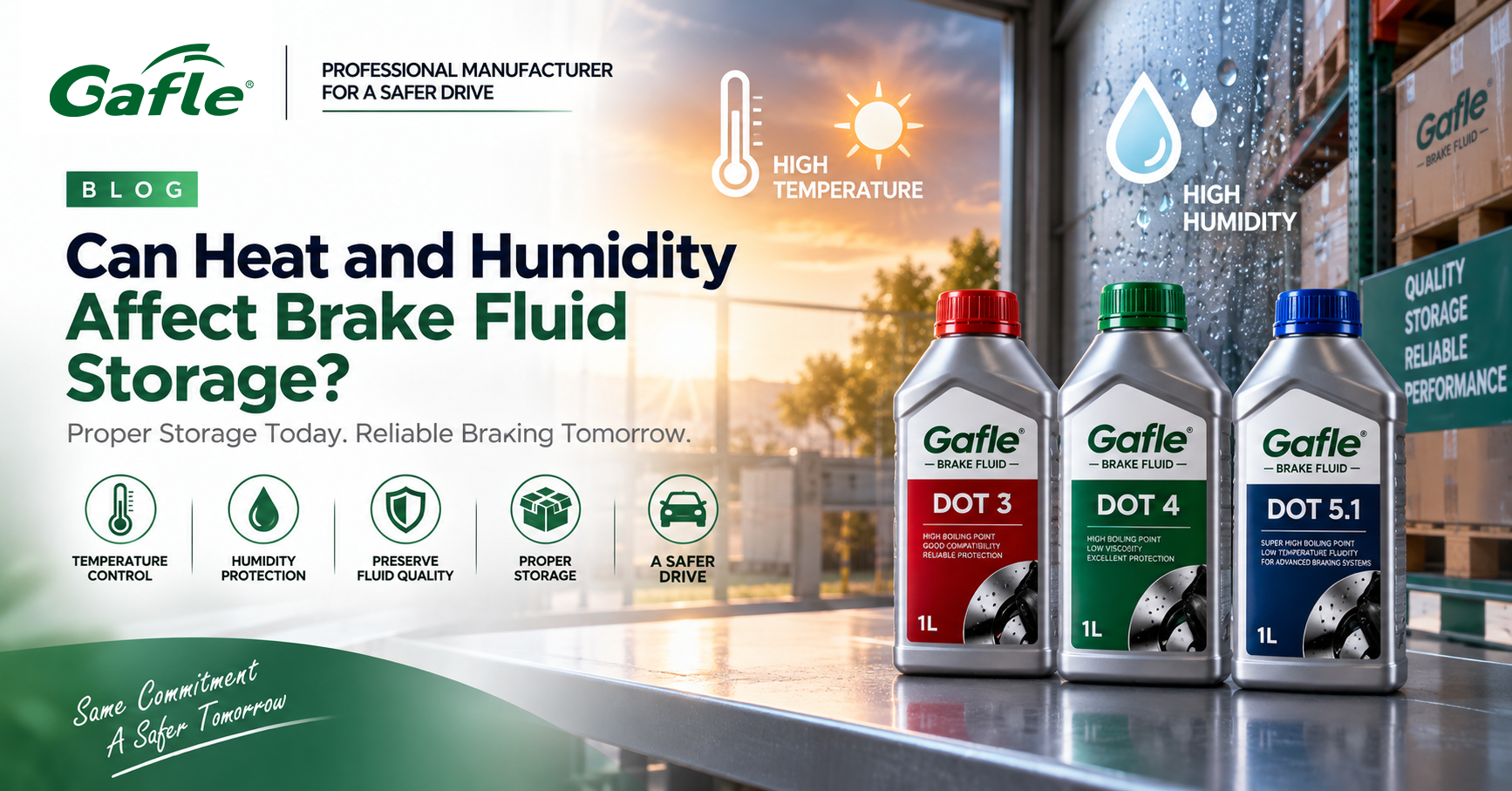
The most common specifications include:
- DOT 3
- DOT 4
- DOT 5.1
These specifications establish performance requirements for characteristics such as:
- Dry boiling point
- Wet boiling point
- Low-temperature viscosity
- Corrosion resistance
- Material compatibility
- Chemical stability
Choosing the correct specification helps ensure the brake system performs as designed. FMVSS 116 also requires brake fluids to be identified by their DOT grade and certified as conforming to the standard.
Why the Correct Brake Fluid Specification Matters
Using the proper brake fluid is essential for both safety and long-term vehicle reliability.
Maintain Braking Performance
Different brake systems are engineered around specific fluid characteristics.
Using the correct specification helps maintain stable hydraulic pressure and consistent braking response during everyday driving and demanding operating conditions.
Ensure Adequate Boiling Performance
During repeated braking, brake temperatures increase significantly.
Brake fluids with insufficient boiling performance may be more susceptible to vapor formation under extreme conditions, reducing hydraulic efficiency.
Selecting the specification recommended by the vehicle manufacturer helps ensure appropriate performance for the intended application.
Protect Brake System Components
Brake fluid must be compatible with:
- Rubber seals
- Brake hoses
- Master cylinders
- ABS components
- Calipers
Using the specified brake fluid helps maintain compatibility with these components throughout the service life of the braking system.
Support Modern Brake Technologies
Modern vehicles equipped with ABS, ESC, and other electronic braking systems may require brake fluids with specific viscosity and performance characteristics.
Using the recommended specification helps these systems operate as intended.
Understanding Brake Fluid Compatibility
Many people ask whether different brake fluids can be mixed.
The answer depends on the fluid type and the vehicle manufacturer's requirements.
DOT 3 vs DOT 4
DOT 4 generally provides a higher minimum boiling point than DOT 3 while remaining glycol-based.
Many modern passenger vehicles specify DOT 4 because of its improved high-temperature performance.
DOT 5.1
DOT 5.1 is also glycol-based and offers higher performance than many conventional fluids.
Despite its name, it is not the same as silicone-based DOT 5.
DOT 5
DOT 5 uses a silicone-based formulation and is not intended for many braking systems designed for glycol-based fluids.
Always follow the vehicle manufacturer's recommendation before selecting or changing brake fluid.
What Can Happen If You Use the Wrong Brake Fluid?
Selecting an incorrect brake fluid specification may lead to several potential issues.
Reduced Braking Performance
If the fluid does not meet the required performance characteristics, braking response may not match the vehicle's original design.
Lower Temperature Resistance
A brake fluid with a lower specification than required may provide less thermal performance under demanding operating conditions.
Component Compatibility Issues
Brake system materials are designed to work with approved brake fluid formulations.
Using an unsuitable fluid may affect long-term compatibility with seals and other hydraulic components.
Increased Maintenance Costs
Choosing the correct brake fluid from the beginning helps reduce unnecessary maintenance and supports long-term brake system reliability.
How Gafle Ensures Specification Compliance
At Gafle, every brake fluid formulation is developed and tested to meet demanding quality standards.
Advanced Formula Development
Our R&D team continuously develops formulations that meet the performance requirements of different international brake fluid specifications.
Professional Laboratory
Every production batch undergoes comprehensive laboratory testing, including:
- Dry boiling point
- Wet boiling point
- Low-temperature viscosity
- Corrosion resistance
- Material compatibility
- Chemical stability
- Appearance inspection
Premium Raw Materials
Only carefully selected raw materials are approved for production after strict quality inspection.
Strict Quality Control
From raw material inspection through finished product testing, every production stage follows standardized quality management procedures.
Stable Batch Consistency
Advanced production equipment and standardized manufacturing processes help ensure consistent quality across every production batch.
Why OEM Customers Choose Gafle
Global distributors and automotive brands require more than high-quality products—they need a manufacturing partner they can trust.
Gafle provides:
- 20+ Years of Brake Fluid Manufacturing Experience
- Professional Brake Fluid Laboratory
- Advanced Testing Equipment
- Strict Quality Control
- Modern Manufacturing Facilities
- Clean Production Environment
- IATF 16949 Quality Management System
- OEM & ODM Manufacturing
- Private Label Solutions
- Customized Bottles, Labels, and Packaging
- Stable Large-Scale Production
- Global Export Experience
- Participation in Drafting China's National Brake Fluid Standards
These capabilities help customers maintain consistent product quality and strengthen their own brands.
How to Choose the Best Brake Fluid Manufacturer in China
Many international buyers searching for the Best Brake Fluid Manufacturer in China understand that choosing the right manufacturer involves much more than comparing prices.
A reliable manufacturing partner should provide:
- Professional laboratory facilities
- Compliance with international brake fluid standards
- Advanced testing capability
- Stable production capacity
- Strict quality management
- OEM & ODM expertise
- Private label services
- Export experience
- Technical support
- Long-term manufacturing partnership
A manufacturer with these strengths can deliver consistent product quality while supporting long-term business growth.
Frequently Asked Questions
Why is using the correct brake fluid specification important?
The correct brake fluid specification helps ensure proper braking performance, component compatibility, and reliable operation under the conditions for which the vehicle was designed.
Can I use DOT 4 instead of DOT 3?
Some vehicles may permit this, while others have specific requirements. Always follow the recommendation in the vehicle owner's manual or service documentation rather than assuming different specifications are interchangeable.
Is DOT 5 the same as DOT 5.1?
No. DOT 5 is silicone-based, while DOT 5.1 is glycol-based. They are different fluid types and should not be treated as equivalent.
How does Gafle ensure brake fluid quality?
Gafle combines advanced laboratory testing, strict quality management, premium raw materials, standardized production processes, and modern manufacturing facilities to ensure every batch meets high quality standards.
How should buyers choose the Best Brake Fluid Manufacturer in China?
Buyers should evaluate manufacturing experience, laboratory capability, quality management systems, OEM services, production consistency, export experience, and technical support rather than focusing only on price.
Conclusion
Choosing the correct Brake Fluid Specification is essential for maintaining safe braking performance, protecting brake system components, and ensuring long-term vehicle reliability. Brake fluid should always match the specification recommended by the vehicle manufacturer rather than being selected solely by price or availability. Following the proper specification helps maintain compatibility, thermal performance, and overall system safety.
With more than 20 years of manufacturing experience, Gafle continues to invest in advanced laboratory facilities, professional research and development, modern production equipment, and strict quality management to produce premium brake fluid for customers around the world.
For businesses searching for the Best Brake Fluid Manufacturer in China, Gafle offers reliable products, flexible OEM and private label services, and long-term manufacturing partnerships built on quality, consistency, and innovation.
At Gafle, we believe that every safe stop begins with using the right brake fluid—and the right brake fluid begins with the right specification.