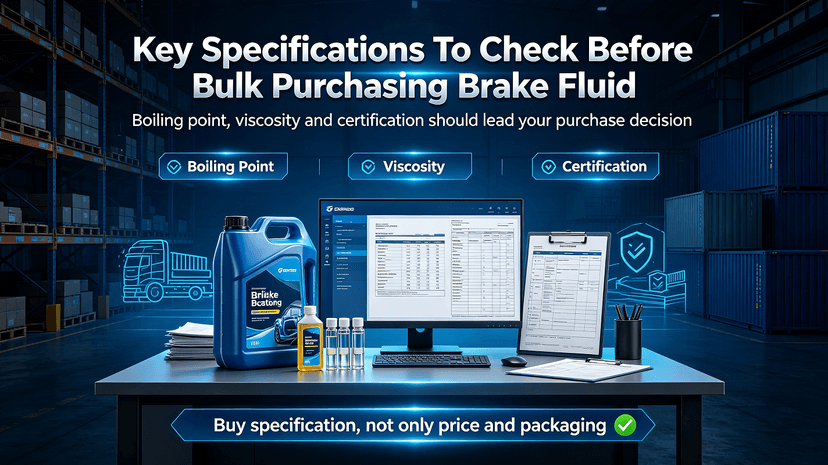
How to Select Reliable Brake Fluid for Distribution
Choosing how to select reliable brake fluid for distribution is not just a purchasing exercise. For distributors, it affects shelf stability, customer complaints, workshop safety, and how much time gets lost handling returns or explaining compatibility issues. Brake fluid looks like a simple commodity, but the wrong choice can create outsized problems once it is moved through warehouses, repackaged, and sold into mixed vehicle fleets.
The challenge is that buyers are often comparing product sheets that sound similar. On paper, many fluids claim the same base performance. In practice, the differences show up in moisture resistance, boiling performance, packaging quality, labeling clarity, and whether the product matches the market you actually serve. A distributor needs a product that is consistent, easy to identify, and suitable for the channels it will pass through.
What Reliability Really Means in Brake Fluid Supply
Reliability in brake fluid is not one single attribute. It is a combination of formulation consistency, clear brake fluid specifications, stable packaging, and dependable supply. If one shipment behaves differently from the last, even slightly, that inconsistency can spread through your network quickly. Workshops notice. Retail customers notice. And because brake fluid is a safety-critical product, there is very little room for “close enough.”
For distribution purposes, reliable product usually means the supplier can maintain the same grade, the same labeling, and the same container quality over repeated orders. It also means the product is packaged in a way that reduces contamination risk after the pail, bottle, or drum is opened. That last point is often underestimated. Brake fluid is sensitive to moisture, and a poor package choice can make a good product look bad by the time it reaches the end user.
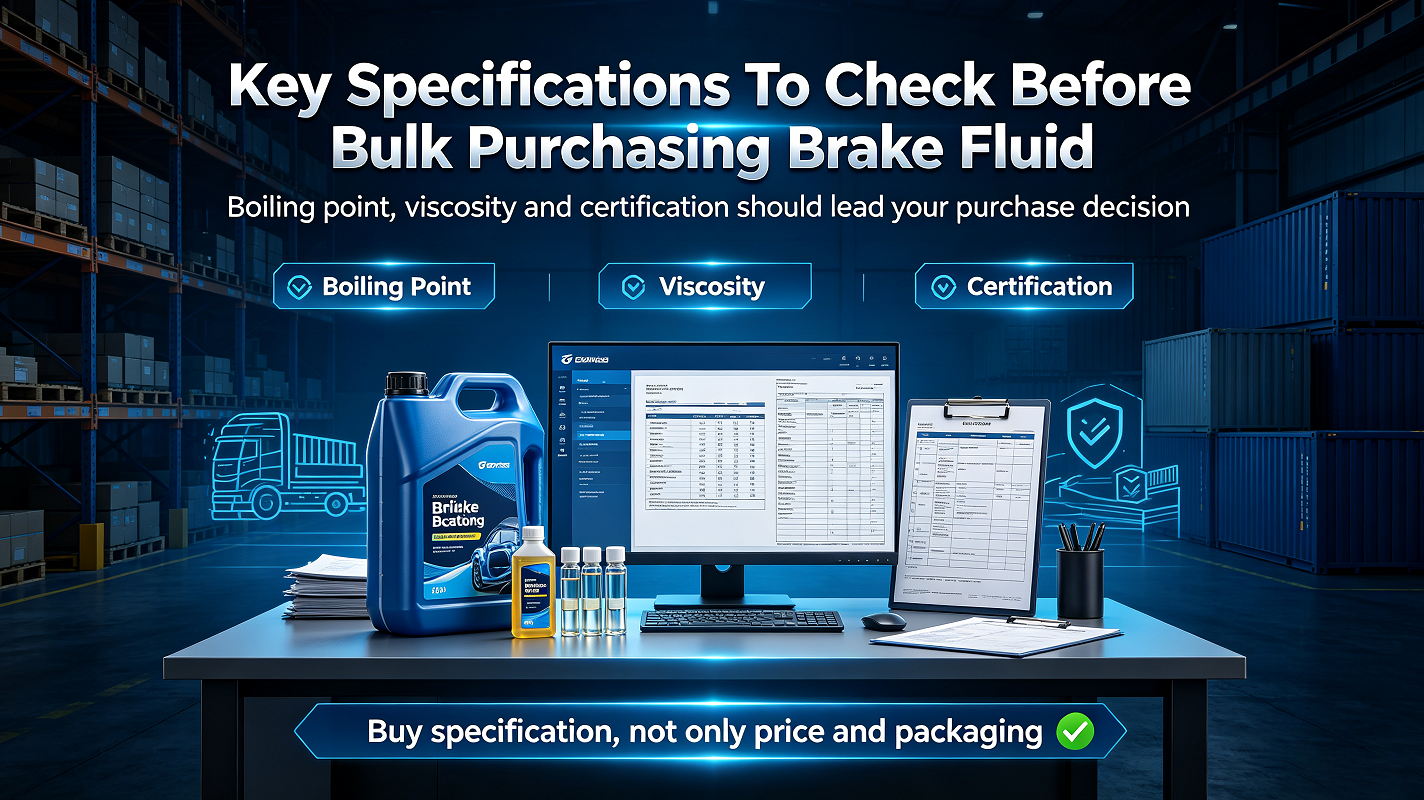
Key Specs for Bulk Brake Fluid Purchasing
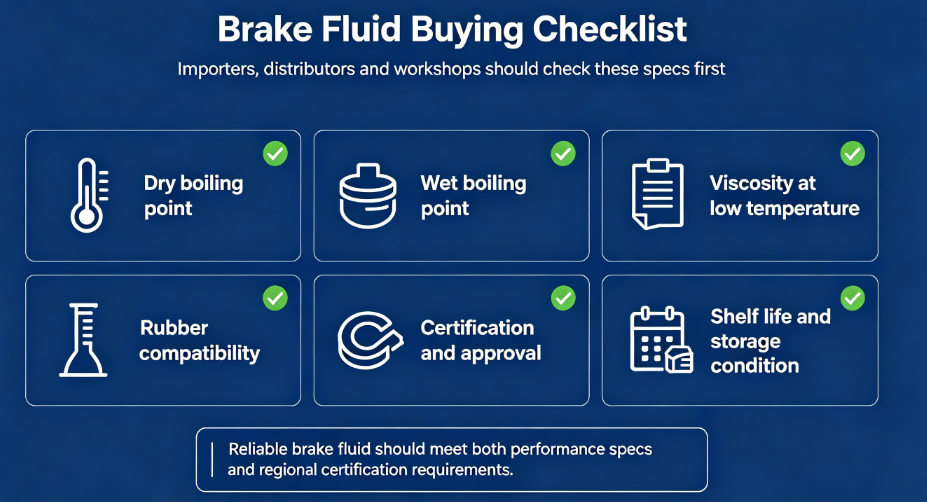
When reviewing key specs for bulk brake fluid purchasing, start with the basics: fluid type, performance rating, compatibility, and packaging format. Not every buyer needs every detail, but the distributor should know exactly what each specification means for downstream users.
1. Fluid type and application fit
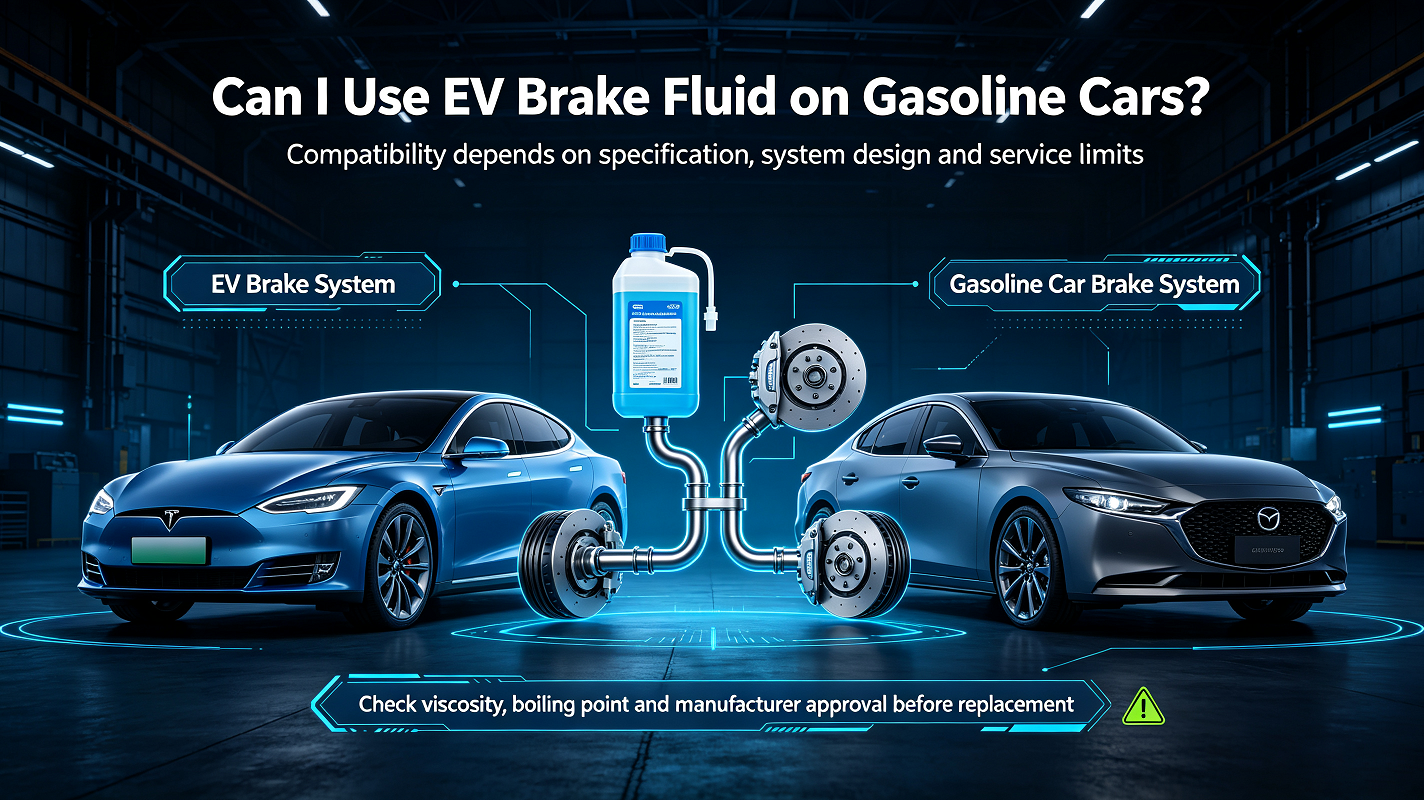
Brake fluid is commonly sold in distinct categories, and each category serves a different vehicle application. A distribution business that serves passenger cars, commercial vehicles, or mixed aftermarket channels should avoid treating every product as interchangeable. Compatibility mistakes create costly claims and, more importantly, can compromise braking performance.
2. Performance behavior under heat and moisture
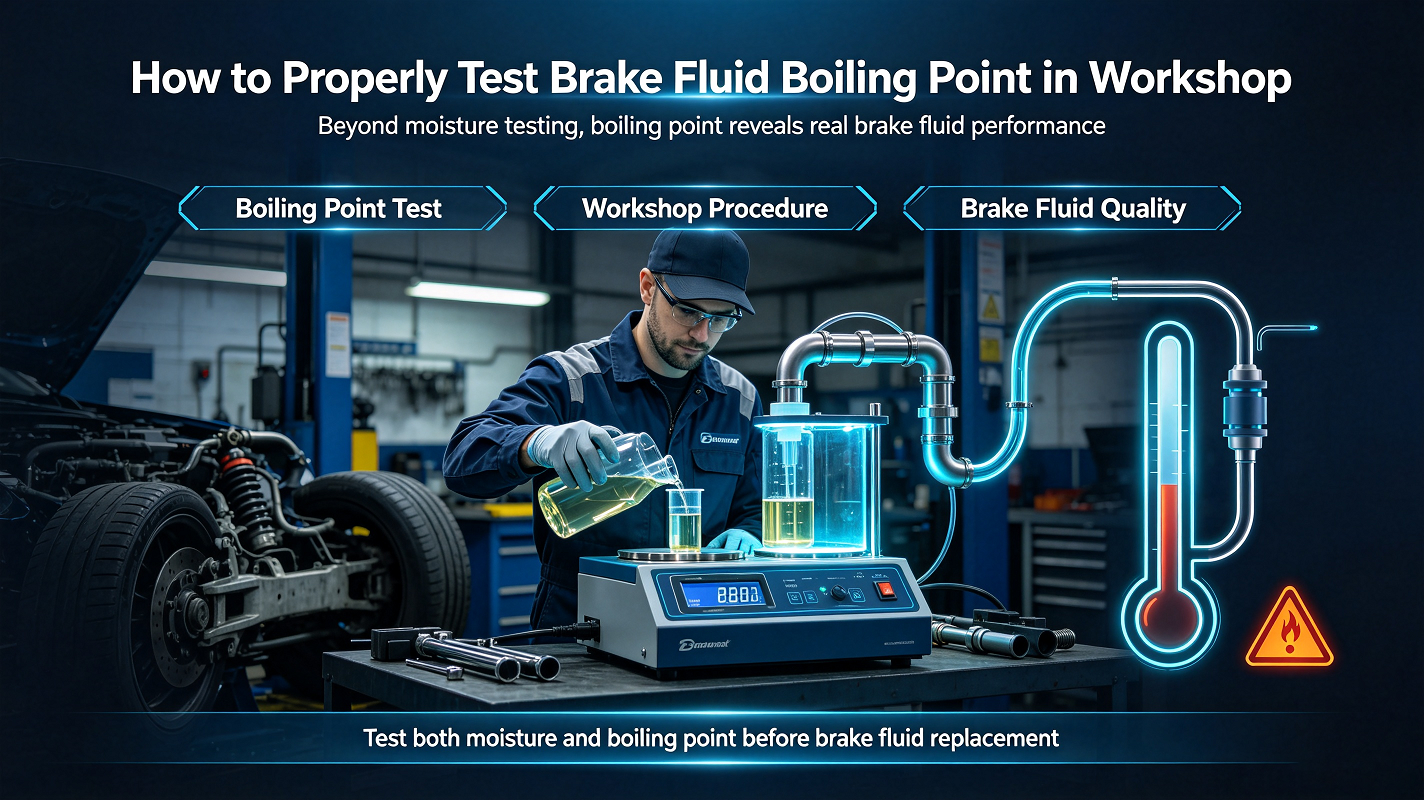
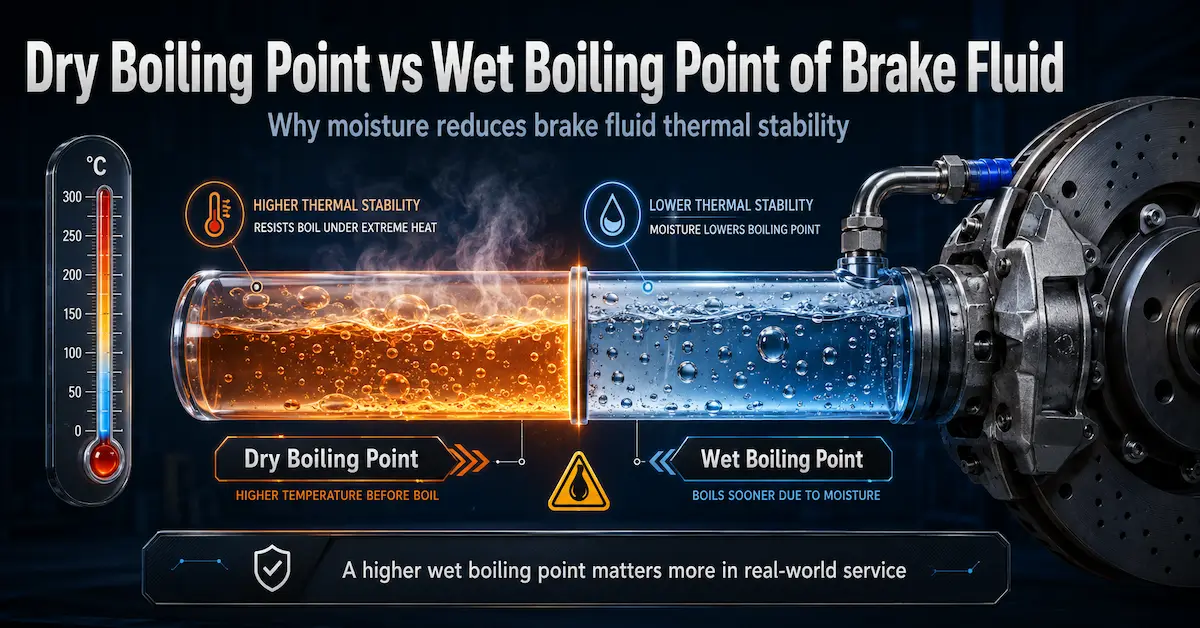
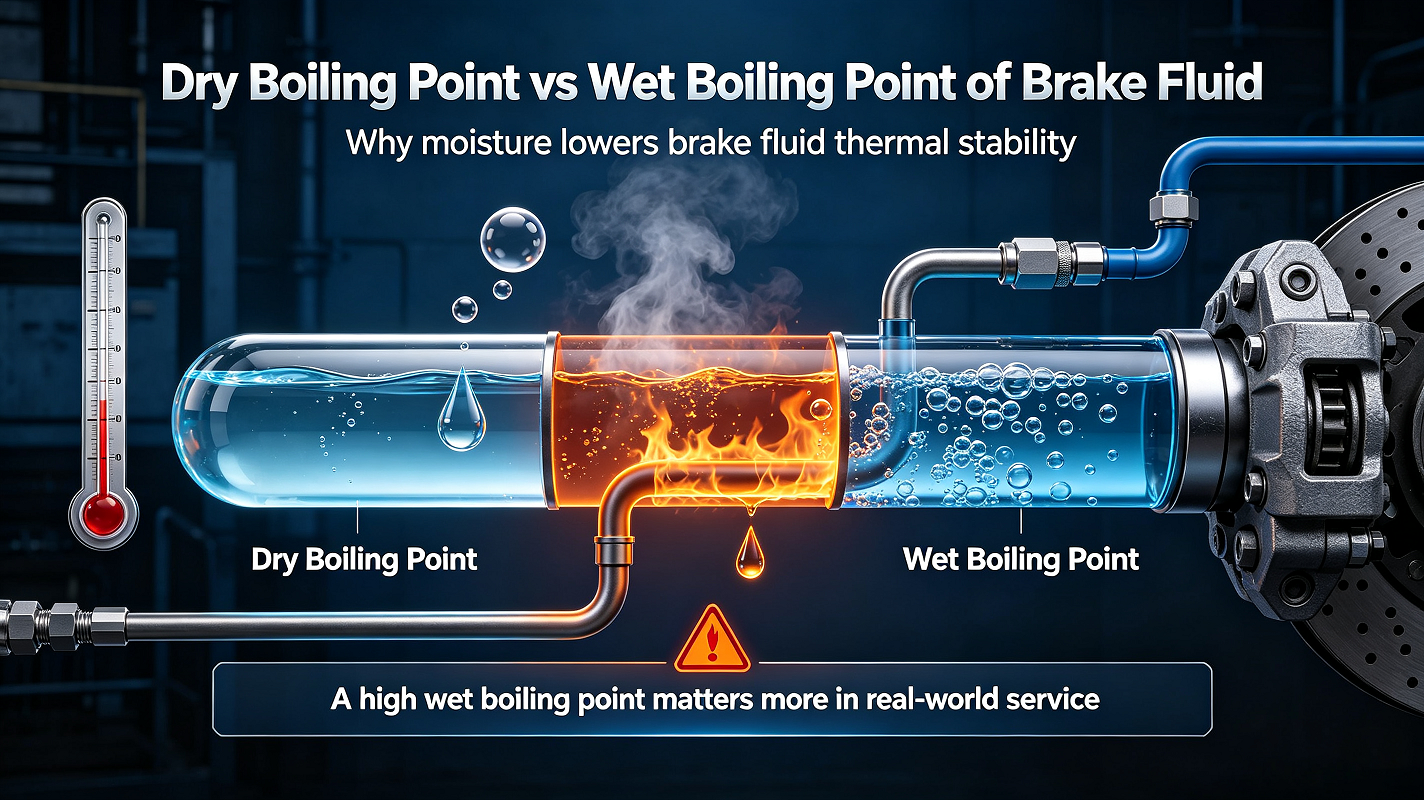
Boiling performance matters because braking systems generate heat. In practical terms, buyers should ask how the product behaves in real service conditions, not just in a lab-style summary. Moisture absorption is also critical. Brake fluid naturally absorbs water over time, and that can lower performance if storage or packaging is poor.
3. Container format and seal integrity
For wholesale brake fluid, the package is part of the product. Bottles need reliable seals, drums need clean handling, and labels need to survive logistics without smearing or peeling. A supplier may offer an attractive formula, but if the packaging is awkward for warehouse staff or prone to leakage, distribution becomes more expensive than it should be.
How to Compare Suppliers Without Getting Lost in the Datasheet
Many buyers start by comparing specifications line by line. That is necessary, but not sufficient. The better question is whether the supplier understands distribution realities. Can they maintain consistency across batches? Do they provide clear product identification? Is the packaging suitable for your channel mix? Can they support repeat orders without constant rework?
A practical buyer will also ask for evidence of routine quality control, material traceability, and stable supply planning. You do not need a flashy presentation. You need enough confidence to avoid surprises. In this category, surprises are expensive.
Common Mistakes Distributors Make
One common mistake is buying solely on price. Brake fluid is sensitive enough that a low-cost product can become expensive once returns, complaints, and repackaging are counted. Another mistake is assuming that a specification sheet tells the whole story. It does not. Packaging, storage behavior, and labeling accuracy all influence whether the product will work smoothly in the channel.
Another practical warning: do not overlook customer use patterns. If your buyers service a wide range of vehicles, a narrow product range can create confusion. If they mostly serve one segment, a broader line may be unnecessary complexity. Match the product mix to the market, not to the catalog size.
Buyer Checklist for Distribution Teams
Before placing an order, distribution teams should confirm the fluid category, packaging size, storage requirements, shelf-life expectations, and labeling consistency. It is also worth checking whether the supplier can keep the same product identity across reorders. That sounds basic, but basic is where many distribution problems begin.
If your team handles private label or mixed-brand programs, make sure artwork, container format, and product naming are locked down early. Small labeling differences can create avoidable warehouse errors and customer confusion later.
FAQ: Short Answers for Practical Buyers
Is the cheapest brake fluid a safe choice for distribution?
Usually not as a first filter. Price matters, but consistency and packaging reliability matter more once the product is moving through a channel.
Why are specifications so important?
Because brake fluid is safety-critical and compatibility-sensitive. Weak product definitions can lead to misapplication and customer claims.
What should buyers ask a supplier first?
Start with product type, packaging format, quality control consistency, and whether the supplier can support the volumes you expect.
A Practical Next Step
If you are building or revising a brake fluid line, compare suppliers with a distribution mindset, not just a product-purchasing mindset. The right choice is the one that fits your market, holds up in storage and transport, and arrives with enough consistency that your team does not have to babysit every shipment. That is the real test when figuring out how to select reliable brake fluid for distribution.
Welcome to contact GAFLE for more information & cooperation!
peter
ZHEJIANG GAFLE AUTO CHEMICL CO.,LTD
Tel:86-579-8222 1665
Fax:86-579-8246 4690
Cel/Wechart:86-13335993986
E-mail:peter@gafle.net
Web:www.gafle.net