How to Tell If Antifreeze Is Degraded: Field Testing and Diagnostic Indicators
Cooling system failures rarely announce themselves with sudden, dramatic steam plumes before minor symptoms have already manifested. In heavy equipment, stationary generators, and vehicle fleets, the fluid itself breaks down long before mechanical components seize. Learning how to tell if antifreeze is degraded comes down to understanding that glycol—the base fluid handling thermal transfer—rarely wears out, but the corrosion inhibitor package definitely does. Once those chemical buffers deplete, the fluid turns mildly acidic, attacking radiator solder, heater cores, cylinder liners, and aluminium housings from the inside out.
Whether you manage an industrial machinery maintenance schedule or maintain personal utility engines, running degraded antifreeze past its functional service life invites galvanic corrosion and accelerated cavitation. Identifying bad coolant early saves thousands in premature radiator core replacements, pitted water pump impellers, and compromised head gaskets.
Direct Visual and Physical Diagnostic Methods
Before pulling out laboratory instruments or ordering spectrometer analysis, a straightforward sensory and chemical check reveals significant data about cooling fluid health.
1. Visual Appearance and Clarity
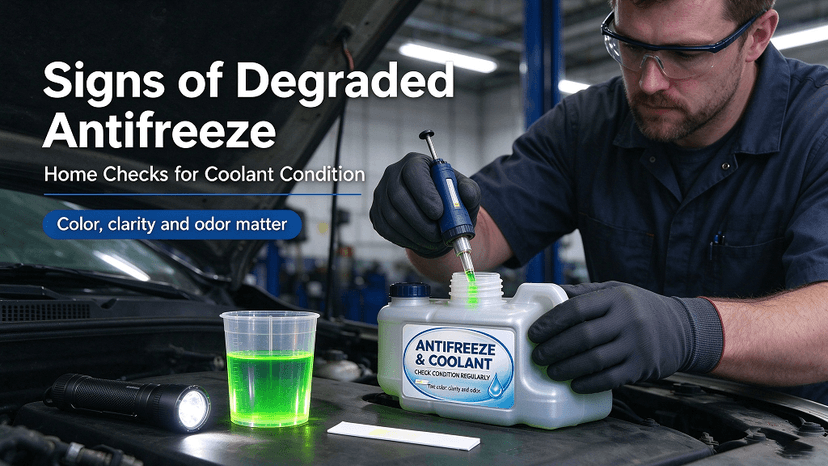
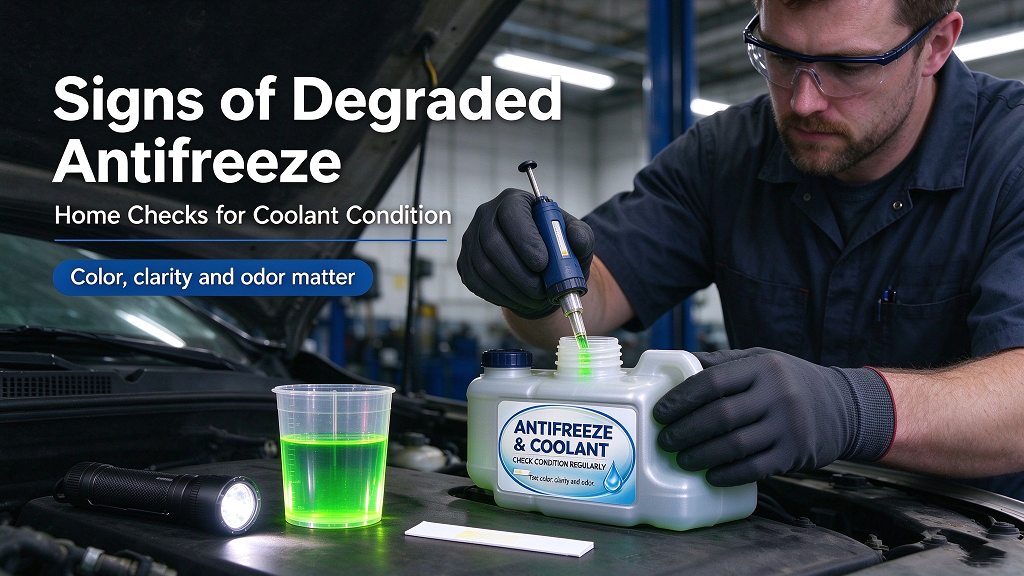
Fresh coolant should be translucent, dyed a vivid color (such as fluorescent green, orange, pink, or blue) depending on the formulation—whether Inorganic Additive Technology (IAT), Organic Acid Technology (OAT), or Hybrid OAT (HOAT). If the fluid looks murky, opaque, or resembles muddy river water, the corrosion inhibitors have collapsed, and metal particulate is actively circulating.
- Rust or Brown Sludge: Indicates cast-iron block oxidation and an exhausted corrosion-inhibitor reserve.
- Milky or Frothy Film: Suggests motor oil or hydraulic fluid ingress, often from a leaking oil cooler or blown head gasket.
- Gel or Stringy Deposits: Typically happens when incompatible coolant types are blended (for example, conventional high-silicate green mixed with Dex-Cool style sebacate/OAT formulas), causing silicates to precipitate into a thick jelly.
2. The Odor Profile
Ethylene glycol carries a distinct, sweet, syrupy smell. Degraded antifreeze, however, often emits a pungent, sour, or burnt odor. When coolant experiences severe local overheating or exhaust gas blow-by from a cracked head, the hydrocarbons break down and generate sharp acetic or formic acids, yielding a sharp, acidic stench rather than the customary sweet aroma.
Field Testing: Practical Bench and Home Antifreeze Inspection Methods
Visual clues tell you when fluid has already failed catastrophically. To catch chemical degradation before erosion begins, you need standard shop and home antifreeze inspection methods that measure specific gravity, pH, and electrochemical activity.
| Test Parameter | Target / Normal Range | Degraded Indicator | Tool Required |
|---|---|---|---|
| Acidity / Alkalinity (pH) | 8.5 – 10.5 (IAT) / 7.5 – 9.0 (OAT) | Below 7.0 (Acidic) | pH Test Strips / Digital Meter |
| Freeze Protection | -34°F (-37°C) at 50/50 mix | Above -10°F or uneven split | Optical Refractometer |
| Electrolysis Voltage | < 0.3 V DC | > 0.4 V DC | Digital Multimeter (DMM) |
Testing Fluid Acidity with pH Strips
Coolant is blended alkaline to neutralize acidic byproducts formed during normal thermal cycling. Over time, that alkaline reserve depletes. If a standard dip-strip reading drops below 7.2 for an organic acid formulation or below 8.0 for traditional IAT, the fluid has turned corrosive. At that point, copper brazing, aluminium channels, and solder joints begin sacrificing their mass to the fluid stream.
Measuring Glycol Concentration with a Refractometer
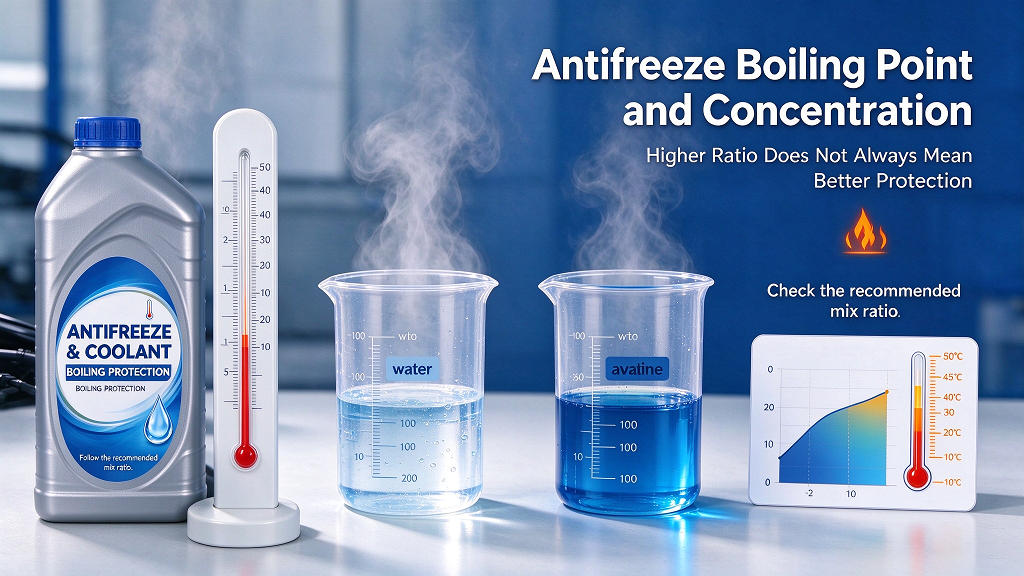
Hydrometers with floating plastic needles are cheap, but they fall out of calibration quickly and depend heavily on fluid temperature. An optical refractometer requires only two drops of liquid on the prism to deliver an exact measurement of freeze and boil-over protection. A reading far outside the 50/50 to 60/40 concentration range indicates either water evaporation or improper top-offs, compromising the mixture's thermal capacity and cavitation resistance.
Checking for Stray Current (Electrochemical Degradation)
One of the clearest signs old antifreeze needs replacement is stray electrical voltage running through the radiator core. Take a digital multimeter, set it to DC volts, ground the negative probe on the engine block or battery negative terminal, and submerge the positive probe directly into the coolant inside the filler neck (avoiding metal contact). A reading higher than 0.3 to 0.4 volts means the fluid has turned into a functioning conductive electrolyte, corroding aluminium heater cores and water pump housings via galvanic action.
Operational Signs Old Antifreeze Needs Replacement
Even if you do not test the fluid on a bench, the machine usually leaves mechanical clues that point directly to bad coolant:
- Heater core failure or weak cabin heat: Precipitated silicates or scale commonly clog the narrow passages of the heater core before plugging the main radiator core.
- Recurring thermostat sticking: Corrosive oxidation forms a crust over the bimetallic spring assembly, slowing down its response time and leading to erratic temperature needle swings.
- Pinhole leaks in aluminium tubing: Depleted silicate/organic inhibitor protection allows localized pitting corrosion, resulting in micro-leaks along seams and tube-to-header joints.
Best Practices to Avoid Premature Fluid Breakdown
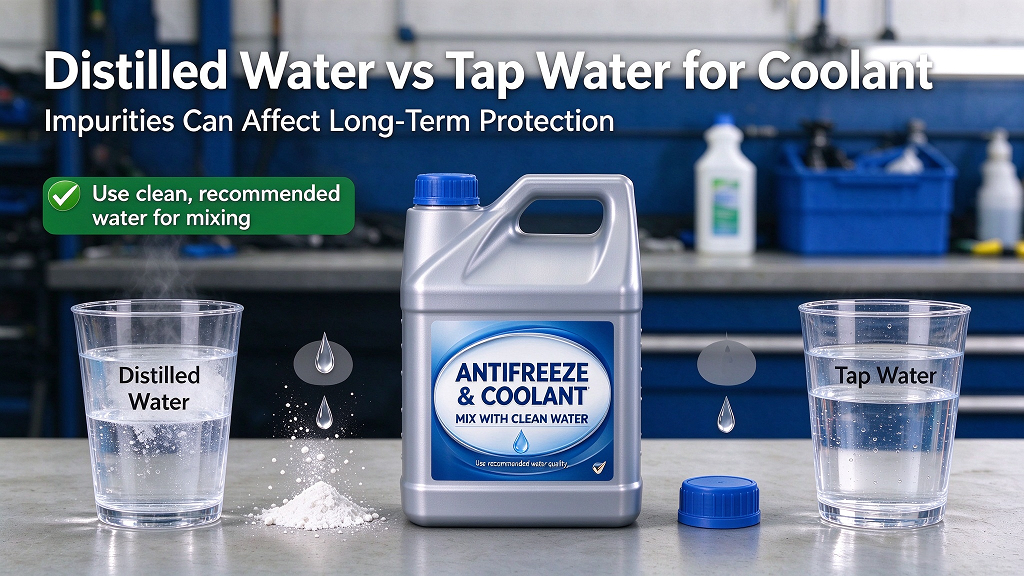
Coolant failure can usually be traced to simple preventive oversights. Using tap water to dilute concentrate introduces calcium, magnesium, and chlorides that directly attack inhibitor additives and cause hard water scale on hot cylinder jacket surfaces. Always use deionized or distilled water for mixing.
Equally critical is avoiding cross-contamination. Topping off an OAT system with a green low-silicate conventional formula introduces incompatible stabilizing packages that often drop out of suspension as abrasive sediment, accelerating seal wear on mechanical water pumps.
Frequently Asked Questions
Can I tell if antifreeze is bad just by the color?
Not reliably. A color change to muddy brown or black definitely shows failure, but modern organic-acid coolants can retain their clear, bright dye color even after their corrosion protection additives have completely depleted. You need pH and freeze point tests for an accurate assessment.
How often should antifreeze be chemically tested?
In commercial and fleet equipment, testing should occur at every scheduled oil service interval or twice annually. For standard utility vehicles, testing the pH and freeze point prior to winter and summer operational spikes is sufficient to catch degradation early.
Does degraded antifreeze lose its freeze protection?
Generally, no. The pure glycol base rarely breaks down enough to lose its freeze-point depression under normal operating conditions. What fails are the corrosion inhibitors, pH buffers, and anti-foaming agents, meaning the fluid might still resist freezing at -30°F while actively dissolving the radiator.
Next Steps for Fleet and Facility Managers
If your diagnostics show a dropping pH, stray voltage above 0.3V, or particulate suspension, do not settle for a simple drain-and-fill. Schedule a complete cooling system flush to clear out suspended scale and depleted chemistry, inspect the radiator cap for rubber seal hardening, and refill with a coolant specification matched strictly to your engine manufacturer's metallurgy requirements.
Welcome to contact GAFLE for more information & cooperation!
peter
ZHEJIANG GAFLE AUTO CHEMICL CO.,LTD
Tel:86-579-8222 1665
Fax:86-579-8246 4690
Cel/Wechart:86-13335993986
E-mail:peter@gafle.net
Web:www.gafle.net