What Should B2B Buyers Check When Sourcing Hydraulic Brake Fluid?
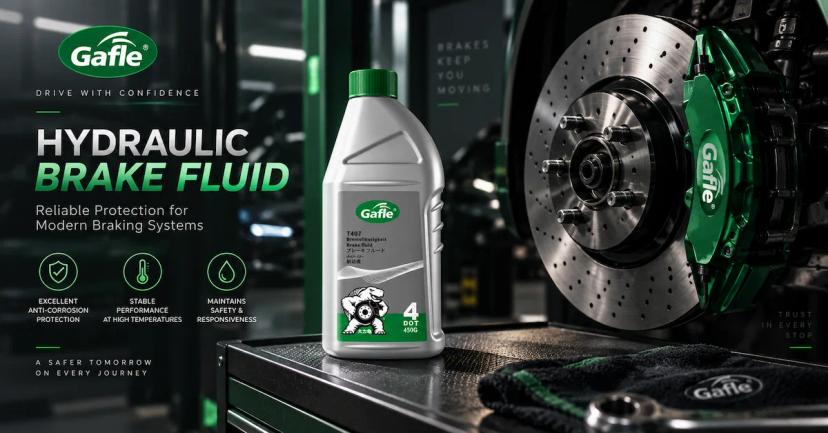
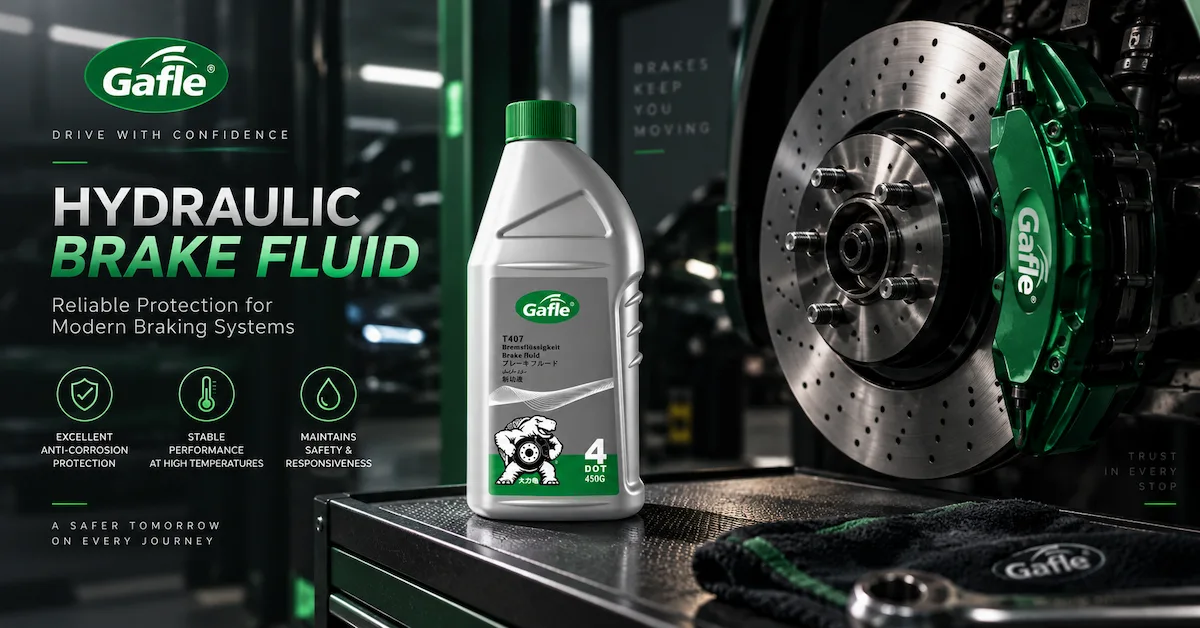
For a B2B buyer, Hydraulic Brake Fluid should be purchased against a defined technical and commercial specification rather than a product name alone. A distributor or private-label brand needs to know which vehicles and service markets the fluid is intended for, which DOT or other specification applies, what test evidence supports the product, how production batches are controlled, how the package protects the fluid, and which documents will accompany future orders. Price becomes meaningful only after those points are aligned. GAFLE's automotive product portfolio includes brake fluid categories such as DOT 3, DOT 4, DOT 5.1, OEM, and application-oriented brake fluid ranges, giving buyers different starting points for product discussions. The final selection, however, should always be confirmed against the target vehicle requirement and the documentation for the exact product being purchased.
Who Is This Hydraulic Brake Fluid Guide Designed For?
This guide is primarily written for automotive chemical importers, regional distributors, aftermarket parts wholesalers, workshop chains, fleet-maintenance procurement teams, private-label brands, and other professional buyers purchasing brake fluid in commercial quantities. These buyers usually need more than an explanation of how a braking system works: they need repeatable product specifications, supplier qualification, packaging control, documentation, traceability, and a practical process for approving samples and mass production. Buyers evaluating GAFLE as part of a broader supplier review can use the About Us page to understand the company background and then request project-specific information for the exact product under consideration. This article is not intended to replace a vehicle manufacturer's service manual, and it should not be used to justify changing from one brake-fluid specification to another without checking the vehicle requirement.
Hydraulic Brake Fluid Is Not General-Purpose Hydraulic Oil
The term “hydraulic” can create confusion in international sourcing. Brake fluid operates hydraulically because pedal force is transmitted through a liquid, but automotive brake fluid is not the same product as hydraulic oil used in industrial machinery, construction equipment, or other hydraulic power systems. The braking system requires a fluid with defined boiling behavior, low-temperature fluidity, chemical stability, corrosion performance, and compatibility with braking-system materials. Filling a brake system with an unrelated hydraulic oil simply because both products are described as “hydraulic fluid” would be a serious specification error. For importers and distributors, product titles, customs documentation, sales descriptions, labels, catalogues, and technical data should therefore clearly distinguish Hydraulic Brake Fluid from general hydraulic oil.
| Product Type | Main Function | Typical Selection Basis | B2B Procurement Risk |
|---|---|---|---|
| Hydraulic brake fluid | Transmits pressure in vehicle brake and clutch hydraulic systems | Vehicle requirement, DOT/specification, technical data | Incorrect grade or incompatible fluid |
| General hydraulic oil | Power transmission and lubrication in hydraulic machinery | Viscosity grade, equipment specification,oil type | Incorrectly marketed as suitable for brake systems |
| Automatic transmission fluid | Lubrication and hydraulic control in specified transmissions | Transmission manufacturer requirement | Cross-application based only on appearance or viscosity |
| Coolant | Controls temperature in cooling circuits | Cooling-system specification and formulation | Confusion with another automotive service fluid |
The procurement rule is simple: classify the fluid by the system specification first, not by the fact that it is a liquid used in a vehicle.
Where Is Hydraulic Brake Fluid Commonly Used?
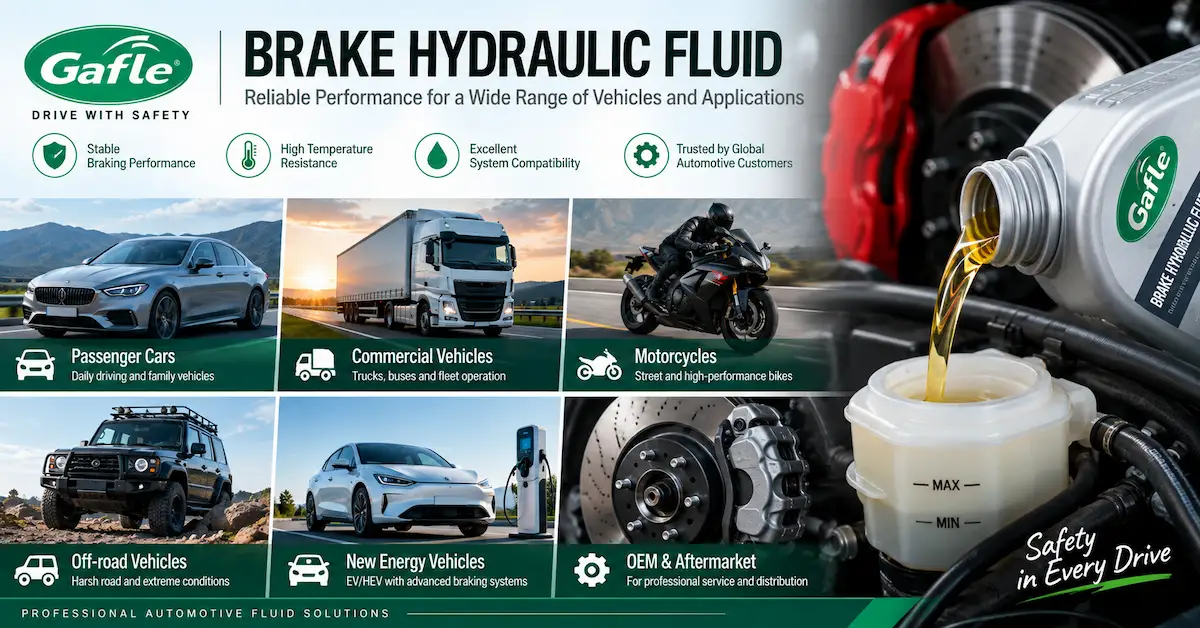
Hydraulic brake fluid is used in hydraulic braking systems found across many passenger cars, SUVs, light commercial vehicles, trucks, motorcycles, fleet vehicles, and other road or off-road applications.Some hydraulic clutch systems also use compatible brake fluid where the vehicle manufacturer specifies it. The important B2B question is not whether these vehicle categories “use brake fluid” in general, but which exact specification applies to each target vehicle population. A distributor serving older passenger vehicles may have a different product mix from a workshop network servicing newer ABS- and stability-control-equipped vehicles, while a motorcycle parts distributor or off-road specialist may need another combination of specifications and package sizes. GAFLE's product range can be used to identify relevant product categories before moving to model-specific technical confirmation.
DOT 3, DOT 4, and DOT 5.1: What Do Buyers Actually Need to Compare?
DOT classification is one of the first filters in brake-fluid sourcing, but the grade number should not be treated as a simple quality ranking. Under FMVSS No. 116, DOT 3, DOT 4, and DOT 5.1 non-silicone fluids have different minimum requirements for properties such as dry equilibrium reflux boiling point, wet equilibrium reflux boiling point, and low-temperature viscosity. The following values are regulatory reference limits rather than measured GAFLE product values.Buyers should obtain the current product specification and corresponding test evidence for the exact formulation they plan to order.
| Brake Fluid Class | Minimum Dry Boiling Point | Minimum Wet Boiling Point | Maximum Viscosity at -40°C | Main B2B Question |
|---|---|---|---|---|
| DOT 3 | 205°C | 140°C | 1,500 mm²/s | Does the target vehicle population require or permit DOT 3? |
| DOT 4 | 230°C | 155°C | 1,800 mm²/s | Are additional viscosity or vehicle-specific requirements involved? |
| DOT 5.1 | 260°C | 180°C | 900 mm²/s | Does the target system specifically require or allow this non-silicone grade? |
These values should not be used to conclude that the grade with the highest boiling point is automatically appropriate for every vehicle. Procurement starts with the vehicle or system specification. Buyers should also keep DOT 5 and DOT 5.1 clearly separated: DOT 5 is silicone-based, while DOT 5.1 belongs to the non-silicone category used alongside conventional glycol-based brake-fluid classifications. Product labeling and sales materials should never blur that distinction.
Build a Hydraulic Brake Fluid Specification Before Comparing Suppliers
A professional RFQ should turn “we need brake fluid” into a controlled set of requirements. This allows purchasing, quality, marketing, packaging, and the supplier to work from the same product definition.It also makes quotations comparable because each supplier receives the same technical and commercial baseline. The specification should identify what the buyer requires, what the supplier proposes, what has already been approved, and what still requires confirmation.
| Specification Area | Information to Define or Request | Why It Matters |
|---|---|---|
| Product identity | Supplier model and buyer item number | Prevents confusion between formulations |
| Brake-fluid class | DOT 3, DOT 4, DOT 5.1 or other required specification | Establishes the required performance category |
| Dry boiling point | Requirement and product/test value | Supports thermal-performance review |
| Wet boiling point | Requirement and product/test value | Evaluates performance after controlled moisture exposure |
| Low-temperature viscosity | Test temperature,specification and result | Important for hydraulic response at low temperature |
| Chemical stability | Relevant test evidence | Supports storage and operating stability |
| Corrosion performance | Applicable metal-corrosion testing | Protects braking-system components |
| Material compatibility | Relevant rubber/material tests | Supports system compatibility |
| Packaging | Bottle, capacity, cap, seal,label and carton | Protects product and controls brand presentation |
| Batch traceability | Coding and production-record requirements | Supports investigation and repeat orders |
| Documentation | TDS, SDS, test reports and agreed shipment records | Supports technical and commercial approval |
| Change control | Changes requiring notification or reapproval | Protects the approved specification |
The table is a sourcing framework rather than a statement that every GAFLE product automatically includes every document or test listed. Buyers should confirm the required scope for their individual project.
Why Dry and Wet Boiling Point Need to Be Evaluated Together
Boiling point is one of the best-known brake-fluid properties, but a purchasing decision based only on a high dry boiling-point figure is incomplete. Conventional glycol-based brake fluids are hygroscopic, meaning moisture can enter the fluid over time. That makes wet boiling performance relevant when assessing the formulation. For supplier comparison, determine whether a published figure is a minimum specification value, a typical formulation value, or an actual laboratory result from a defined batch or sample. A buyer should not place a supplier's “typical dry boiling point” beside another supplier's “guaranteed wet boiling point” and treat the numbers as a direct performance ranking. Comparable data need comparable test conditions, product identities, units, and definitions.
Low-Temperature Viscosity Can Affect Product Selection
Low-temperature viscosity deserves separate attention because modern braking systems can contain electronically controlled hydraulic components used for ABS, stability control, and other functions. A fluid's strong boiling performance does not automatically prove suitable low-temperature characteristics.B2B buyers selling into cold climates or servicing vehicles with specifically defined viscosity requirements should request the actual test condition and value for the proposed product instead of accepting descriptions such as “excellent fluidity.” The practical sourcing question is whether the selected Hydraulic Brake Fluid meets the requirements of the vehicles and systems represented in the buyer's market. Where a special low-viscosity or application-specific product is required, it should be qualified as a separate product rather than assumed to be interchangeable with a conventional formulation.
What Should Buyers Know About Brake Fluid Formulation?
Most conventional DOT 3, DOT 4, and DOT 5.1 products are based on non-silicone glycol-related chemistry combined with additives selected to help control properties such as oxidation, corrosion, stability, and material compatibility. Exact formulation design varies by product and manufacturer, so a supplier should not be expected to disclose proprietary formulation details simply to prove quality. The more useful B2B questions are whether raw materials are controlled against approved requirements, whether formulation revisions are managed, whether production follows a documented recipe, and whether relevant performance is verified through defined testing.Buyers should avoid judging the formulation by color, smell, or a single ingredient claim because those observations do not establish compliance with the required brake-fluid specification.
Manufacturing Control Should Focus on Repeatability
For an importer or private-label brand, a successful development sample is only the beginning. The real requirement is to receive the same approved product across repeat orders. Supplier evaluation should therefore examine how raw materials are identified, how batches are prepared, how blending conditions are controlled, how contamination is prevented, how filling equipment is managed, how fill quantity and closures are checked, and how finished product is released. These controls are especially relevant for automotive fluids because an uncontrolled formulation change or contamination problem may not be visible from the outside of the bottle. Buyers reviewing GAFLE can combine information from the company's About Us and product pages with project-specific questions about the exact Hydraulic Brake Fluid being quoted.
Separate Product Qualification Testing From Batch Release Testing
A frequent B2B sourcing mistake is assuming that every test shown in a technical report is conducted on every production batch. Product qualification and routine batch release often serve different purposes. A comprehensive evaluation may include boiling behavior, viscosity, corrosion, fluid stability, material compatibility, and other specification-related tests, while routine production control may use a different set of agreed release checks. Buyers should ask the supplier to identify which tests qualify the formulation, which checks are conducted routinely, what acceptance criteria apply, and which records can be provided with or upon request for production shipments. This makes quality control measurable rather than relying on the phrase “strict QC.”
How Should Certifications and Test Reports Be Reviewed?
Company certifications, management-system certificates, technical data sheets, laboratory reports, and batch records should be reviewed as different types of evidence. A management-system certificate may support assessment of a factory's quality-management framework, but it does not by itself prove the performance of one Hydraulic Brake Fluid formulation.A product report should therefore be checked for the product or sample identification, test method, date, results, and scope. Likewise, buyers should check that a certificate is current, that the legal company and facility match the supplier being evaluated, and that the scope is relevant to the product or operation being discussed. If a private-label customer intends to reproduce certification or compliance claims on packaging, the exact basis for those claims should be confirmed before artwork approval rather than copied from a general company presentation.
Packaging Is Part of the Technical Supply Specification
Brake-fluid packaging should be treated as a functional component of the finished product, not only as a marketing surface. Because conventional brake fluid can absorb moisture after exposure to the atmosphere, closure integrity, sealing, storage, and handling matter. B2B buyers should specify bottle capacity, bottle construction, cap, tamper evidence or seal where applicable, label material, coding position, carton configuration, and transport requirements. Physical samples should be checked before mass production so that the buyer can review appearance, fit, closure, label position, barcode readability, coding, and carton information. For projects involving branded packaging, GAFLE's Label service can form part of the discussion around product identification and labeling, while the exact packaging options should be confirmed for the selected product and order.
Private Label Artwork Must Match the Approved Product
The technical product and the marketing label cannot be approved independently. A private-label artwork file may contain the DOT designation, performance statements, usage information, warnings, importer information, language, barcode, batch-code area, and other market-specific elements. If the marketing team changes a technical claim after the fluid has already been approved, the final package can end up promising more than the supporting product documentation. The safer process is to freeze the proposed product first, review the evidence supporting label claims, complete translation and regulatory checks, and then release an identified artwork revision for printing. Brands concerned with downstream authenticity and unauthorized products can also review GAFLE's Product and Brand Protection service when designing their distribution program.
How Should B2B Buyers Compare Hydraulic Brake Fluid Suppliers?
Supplier comparison should use the same requirement set for every candidate. If Supplier A quotes a standard 500 mL product with a stock bottle while Supplier B quotes a customized formulation, printed bottle, special carton, additional testing, and different delivery terms, comparing only unit price creates a false conclusion. Use a structured comparison covering product specification, evidence, quality controls, packaging, customization, commercial conditions, change management, and technical support.
| Evaluation Area | Supplier A | Supplier B | Buyer Decision Question |
|---|---|---|---|
| Required brake-fluid grade | Confirm | Confirm | Are both quoting the same specification? |
| Technical documents | Review scope | Review scope | Does the evidence identify the quoted product? |
| Batch controls | Confirm | Confirm | How is repeat-order consistency managed? |
| Packaging | Compare same configuration | Compare same configuration | Are bottle,closure and carton requirements equivalent? |
| Private label | Confirm scope | Confirm scope | What is included in the quoted price? |
| MOQ | Project-specific | Project-specific | Are quantities based on the same package and formulation? |
| Lead time | Project-specific | Project-specific | When does the production clock actually start? |
| Change control | Review | Review | Will relevant changes require buyer notification? |
| Technical support | Review | Review | Who handles technical questions after launch? |
| Total commercial risk | Evaluate | Evaluate | Which proposal creates fewer unresolved assumptions? |
A supplier that answers these questions clearly may provide greater purchasing value than one that offers a lower headline price without defining what is actually being supplied.
MOQ, Capacity, and Lead Time Should Be Confirmed Per Project
B2B buyers often search for a fixed brake-fluid MOQ or production lead time, but these figures can depend on the formulation, pack size, bottle availability, cap, label language, carton, order quantity, customization, testing, and delivery requirements. For that reason, commercial planning should separate sample preparation, artwork approval, packaging preparation, production scheduling, inspection, and dispatch instead of asking for one generic number.GAFLE buyers can use the Contact Us page to submit the destination market, required grade, pack size, private-label requirements, estimated volume, and target schedule so that MOQ and timing can be assessed against a real project rather than an undefined inquiry.
Total Cost Matters More Than Price Per Liter
Unit price is only one part of a Hydraulic Brake Fluid program. Importers and private-label brands may also need to consider bottle and closure costs, label printing, carton requirements, testing, samples, design revisions, freight efficiency, warehousing, incoming inspection, damaged packaging, local relabeling, slow-moving inventory, and warranty or complaint handling. A cheaper product can become more expensive if the specification is unclear, packaging fails during distribution, artwork must be corrected after production, or repeat orders are not consistent with the approved sample. Procurement teams should therefore compare total landed and lifecycle cost together with technical risk instead of reducing supplier selection to a single price-per-liter figure.
How OEM and Private Label Hydraulic Brake Fluid Projects Should Be Managed
An OEM or private-label project should move through controlled milestones: define the target market and application, confirm the brake-fluid specification, evaluate the proposed product, review technical documentation, approve the product sample, select the package, approve artwork, confirm inspection requirements, freeze the production version, and then release mass production. If formulation development or another technical change is requested, the project should also define what needs to be retested or reapproved. GAFLE's broader product portfolio and Label service provide useful starting points for these discussions, while actual formulation availability, packaging combinations, MOQ, schedule, and documentation should be confirmed for the individual order.
Technical Support Can Add Value After the Product Is Sold
For distributors and workshop networks, the supplier relationship does not necessarily end when the shipment leaves the factory. Sales staff, workshops, and end users can still have questions about grade selection, storage, handling, product identification, and application boundaries. Technical information therefore has commercial value because it helps distributors avoid oversimplified claims and improves consistency across the channel. GAFLE's Trainings Center can be considered when evaluating the broader support environment, while buyers looking for available product resources can also check the Download Center. The exact technical documents required for an order should still be listed in the purchasing specification rather than assumed to be available from a general download page.
What Should Be Included in a Hydraulic Brake Fluid RFQ?
A serious RFQ should include the destination country, buyer type and distribution channel, target vehicle or service market, required DOT grade and any additional specification, preferred pack size, annual and initial volume estimates, label language, private-label requirements, required documents, desired testing or inspection, delivery destination, and target timing. If the buyer already sells a competing or existing product, sharing its technical requirements is much more useful than sending only a bottle photograph and asking for an identical version. A defined RFQ helps the supplier determine whether an existing product is appropriate or whether additional technical work is required, and it gives the buyer a much stronger basis for comparing quotations.
Frequently Asked Questions About Hydraulic Brake Fluid
1. Is Hydraulic Brake Fluid the Same as Regular Hydraulic Oil?
No. Automotive brake fluid is formulated and specified for hydraulic braking systems and has requirements for boiling behavior, viscosity, corrosion, stability, and material compatibility.General hydraulic oil should not be treated as an alternative simply because both fluids transmit hydraulic pressure.
2. Which Hydraulic Brake Fluid Grade Should a Distributor Stock?
The correct portfolio depends on the vehicles and service requirements in the target market. Distributors should analyze the vehicle population and manufacturer specifications before deciding the relative volume of DOT 3, DOT 4, DOT 5.1, or application-specific products.
3. Is DOT 4 Always Better Than DOT 3?
Not as a universal purchasing rule. DOT 4 has different minimum performance requirements, but the correct product still depends on what the vehicle manufacturer requires or permits. A higher grade number should not replace application verification.
4. Is DOT 5.1 the Same as DOT 5?
No. DOT 5.1 is a non-silicone brake-fluid classification, while DOT 5 is silicone-based. Buyers should keep the two clearly separated in specifications, purchasing documents, labels, catalogues, and technical training.
5. What Technical Documents Should B2B Buyers Request?
Depending on the project, buyers may request a current technical data sheet, safety data sheet, applicable test reports, product specification, and agreed batch or shipment-level documentation. The key requirement is that the documents identify or clearly correspond to the exact product being purchased.
6. Does a High Boiling Point Alone Prove Better Brake Fluid?
No. Boiling performance is important, but low-temperature viscosity, corrosion behavior, material compatibility, stability, specification compliance, and the intended vehicle application also matter. Suppliers should be compared using a complete requirement rather than one headline number.
7. Can Hydraulic Brake Fluid Be Supplied Under a Private Label?
GAFLE supports discussions around OEM and private-label brake-fluid programs. Buyers should confirm the specific fluid, packaging, label design, required documents, order quantity, and project timing before approving a commercial program.
8. How Should a Buyer Check Batch Consistency?
Start by defining the approved product specification and asking which production controls and release tests apply to repeat batches. Product codes, batch identification, retained records, and a clear change-control process make later verification and complaint investigation more manageable.
9. What Determines Hydraulic Brake Fluid MOQ and Lead Time?
MOQ and schedule can depend on formulation, packaging, labeling, number of variants, quantity, approval requirements, and production planning. Buyers should request a project-specific quotation instead of relying on a generic online figure.
10. What Information Should I Send GAFLE for a Bulk Inquiry?
Send the required brake-fluid grade, target market, vehicle or service application, desired package size, brand and label requirements, expected initial and annual quantities, required documents, destination, and target delivery period. These details allow the project to be evaluated against a defined purchasing requirement through GAFLE Contact Us.
Conclusion
Sourcing Hydraulic Brake Fluid for a B2B market is a technical qualification and supply-chain control task before it becomes a price negotiation. Automotive importers, distributors, fleet buyers, workshop networks, and private-label brands should define the target vehicle requirement, select the appropriate fluid class, review comparable technical evidence, understand manufacturing and batch controls, approve packaging and artwork, confirm documentation, and calculate total commercial risk before releasing a bulk order. GAFLE's automotive product range provides a starting point for brake-fluid selection, while its labeling, training, protection, and support services can be considered as part of a wider distribution program. For an order-specific evaluation, use GAFLE Contact Us and provide your target market, required specification, packaging, private-label requirements, volume, documentation needs, and delivery expectations so the proposed product and supply conditions can be confirmed before mass production.