What Is Brake Hydraulic Fluid?
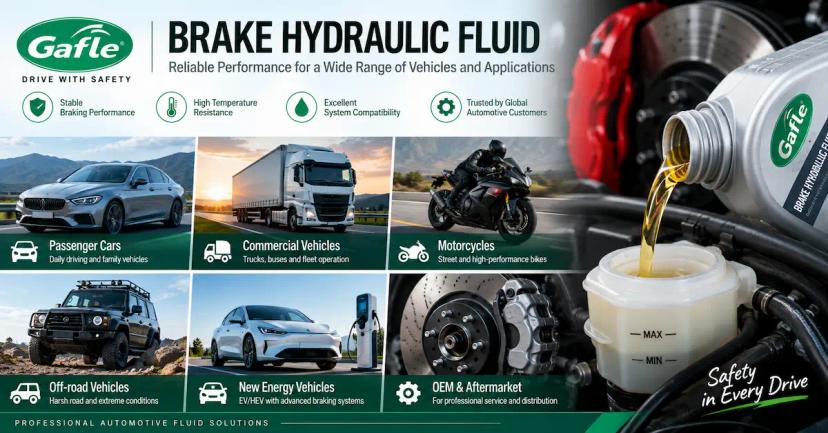
Brake hydraulic fluid is the specially formulated liquid that transmits pressure through a vehicle’s hydraulic braking system, allowing the master cylinder to actuate brake calipers or wheel cylinders. Its job involves more than pressure transmission: the fluid must also provide suitable temperature performance and remain compatible with the materials it contacts. For a bulk buyer, that means approving a product requires more than recognizing the words “brake fluid” on the container. The required grade, intended application, technical documentation, packaging, and batch identification must describe the same product. This guide focuses on that procurement process rather than vehicle-specific brake servicing or bleeding procedures.
Start with the Vehicle Requirement, Not the Product Label
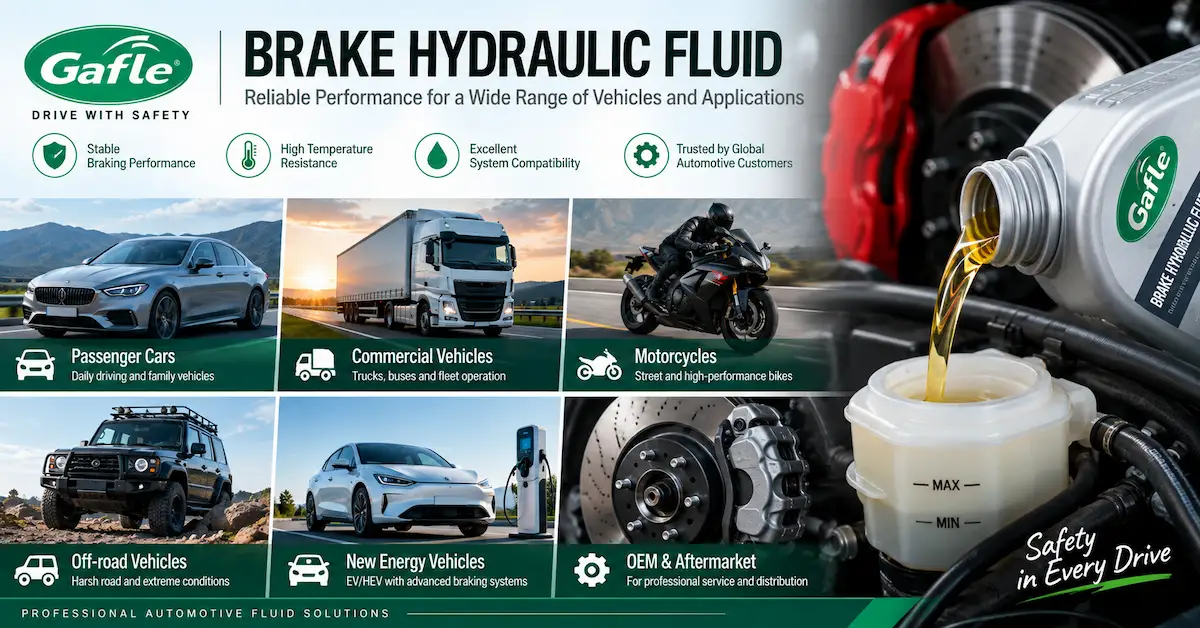
Before requesting a brake hydraulic fluid quotation, define the vehicle population and service channel the order will support. An importer supplying independent workshops may need several clearly differentiated products, while a fleet buyer should work from the specifications of the vehicles actually maintained. Include the required DOT grade, any additional vehicle-manufacturer specification, relevant operating conditions, and intended packaging format in the inquiry. Do not replace those details with descriptions such as “premium,” “universal,” or “suitable for modern vehicles.” GAFLE’s brake-fluid product range includes DOT 3, DOT 4, DOT 5.1, OEM, and application-oriented categories. Use those categories to start a discussion, not as proof that every product within them fits every vehicle.
DOT 3, DOT 4, and DOT 5.1: Compare Requirements, Not Just Numbers
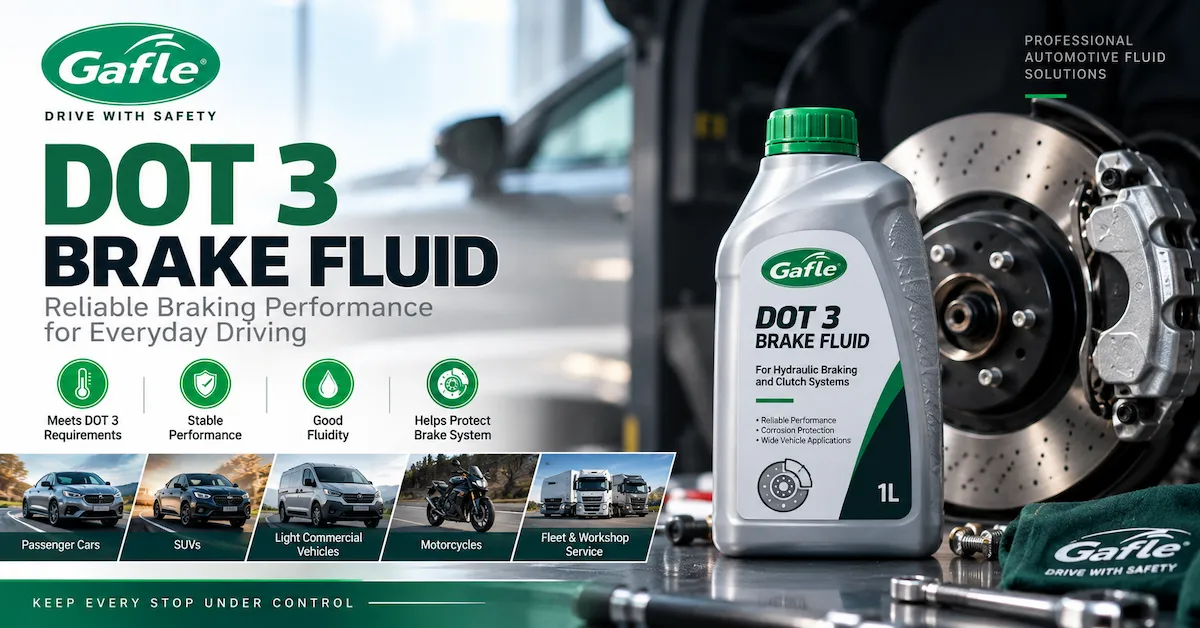
DOT classifications provide performance requirements, but a grade designation is not a complete purchasing specification. The boiling-point figures below are minimum requirements under FMVSS No. 116, as explained in GAFLE’s automotive brake-fluid guide. They are not measured values for a particular GAFLE product, nor do they establish a vehicle’s replacement interval. Buyers should use them as a baseline, then check the selected formulation’s documentation and the vehicle manufacturer’s requirements. A product can exceed a minimum on one test without automatically becoming the correct choice for every application.
| Brake fluid grade | Minimum dry boiling point | Minimum wet boiling point | Procurement check |
|---|---|---|---|
| DOT 3 | 205°C | 140°C | Confirm the intended vehicles specify or permit this grade. |
| DOT 4 | 230°C | 155°C | Check any additional viscosity or manufacturer-specific requirement. |
| DOT 5.1, non-silicone | 260°C | 180°C | Verify the required specification rather than assuming universal compatibility. |
Keep DOT 5 and DOT 5.1 Clearly Separated
DOT 5 silicone-base fluid and DOT 5.1 non-silicone-base fluid are different products. Conventional DOT 3, DOT 4, and DOT 5.1 fluids are generally glycol-based, and DOT 5 should not be mixed with them. For private-label buyers, this distinction must remain clear across quotations, specifications, artwork, cartons, and sales descriptions. Avoid combined wording such as “DOT 5/5.1” that makes the products appear interchangeable. Likewise, do not approve a substitution simply because one designation has a higher number; suitability depends on the braking system and the vehicle manufacturer’s requirements.
Check the Performance Details Behind the Grade
Read Dry and Wet Boiling Data Together
A statement such as “high boiling point” leaves an important question unanswered: does it describe dry or wet performance? Dry boiling data describe the fluid under the specified new-fluid test conditions, while wet testing evaluates boiling performance after controlled moisture exposure. Common glycol-based brake fluids absorb moisture, which can reduce boiling performance. When evaluating brake hydraulic fluid, request both results with their test methods, units, product identification, and specification limits. Also distinguish a guaranteed minimum from a typical result. A single attractive number should not stand in for a complete technical comparison.
Verify Viscosity for the Intended Braking System
Low-temperature viscosity deserves its own review, particularly where the target vehicle specifies a low-viscosity fluid for electronically controlled braking. ABS and stability-control systems use hydraulic components whose response depends partly on fluid behavior. However, “low viscosity” and “high boiling point” describe different characteristics; one does not demonstrate the other. Ask for the viscosity value, measurement temperature, test method, and applicable requirement. For a more detailed explanation, review GAFLE’s low-viscosity brake-fluid guide. A cold-climate application makes this discussion especially relevant, but climate alone does not authorize departure from the vehicle specification.
Treat Material Compatibility as a Separate Check
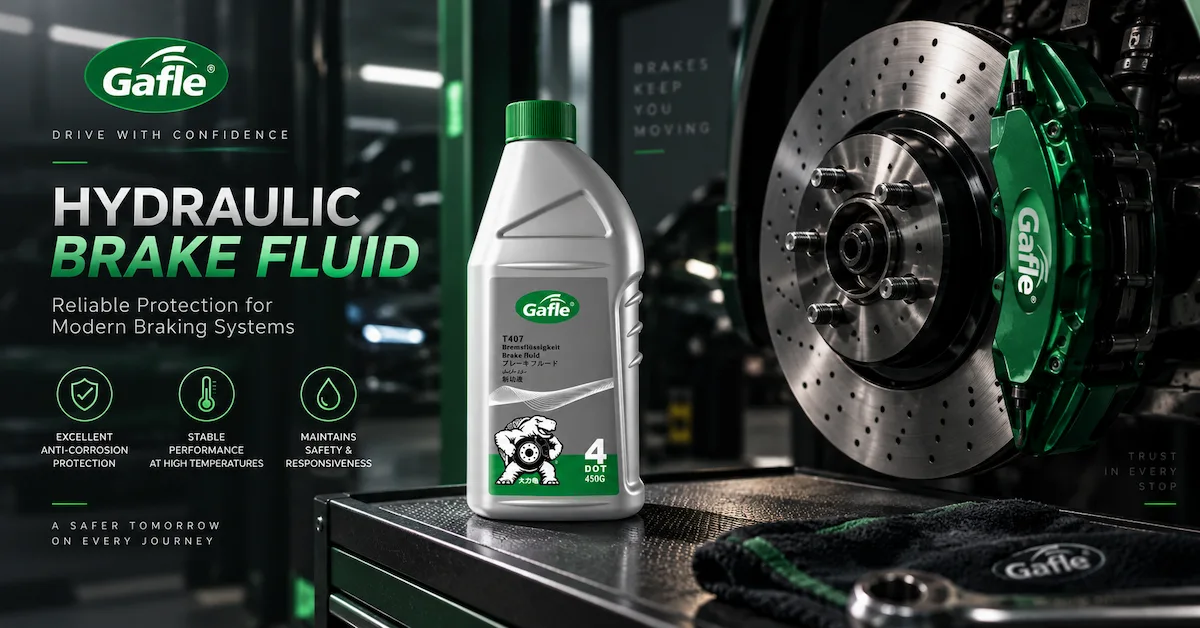
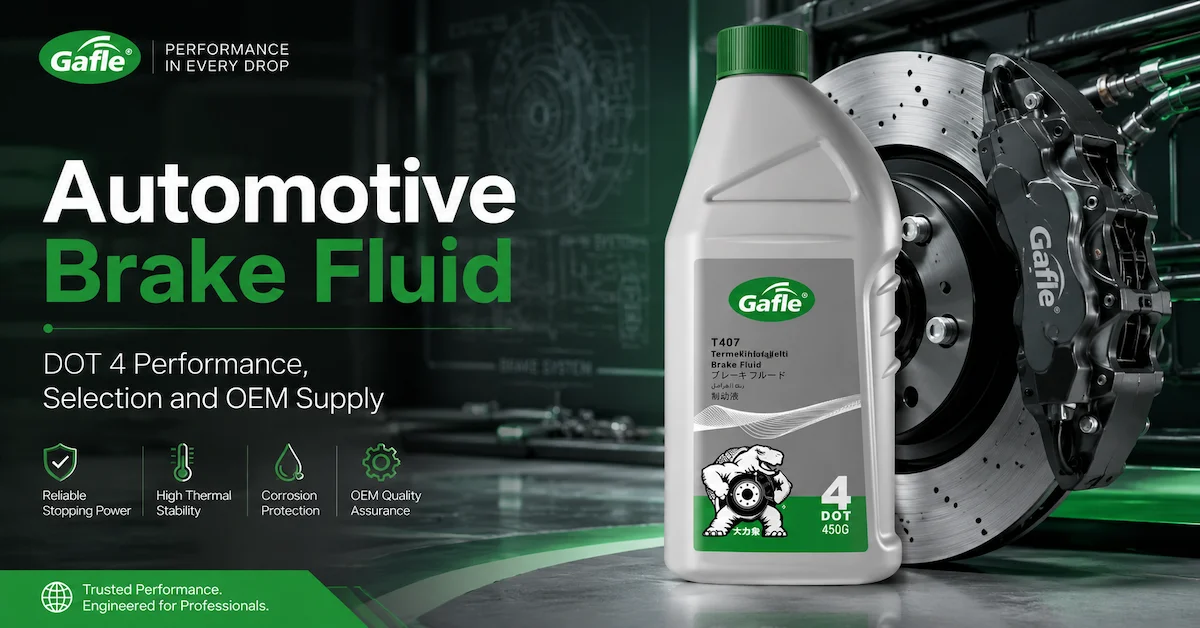
Brake fluid contacts seals, hoses, metal components, and other internal surfaces. Thermal performance alone does not establish compatibility with those materials. During supplier qualification, request the relevant corrosion, stability, and material-compatibility evidence for the proposed formulation. GAFLE’s DOT407 product description identifies a DOT 4 product and describes corrosion protection and compatibility with common braking-system materials. Those descriptions provide a starting point for technical discussion; the purchasing decision should still be tied to the required application and supporting product documentation, rather than extended into an unsupported “compatible with all systems” claim.
Compare Identifiable Products Before Comparing Prices
A useful brake hydraulic fluid comparison starts with exact product identification. GAFLE’s published information includes DOT407, described as a DOT 4 product, and a test-report reference identifying DOT4 (EV508), with the sample described as a low-viscosity, high-boiling-point fluid for electric vehicles. The table below compares the available identification information—not measured performance or universal suitability. The published EV508 report cover does not provide the complete numerical results needed for a performance comparison, so current technical data and the full relevant report should be requested before approval.
| Product reference | Published identification | Appropriate purchasing discussion | Information still needed for approval |
|---|---|---|---|
| GAFLE DOT407 | DOT 4 brake fluid for hydraulic braking and clutch applications | Evaluate against the intended vehicle’s DOT 4 and additional requirements | Current technical data, relevant test results, packaging specification, and application confirmation |
| DOT4 (EV508) | Published sample-report reference for an EV-oriented, low-viscosity, high-boiling-point brake fluid | Discuss applications with specifically defined fluid requirements | Current product status, full test results, viscosity data, and vehicle-specific suitability |
Turn Sample Approval into a Written Supply Specification
Approve the Fluid and the Packaging Separately
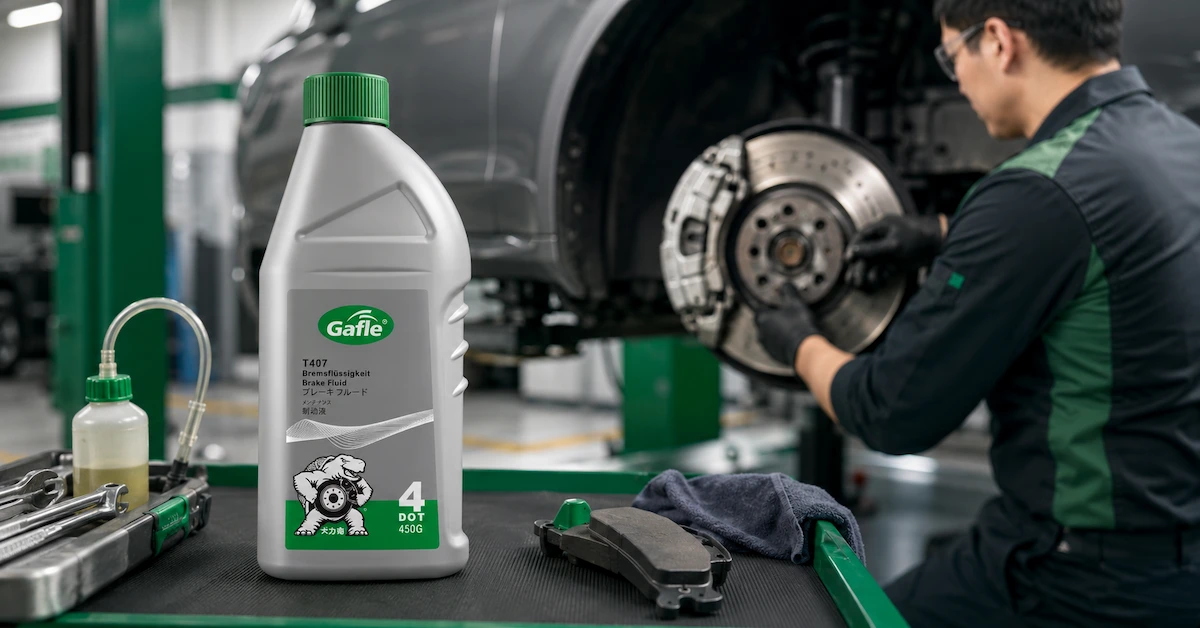
A sample bottle combines two approval decisions: the fluid inside and the package around it. Record them separately. For the fluid, identify the product code, specification revision, required tests, acceptance limits, and documents to be supplied. For the package, approve capacity, bottle format, cap and seal, label language, barcode, carton information, and batch-code position. Request a technical data sheet, safety data sheet, and relevant test documentation, then agree which batch documents will accompany production orders. GAFLE’s bulk brake-fluid sourcing guide identifies these document categories as part of supplier evaluation. A visually approved bottle should not be treated as approval of technical claims that have not been reviewed.
Agree How Production Batches Will Be Released
For repeat orders, the approval record should explain how the manufacturer will demonstrate conformity with the agreed specification. Ask which checks are performed on each batch, which tests support product qualification, and how finished-product codes connect to production records. Do not assume that every test appearing in a qualification report is repeated on every shipment. Where relevant, agree on retained samples, document retention, and notification before changes to the formulation or packaging components. These are purchasing controls to discuss and document—not capabilities to assume from a catalogue. They make it easier to compare the approved sample with subsequent brake hydraulic fluid deliveries.
Assess Manufacturing Controls, Not Just a Finished Bottle
GAFLE’s published brake-fluid quality-control process describes incoming-material checks, formulation preparation, mixing control, filling and packaging inspections, laboratory testing, and batch identification. For a buyer, the useful follow-up is to connect those stages to the proposed order. Ask how incoming materials are identified, how production follows the approved formulation, how filling volume and closures are checked, and what happens when a result falls outside the agreed limit. Rather than requesting another general assurance of “strict quality,” ask for the relevant record format or explanation of the release procedure. This turns a manufacturing description into a practical supplier-assessment discussion.
Separate Company Certificates from Product Evidence
When reviewing a supplier’s certification claims, check the issuing organization, company name, manufacturing location, scope, and validity of the current document. Review product test evidence separately: the sample identity, test methods, results, and report scope need to match the product under consideration. A management-system certificate and a brake-fluid test report answer different questions, so neither should be presented as a substitute for the other. GAFLE’s company information provides background for supplier review; request current supporting documents for the actual project before reproducing certification or approval claims on private-label packaging.
Include Packaging and Storage in the Product Specification
For brake hydraulic fluid, packaging is more than a branding surface. Glycol-based fluids can absorb moisture after exposure to the atmosphere, and handling can introduce contamination. Specify the required closure and seal, agree on leakage inspection, and obtain the product’s storage instructions rather than assuming one shelf-life figure applies to all formulations and containers. GAFLE’s discussion of moisture absorption in brake fluid explains why containers should remain tightly closed and handling equipment should be clean and dry. When choosing package sizes, also consider how customers will dispense the fluid. A large container should be selected with a suitable handling plan, not simply because its quoted price per litre is lower.
Plan OEM and Private-Label Orders Around Approval Milestones
GAFLE offers brake-fluid OEM and private-label cooperation, including bottle, label, cap, and carton customization. Its custom packaging and private-label guide describes a six-stage process: consultation, product selection, packaging design, sample approval, mass production, and inspection and delivery. Use that sequence to establish project milestones. Confirm the product before finalizing technical label claims, approve artwork before printing, and agree on the final inspection requirements before production release. The website lists packaging examples including 250 mL, 500 mL, 800 mL, and 1 L, plus larger containers; availability for a particular formulation and order should be confirmed during quotation. Where additional formulation development is requested, agree on feasibility, validation requirements, and responsibilities before promising a launch date.
Compare Cost, MOQ, and Delivery Using the Same Requirements
To compare brake hydraulic fluid quotations fairly, send suppliers the same product specification, packaging request, document requirements, quantity, and delivery basis. Review both cost per litre and cost per saleable unit, including any separately quoted artwork, packaging tooling, testing, or freight items. Keep first-order requirements separate from repeat-order requirements: initial sample review and artwork approval should not disappear inside a vague delivery promise. For a GAFLE project, request written confirmation of MOQ, available production scheduling, dispatch timing, and any dependencies on packaging approval. An annual volume forecast is useful for planning discussions, but it should not be treated as a confirmed production reservation. Resolve differences between quotations before choosing on price.
Frequently Asked Questions About Brake Hydraulic Fluid
Is Brake Hydraulic Fluid the Same as Brake Fluid?
In the automotive context discussed here, both terms refer to the specialized fluid used to transmit hydraulic braking pressure. “Hydraulic” describes its function; it does not mean that another hydraulic fluid can be selected without checking the braking-system specification.
Can DOT 4 Replace DOT 3?
Do not approve a replacement solely because DOT 4 has higher minimum boiling-point requirements. Follow the vehicle manufacturer’s specification and confirm the proposed product’s compatibility. A grade comparison is a starting point, not authorization for a substitution.
Is DOT 5.1 Always Better Than DOT 4?
No. The actual formulation and application requirements matter. Some specialized DOT 4 products have strong thermal performance, while DOT 5.1 has its own requirements. Compare the required specification and documented results rather than treating the numbers as a universal ranking.
Does Every Electric Vehicle Need the Same Brake Fluid?
No single product should be assumed suitable for every electric vehicle. Start with the vehicle manufacturer’s requirement, then verify the proposed grade, viscosity characteristics, and other relevant specifications. An “EV” label does not replace that application check.
Does a High Dry Boiling Point Prove Overall Product Quality?
No. It describes one performance characteristic under specified conditions. Wet boiling performance, viscosity, corrosion behavior, stability, and material compatibility also require consideration. GAFLE’s published testing overview discusses these as separate evaluation areas.
What Should Be Included in a Sample-Approval Record?
Record the exact product identifier, specification revision, reviewed technical documents, acceptance requirements, and approved packaging version. Identify who approved each item and when. Keep unresolved questions separate so that sample receipt is not mistaken for full technical acceptance.
Does One Test Report Approve Every Future Shipment?
Treat a report as evidence for the sample and scope it identifies. For future shipments, agree how batch conformity will be demonstrated and what documents will be supplied. The report, purchase specification, and batch-release arrangement should support one another.
Can GAFLE Supply Brake Hydraulic Fluid Under My Own Brand?
GAFLE offers OEM and private-label cooperation. Discuss the required product, package format, label language, branding, and technical claims before approving artwork. Customization scope and commercial terms should be confirmed for the individual order.
What Determines MOQ and Lead Time?
For quotation purposes, ask how the selected fluid, packaging format, number of variants, customization, and approval requirements affect the proposed MOQ and schedule. Obtain written terms for the actual project rather than using a generic quantity or delivery estimate.
What Should Buyers Do with Leaking or Unidentifiable Deliveries?
Set affected stock aside for investigation, document its condition, and retain the delivery and packaging records. Contact the supplier to establish the affected batch and agree on disposition before sale or use. Avoid repacking or relabelling stock merely to make the shipment appear acceptable.
Conclusion
Buying brake hydraulic fluid is a specification-and-verification task before it becomes a pricing decision. Start with the intended vehicle requirements, identify the exact product, review the relevant test evidence, and turn sample approval into written requirements for packaging and production batches. That approach gives importers, distributors, and private-label brands a clearer basis for comparing suppliers and managing repeat orders. To discuss a GAFLE project, contact the team with your destination market, vehicle applications, required DOT grade and additional specifications, packaging preferences, initial quantity, and expected delivery schedule. Use those details to confirm the product and supply conditions before committing to a bulk order.