Is DOT 4 LV Brake Fluid Required for Modern ABS Systems?
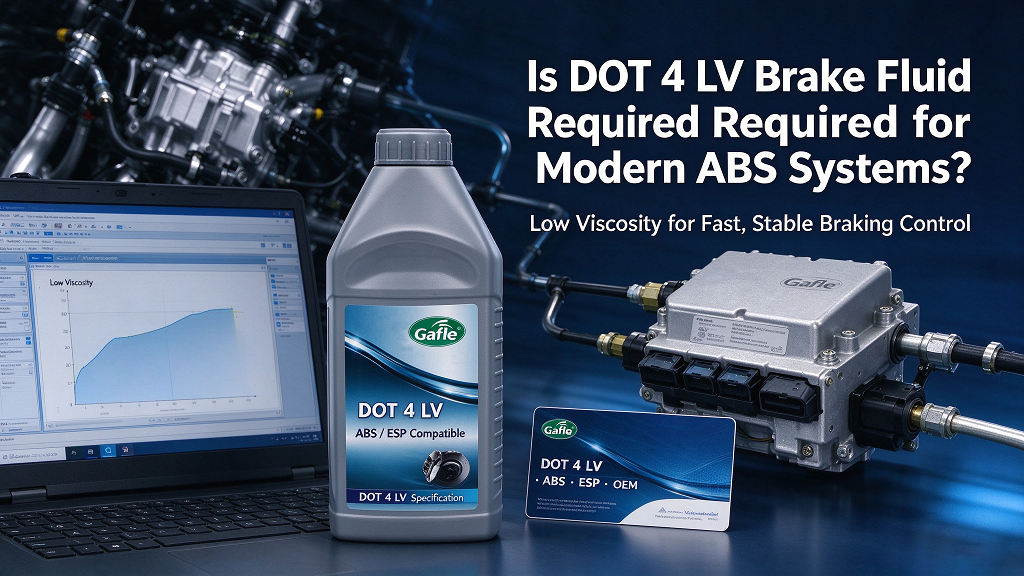
When fleet operators and automotive technicians evaluate service specifications for late-model hydraulic platforms, the question often surfaces: is DOT 4 LV brake fluid required for modern ABS systems? The short answer is technically platform-dependent, but practically speaking, low viscosity formulations have become the default engineering standard for vehicles equipped with modern anti-lock braking and electronic stability program (ESP) units. Substituting conventional fluids into an active safety system designed around low-viscosity hydraulics introduces measurable latency in pressure modulation, especially in sub-zero operational environments.
The Engineering Difference: Why Viscosity Matters in Modern Braking
Traditional glycol-based fluids like standard DOT 3 and DOT 4 were engineered around dry boiling point, wet boiling point, and thermal stability under heavy friction loads. However, the hydraulic architectures of the 1980s and 1990s were largely passive. Driver foot pressure generated the primary displacement, while primitive ABS modulators simply dumped and restored line pressure a few times per second to prevent tire lockup.
Modern vehicles manage braking far more proactively. Advanced driver assistance systems (ADAS), autonomous emergency braking (AEB), and dynamic yaw control require the hydraulic control unit (HCU) to independently build, hold, and release hydraulic pressure within fractions of a second—often without any input from the brake pedal. These systems rely on miniature internal solenoid valves, restrictive micro-orifices, and rapid-cycling return pumps.
At standard operating temperatures, conventional fluid and low viscosity variants exhibit similar flow rates. The critical divergence happens at low ambient temperatures. Under the ISO 4925 classification:
- Standard DOT 4 (Class 4): Maximum kinematic viscosity of 1,500 mm²/s at -40°C.
- DOT 4 LV (Class 6): Maximum kinematic viscosity of 750 mm²/s at -40°C.
By cutting low-temperature kinematic resistance in half, DOT 4 LV ensures that valve shuttle times and pressure rise rates remain linear and predictable, regardless of ambient cold.
The Operational Link to ESP and ADAS Calibrations
Using DOT 4 LV brake fluid for ESP system calibration is primarily about response time. Electronic stability algorithms operate on millisecond control loops. If an oversteer event occurs on an icy corner, the vehicle dynamics controller calculates the exact corrective yaw moment needed and commands the HCU to apply micro-pulses of pressure to an individual wheel.
If the hydraulic system contains thick fluid, the pressure rise time at the caliper lags behind the computer's timing model. A solenoid valve attempting to cycle 15 to 30 times per second cannot displace high-viscosity fluid cleanly through narrow passages. The result is delayed brake intervention, degraded directional stabilization, and in extreme cold, occasional fault codes triggered by transient pressure discrepancies detected by internal HCU pressure sensors.
Can You Substitute or Top Off with Standard DOT 4?
Chemically, standard DOT 4 and DOT 4 LV share the same borate ester and polyglycol foundation. They are fully miscible, meaning mixing them will not trigger chemical phase separation, seal swelling, or corrosive degradation inside the brake lines. However, dilution directly undermines the viscosity profile.
If a technician tops off an ISO Class 6 system with standard DOT 4, the boiling points remain well within safety thresholds, but the cold-flow performance degrades toward Class 4 metrics. For summer driving or mild climates, the difference may go unnoticed by the operator. Yet, for commercial fleets, passenger carriers, and vehicles operating in cold-weather regions, running non-LV fluid in an LV-specified chassis compromises the calibrated intervention thresholds of the vehicle's active safety envelope.
Service and Fleet Sourcing Recommendations
For procurement teams and workshop managers standardizing shop inventory, stocking a dedicated Class 6 fluid simplifies operations across modern mixed-vehicle fleets. Because DOT 4 LV meets or exceeds the dry and wet boiling point parameters of standard DOT 4 while providing superior cold fluidity, it functions as a backward-compatible fluid for older passenger vehicles specifying standard DOT 3 or DOT 4.
Before standardizing inventory, verify the fluid labeling against common OEM and global specifications:
- ISO 4925 Class 6
- SAE J1704 (Low Viscosity designation)
- OEM platform standards: VW 501 14, BMW QV 34 001, Ford WSS-M6C65-A2
Frequently Asked Questions
Does DOT 5.1 have the same low viscosity properties as DOT 4 LV?
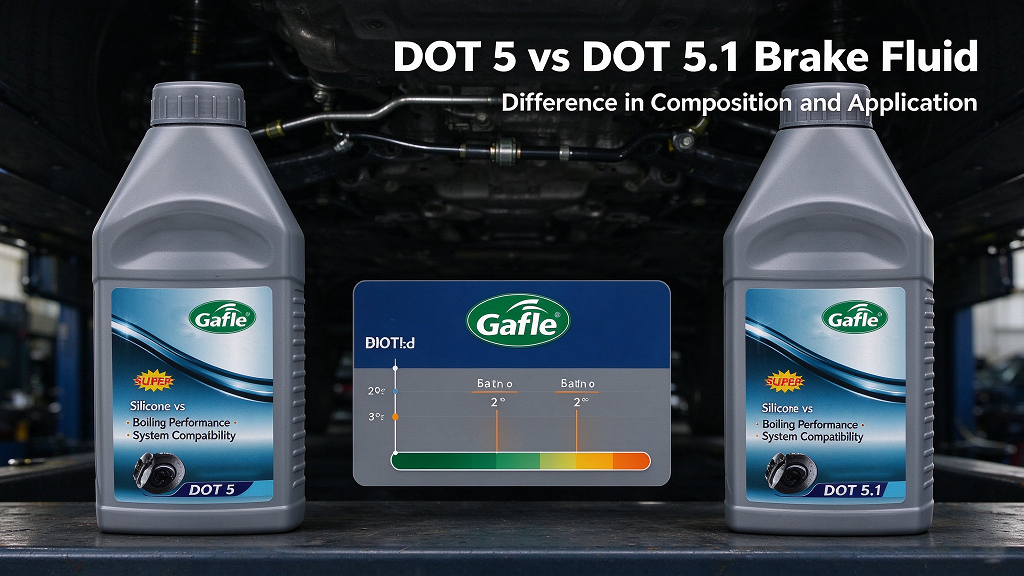
Not automatically. While DOT 5.1 is glycol-based and offers high dry and wet boiling points, standard DOT 5.1 specifications allow for kinematic viscosity up to 900 mm²/s at -40°C. Certain specialized DOT 5.1 formulations are tailored for low viscosity applications, but standard DOT 4 LV explicitly guarantees the ≤750 mm²/s threshold defined under ISO 4925 Class 6.
Will standard fluid damage the ABS pump motor?
It will not cause mechanical seizure or seal breakdown under normal conditions. However, pumping viscous fluid through micro-orifices in severe cold forces the electric pump motor to pull higher current draw, generating additional internal hydraulic stress and sluggish pressure release.
How often should low viscosity fluid be replaced?
Because low-viscosity borate-ester formulations absorb ambient moisture at rates comparable to standard glycol fluids, the maintenance interval remains unchanged: typically every two years or based on moisture testing indicating a water content above 2.5% to 3%.
Review Your Fleet Maintenance Protocol: Verify the reservoir cap markings and manufacturer service manuals for all late-model utility vehicles and light trucks. Standardizing your inventory around ISO 4925 Class 6 fluid ensures compliance across both advanced ADAS platforms and standard braking systems.
Welcome to contact GAFLE for more information & cooperation!
peter
ZHEJIANG GAFLE AUTO CHEMICL CO.,LTD
Tel:86-579-8222 1665
Fax:86-579-8246 4690
Cel/Wechart:86-13335993986
E-mail:peter@gafle.net
Web:www.gafle.net