Why mixed coolant risk matters more than many buyers expect
Mixed coolant risk is not just a workshop annoyance. In engine programs, fleet maintenance, and aftermarket service, the wrong coolant combination can change how a cooling system protects metal, seals, and pumps. The issue usually starts simply: a vehicle comes in with a top-up from a different bottle, a service bay uses whatever is on hand, or a performance build gets a specialty fluid after years of ordinary glycol service. That shortcut can create problems that are hard to see until temperatures rise, deposits form, or corrosion starts working quietly inside the system.
For engineers, sourcing managers, and product teams, the real decision is not whether coolant matters. It is whether the fluids in circulation are chemically compatible, what happens when they are not, and how to reduce the chances of an expensive cleanup or warranty dispute later.
What goes wrong when coolants are mixed
Coolant is more than antifreeze. The base fluid is only part of the story. The additive package is what protects aluminum, cast iron, solder, elastomers, and water pump components. When chemistries are blended without checking compatibility, the inhibitor system can be weakened or disrupted.
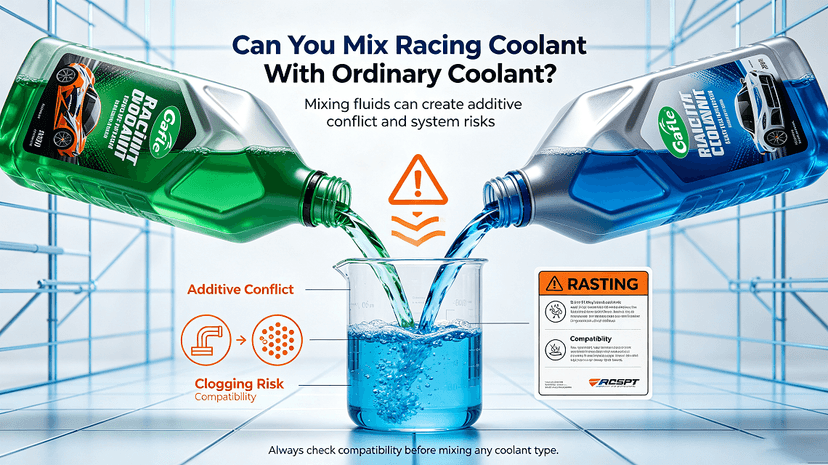
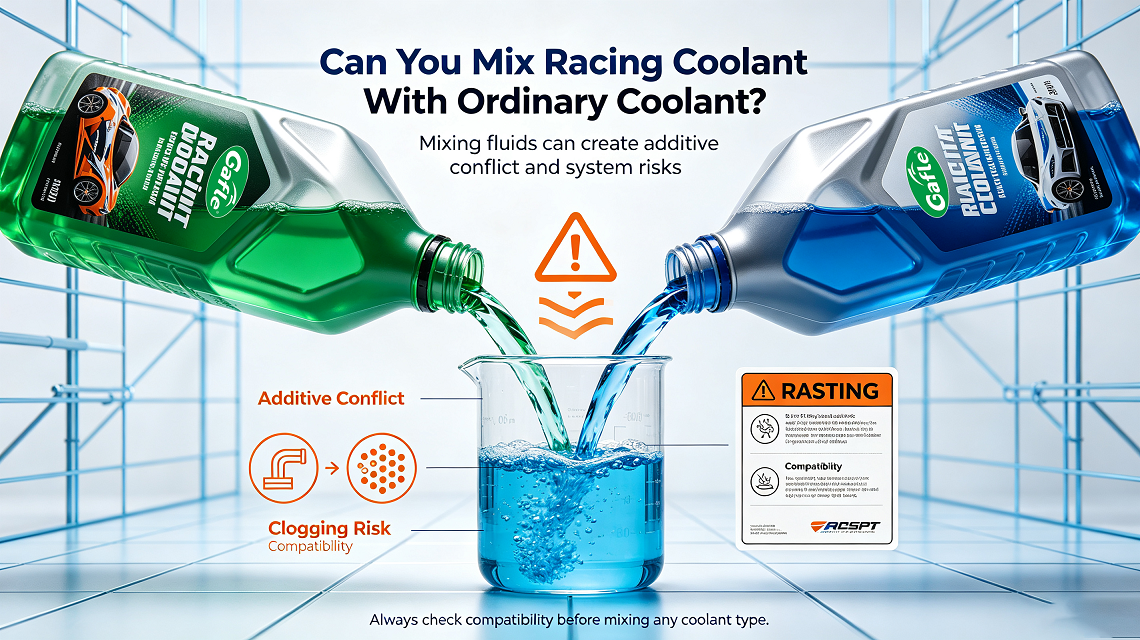
The most common result is additive conflict. One coolant may rely on organic acid technology, another on a different inhibitor approach, and the mixture can reduce the performance of both. That is where coolant additive conflict consequences begin to show up: sludge, scale, dropped corrosion protection, foaming, and in some cases blocked passages or sticky thermostat behavior. These are not dramatic failures in the first hour. They are slow, cumulative problems that make maintenance more expensive than it should be.
Risks of mixing racing and ordinary coolant
The risks of mixing racing and ordinary coolant are often misunderstood because “race” products are marketed around temperature control, track use, or reduced residue. Ordinary coolant, by contrast, is generally designed for broad road use and longer service intervals. When the two are mixed, the resulting fluid may no longer deliver the intended protection profile of either product.
That matters in a track car, but it also matters in any application where the owner expects a specific coolant behavior under heat cycling. A specialty coolant may use a narrower formulation window, while a standard coolant may contain inhibitor packages optimized for a different operating environment. Mixing them can create a system that looks acceptable on paper but behaves unpredictably in service.
Coolant incompatibility: the practical signs buyers should watch for
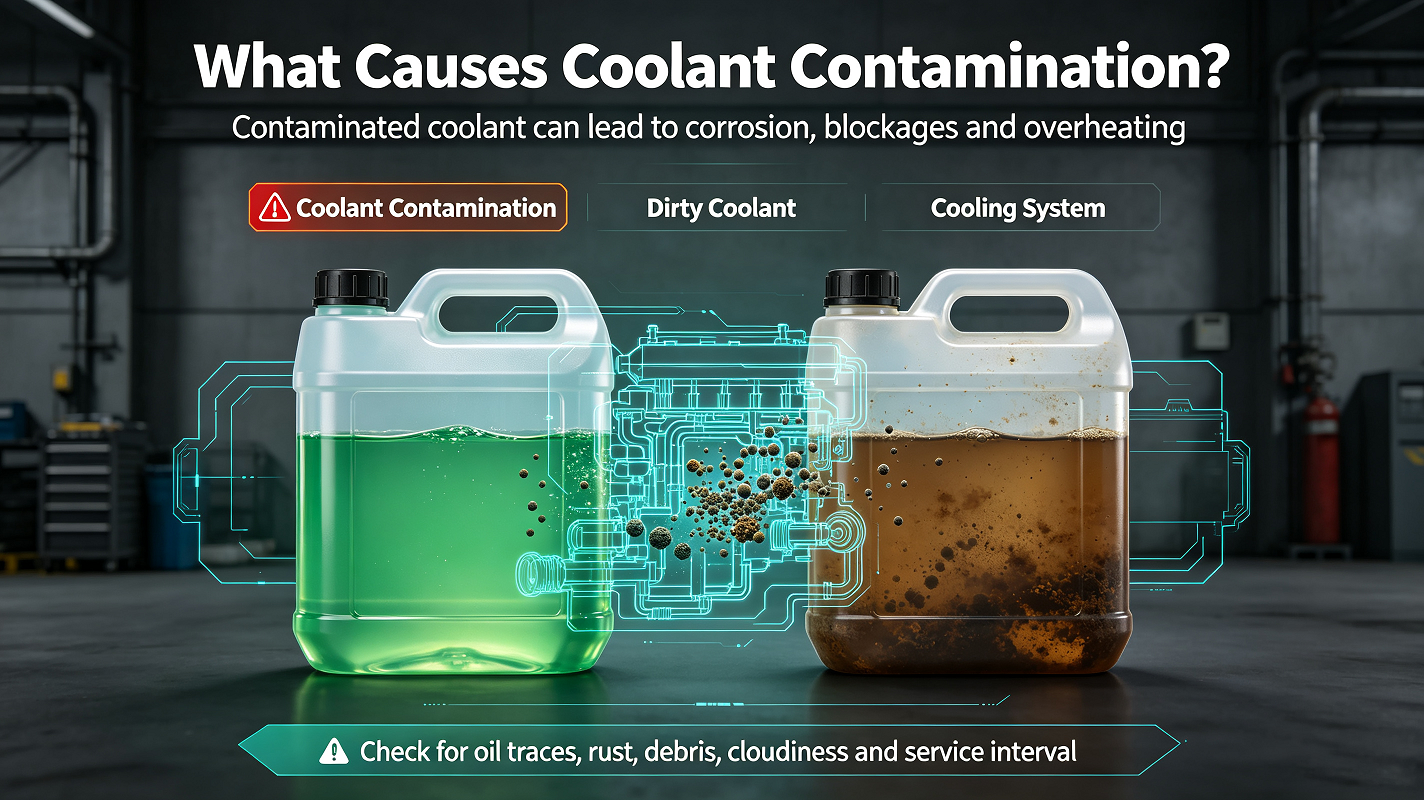
Coolant incompatibility does not always announce itself with a clear failure code. Often the first clues are visual or procedural. Discoloration after mixing, particles floating in the expansion tank, gel-like residue on caps or hoses, or recurring overheating that appears after a refill all deserve attention. A technician may also notice that a system that once bled clean now traps air more easily.
These symptoms are easy to dismiss, especially when the vehicle seems fine after a short test drive. That is the trap. Cooling systems are designed around long service cycles, pressure changes, and thermal expansion. A small incompatibility can stay hidden until the next hot day, the next load cycle, or the next pressure event.
How to evaluate coolant selection before a problem starts
For product teams and sourcing managers, the safest approach is to treat coolant selection like any other chemistry decision: by application, specification, and compatibility, not by color alone. Color is a weak signal. It can help with identification, but it should never be used as proof that two products are interchangeable.
Start with the vehicle or system requirements, then check the chemical family and service assumptions. If a fleet uses multiple platforms, the inventory strategy should be conservative. Fewer approved fluids usually mean fewer mistakes in the field. For aftermarket packaging, clear labeling matters as much as formulation language. A customer who thinks “all coolant is the same” is one top-up away from mixed coolant risk.
Quick buyer checklist
Before approving a coolant for service or resale, confirm the intended application, the coolant chemistry family, the top-up rules, and whether mixing is allowed by the original equipment guidance. If the answer is not obvious, assume it is not safe to blend.
Common mistakes that create avoidable trouble
The first mistake is topping off with whatever is nearby. The second is assuming a flush is unnecessary after an unknown refill. A third is relying on color matching alone, which is a poor habit that survives longer than it should. Another practical problem is inventory drift: one branch buys an alternate coolant because the usual one is out of stock, and the new fluid quietly enters the system without a compatibility review.
None of these mistakes are exotic. They happen because coolant is treated as routine consumable stock rather than a managed chemical. That is exactly why mixed coolant risk keeps showing up in service records and warranty conversations.
What to do when incompatible coolant may already be in the system
If contamination is suspected, the safest response is to identify what was added, document the service history, and follow the applicable flushing and refill guidance. In some cases, a simple drain-and-refill may be enough. In others, the system may need a more careful cleanup, especially if sludge or deposits are visible. Do not guess. A rushed refill can lock the problem in place.
For OEMs, distributors, and maintenance providers, the takeaway is straightforward: write the mixing rules clearly, train against color assumptions, and keep a short approved list of fluids whenever possible. The cost of a few extra part numbers is usually lower than the cost of corrosion, downtime, or a disputed repair.
FAQ
Is mixing coolants always harmful?
Not always, but it is risky unless the formulations are confirmed compatible. Some products are designed to work together; many are not.
Can a small top-up really matter?
Yes. Even a small amount of the wrong fluid can shift the additive balance enough to matter over time, especially in a system that runs hot or sees heavy cycling.
Should color be trusted as a guide?
Only as a rough identifier, never as a compatibility test. Two coolants can share a color and still be chemically different.
A practical next step
Before approving a service fill, a private-label coolant line, or a maintenance stocking plan, verify chemical family, application fit, and mixing guidance in writing. That small step prevents the kind of mixed coolant risk that is cheap to ignore on day one and expensive to fix later.
Welcome to contact GAFLE for more information & cooperation!
peter
ZHEJIANG GAFLE AUTO CHEMICL CO.,LTD
Tel:86-579-8222 1665
Fax:86-579-8246 4690
Cel/Wechart:86-13335993986
E-mail:peter@gafle.net
Web:www.gafle.net