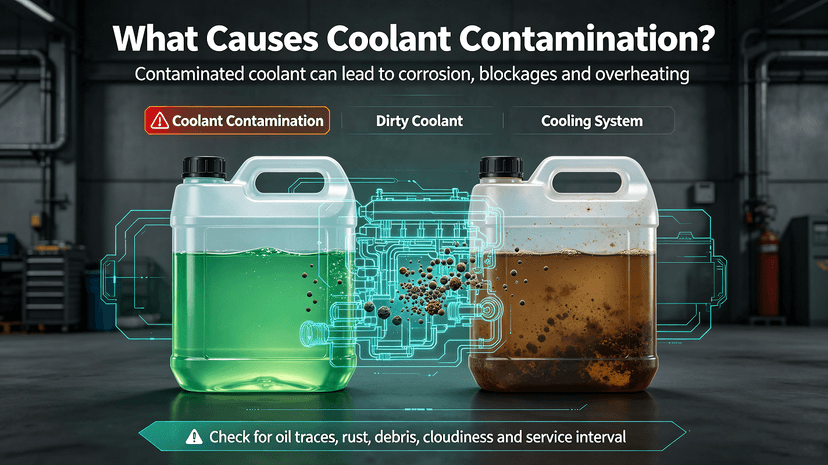
Why coolant contamination deserves attention
If you are asking what causes coolant contamination, the short answer is that the cooling system is being exposed to something it should not contain: oil, rust, fuel residue, transmission fluid, air, or even the wrong mix of water and antifreeze. That sounds minor until you remember what engine coolant is supposed to do. It carries heat away from the engine, protects metal passages, and helps keep temperatures stable under load. Once the coolant is compromised, the whole system starts working harder than it should.
For buyers, fleet managers, and maintenance teams, the real decision is not just how to flush a system. It is how to identify the source quickly enough to avoid a repeat failure. A dirty coolant sample may point to neglected service, but it can also be an early warning of a more expensive internal problem. That distinction matters.
What contaminated coolant usually looks like
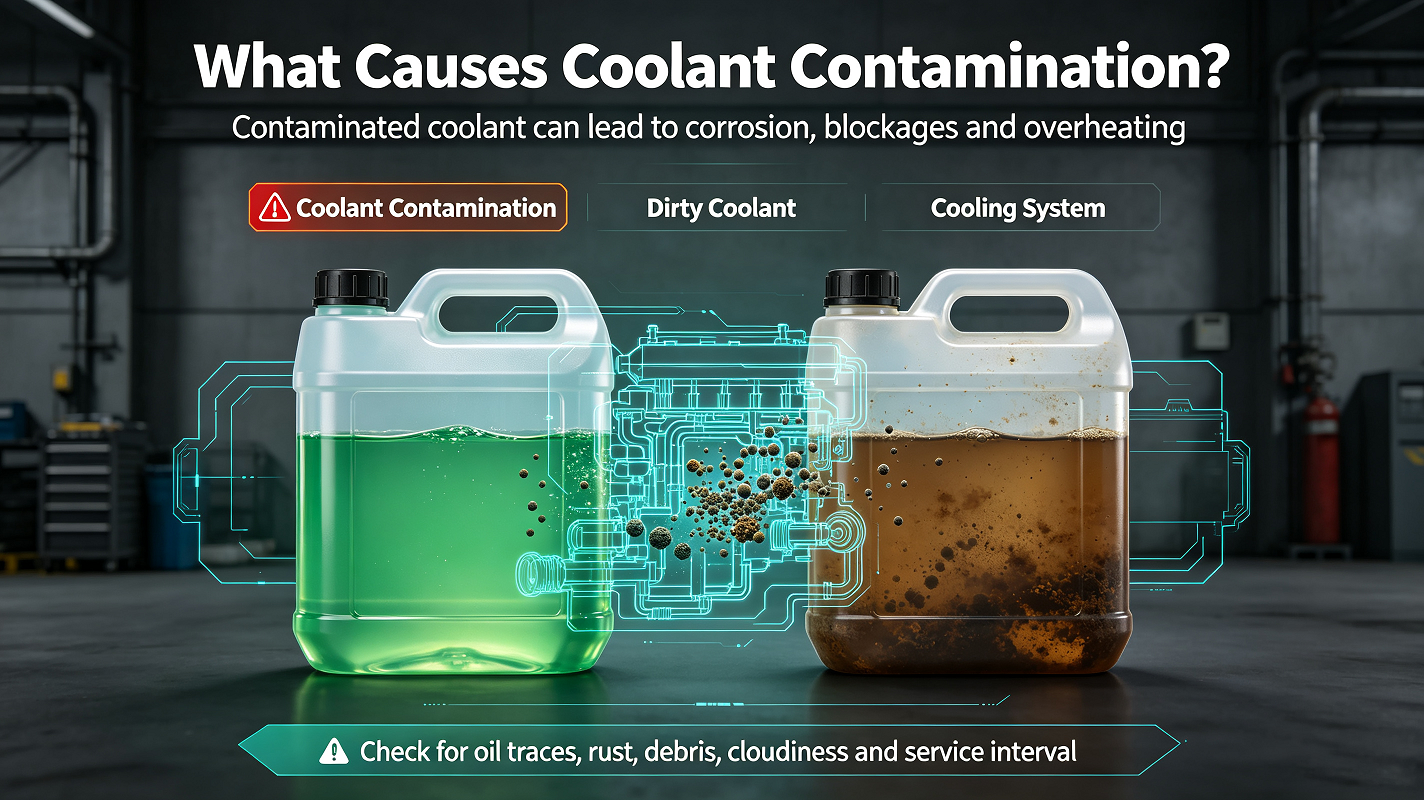
Contamination does not always announce itself with a dramatic breakdown. Often the first clues are subtle: a muddy reservoir, staining around the cap, sludge in the overflow tank, or coolant that has turned rusty, milky, or oily. In some cases, the fluid still looks green, pink, or orange, but it has lost its clarity and performance.
One practical caution: not every color change means the same thing. Discoloration can come from age, mixed formulations, corrosion, or a failed component. That is why visual inspection helps, but it should not be the only test. If the system has recurring overheating, pressure loss, or heater performance problems, the contamination is probably doing more than just making the fluid look bad.
Common reasons coolant gets contaminated
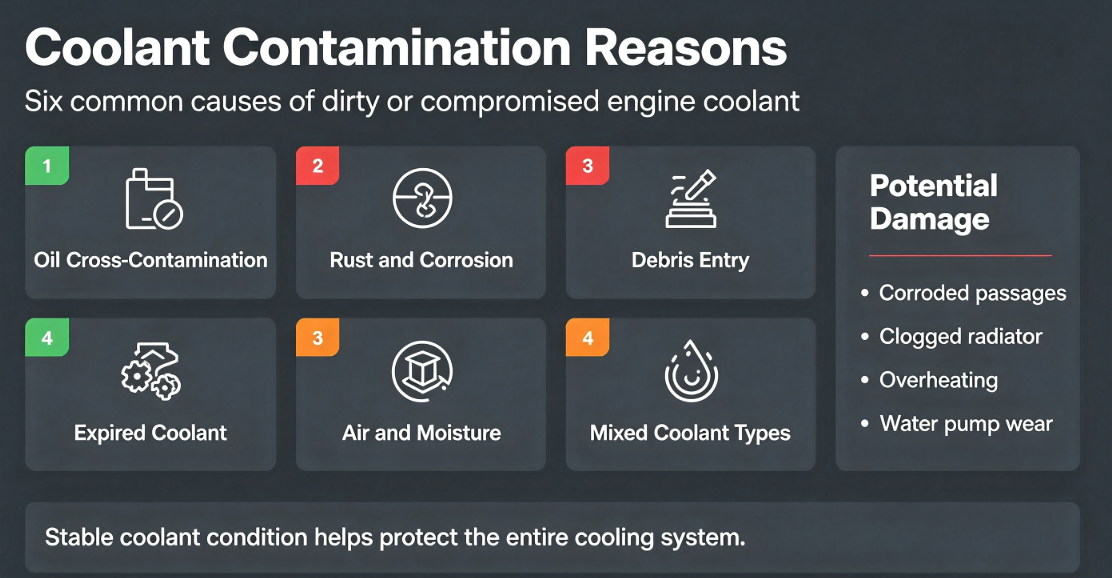
1. Internal leaks from the engine
One of the most serious common reasons is a head gasket failure, cracked cylinder head, or damaged engine block. When combustion gases or oil enter the cooling passages, the coolant system pollution can become severe very quickly. Oil in the cooling system often creates a slick film or mayonnaise-like residue, especially in the reservoir and radiator neck.
2. Corrosion and scale buildup
Over time, old engine coolant loses part of its protective package. That allows corrosion inside the radiator, water pump, heater core, and metal passages. Rust, mineral scale, and sediment then circulate through the system. This is common in vehicles that have gone too long without service, or where plain tap water has been used repeatedly instead of properly mixed antifreeze and water.
3. Mixing incompatible coolants
Not every coolant chemistry behaves well with another. Mixing formulations can cause gel formation, sludge, or reduced corrosion protection. This is a frequent problem after a top-up with the wrong product. The system may still run, but the fluid can start breaking down sooner than expected.
4. Transmission cooler failure
On some vehicles, the transmission cooler is integrated with the radiator. If that cooler leaks, automatic transmission fluid can cross into the coolant, or coolant can enter the transmission. Either direction is bad news. The signs are often a slippery residue, unusual fluid color, and a system that no longer behaves normally under heat.
5. External contamination from poor maintenance
Open caps, dirty funnels, contaminated recovery bottles, and careless topping-off habits can introduce debris into the system. It sounds basic, but shop-side contamination happens. So does neglect. A cooling system with low fluid for long periods can pull in air, which accelerates oxidation and corrosion.
Why the source matters more than the stain
There is a difference between cleaning up dirty coolant and fixing the condition that caused it. If the root problem is never addressed, the new fill will deteriorate the same way. That is why service teams usually inspect hoses, radiator condition, thermostat performance, reservoir cleanliness, cap seal integrity, and any signs of cross-system leakage before refilling.
In more severe cases, the issue may be tied to a combustion leak or internal seal failure. Those failures can be expensive, but ignoring them tends to cost more. Overheated engines, clogged heater cores, and water pump wear are common downstream effects. Once deposits begin to circulate, even a fresh flush may not restore normal flow.
Practical checks before deciding on a flush
A careful inspection usually starts with the easiest signs: fluid appearance, smell, and operating temperature. Then comes pressure testing, hose inspection, and looking for residue around caps, fittings, and the overflow tank. If the vehicle uses a radiator-and-transmission cooler arrangement, that system should be checked as well. A sample of the engine coolant can tell you a lot before parts are replaced unnecessarily.
For buyers choosing service parts or maintenance routines, the goal is to match the fix to the failure mode. A simple drain-and-fill may be enough after age-related degradation. But if the coolant has oil contamination, metallic debris, or repeated sludge formation, the problem is probably deeper than routine service.
How to reduce the risk of future contamination
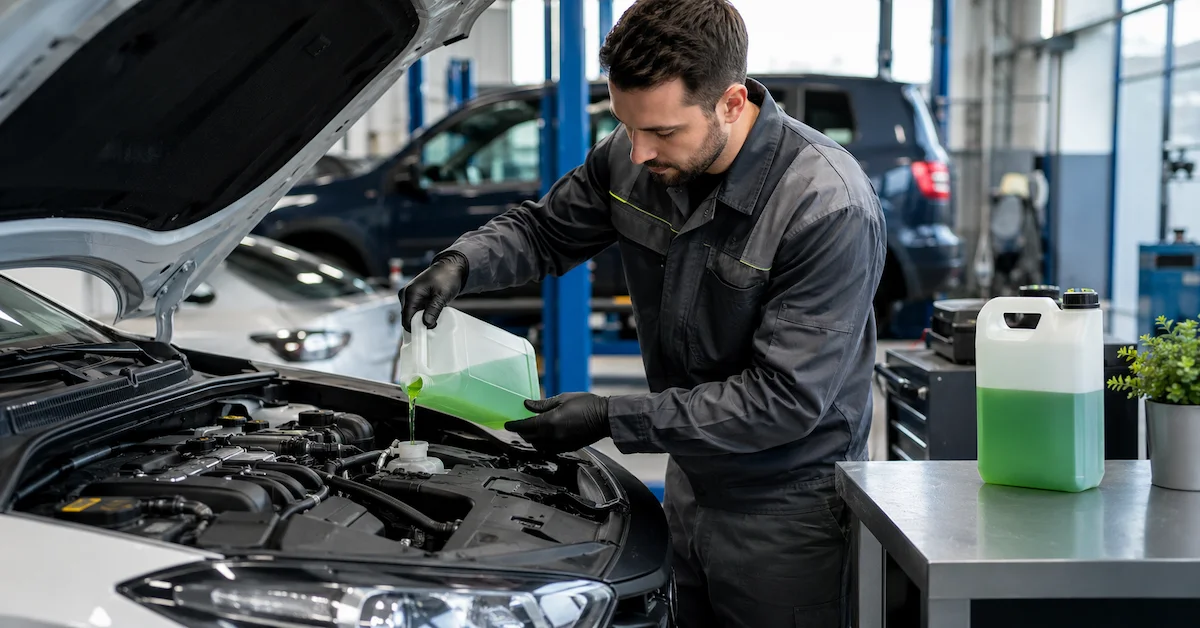
Good prevention is less glamorous than a repair quote, but it pays off. Use the correct coolant specification for the vehicle, keep the mix ratio within the recommended range, and avoid topping off with random leftovers from other systems. Replace damaged caps and hoses promptly. Keep funnels and recovery containers clean. And do not stretch service intervals beyond reason; old antifreeze loses protection long before the vehicle stops running.
It also helps to track patterns. If the same unit keeps showing dirty coolant after each service, that is a sign to look for a leak path or a component issue rather than blaming the fluid alone. Repeated contamination is usually a symptom, not the disease.
FAQ: quick answers for maintenance teams
Is contaminated coolant always an emergency?
Not always, but it should be treated as a warning. Some cases can wait for scheduled service; others, especially oil or fuel contamination, need prompt attention.
Can a flush fix everything?
No. A flush removes contaminated fluid, but it does not repair a head gasket, failed cooler, or corroded component.
Why does the heater stop working when coolant is dirty?
Deposits and sludge can block heater-core flow, which reduces cabin heat even before the engine shows obvious overheating.
What to do next
If you have signs of contamination, start with a source check before ordering parts or scheduling a standard flush. In many cases, the fastest path is to confirm whether the problem is age, corrosion, cross-fluid leakage, or internal engine damage. That small bit of diagnosis can save a lot of rework later.
For anyone responsible for fleet uptime or workshop efficiency, the useful habit is simple: treat coolant as a monitored fluid, not a background item. When engine coolant changes color, thickens, or picks up residue, it is telling you the cooling system has already started to drift away from normal.
Welcome to contact GAFLE for more information & cooperation!
peter
ZHEJIANG GAFLE AUTO CHEMICL CO.,LTD
Tel:86-579-8222 1665
Fax:86-579-8246 4690
Cel/Wechart:86-13335993986
E-mail:peter@gafle.net
Web:www.gafle.net