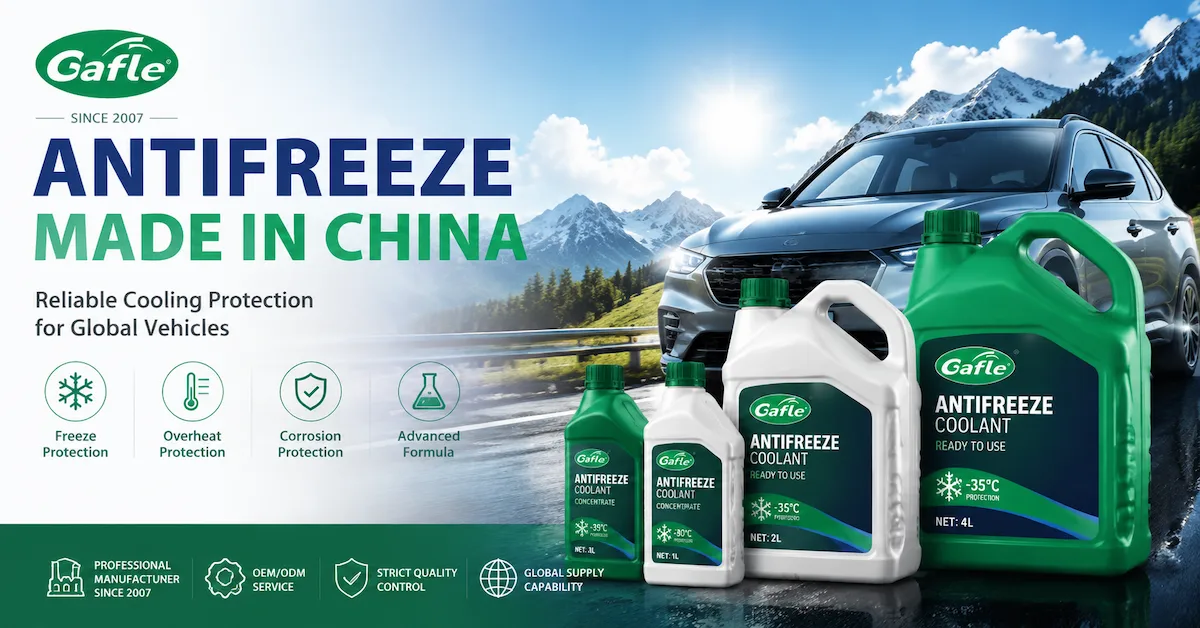
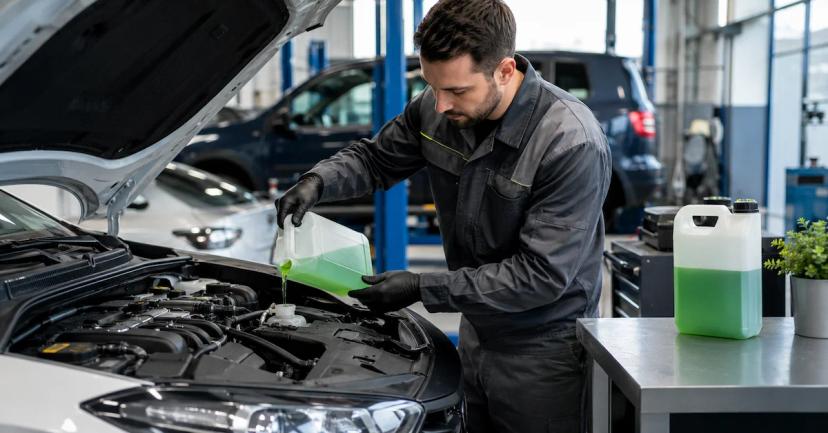
What Is Non-toxic Antifreeze?
Non-toxic antifreeze is a commercial search term commonly used for coolant products designed to offer a lower toxicity profile than conventional ethylene glycol-based antifreeze.
In many cases, buyers using this term are actually looking for propylene glycol antifreeze.
However, professional buyers should understand one important point immediately:
“Non-toxic” should not automatically be treated as an absolute product-safety claim.
The complete safety profile of an antifreeze product depends on:
- Glycol base
- Corrosion inhibitors
- Dyes
- Additives
- Concentration
- Intended application
- Finished-product classification
Propylene glycol generally has a substantially different acute toxicity profile from ethylene glycol. CDC's Agency for Toxic Substances and Disease Registry notes that ethylene glycol is a potent cause of acute toxicity in humans, while propylene glycol is widely used in food, pharmaceutical, coolant, antifreeze, and heat-transfer applications.
That does not mean every automotive coolant containing propylene glycol is safe to drink, safe for uncontrolled release, or legally entitled to an unrestricted “non-toxic” claim.
For a distributor or OEM brand, the correct purchasing question is therefore:
“What formulation and documentation support the lower-toxicity positioning of this antifreeze?”
rather than simply:
“Is it non-toxic?”
Why Buyers Search for Non-toxic Antifreeze
Demand for lower-toxicity coolant can come from several B2B markets.
Fleet Operators
Fleet operators may want to reduce handling risks in:
- Maintenance depots
- Bus fleets
- Logistics fleets
- Rental fleets
- Municipal vehicles
Where coolant is stored and handled frequently, product safety becomes part of workshop management.
Automotive Chemical Distributors
A distributor may want a differentiated coolant range containing:
- Standard ethylene glycol coolant
- OEM-specific coolant
- Propylene glycol-based coolant
- Ready-to-use coolant
- Private-label coolant
This allows buyers to serve different market segments instead of competing only on price.
Private-Label Automotive Brands
Some brands want to position a coolant around:
- Lower toxicity
- Safer handling
- Environmental awareness
- Professional fleet use
- Specialized applications
But claims printed on packaging must be supported by the actual formulation and applicable regulations.
Workshops and Service Chains
Large service networks may prioritize:
- Easier product identification
- Controlled handling
- Consistent SDS documentation
- Reduced workshop risk
- Reliable repeat supply
The coolant still needs to meet the technical requirements of the vehicle.
Propylene Glycol vs Ethylene Glycol Antifreeze
The most common comparison behind searches for non-toxic antifreeze is:
propylene glycol vs ethylene glycol antifreeze
Both can be used as bases for automotive coolant formulations.
ASTM D3306-21 specifically covers both ethylene glycol-based and propylene glycol-based engine coolants for automobiles and other light-duty cooling systems.
| Buying Factor | Ethylene Glycol Coolant | Propylene Glycol Coolant |
|---|---|---|
| Common automotive use | Very widespread | Available for defined applications |
| Toxicity positioning | Higher ingestion hazard | Generally lower acute toxicity |
| ASTM D3306 category | Covered | Covered |
| Concentrate available | Yes | Yes |
| Prediluted version | Yes | Yes |
| Vehicle compatibility | Must be verified | Must be verified |
| Safety evaluation | Check finished-product SDS | Check finished-product SDS |
| B2B positioning | Mainstream automotive coolant | Lower-toxicity/specialized coolant |
The table is a procurement comparison, not a compatibility guide.
A buyer should not replace an ethylene glycol coolant with propylene glycol coolant solely because the latter sounds safer.
Vehicle requirements, cooling-system performance, OEM specifications, inhibitor chemistry, and service procedures still need to be checked.
Does Propylene Glycol Mean the Antifreeze Is Completely Non-toxic?
No.
This distinction is essential for accurate product marketing.
CDC/ATSDR describes propylene glycol as having wide use in food, pharmaceuticals, antifreeze, coolants, and heat-transfer fluids and distinguishes its toxicity profile from ethylene glycol.
But an automotive coolant is a formulated chemical product, not pure pharmaceutical- or food-grade propylene glycol.
Finished antifreeze may contain:
- Corrosion inhibitors
- Stabilizers
- Anti-foam agents
- Dyes
- Buffers
- Other functional additives
Therefore, buyers should evaluate the finished product SDS, not just the glycol base.
Better Marketing Language
Instead of automatically claiming:
“100% non-toxic antifreeze”
a professional private-label project may use technically supportable positioning such as:
- Propylene glycol-based antifreeze
- Lower-toxicity coolant
- Reduced-toxicity coolant formulation
- Safer-handling coolant
The exact wording should always be reviewed against:
formula + SDS + destination-market regulations
This protects both the supplier and the importer.
Does ASTM Recognize Propylene Glycol Antifreeze?
Yes.
ASTM D3306-21 categorizes light-duty glycol-base engine coolants including:
- Type I — ethylene glycol concentrate
- Type II — propylene glycol concentrate
- Type III — ethylene glycol predilute
- Type IV — propylene glycol predilute
The standard also states that qualifying products can provide protection against freezing, boiling, and corrosion when used according to the applicable concentration requirements.
This is important for B2B buyers because it shows that propylene glycol is not simply a “green marketing substitute.”
It is an established coolant base recognized within automotive engine coolant standards.
Heavy-Duty Applications
ASTM D6210-25 covers fully formulated glycol-base coolants for heavy-duty engines and includes both ethylene glycol and propylene glycol formulations. It addresses protection against corrosion, cavitation, freezing, and boiling in heavy-duty cooling systems.
For truck, bus, construction-equipment, or fleet procurement, buyers should verify the specific heavy-duty requirement rather than assuming a light-duty coolant is suitable.
What Does Non-toxic Antifreeze Actually Need to Do?
Lower toxicity is only one buying criterion.
A professional engine coolant must still perform its primary technical functions.
Freeze Protection
Coolant must help prevent freezing under the expected operating climate.
The target should be defined by:
- Country
- Region
- Minimum winter temperature
- Vehicle application
Boiling Protection
The cooling system also operates under high thermal loads.
The selected coolant must work with the vehicle cooling system to maintain a suitable operating range.
Corrosion Protection
Modern cooling systems can contain:
- Aluminum
- Cast iron
- Steel
- Copper alloys
- Plastics
- Elastomers
The inhibitor package must be suitable for the materials found in the intended system.
Cavitation Protection
This can be especially important in certain heavy-duty diesel applications.
ASTM D6210 specifically addresses cavitation protection as part of heavy-duty coolant performance.
Chemical Stability
A coolant also needs consistent formulation and performance throughout its intended service environment.
Therefore:
lower toxicity without adequate cooling-system performance is not a successful automotive coolant.
Who Should Consider Propylene Glycol Antifreeze?
Propylene glycol-based coolant can be worth evaluating when the project places additional emphasis on exposure and handling considerations.
Possible B2B applications include:
Automotive Fleets
Useful where large quantities of coolant are stored and handled by maintenance teams.
Workshop Chains
A lower-toxicity positioning may support workshop safety programs, provided vehicle compatibility is confirmed.
Municipal or Institutional Fleets
Organizations with formal environmental, chemical-handling, or procurement requirements may specifically request alternative coolant chemistries.
Specialized Equipment Markets
Some buyers may specify propylene glycol coolant according to an equipment or operating requirement.
Private-Label Coolant Programs
Distributors can potentially use propylene glycol chemistry to differentiate a premium or specialized product line.
However, the target vehicle specification always takes priority over marketing positioning.
Where Should Buyers Not Use “Non-toxic” as the Main Selection Criterion?
The keyword is commercially attractive, but there are situations where it can lead buyers in the wrong direction.
Do not select antifreeze mainly because it is described as “non-toxic” when:
- The vehicle manufacturer requires another chemistry
- OEM compatibility is unknown
- Heavy-duty requirements have not been checked
- The SDS is unavailable
- The complete additive package is unknown
- Required performance tests are unsupported
- The product's freeze protection is unsuitable
- The supplier cannot provide batch-level documentation
The safest procurement order is:
technical compatibility first → safety positioning second
not the reverse.
Concentrated vs Ready-to-Use Non-toxic Antifreeze
B2B buyers also need to decide whether they want concentrate or prediluted coolant.
| Factor | Concentrate | Ready-to-Use |
|---|---|---|
| Dilution | Buyer controls | Factory controlled |
| Water quality | Buyer responsibility | Manufacturer responsibility |
| Freight | Less water transported | More finished fluid transported |
| Workshop convenience | Lower | Higher |
| Mixing error | Greater risk | Reduced risk |
| Climate flexibility | Higher | Fixed formulation |
| Retail suitability | Good | Very good |
ASTM D3306 covers qualifying concentrates and prediluted propylene glycol coolant products.
Concentrate May Suit
- Professional distributors
- Regional blenders
- Controlled fleet workshops
- Markets requiring several freeze-protection grades
Ready-to-Use May Suit
- Retail channels
- Workshop chains
- Service networks
- Fleets prioritizing standardized maintenance
The purchasing decision should be based on landed cost and operational control, not just container price.
Non-toxic Antifreeze Specifications to Include in an RFQ
One of the easiest ways to improve quotation quality is to give the manufacturer a structured RFQ.
| RFQ Field | What to Specify |
|---|---|
| Destination | Country/market |
| Vehicle type | Passenger, truck, fleet,equipment |
| Glycol base | Propylene glycol if specifically required |
| Technical standard | ASTM/OEM/market requirement |
| Coolant technology | OAT/HOAT/other if defined |
| Format | Concentrate or premixed |
| Freeze protection | Required temperature |
| Safety positioning | Required claim and evidence |
| Packaging | Bottle, drum,bulk |
| Branding | Standard/OEM/private label |
| Label language | Market requirement |
| Documentation | TDS, SDS, COA, tests |
| Trial quantity | First order |
| Annual forecast | Expected demand |
| Delivery | Destination and timing |
Compare suppliers only after each supplier understands the same specification.
Otherwise, a “cheaper” quotation may simply contain a different glycol base, concentration, additive package, packaging configuration, or testing requirement.
What Documents Should Buyers Request?
For lower-toxicity antifreeze sourcing, documentation becomes especially important.
SDS
The Safety Data Sheet should help buyers evaluate the hazard classification and handling requirements of the finished product.
This is more meaningful than relying on the phrase “non-toxic.”
TDS
The Technical Data Sheet should describe product performance and use requirements.
Depending on the product, buyers may look for:
- Glycol base
- Concentration
- Freeze protection
- Physical properties
- Application
- Technical standards
COA
For commercial orders, a Certificate of Analysis can help demonstrate batch-level verification against agreed properties.
Test Reports
Where technical or marketing claims rely on a specific standard, request supporting evidence relevant to the exact product.
Why Buyers Should Verify Every Safety Claim Before Printing Packaging
This is particularly important for private-label projects.
Imagine a distributor orders 20,000 bottles with:
NON-TOXIC ANTIFREEZE
printed prominently on the label.
If the final product documentation does not support that statement in the destination market, the buyer may face:
- Artwork changes
- Label reprinting
- Inventory delays
- Customs/compliance questions
- Distributor disputes
- Reputation risk
A better OEM process is:
formula confirmation → SDS review → claim review → label approval → production
not:
label design → production → safety verification
For high-volume B2B sourcing, this simple sequence can prevent expensive mistakes.
How to Evaluate a Non-toxic Antifreeze Manufacturer
1.Ask About the Actual Glycol Base
Do not accept only:
“Yes, we have eco antifreeze.”
Ask:
“Is the finished product ethylene glycol, propylene glycol, glycerin-containing, or another base?”
2. Ask for the SDS
This is essential when lower toxicity is one of your main purchasing requirements.
3. Confirm Vehicle Compatibility
The product must satisfy the actual cooling-system requirement.
4. Verify the Applicable Standard
For example:
- ASTM D3306 for relevant light-duty glycol-base coolant
- ASTM D6210 for relevant heavy-duty fully formulated glycol-base coolant
The standard must be applicable to the exact product.
5.Review Production and QC
Ask how the manufacturer controls:
- Raw materials
- Formula versions
- Mixing
- Filling
- Batch identification
- Finished inspection
6. Confirm OEM Capability
For private-label buyers, establish what can actually be customized.
What Quality Control Matters for Propylene Glycol Antifreeze?
A strong QC program should begin before production.
Raw Material Control
Important controls can include:
- Supplier qualification
- Material identification
- Incoming inspection
- Storage management
- Batch traceability
Formula Control
The manufacturer should prevent:
- Incorrect glycol base
- Incorrect additive dosing
- Cross-formula confusion
- Unapproved substitutions
Production Control
Buyers should understand controls around:
- Mixing
- Process sequence
- Filling
- Sealing
- Labeling
- Batch coding
Finished Product Testing
Depending on the agreed specification, relevant checks may include:
- Freeze protection
- pH
- Density
- Corrosion performance
- Foam behavior
- Stability
- Application-specific properties
The correct question is not:
“Do you have a laboratory?”
It is:
“Which tests are performed on the exact coolant we are buying,and what are the acceptance limits?”
That produces a much more useful supplier evaluation.
OEM and Private Label Non-toxic Antifreeze
For distributors and automotive brands, the commercial opportunity is often larger than simply buying a standard bottle.
A private-label project may involve:
- Formula selection
- Propylene glycol requirement
- Target standard
- Concentrate/premix decision
- Product color
- Bottle size
- Cap
- Label
- Carton
- Local language
- Barcode
- Shipping marks
But buyers should separate customization that creates market value from customization that only increases MOQ.
Recommended Launch Strategy
For a new private-label brand:
Step 1: Define target customer.
Step 2: Confirm whether the market actually requires a propylene glycol product.
Step 3: Select one primary format.
Step 4: Verify performance and safety documentation.
Step 5: Approve packaging.
Step 6: Start with a controlled commercial order.
Step 7: Expand SKUs after validating demand.
This minimizes inventory risk.
Non-toxic Antifreeze Cost: Why Propylene Glycol Is Only One Factor
The final purchasing cost is affected by more than the base glycol.
Commercial cost can include:
formulation + additives + testing + packaging + OEM customization + freight + duties + inventory + quality risk
A buyer comparing two quotations should normalize:
- Glycol chemistry
- Concentration
- Standard
- Packaging
- Quantity
- Documents
- OEM requirements
- Destination
Do Not Compare Only Cost per Liter
A lower-cost product can become more expensive if:
- The concentration differs
- Packaging wastes container space
- Labels require reprinting
- Documentation is incomplete
- The product cannot support the target application
- Repeat-batch consistency is poor
For importers, landed and risk-adjusted cost is the better metric.
Is Non-toxic Antifreeze Better for the Environment?
Not automatically.
Lower human acute toxicity and environmental impact are different questions.
A coolant may have a lower-toxicity glycol base but still require:
- Controlled storage
- Spill management
- Proper disposal
- Local wastewater compliance
- Used-coolant collection
Therefore, buyers should avoid vague claims such as:
“completely environmentally harmless.”
A stronger professional approach is to document:
- Chemical composition
- Hazard classification
- Disposal instructions
- Market-specific regulatory information
This provides buyers with evidence instead of slogans.
Why Supplier Manufacturing Systems Matter
For an importer, formula performance is only useful when the manufacturer can reproduce it consistently.
GAFLE's current corporate information identifies the manufacturer as Zhejiang Gafle Auto Chemical Co., Ltd. and states that it develops and manufactures automotive chemicals, including engine coolant/antifreeze. The company reports annual capacity above 80,000 tons across all product lines and OEM service for more than 90 international brands.
Its corporate information also lists:
- IATF 16949
- ISO 9001
- ISO 14001
- ISO 45001
GAFLE's About Us page describes automated production lines and states that it provides bespoke specifications and packaging solutions for private-label customers.
These are useful supplier-level qualifications.
They do not, however, prove that every GAFLE coolant is propylene glycol-based or should be marketed as non-toxic.
That distinction matters.
Does GAFLE Currently Offer Non-toxic Antifreeze?
GAFLE's current public coolant portfolio lists:
- Coolant
- Energy Storage Battery Thermal Management Coolant
- Energy Vehicles Coolant
- Non-Contact Liquid Cooling Coolant
- OEM solutions
The public category page does not identify every coolant's exact glycol chemistry or label a specific product as Non-toxic Antifreeze.
Therefore, a buyer requiring a propylene glycol or lower-toxicity coolant should confirm the exact formulation, TDS, SDS, application, and available OEM program directly with GAFLE before making product claims.
This is a much stronger B2B procurement process than assuming product chemistry from a category name.
Buyers can review the GAFLE Antifreeze/Coolant range and discuss the required formulation through GAFLE Contact Us.
Standard Coolant vs Lower-Toxicity Coolant vs OEM Development
| Supply Direction | Best Fit | Main Buyer Priority |
|---|---|---|
| Standard automotive coolant | Mainstream distribution | Cost, compatibility,availability |
| Propylene glycol coolant | Lower-toxicity requirement | Chemistry and safety documentation |
| OEM/private-label coolant | Regional brands | Branding + technical specification |
| Specialized coolant development | Defined technical project | Application-specific performance |
The correct solution depends on:
- Target vehicles
- Local market
- Safety requirement
- Annual volume
- Technical specification
- Distribution model
A buyer does not always need a completely custom formulation.
But when Non-toxic Antifreeze is an important product claim, the formulation and documentation need to be defined before commercial launch.
Common Non-toxic Antifreeze Sourcing Risks
Risk 1: Treating “Non-toxic” as an Absolute Technical Specification
Problem: The marketing term replaces proper chemical verification.
Better approach: Confirm glycol base and finished-product SDS.
Risk 2: Assuming Propylene Glycol Works in Every Vehicle
Problem: Lower toxicity becomes more important than vehicle compatibility.
Better approach: Follow the OEM and technical specification.
Risk 3: Checking Only the Main Ingredient
Problem: Buyers ignore the complete additive package.
Better approach: Evaluate the finished formulation.
Risk 4: Printing Safety Claims Too Early
Problem: Packaging is approved before supporting documents.
Better approach: Verify safety wording first.
Risk 5: Comparing Different Coolant Concentrations
Problem: Quotations look cheaper because specifications differ.
Better approach: Standardize the RFQ.
Risk 6: Ignoring Batch Consistency
Problem: One sample is treated as proof of long-term supply quality.
Better approach: Review QC, traceability, and repeat production.
Risk 7: Confusing Lower Toxicity With Environmental Harmlessness
Problem: Unsupported environmental claims create compliance risk.
Better approach: Use specific, documentable claims.
What Should You Send for a Non-toxic Antifreeze Quote?
To get a useful quotation, provide:
- Destination country
- Vehicle/application type
- Light-duty or heavy-duty use
- Propylene glycol requirement,if mandatory
- Required ASTM/OEM specification
- Concentrate or premix preference
- Required freeze protection
- Packaging size
- Trial-order volume
- Expected annual demand
- OEM/private-label requirement
- Label language
- Required SDS/TDS/COA
- Required safety or environmental claims
- Target delivery date
If the chemistry is not yet defined, send the application and safety objective first rather than guessing a coolant formula.
For broader sourcing information, buyers can also review the GAFLE coolant product portfolio and related procurement guides before requesting a quotation.
FAQ About Non-toxic Antifreeze
1.What is Non-toxic Antifreeze?
Non-toxic antifreeze is a commercial term often used for lower-toxicity coolant, particularly products based on propylene glycol. Buyers should confirm the finished-product SDS because the complete formulation determines its hazard classification.
2. Is propylene glycol antifreeze completely non-toxic?
No absolute assumption should be made. Propylene glycol has a different and generally lower acute toxicity profile than ethylene glycol, but finished automotive coolant also contains additives and should be evaluated through its SDS.
3. Is propylene glycol approved for automotive coolant?
ASTM D3306 includes propylene glycol-based concentrate and prediluted engine coolant categories for automobile and light-duty service.
4. Can propylene glycol antifreeze be used in heavy-duty engines?
ASTM D6210 covers fully formulated glycol-base heavy-duty engine coolant prepared using ethylene or propylene glycol, but buyers must still verify the engine manufacturer's requirements.
5. Is propylene glycol coolant better than ethylene glycol coolant?
Not universally.Propylene glycol may be selected when lower toxicity is important, while vehicle compatibility and technical performance remain the primary selection criteria.
6. Is Non-toxic Antifreeze safe for pets?
Automotive coolant should never be treated as safe for intentional ingestion by people or animals. Buyers should follow the finished-product SDS, labeling, storage, and spill-control requirements.
7. What documents should a supplier provide?
Depending on the project, buyers should request TDS, SDS/MSDS, COA, product specifications, relevant test information, and evidence supporting any safety or compatibility claim.
8. Can Non-toxic Antifreeze be private labeled?
A manufacturer with appropriate formulation and OEM capability may support private-label programs involving formula selection, packaging, labels, cartons, languages, and market positioning. The safety claim should be verified before artwork approval.
9. What affects the MOQ for private-label coolant?
MOQ can depend on formulation, bottle size, custom packaging, label, carton, number of SKUs, testing requirements, and production planning.
10.How do I choose a Non-toxic Antifreeze supplier?
Compare suppliers using one standardized specification. Evaluate glycol chemistry, vehicle compatibility, SDS/TDS, technical testing, QC, OEM capability, production capacity, export support, landed cost, and repeat-batch consistency.
Conclusion
Non-toxic Antifreeze should be treated as a purchasing objective, not as a complete technical specification.
For professional buyers, the better selection process is:
application → glycol chemistry → OEM requirement → technical standard → safety documentation → QC → packaging → commercial terms
Propylene glycol can provide a lower-toxicity alternative to conventional ethylene glycol and is explicitly recognized within ASTM automotive coolant standards. But the finished coolant still needs appropriate technical performance, vehicle compatibility, corrosion protection, quality control, and documented safety information.
For distributors and private-label brands, this creates a valuable market opportunity: build a differentiated coolant product around verifiable chemistry and documented performance, rather than an unsupported “safe” claim.
GAFLE manufactures automotive chemicals and provides conventional coolant, specialized thermal-management products, and OEM solutions for international buyers. Its public portfolio does not currently identify a specific product as “Non-toxic Antifreeze,” so buyers requiring propylene glycol or another lower-toxicity formulation should confirm the exact technical specification directly before ordering.
Review the GAFLE Antifreeze/Coolant portfolio and contact GAFLE with your destination market, vehicle application, glycol requirement, required standard, packaging, trial quantity, and annual forecast.