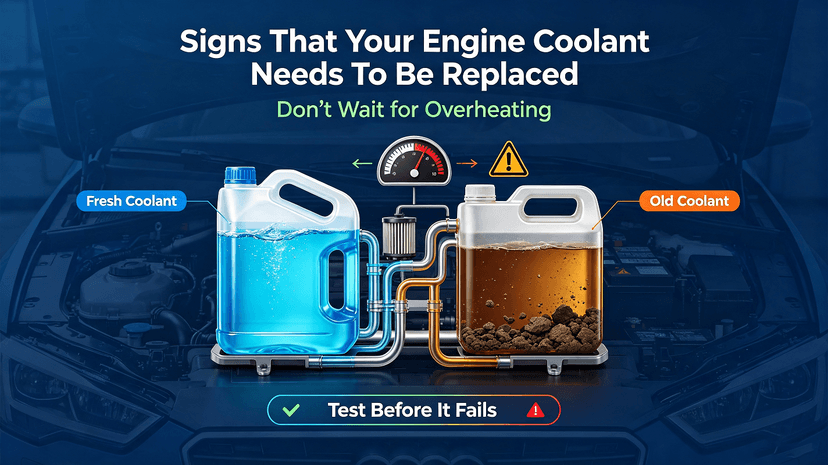
Waiting for overheating to happen before changing coolant is a risky habit. Many vehicle owners only inspect antifreeze after engine trouble occurs. Aging coolant gradually loses anti‑corrosion and freeze‑protection properties, slowly harming radiators, water pumps and gaskets. Spotting early warning signs helps garages, fleet managers and drivers avoid expensive engine repairs.
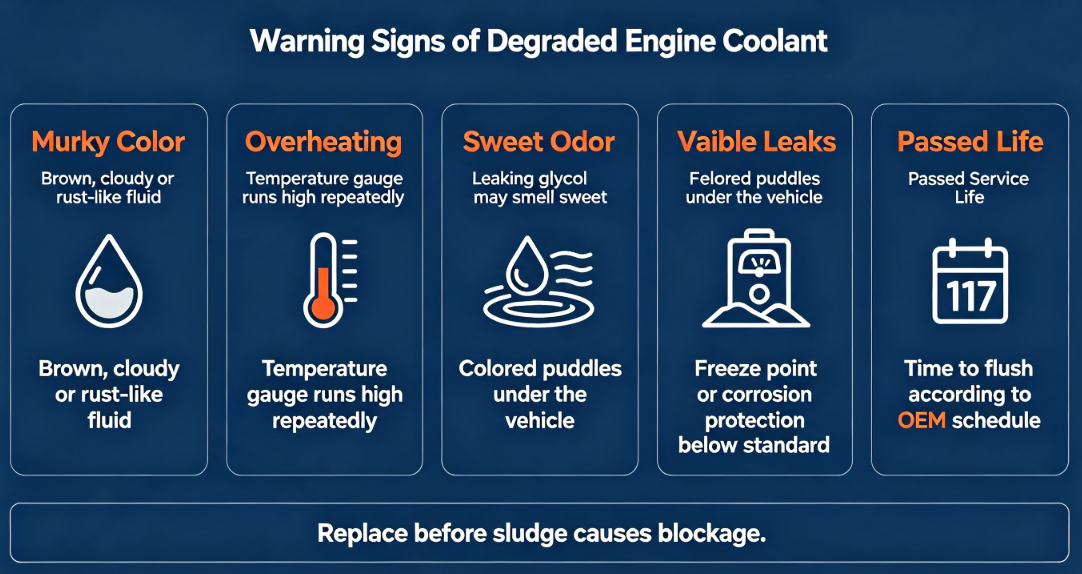
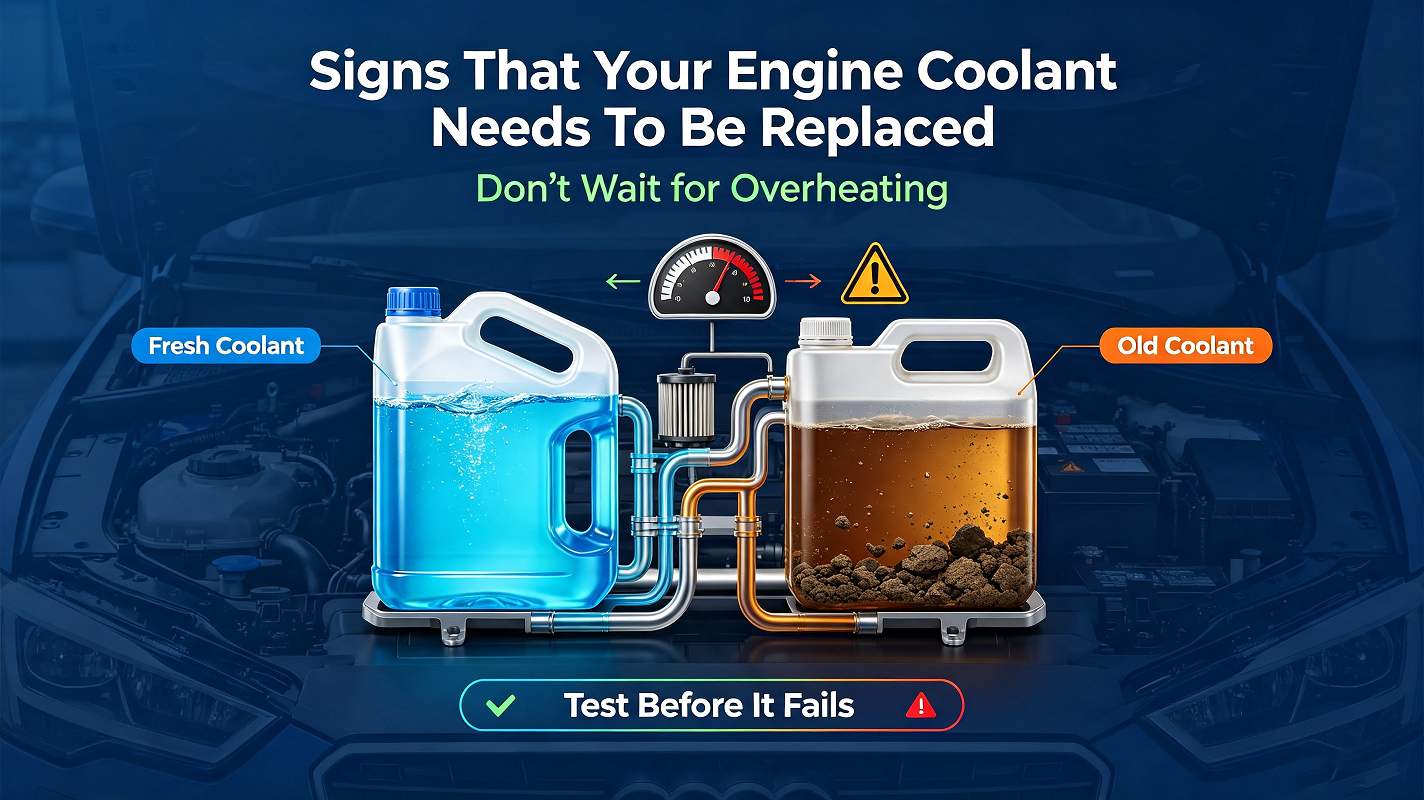
Discolored or murky coolant is one obvious warning signal. Fresh coolant stays bright and transparent. After years of service, heat, oxidation and metal corrosion turn fluid brown, muddy or rust‑like. Visible particles, sludge or floating debris inside the reservoir mean the additives have failed. This is not solved by simply topping up new coolant. A full system flush is required.
Repeated engine overheating points to degraded coolant. If your temperature gauge frequently runs high even with sufficient fluid volume, worn‑out antifreeze may no longer transfer heat effectively. Note: overheating can also come from broken water pumps or blocked radiators. Test coolant condition to tell whether fluid quality is the root cause.
Visible coolant leaks or sweet odor from engine bay deserve your attention. Expired coolant accelerates rubber hose aging and gasket corrosion. You may spot colorful fluid puddles under the vehicle, or notice a distinct sweet glycol smell while driving. Even small continuous leaks lower fluid level and reduce cooling efficiency. Inspect hoses, seals and test coolant quality at the same time.
Coolant test results show failing protection performance. You cannot judge status only by eyesight. Using a coolant tester or refractometer lets you read real‑world freeze‑point and anti‑corrosion performance. When test values fall below manufacturer‑specified standards, replacement becomes necessary, even if the liquid still looks clean. This testing method is highly recommended for fleet‑scale maintenance.
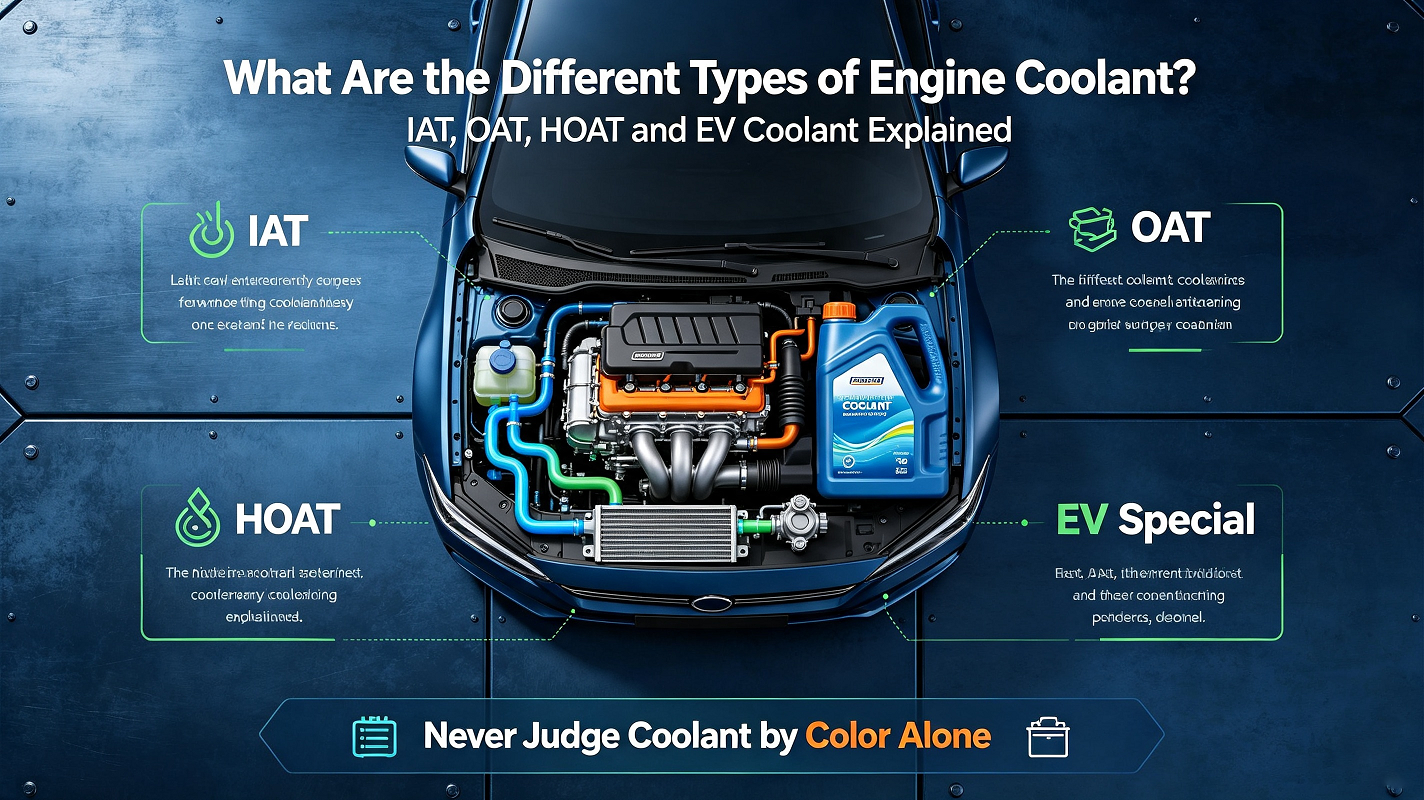
You have passed the vehicle‑specified service interval. Every car, truck and machinery model has official coolant service life, measured by years or total mileage. IAT coolant needs replacement every 2‑3 years. Long‑life OAT / HOAT types last 5‑7 years. For heavy‑duty fleets, set up scheduled inspection calendars, do not ignore time‑based replacement even with low driving distance.
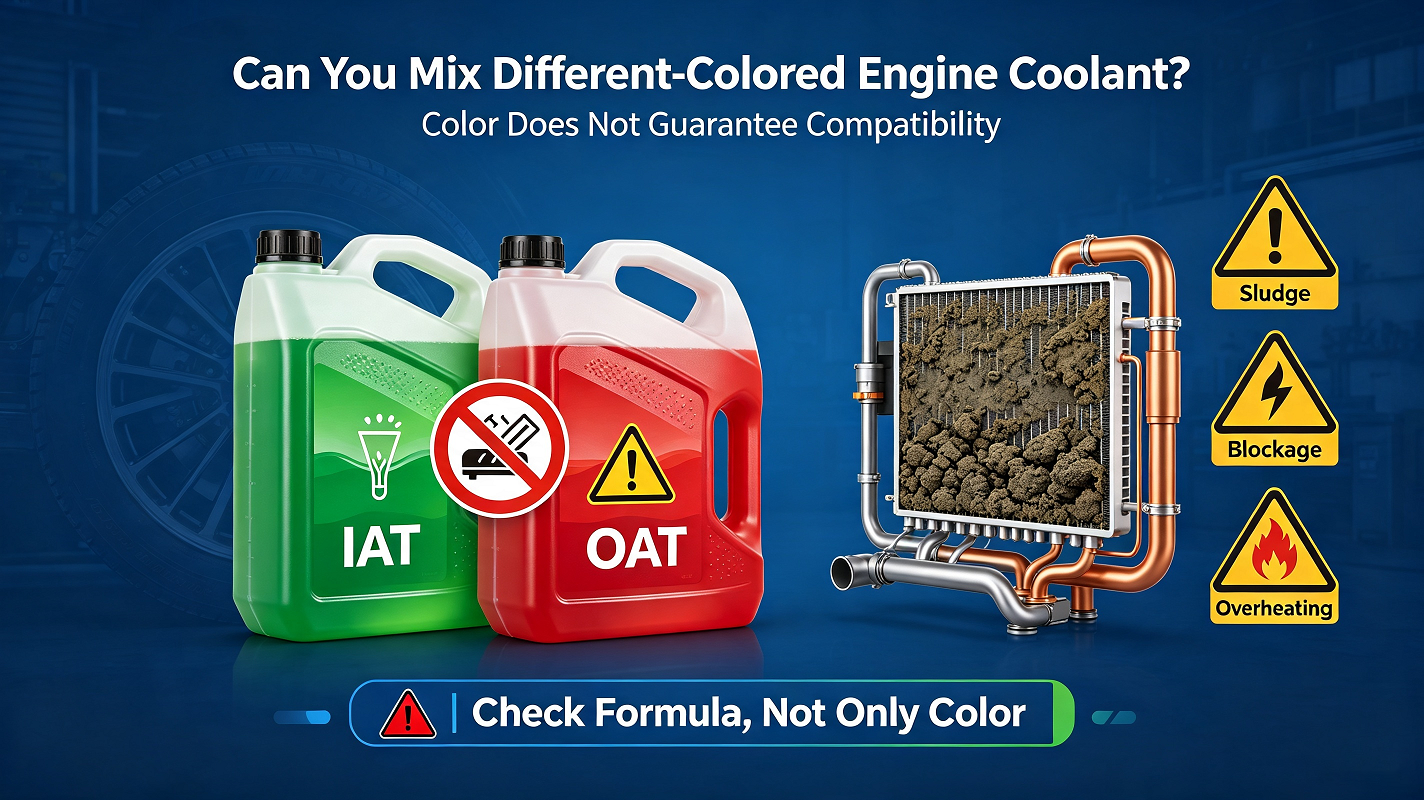
Mix‑incident history means you should plan a coolant flush. If incompatible antifreeze types were previously mixed in the cooling circuit, chemical reactions may produce hidden sediment you cannot see. Even without obvious overheating symptoms, schedule a complete flush and refill with correct‑spec coolant to prevent future blockages. This tip is valuable for second‑hand vehicles.
B2B operators should build regular coolant‑check workflows. For repair shops and fleet businesses: use refractometer tests, log replacement records, educate end‑users not to rely purely on visual color. GAFLE supplies high‑performance IAT, OAT and HOAT coolant suitable for all kinds of vehicle fleets. Contact us for bulk or private‑label coolant solutions for your market.
Welcome to contact GAFLE for more information & cooperation!
peter
ZHEJIANG GAFLE AUTO CHEMICL CO.,LTD
Tel:86-579-8222 1665
Fax:86-579-8246 4690
Cel/Wechart:86-13335993986
E-mail:peter@gafle.net
Web:www.gafle.net
peter
ZHEJIANG GAFLE AUTO CHEMICL CO.,LTD
Tel:86-579-8222 1665
Fax:86-579-8246 4690
Cel/Wechart:86-13335993986
E-mail:peter@gafle.net
Web:www.gafle.net