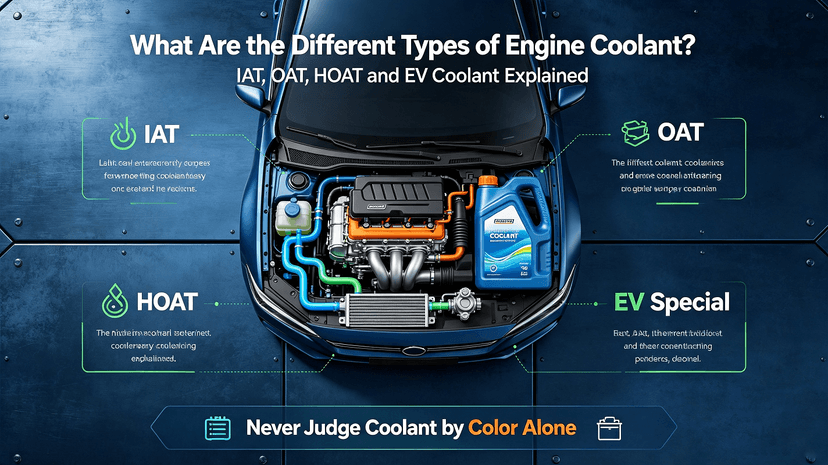
Not all engine coolants work the same for every vehicle. Many buyers select antifreeze only by bottle color, which often leads to wrong fluid choice and unexpected cooling‑system damage. For wholesalers, garage owners and fleet managers, understanding coolant classifications helps avoid mixing incompatible products and extend engine service life. This blog breaks down major coolant types by chemical formula, base solvent and application scenarios.
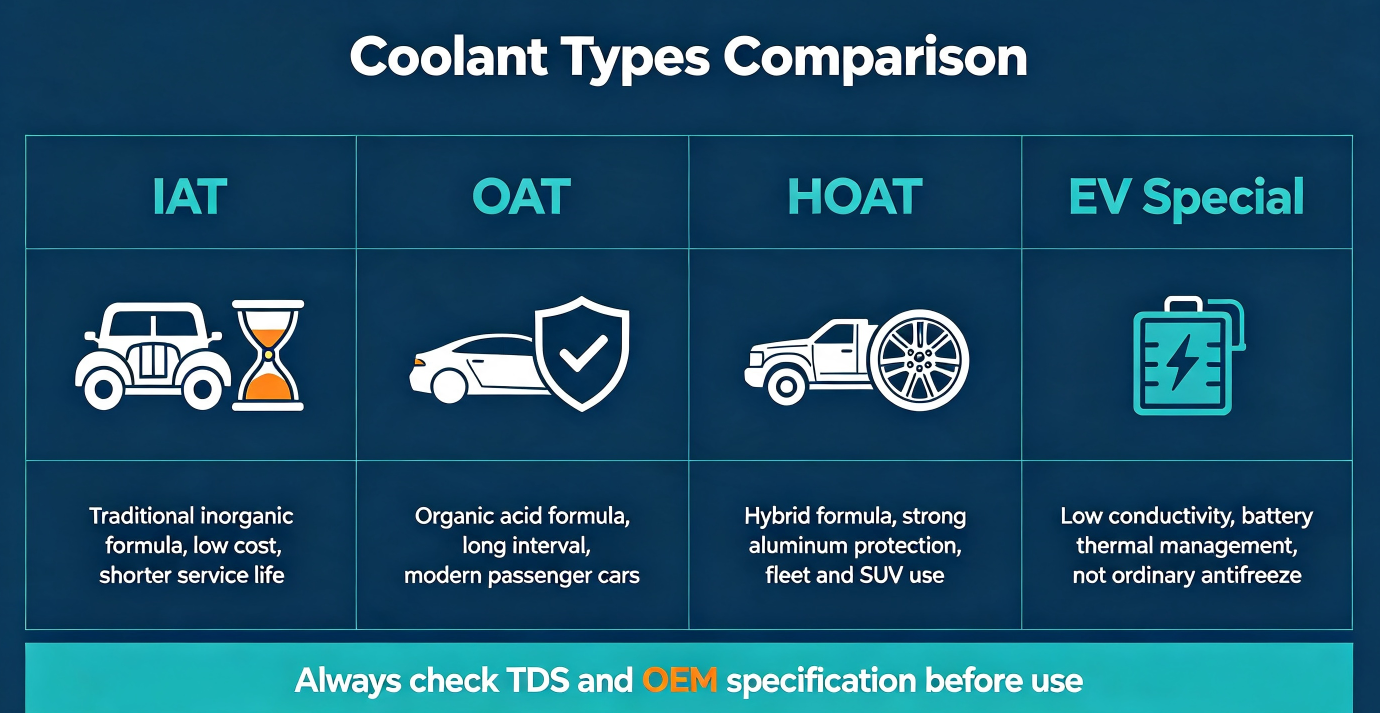
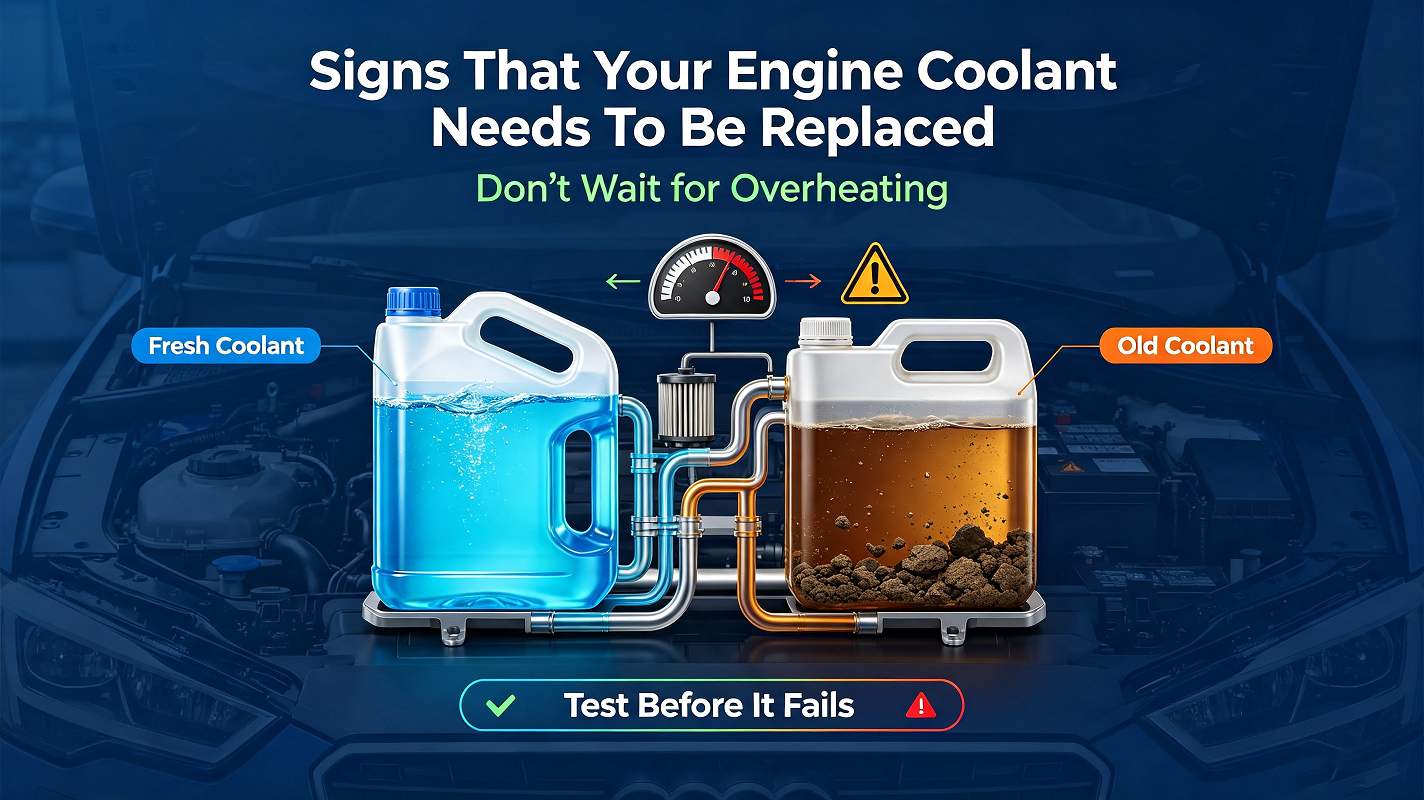
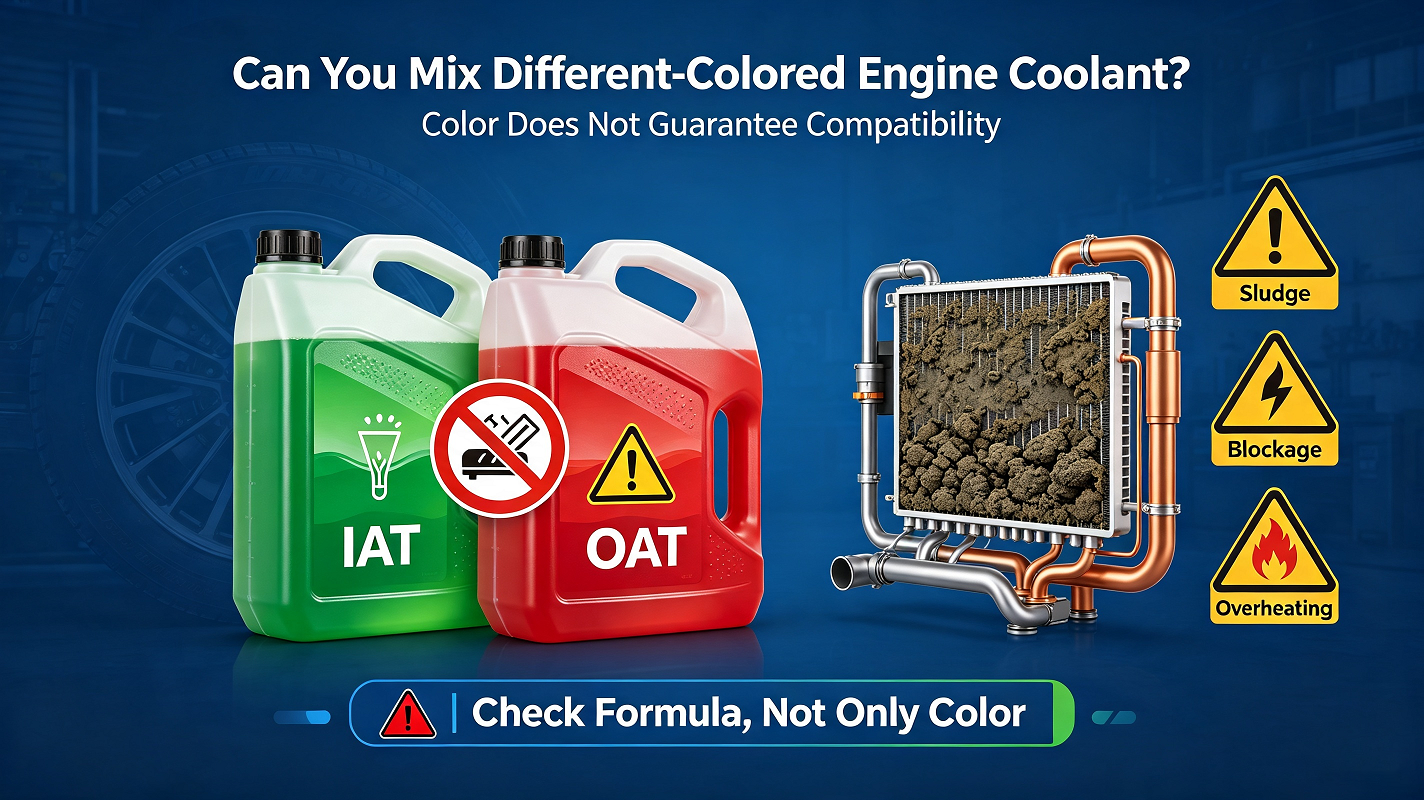
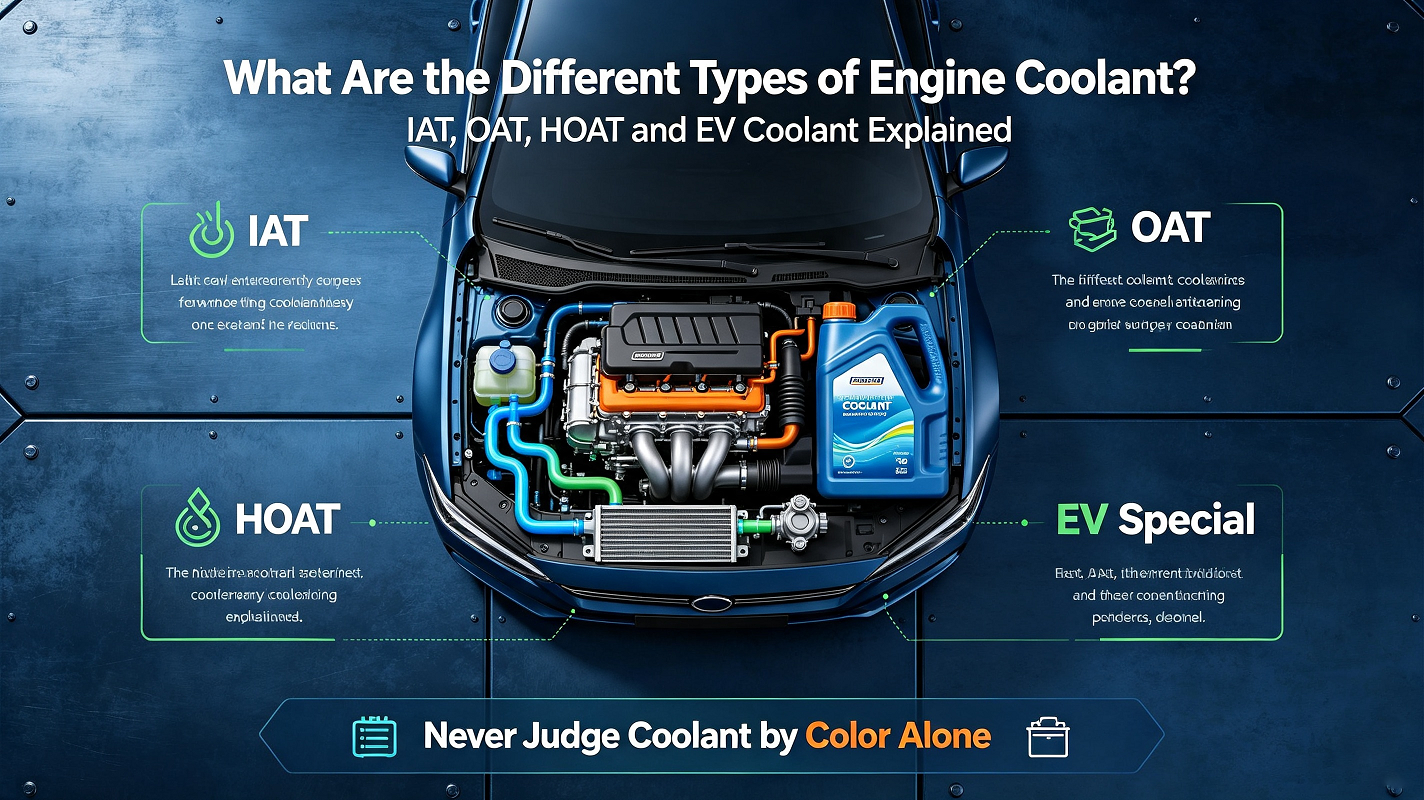
IAT (Inorganic Additive Technology) is the traditional inorganic‑based coolant. It uses silicates, phosphates and borates as corrosion inhibitors on an ethylene‑glycol base. IAT coolant is low‑cost, widely seen in older gasoline cars, heavy‑duty machinery and budget‑oriented markets across Africa and the Middle East. Its main drawback is short service life: it normally needs replacement every 2‑3 years or 40 000‑60 000 km. Sediment build‑up may block radiators if it stays in service too long.
OAT (Organic Acid Technology) relies on organic‑acid corrosion protection without silicates. Designed for modern passenger vehicles from European and American automakers, OAT antifreeze delivers a long service interval up to 5 years or 240 000 km. It provides stable anti‑corrosion performance for aluminum engine parts. One critical warning: OAT coolant should never be randomly mixed with older IAT fluid, as cross‑mixing will weaken protective properties.
HOAT (Hybrid Organic Acid Technology) combines advantages of IAT and OAT formulas. This type adds small amounts of silicate into organic‑acid formulas, offering strong protection for aluminum components. HOAT coolant fits most American pickup trucks, SUVs and many European passenger cars. Its replacement cycle ranges from 5 to 7 years, making it popular for fleet‑vehicle maintenance. The upgraded P‑HOAT or Si‑OAT variants are specially adjusted for electric‑vehicle battery cooling loops.
Coolant can also be grouped by its base solvent: ethylene glycol versus propylene glycol. Ethylene‑glycol coolant dominates the global automotive market. It delivers excellent freeze‑resistance performance for passenger cars and commercial trucks, though it is toxic if ingested. Propylene‑glycol coolant features low‑toxicity characteristics, mainly applied in special equipment and partial new‑energy vehicles, yet it comes with higher procurement costs.
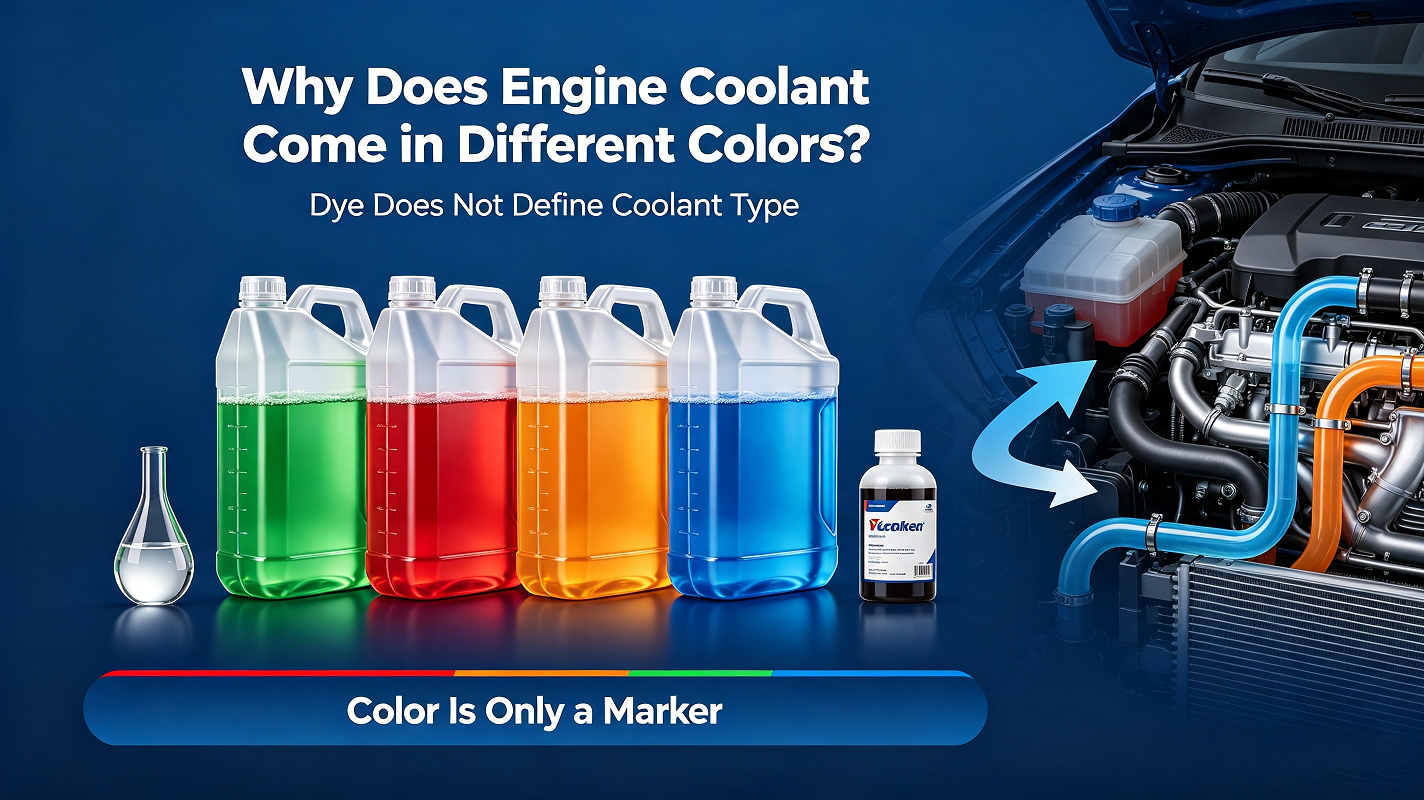
Color is only dye and cannot define coolant type. Green, red, orange and blue are just added color markers for easy identification. Two bottles of red coolant may belong to totally different chemical systems. Always check TDS or product datasheets instead of judging antifreeze purely by visual color.
EV‑special cooling fluid forms an independent product category for electric cars. Ordinary engine antifreeze cannot be directly used for EV battery thermal management. EV coolant requires extra‑low electrical conductivity and stable compatibility with battery‑loop plastic and rubber materials. Improper fluid will create safety risks for high‑voltage battery packs.
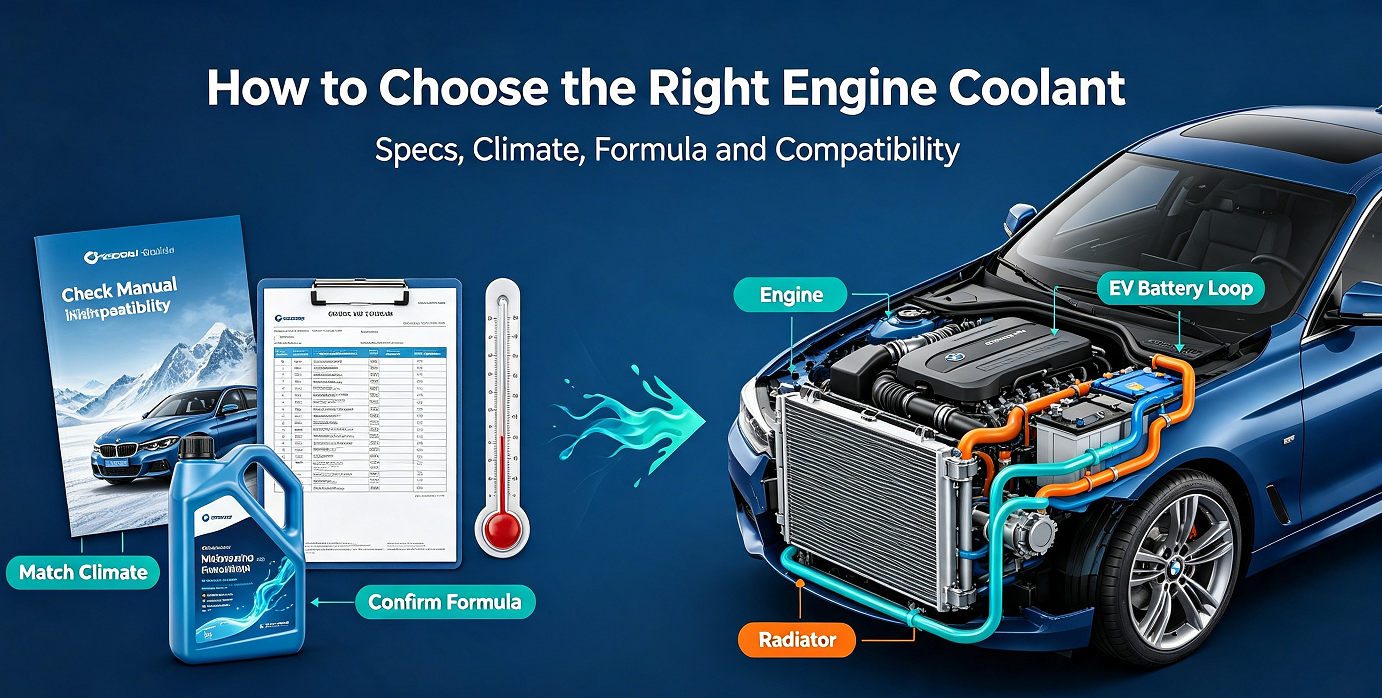
Select coolant according to local climate and vehicle official requirements. Warm‑region markets may choose‑25℃ rated antifreeze; most global orders pick‑35℃ coolant; cold high‑latitude areas demand‑40℃ or‑45℃ specifications. Vehicle manufacturer manuals remain the most reliable reference before purchasing or refilling antifreeze.
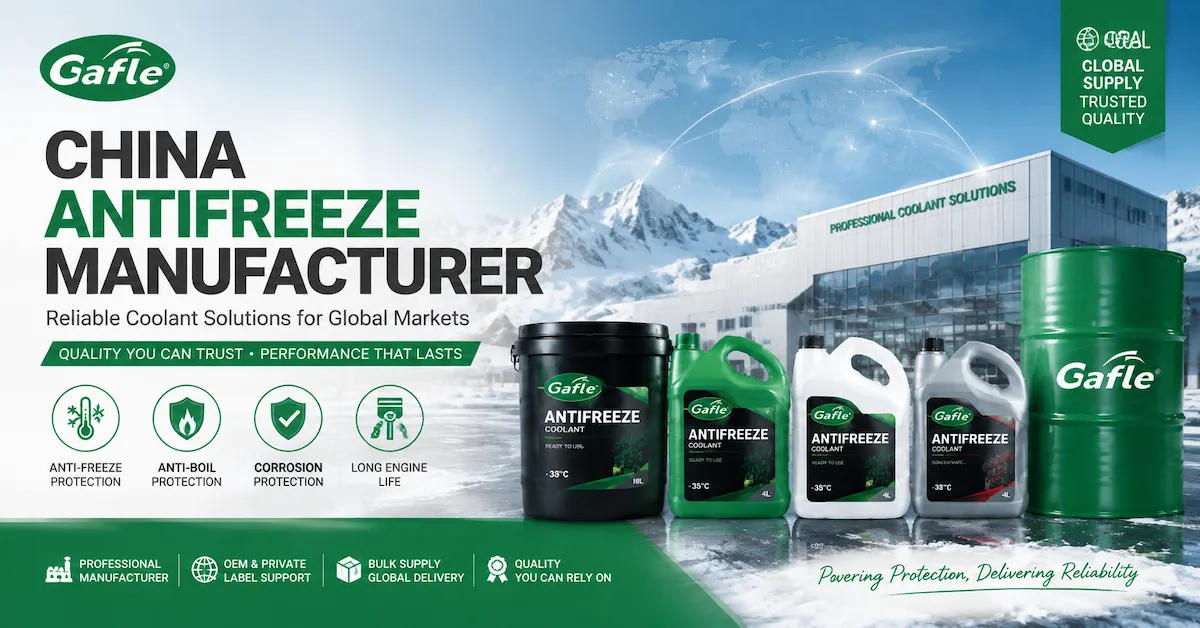
If you source bulk or OEM‑branded coolant, confirm formula standards with your supplier. GAFLE supplies IAT, OAT, HOAT and EV‑grade cooling liquids with complete technical documents for global B2B customers. Contact our team to get detailed TDS and custom quotation for your target market.
Welcome to contact GAFLE for more information & cooperation!
peter
ZHEJIANG GAFLE AUTO CHEMICL CO.,LTD
Tel:86-579-8222 1665
Fax:86-579-8246 4690
Cel/Wechart:86-13335993986
E-mail:peter@gafle.net
Web:www.gafle.net
peter
ZHEJIANG GAFLE AUTO CHEMICL CO.,LTD
Tel:86-579-8222 1665
Fax:86-579-8246 4690
Cel/Wechart:86-13335993986
E-mail:peter@gafle.net
Web:www.gafle.net