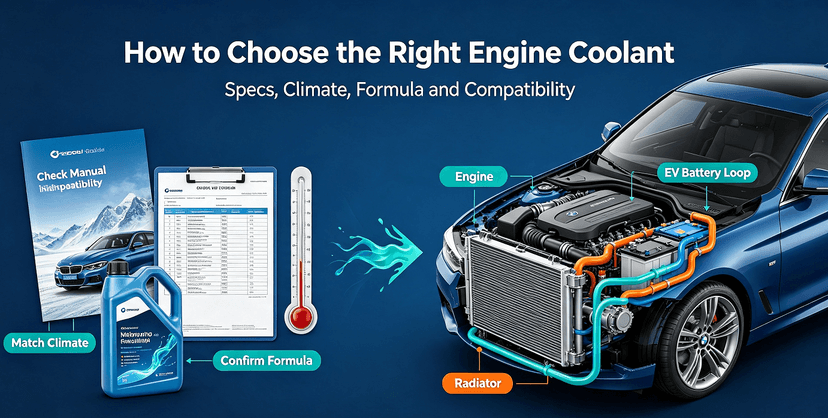
Picking the wrong engine coolant will cause avoidable engine damage. Many vehicle owners and bulk buyers make decisions based only on price or bottle color. Improper antifreeze triggers corrosion, radiator clogging and overheating. Whether you are a wholesaler, garage operator or fleet manager, several key factors will help you select suitable coolant for your target vehicles and markets.
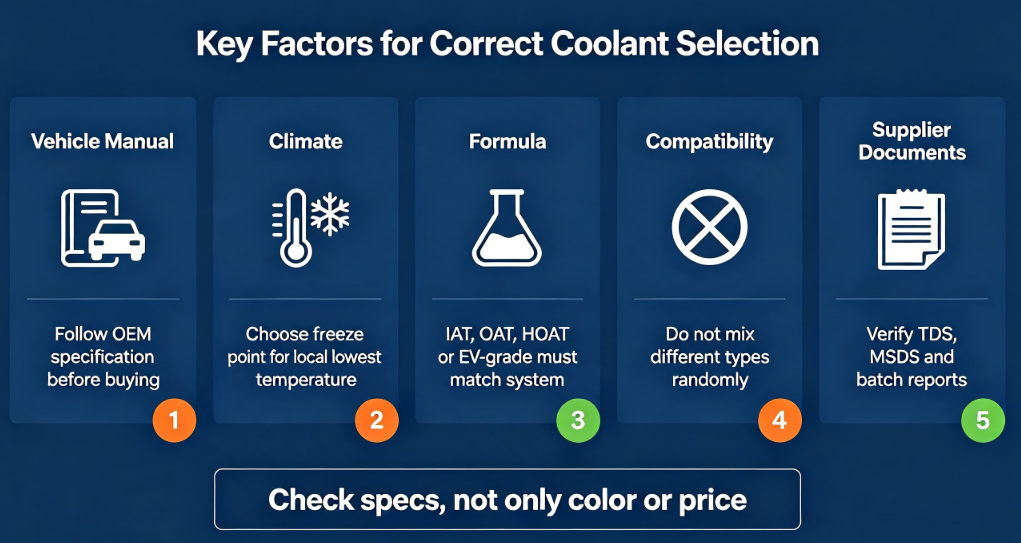
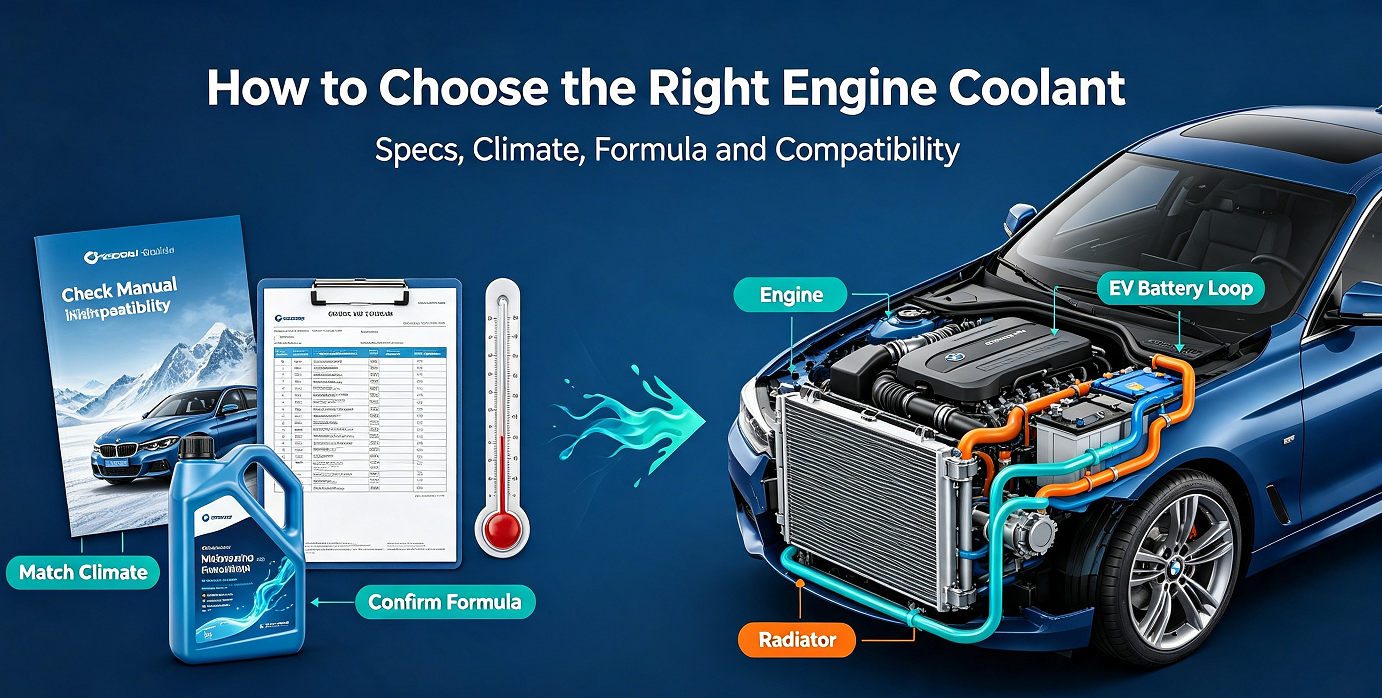
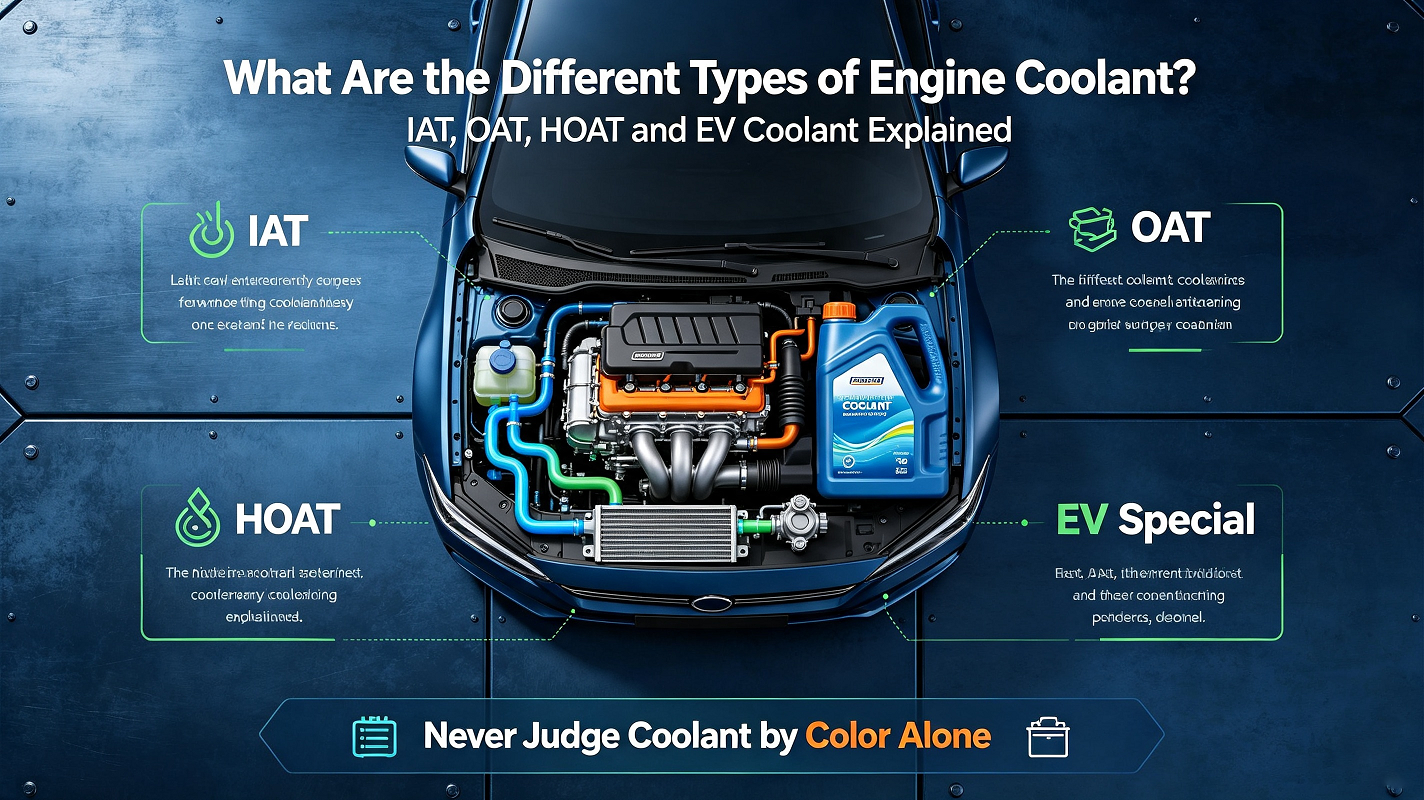
Check the vehicle manufacturer’s official manual first. Vehicle OEM manuals give the most authoritative recommendation for coolant specifications. It clarifies required formula types: IAT, OAT, HOAT or EV‑special fluid. Never guess the standard by vehicle appearance. For electric cars, ordinary antifreeze for fuel vehicles cannot replace dedicated EV cooling fluid, as high‑voltage battery packs demand low‑conductivity protection.
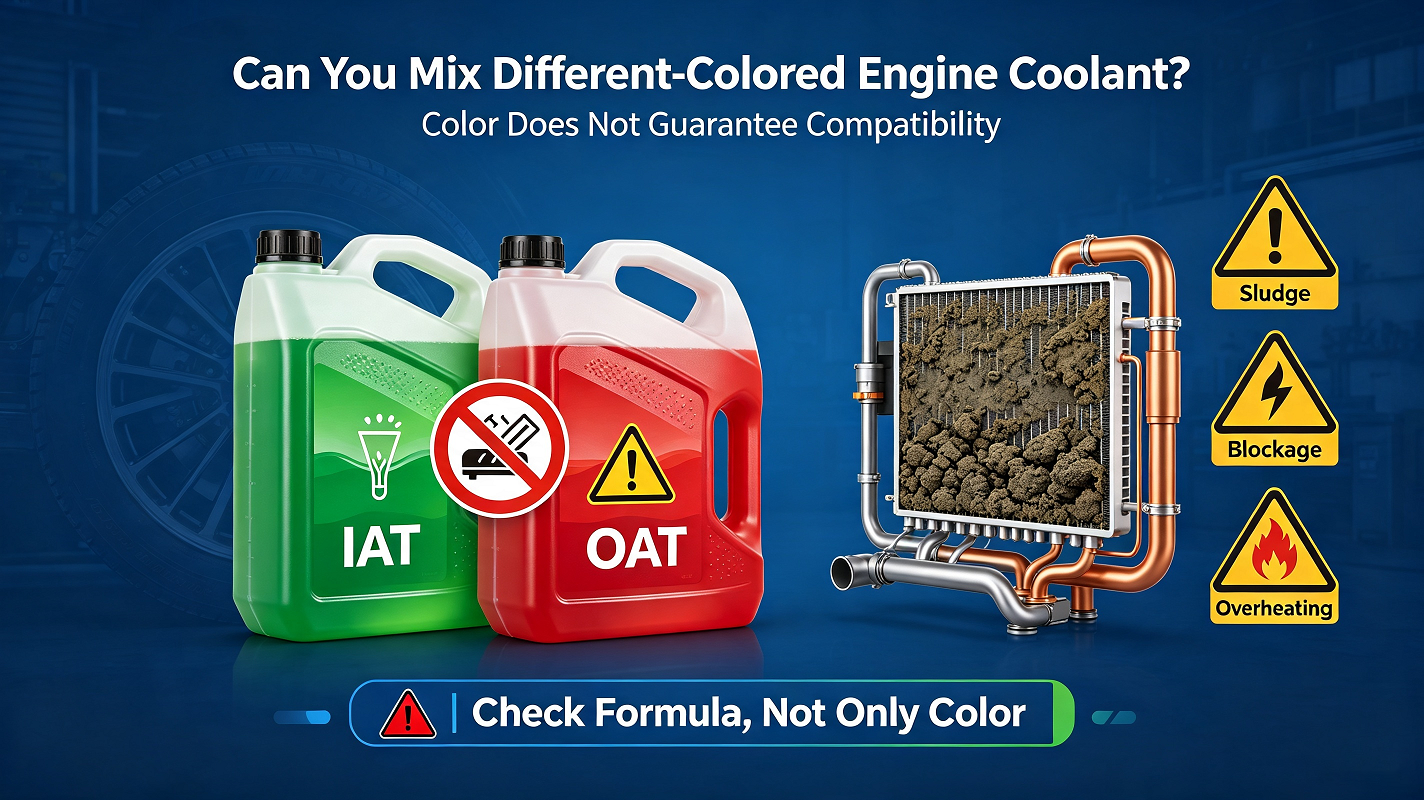
Match coolant formula to your operating conditions. Traditional IAT coolant fits older gasoline vehicles and heavy‑duty equipment with low‑cost demands. Modern passenger cars usually require OAT or HOAT formulas. Pay close attention to compatibility: do not mix IAT with OAT coolant randomly. Mixed additives may produce sediments and weaken anti‑corrosion performance. If you purchase bulk stock for resale, prepare multiple formulas to cover different customer vehicle groups.
Select proper freezing point based on local climate. Antifreeze freezing‑point rating must adapt to local lowest ambient temperature. For tropical and subtropical regions, ‑25 ℃ coolant meets daily demands. ‑35 ℃ is the widely accepted universal grade for most global markets. Cold‑climate areas such as Russia and Northern Europe need ‑40 ℃ or ‑45 ℃ coolant. Remember, higher concentration does not always mean better performance; strictly follow factory mixing ratios.
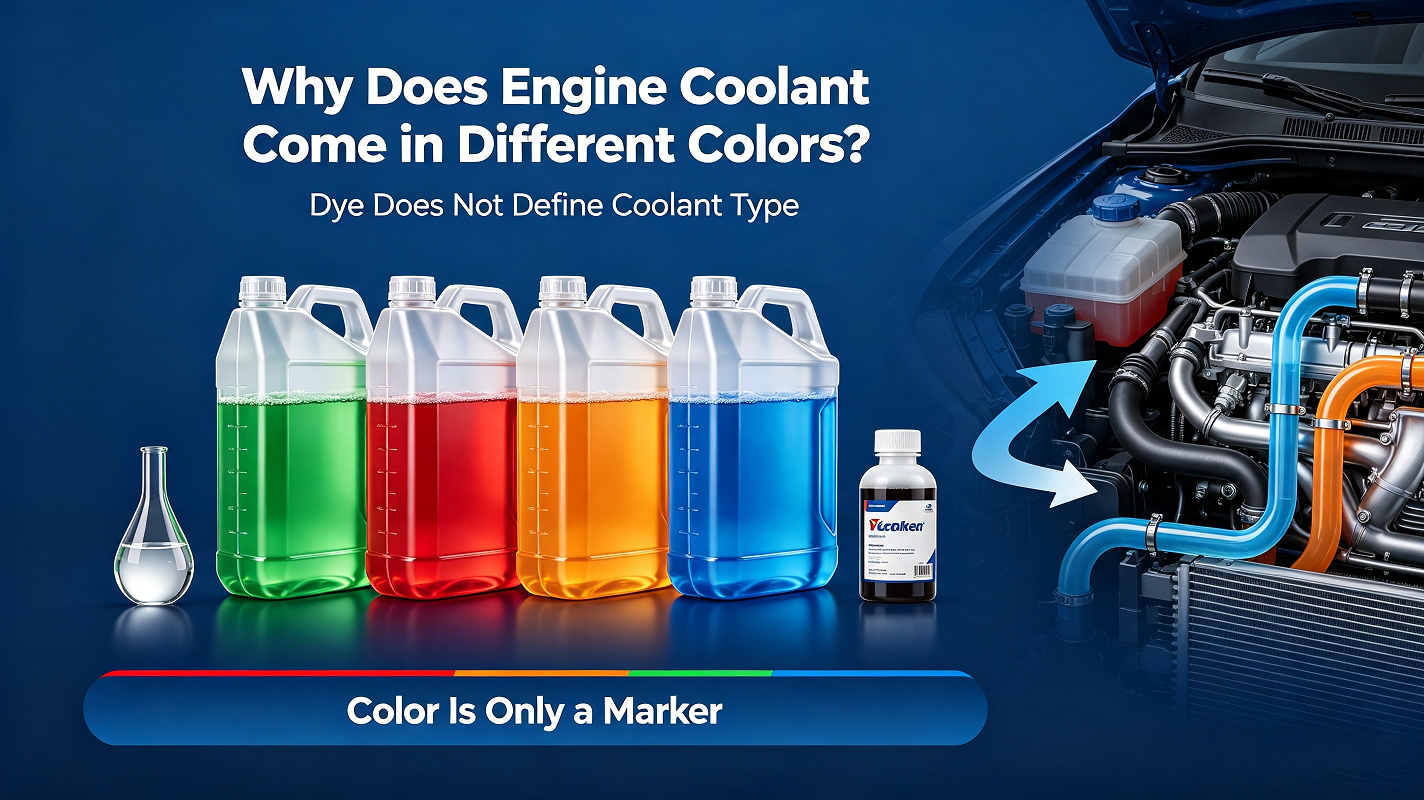
Do not judge coolant performance by its color alone. Dyes only serve visual identification purposes. Same‑colored coolants can belong to completely different chemical systems. Always refer to the supplier’s TDS (Technical Data Sheet) to confirm additive technology, base solvent and performance parameters before purchase. This rule is critical for B2B bulk and OEM orders.
Confirm base solvent type for special‑use scenarios. Ethylene‑glycol‑based coolant covers most automotive scenarios with cost‑effective freeze‑protection. Choose propylene‑glycol coolant only for projects requiring low‑toxicity standards, even though its procurement cost is higher. Heavy‑duty trucks and construction machinery may also need heavy‑duty‑formula antifreeze for long‑hour working conditions.
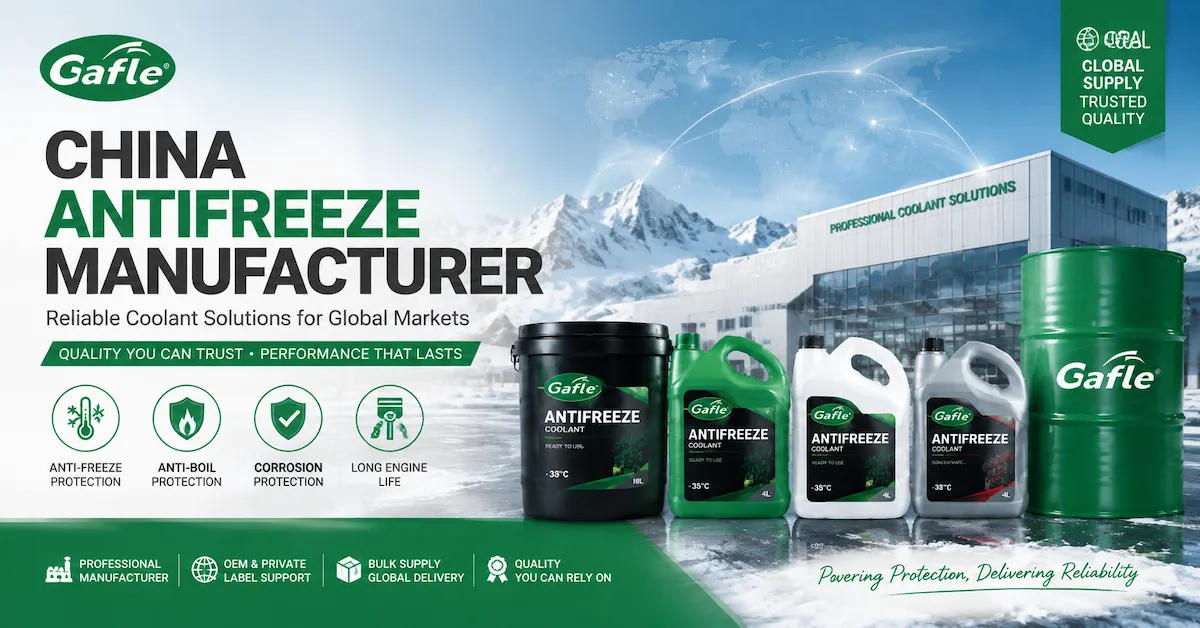
Think over supplier qualification when placing bulk or OEM orders. Reliable coolant suppliers provide complete test reports, MSDS and TDS documents. GAFLE offers full‑range coolant products covering IAT, OAT, HOAT and EV grades for global B2B clients. Custom labeling and stable batch quality support wholesale and private‑label projects. Reach out to our team for market‑oriented product suggestions.
Welcome to contact GAFLE for more information & cooperation!
peter
ZHEJIANG GAFLE AUTO CHEMICL CO.,LTD
Tel:86-579-8222 1665
Fax:86-579-8246 4690
Cel/Wechart:86-13335993986
E-mail:peter@gafle.net
Web:www.gafle.net
peter
ZHEJIANG GAFLE AUTO CHEMICL CO.,LTD
Tel:86-579-8222 1665
Fax:86-579-8246 4690
Cel/Wechart:86-13335993986
E-mail:peter@gafle.net
Web:www.gafle.net