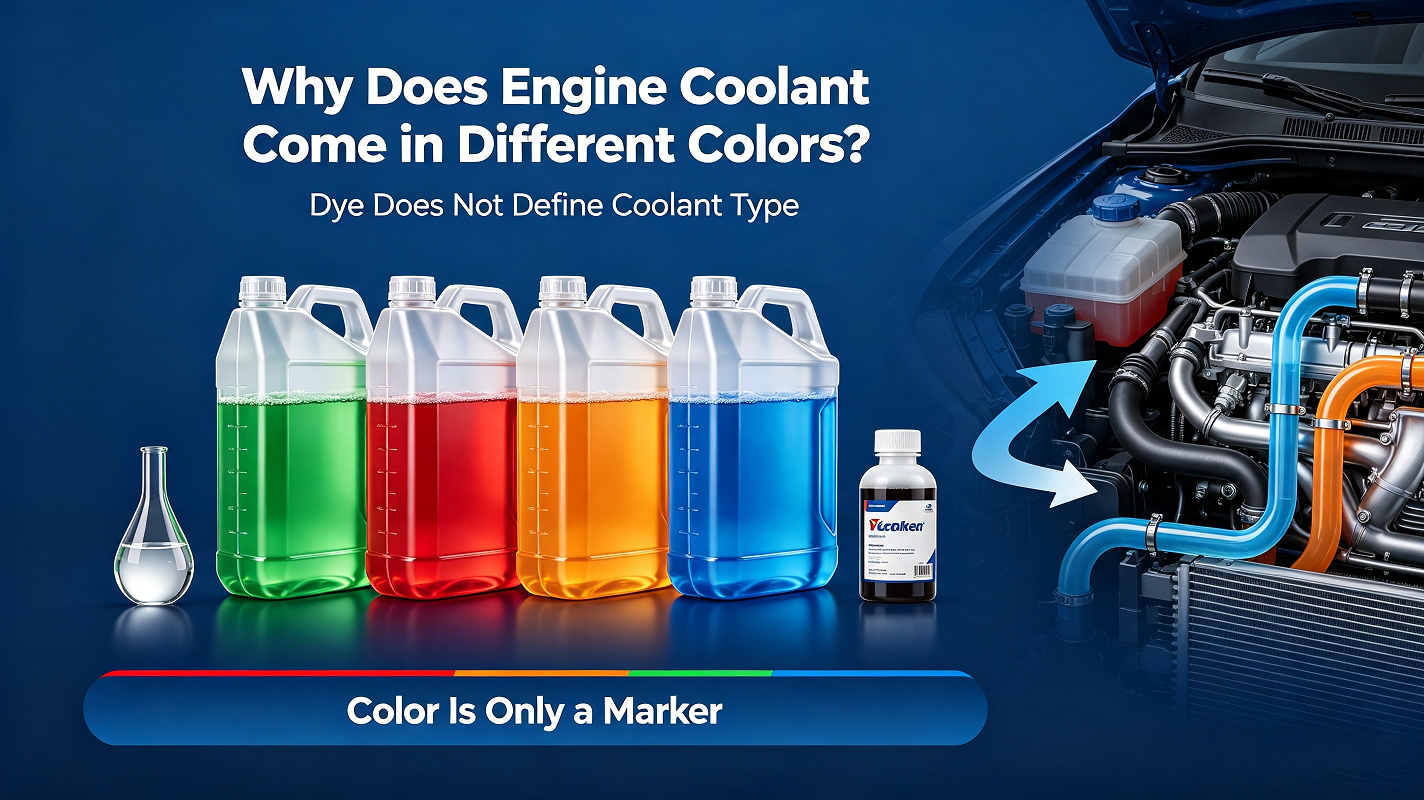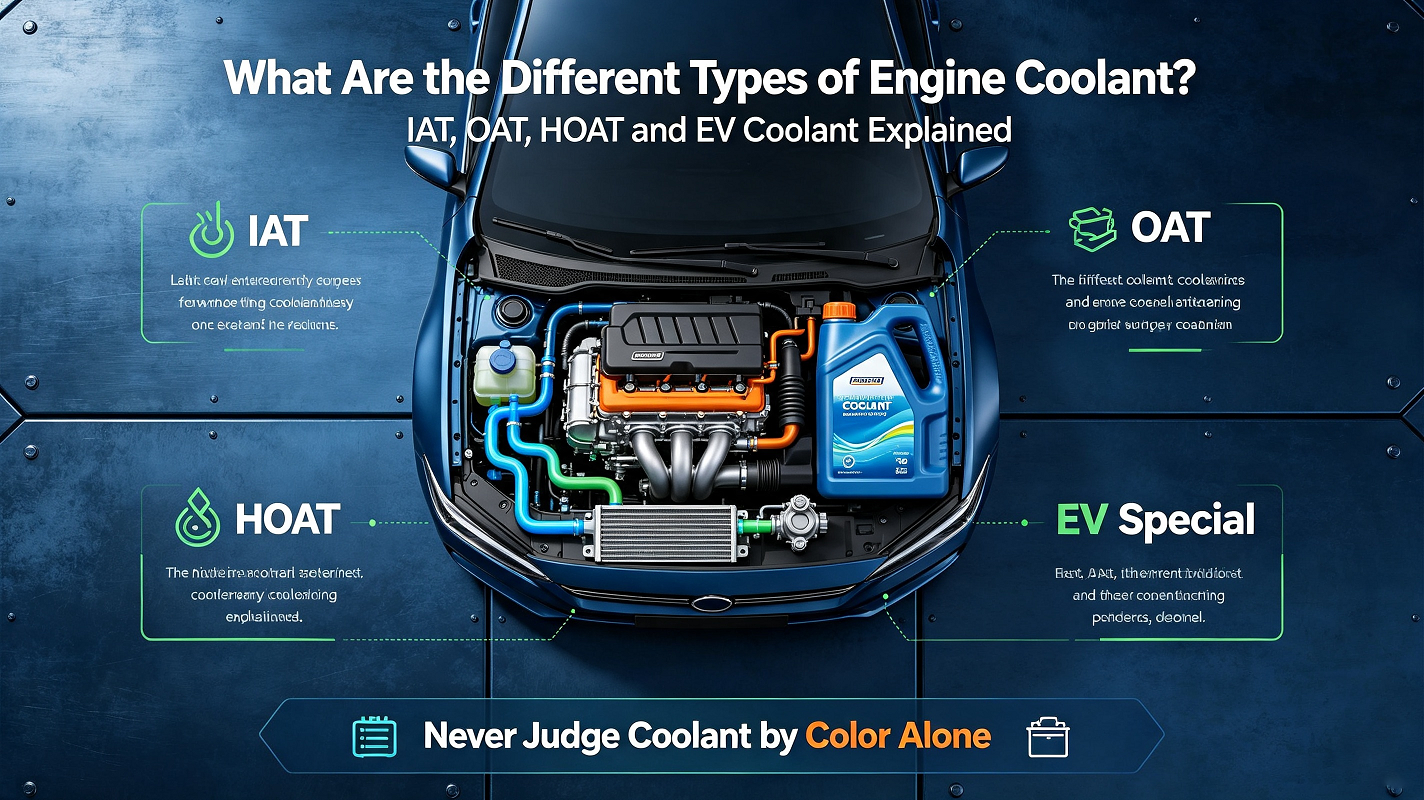
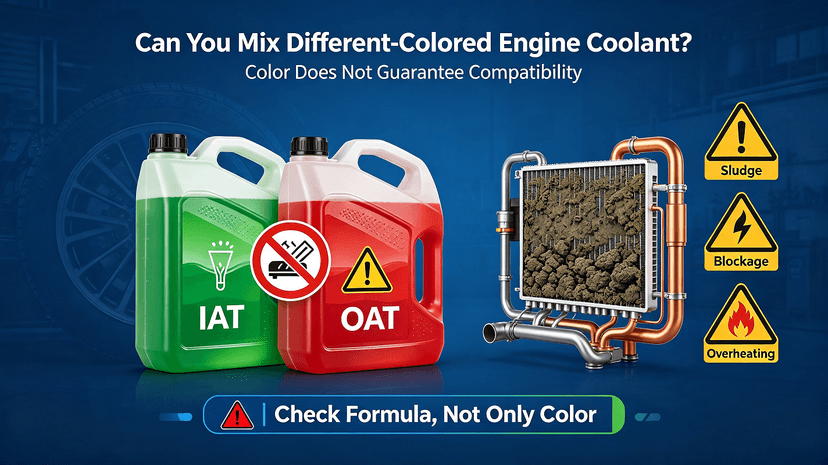
Many mechanics and car owners assume same‑color coolant means safe to mix. This widespread misunderstanding leads to costly cooling‑system failures. Color is just artificial dye, and matching liquid color cannot guarantee chemical compatibility. This article explains what really happens when you mix coolants, and how wholesale buyers and garages can avoid mistakes.
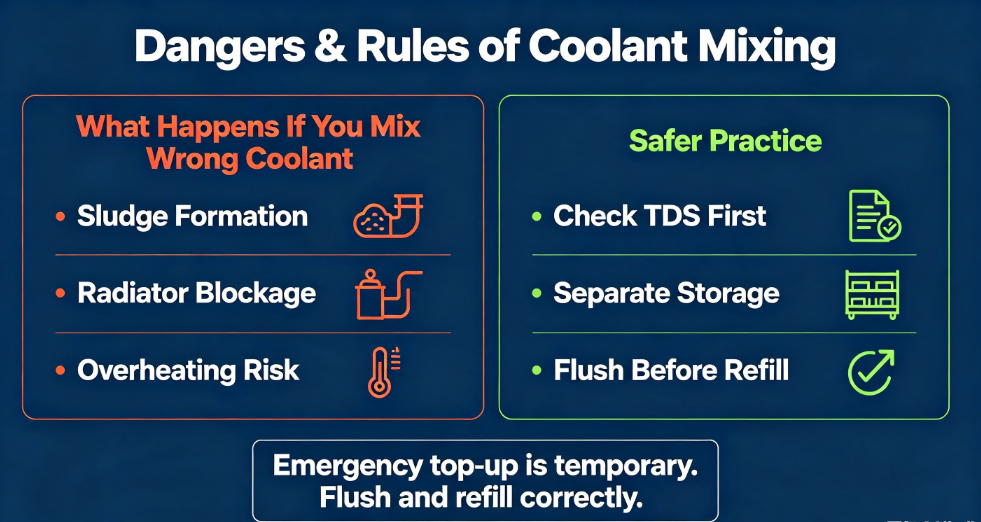
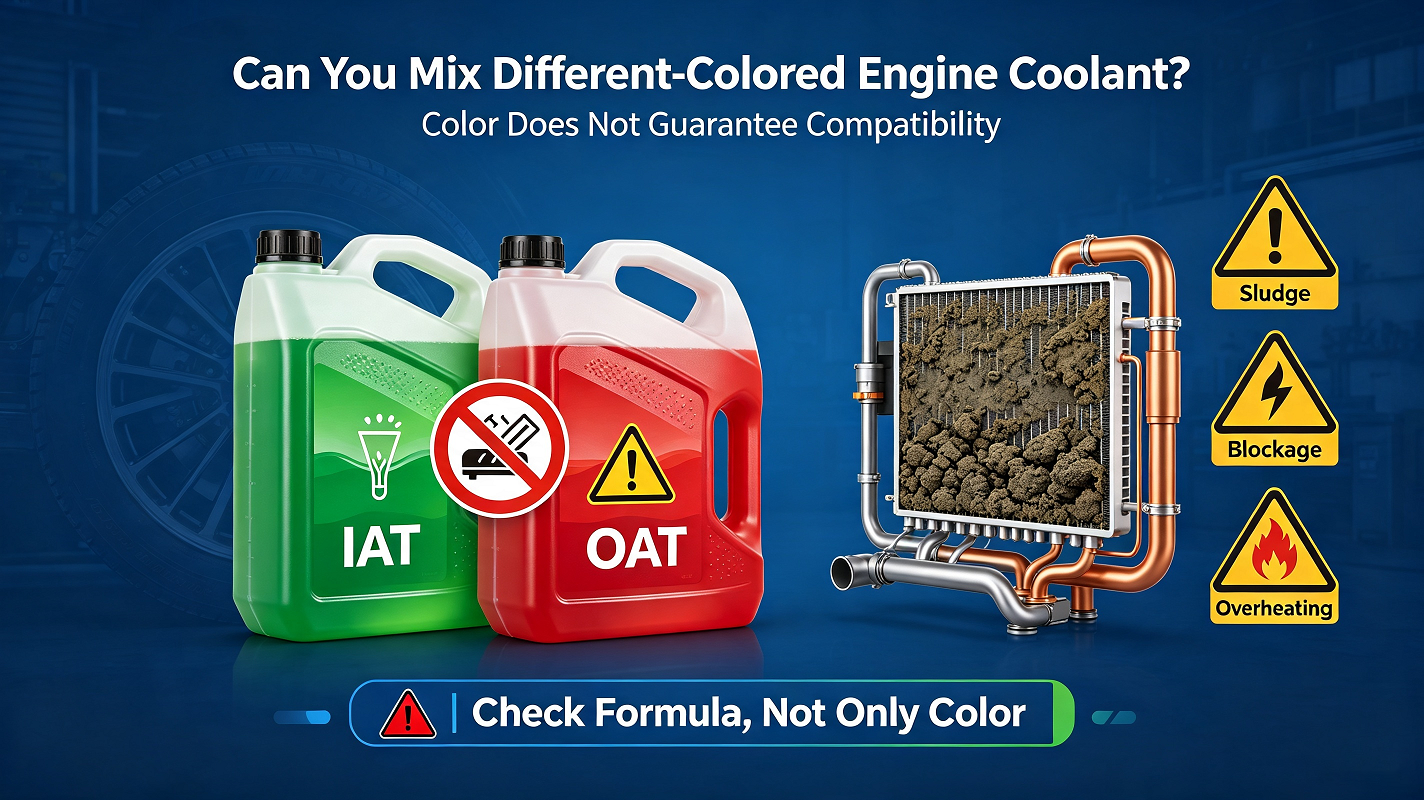
Mixing coolants mainly risks chemical incompatibility instead of color conflict. If two coolants adopt different additive technologies such as IAT and OAT, their corrosion inhibitors will react once blended. This chemical reaction produces sludge and solid sediments. These deposits stick to radiators, water pumps and heater cores, blocking fluid circulation and triggering engine overheating.
Even identical‑colored coolant from different brands may not be compatible. One manufacturer’s red coolant could be OAT formula, while another supplier’s red product belongs to traditional IAT system. Visually they look almost the same, yet cross‑mixing will create harmful residue. You cannot rely on bottle appearance to make mixing decisions. Always refer to technical datasheets.
Minor top‑up under emergency conditions brings limited short‑term risk. If you face sudden coolant loss on the road and have no exact‑specification antifreeze available, adding a small amount of different coolant is an emergency fix only. You should plan a full system flush and refill with correct‑spec fluid at the earliest workshop visit. Do not treat emergency top‑up as a permanent solution.
Never mix ethylene‑glycol coolant with propylene‑glycol coolant. These two base solvents have different physical and protective properties. Blending EG and PG antifreeze weakens freeze‑point performance and anti‑corrosion capacity. This mistake frequently occurs among bulk purchasers who stock both low‑toxicity PG products and standard EG inventory. Separate storage and clear labelling are strongly suggested for warehouses.
Practical guidelines for garages and B2B coolant distributors. Keep each coolant type stored in clearly marked containers. Train your team to check formula standards rather than liquid color. When fulfilling OEM or wholesale orders, attach corresponding TDS documents for end‑user reference. For fleet maintenance projects, stick to one approved coolant specification across the whole vehicle group to eliminate mixing hazards.
What to do if you have already mixed incompatible coolant. If unknown coolants have been blended inside the cooling system, partial draining will not solve hidden sediment risk. The proper solution is complete cooling‑system flush, then refill with the manufacturer‑recommended full‑spec antifreeze. Simple topping‑off cannot remove formed sludge inside pipelines.
Work with your coolant supplier for compatibility consultation. As a professional automotive chemical manufacturer, GAFLE offers compatibility advice for global B2B clients. When you place wholesale or private‑label orders, our team will clarify formula matching suggestions for your target market. Get in touch if you need product‑selection support.
Welcome to contact GAFLE for more information & cooperation!
peter
ZHEJIANG GAFLE AUTO CHEMICL CO.,LTD
Tel:86-579-8222 1665
Fax:86-579-8246 4690
Cel/Wechart:86-13335993986
E-mail:peter@gafle.net
Web:www.gafle.net
peter
ZHEJIANG GAFLE AUTO CHEMICL CO.,LTD
Tel:86-579-8222 1665
Fax:86-579-8246 4690
Cel/Wechart:86-13335993986
E-mail:peter@gafle.net
Web:www.gafle.net