Thermal Thresholds in Hydraulic Braking: Beyond the Spec Sheet
For automotive test engineers, fleet maintenance directors, and tier-one brake system integrators, hydraulic fade is not an abstract concept—it is a catastrophic failure mode known as vapor lock. When brake fluid flashes from a non-compressible liquid into a compressible gas under sustained thermal load, pedal travel goes to the floorboard without transferring clamping force to the caliper pistons. Evaluating hydraulic media requires understanding the exact difference between dry and wet boiling point, particularly as duty cycles shift from cleanroom bench testing to years of unsealed real-world service.
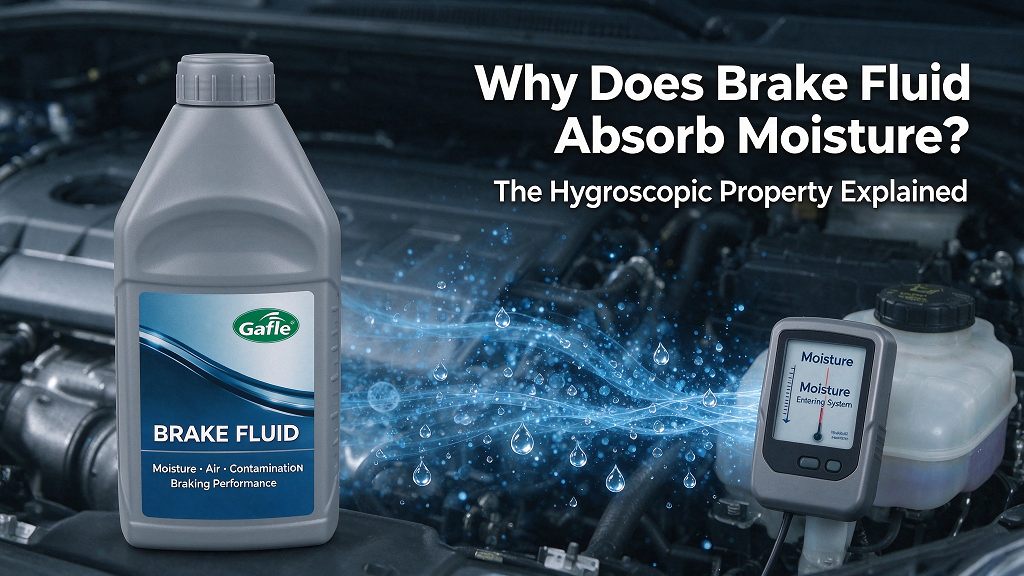
Procurement teams frequently evaluate hydraulic formulations by looking solely at peak thermal resistance on a supplier's marketing brochure. However, glycol-ether based formulations are fundamentally hygroscopic: they pull ambient moisture through microscopic breather ports, master cylinder diaphragm seals, and elastomeric hoses over their operating life. What begins as a resilient fluid on day one can become a liability after twelve months in high-humidity field environments.
Defining Dry vs. Wet Boiling Points
The dry boiling point measures the temperature at which fresh, unadulterated fluid boils directly out of a sealed container, assuming zero percent moisture absorption. In engineering terms, this is the Equilibrium Reflux Boiling Point (ERBP) of virgin chemistry. It reflects absolute thermal headroom under pristine initial operating parameters, such as the first few laps of a test track evaluation or factory-fill validation.
Conversely, the wet boiling point—formally referred to as the Wet Equilibrium Reflux Boiling Point (WERBP)—measures the fluid's thermal tolerance after it has absorbed atmospheric moisture to equilibrium, established in standardized testing at approximately 3.7% water content by volume. Because water boils at 100°C (212°F) under atmospheric pressure, entrained moisture sharply depresses the bulk fluid boiling temperature. This degradation is non-linear; the introduction of even the first 1% to 2% moisture causes the steepest drop in vapor transition resistance.
DOT Classifications and the Test Framework
Regulatory frameworks do not leave these thresholds to supplier discretion. Global compliance relies on the brake fluid dry vs wet boiling point test standard established under FMVSS No. 116 (Motor Vehicle Safety Standards: Hydraulic Brake Fluids), SAE J1703/J1704, and ISO 4925. The test standard prescribes specific reflux distillation apparatus and precise humidification chambers where samples are conditioned alongside a standardized reference fluid until the target moisture equilibrium is reached.
To put the thermal divergence into perspective, consider the minimum regulatory requirements across standard grades:
- DOT 3: Minimum dry boiling point of 205°C (401°F); minimum wet boiling point of 140°C (284°F).
- DOT 4: Minimum dry boiling point of 230°C (446°F); minimum wet boiling point of 155°C (311°F).
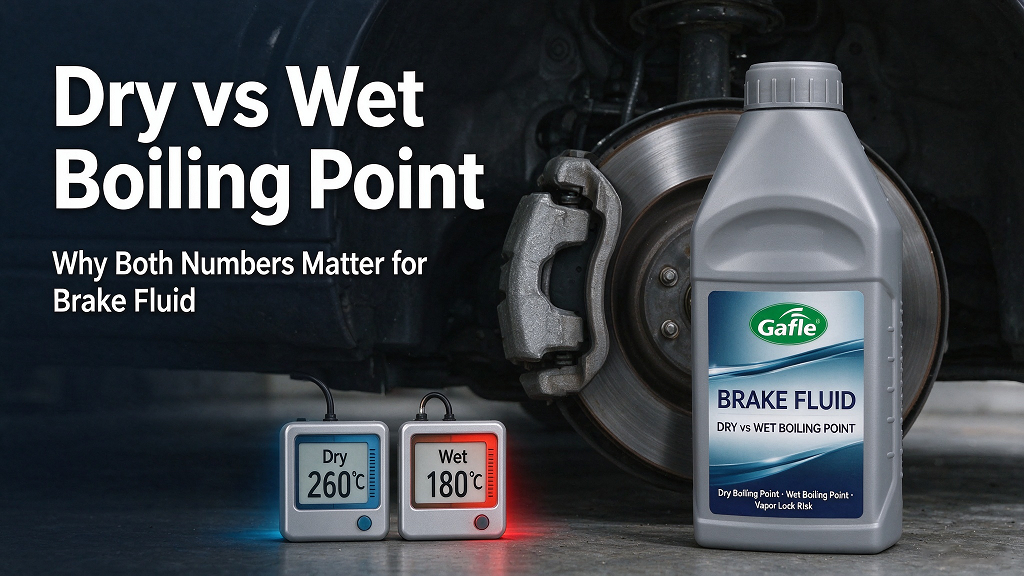
- DOT 5.1: Minimum dry boiling point of 260°C (500°F); minimum wet boiling point of 180°C (356°F).
While DOT 5 (silicone-based) is hydrophobic and therefore does not absorb water, it introduces separate challenges: water that enters the system cannot disperse into solution, instead pooling at low points such as caliper bores where it boils at 100°C or freezes in cold climates. For modern ABS and ESC systems requiring rapid valve cycling and consistent fluid compressibility, glycol-based chemistries (DOT 4 and DOT 5.1) remain the industry default despite their hygroscopic penalty.
Procurement Pitfalls: The High-Dry Illusion
A common misstep in performance specification is selecting ultra-high dry boiling formulations—frequently marketed for motorsport applications with dry thresholds exceeding 315°C (600°F)—for standard fleet or extended-interval industrial machinery. Many of these specialized polyglycol formulations sacrifice wet-point stability or exhibit rapid hygroscopic uptake rates to achieve elevated initial dry ratings.
If a service profile calls for a two-year fluid flush interval across commercial fleet operations, a balanced DOT 4 or DOT 5.1 with an elevated wet baseline (for instance, maintaining 190°C wet) provides significantly more safety margin over time than a racing fluid that drops below 145°C after absorbing modest ambient moisture.
Practical Engineering Rules of Thumb
- Assess Operating Environment: In coastal, humid, or high-washdown agricultural environments, monitor the degradation curve rather than peak factory ratings. Moisture accumulation typically averages 1.5% to 3% over 18 to 24 months.
- Account for Caliper Temperatures: Heavy towing, mountainous descents, and regenerative braking blends on electric platforms create localized caliper temperatures easily exceeding 160°C. If wet boiling margins are tight, fluid flashing will occur at the rotor-pad interface first.
- Validate Seal Compatibility: Moving from DOT 3 to high-grade DOT 4 or DOT 5.1 chemistries requires checking elastomer compatibility (such as EPDM seals) against the specific ester compounds used to suppress moisture sensitivity.
Frequently Asked Questions
How quickly does hydraulic brake fluid absorb moisture in service?
Under standard operational and climate conditions, sealed hydraulic systems accumulate roughly 1% to 2% moisture per year through semi-permeable flexible lines and reservoir seals. Within three years, systems regularly hover near or above the standard 3.7% test saturation mark, making the wet threshold the operational reality.
Can moisture content be accurately measured on the shop floor?
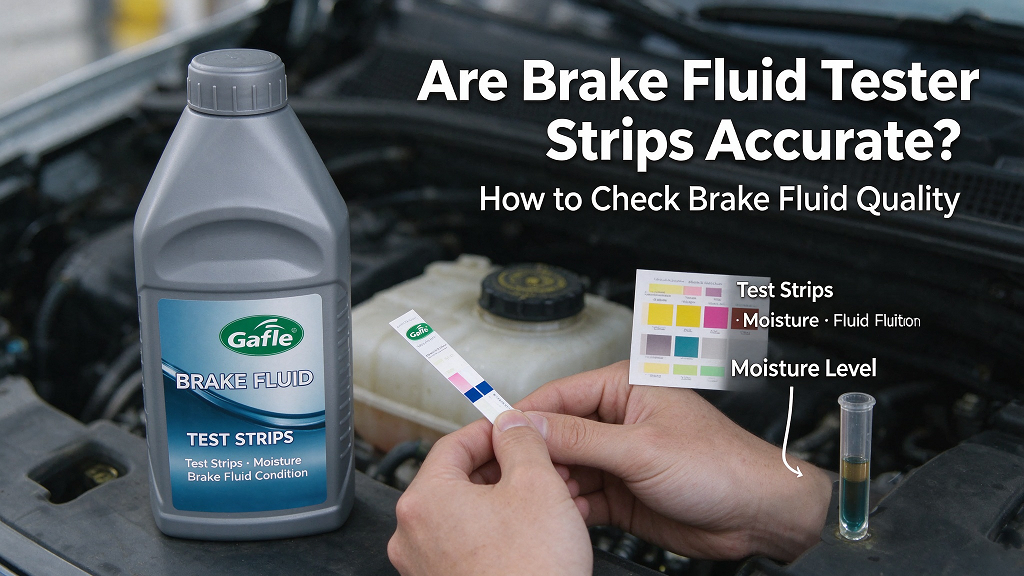
Conductivity-based test pens are common but can be misled by varying additive packages. For reliable quality control in fleet or testing environments, optical refractometers calibrated to specific fluid bases or boiling-point testers that heat a sample to boil provide defensible data.
Next Steps for Sourcing and Design Teams
When reviewing fluid technical data sheets, request complete ASTM/ISO test reports showing actual ERBP and WERBP values rather than simply passing certification thresholds. Compare the degradation curves between batches, verify viscosity ratings at -40°C for cold-weather ABS compliance, and ensure that preventive maintenance schedules align with the true wet thermal capacity of your chosen chemistry.
Welcome to contact GAFLE for more information & cooperation!
peter
ZHEJIANG GAFLE AUTO CHEMICL CO.,LTD
Tel:86-579-8222 1665
Fax:86-579-8246 4690
Cel/Wechart:86-13335993986
E-mail:peter@gafle.net
Web:www.gafle.net