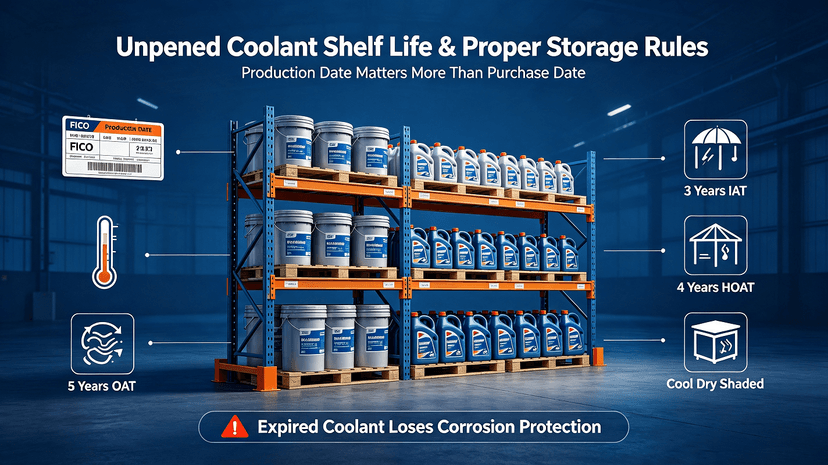
Most garages, fleet workshops and coolant wholesalers stock large inventory of antifreeze for seasonal peak sales and daily maintenance. A widespread confusing question remains: does coolant expire on the shelf if unopened? Many people believe sealed coolant can be stored forever, but in fact, every glycol-based coolant has a valid shelf life. Improper storage also ruins brand-new coolant, causing hidden engine risks after use.
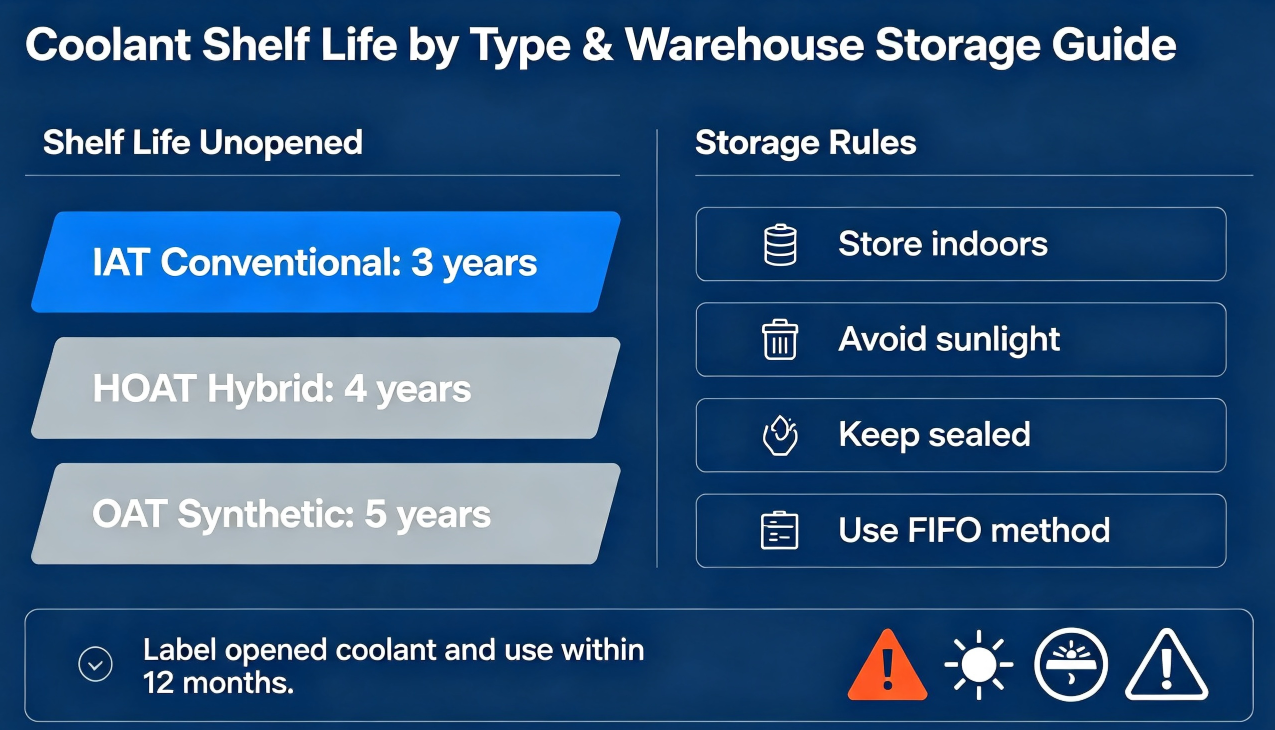
How Long Is the Shelf Life of Unopened Coolant?
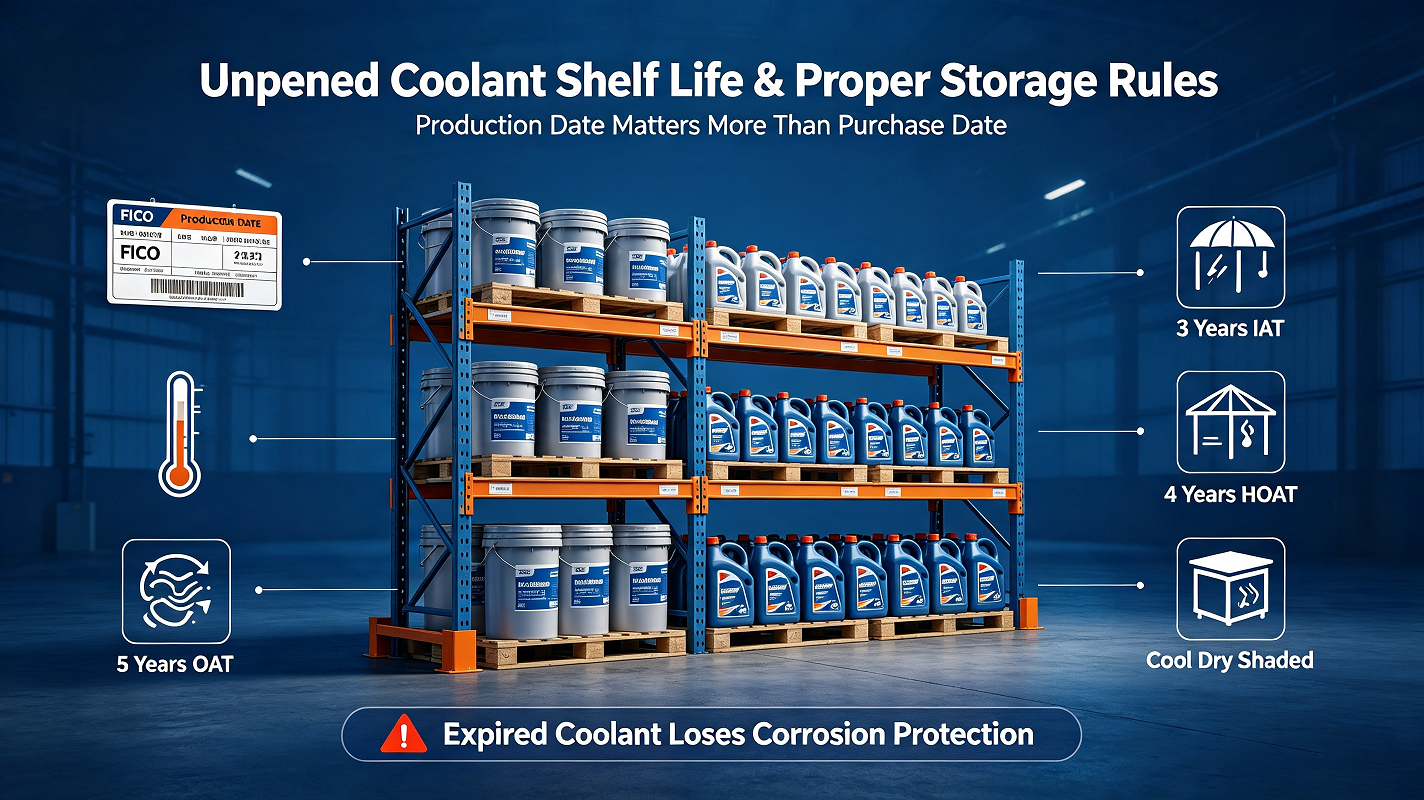
Under factory-sealed and proper storage conditions:
· Conventional IAT coolant: 3 years shelf life
· HOAT hybrid coolant: 4 years shelf life
· Fully synthetic OAT coolant: 5 years shelf life
All lifespans start from the production date, not the purchase date. Even if the bottle is never opened, the internal corrosion inhibitors will slowly degrade over time, reducing anti-rust, anti-scale and anti-boiling performance.
Why Sealed Coolant Expires Over Time
Coolant formulas rely on balanced chemical inhibitor systems. During long-term storage:
1. Organic additives slowly oxidize
2. Minor component precipitation occurs
3. PH value gradually decreases and becomes slightly acidic
4. Anti-foam and anti-corrosion agents lose activity
Once the chemical balance breaks, the coolant loses its original protective function, even if the liquid looks clean and clear.
Common Wrong Storage Methods That Ruin Coolant
Many B-end sellers store coolant improperly, causing early failure of inventory stock:
1. Long-term sunlight exposure
UV rays destroy organic additives, accelerate liquid aging and cause coolant discoloration and performance degradation.
2. Extreme temperature storage
Storing coolant outdoors in high-temperature summer or freezing winter environments causes formula instability and component separation.
3. Unsealed or damaged packaging
Loose bottle caps and cracked barrels allow moisture, dust and air to enter, triggering chemical deterioration and contamination.
4. Mixed stacking with chemicals
Stacking coolant with engine oil, detergent or corrosive products risks cross-contamination and formula failure.
Can You Use Expired Unopened Coolant?
Not recommended for any vehicle, especially new cars and heavy-duty fleets.
Expired coolant may look normal, but its protective parameters are unqualified. Using expired stock easily causes:
· Early cooling system corrosion
· Sludge and scale formation
· Weak overheating resistance
· Accelerated water pump and gasket wear
For fleet vehicles and customer maintenance, expired coolant will directly increase after-sales failure rates.
Does Opened Coolant Expire Faster?
Yes. Once the seal is broken, coolant contacts oxygen and moisture continuously. Opened coolant should be used within 12 months. Long-term open storage will cause inhibitor failure and liquid deterioration.
B2B Wholesale & Garage Inventory Management Tips
1. Follow FIFO (First In, First Out) inventory rules to avoid stock backlog
2. Store all coolant indoors in cool, dry and shaded environments
3. Regularly check production dates for bulk stock
4. Never sell or install expired coolant for end customers
5. Label opened barrels with opening dates
Standardized inventory management greatly reduces after-sales risks and improves customer trust.
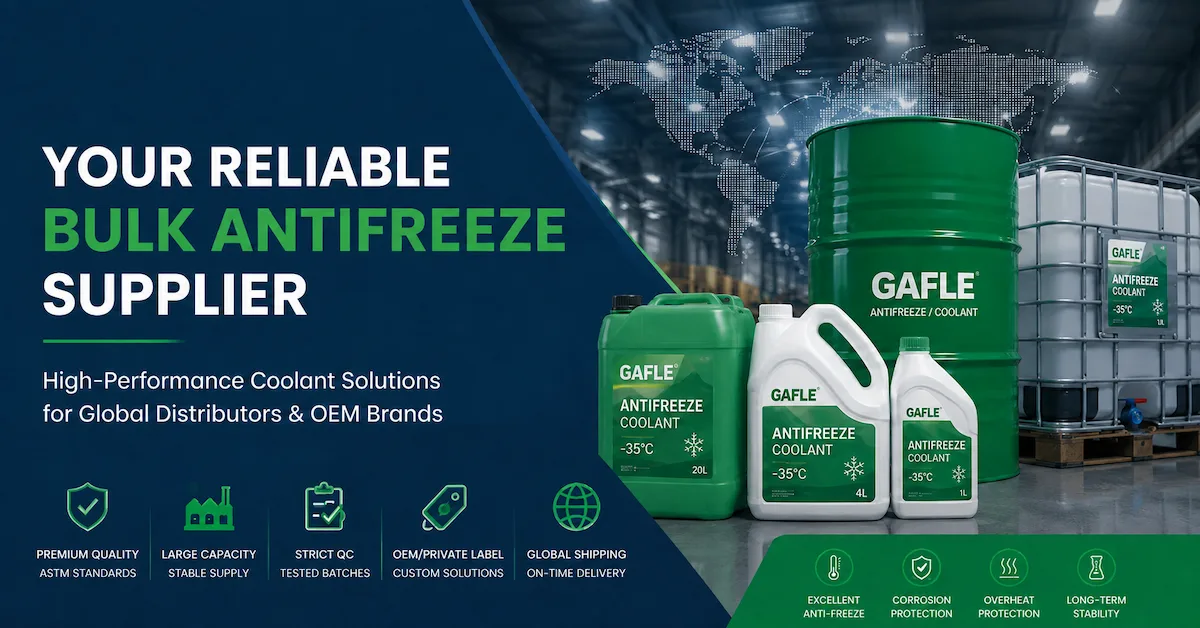
GAFLE coolant is produced with stable formulas and long shelf life. We provide batch production date tracking, standardized packaging and professional storage guidance for global wholesale and private label clients.
Welcome to contact GAFLE for more information & cooperation!
peter
ZHEJIANG GAFLE AUTO CHEMICL CO.,LTD
Tel:86-579-8222 1665
Fax:86-579-8246 4690
Cel/Wechart:86-13335993986
E-mail:peter@gafle.net
Web:www.gafle.net