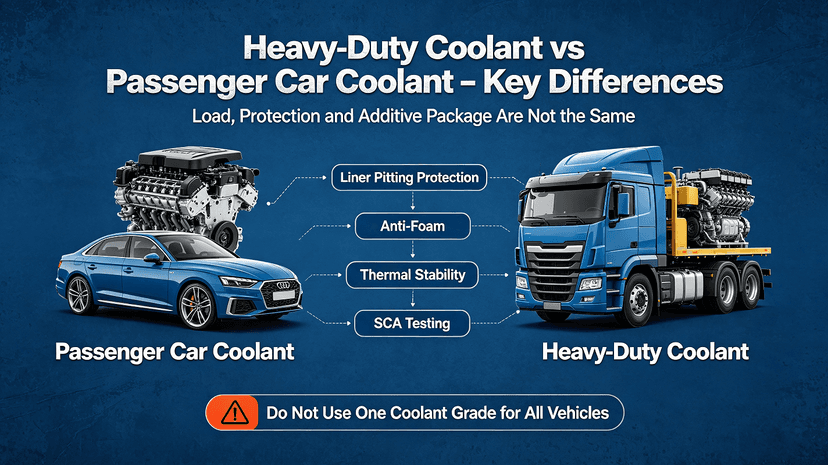
Most garages and fleet owners treat all coolant as universal. They stock one type of antifreeze and use it for sedans, pickup trucks, semi-trucks, excavators and buses interchangeably. This is a dangerous maintenance mistake. Heavy-duty vehicles and passenger cars operate under completely different load conditions and require dedicated coolant formulas. Using the wrong type leads to liner pitting, corrosion, deposit buildup and premature engine failure.
Why Heavy-Duty Engines Need Special Coolant
Passenger cars run mostly steady-speed, light-load trips. Heavy-duty trucks, construction machinery and buses face:
· Long-hour continuous operation
· Extreme engine temperature cycles
· High combustion pressure
· Vibration and harsh working environments
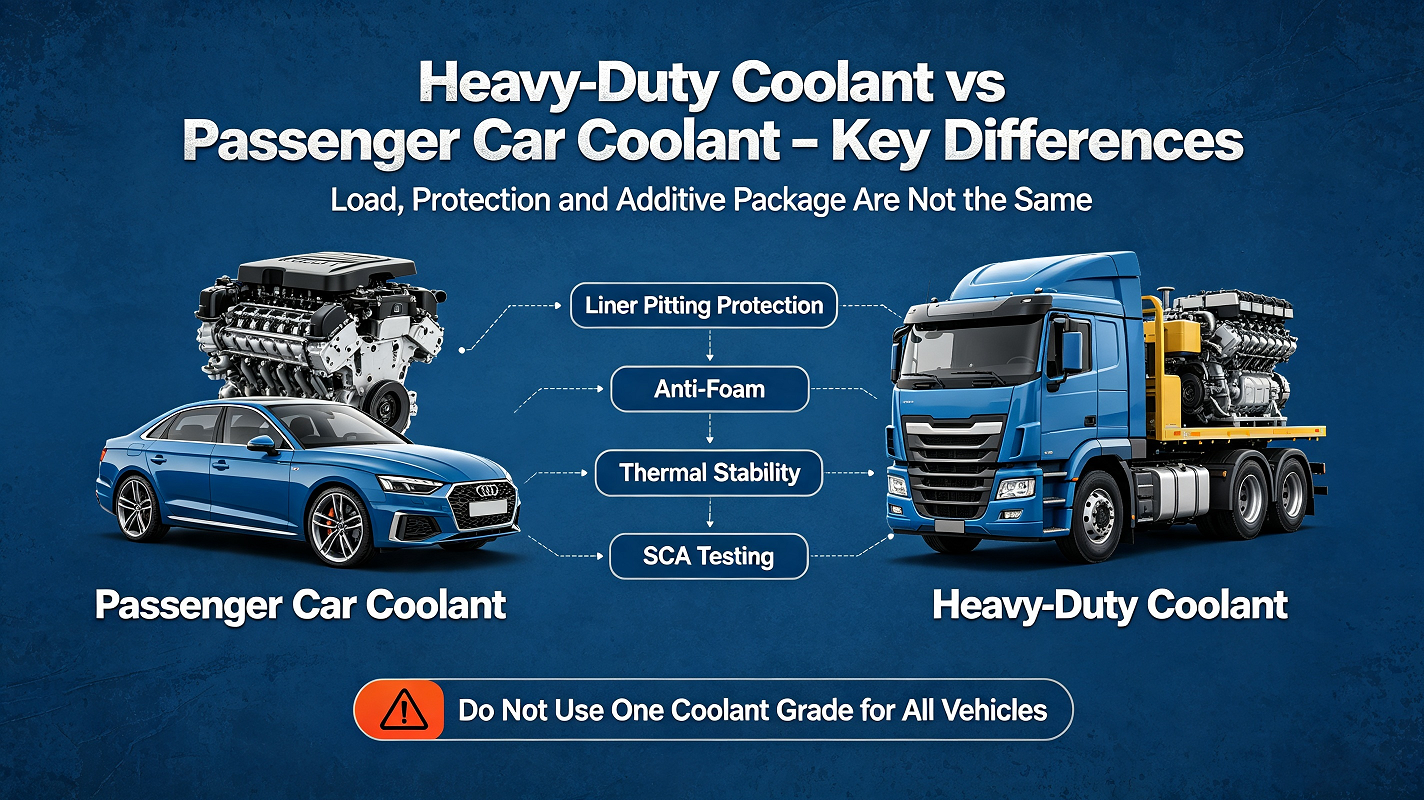
These conditions require coolant with stronger anti-foam performance, liner pitting protection and thermal stability that ordinary passenger car coolant cannot provide.
Core Difference 1: Additive Package Technology
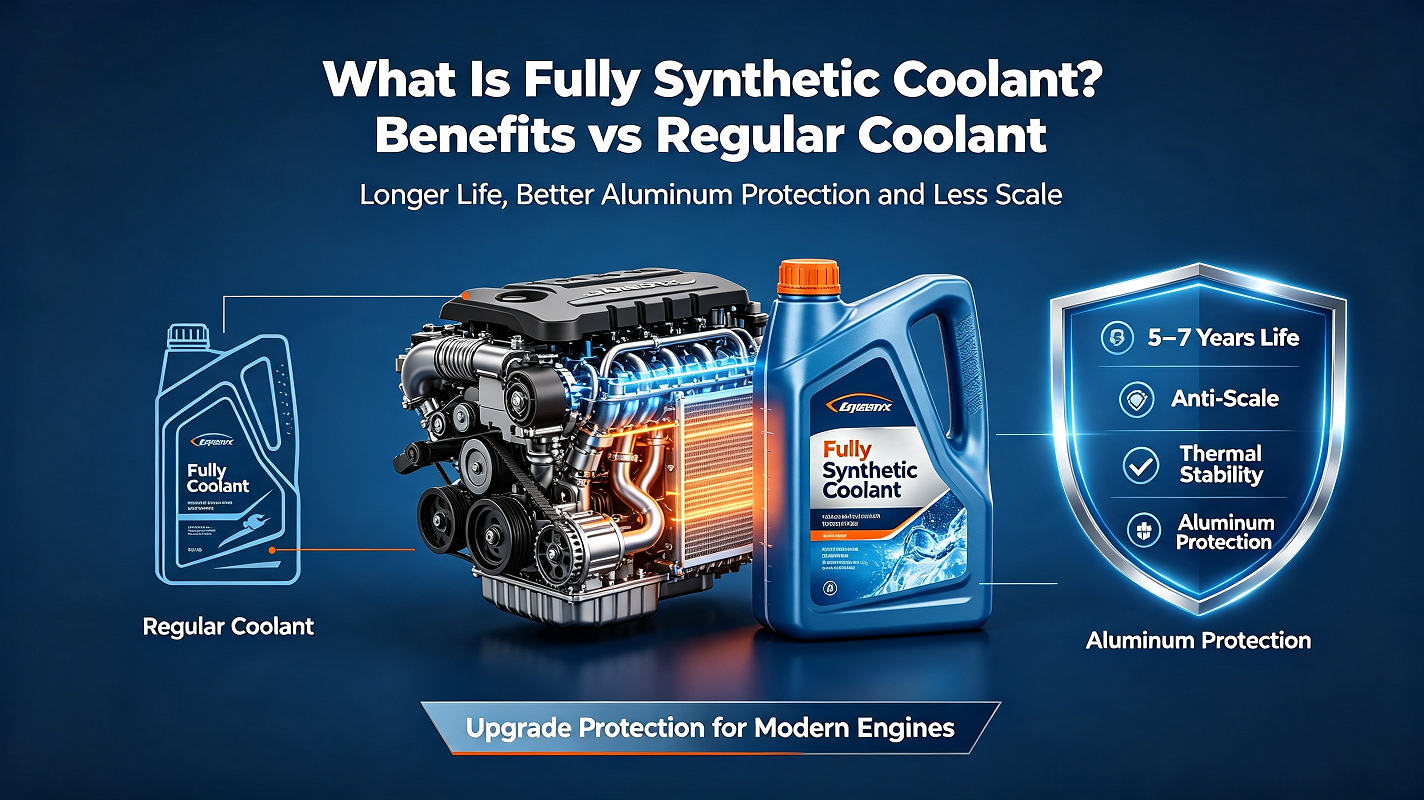
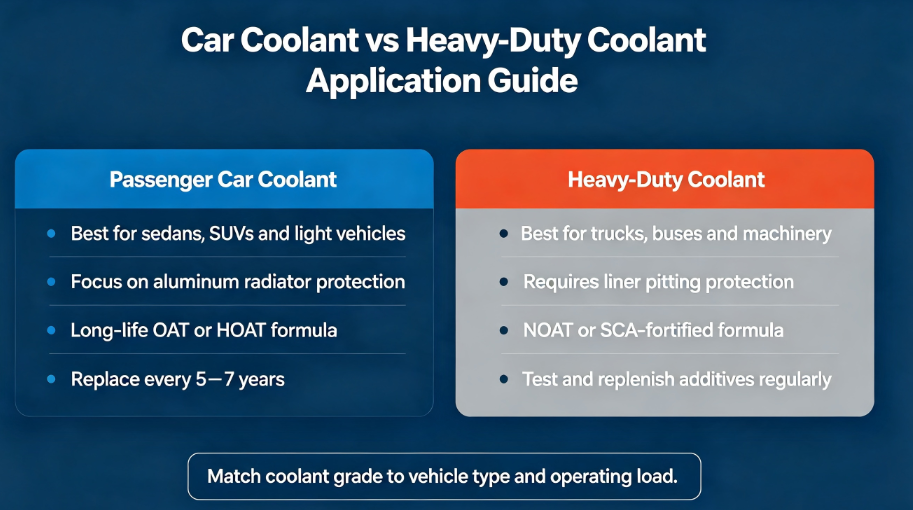
Passenger car coolant (OAT/HOAT) Focuses on aluminum protection, anti-scale and long service life. Suitable for light-load gasoline engines.
Heavy-duty coolant (NOAT / SCA fortified) Contains extra nitrite and molybdenum additives specifically designed to protect cast iron cylinder liners. It prevents liner pitting — the #1 failure for diesel heavy-duty engines.
Core Difference 2: Anti-Foam Performance
Heavy-duty engines produce intense coolant agitation. Ordinary car coolant foams easily under strong circulation. Foam creates air pockets, causing local overheating and uneven heat dissipation.
Heavy-duty formulas contain professional anti-foam agents to ensure stable liquid circulation under high-load conditions.
Core Difference 3: Heat Resistance & Durability
Automotive coolant degrades quickly in diesel engine environments. Heavy-duty coolant maintains stable protection under continuous high-temperature operation, reducing acidification and additive depletion.
Core Difference 4: Service Maintenance Rules
· Passenger cars: Long-life OAT, 5–7 years replacement
· Heavy-duty fleets: Require regular SCA testing & additive replenishment during long service cycles
Many fleet vehicles fail early simply because they use passenger-grade coolant with no supplementary protection.
Can You Mix Heavy-Duty and Car Coolant?
Not recommended. Mixing OAT car coolant with NOAT heavy-duty coolant will weaken liner protection, cause additive imbalance and produce minor sediments. Always use dedicated formulas for each vehicle type.
B2B Garage & Wholesale Guide
For aftermarket suppliers:
1. Separate inventory: passenger car coolant & heavy-duty coolant
2. Educate customers: diesel fleets need heavy-duty grade
3. Provide test tools for SCA concentration inspection
4. Recommend NOAT long-life coolant to reduce fleet maintenance cost
GAFLE provides dedicated passenger car OAT/HOAT coolant and heavy-duty NOAT coolant for global markets. Full specifications, complete certification documents and private label services are available.
Welcome to contact GAFLE for more information & cooperation!
peter
ZHEJIANG GAFLE AUTO CHEMICL CO.,LTD
Tel:86-579-8222 1665
Fax:86-579-8246 4690
Cel/Wechart:86-13335993986
E-mail:peter@gafle.net
Web:www.gafle.net