A visual check of the master cylinder reservoir is often the first step during scheduled maintenance, yet interpreting what you see is not always straightforward. Fleet technicians and service engineers frequently ask: What Do Brake Fluid Color Changes Mean for the operational safety of the hydraulic system? While a shift in shade does not immediately correlate with total mechanical failure, it is an undeniable diagnostic signal of internal chemical or physical degradation that demands informed action.
Baseline Visuals: What Normal Hydraulic Fluid Looks Like
Fresh, uncontaminated glycol-based formulations—principally DOT 3, DOT 4, and DOT 5.1—leave the factory almost completely clear or with a faint, straw-like amber tint. Silicone-based DOT 5, by contrast, is intentionally dyed purple to prevent accidental cross-contamination with hygroscopic formulations. In a sealed, healthy system, the fluid maintains its clarity and light hue for thousands of operating hours.
Over time, exposure to environmental factors and operating stresses prompts a transition. Understanding why brake fluid changes color requires looking at three distinct mechanisms: chemical oxidation, thermal breakdown, and particulate ingress.
Primary Drivers: Brake Fluid Discoloration Causes
Hydraulic systems are sealed against massive pressure leaks, but they are not entirely hermetic against atmospheric gas exchange. The fluid reservoir cap diaphragm breathes slightly during normal pedal cycling, which initiates several progressive forms of deterioration.
1. Moisture Contamination
Polyalkylene glycol ethers are inherently hygroscopic; they actively strip moisture out of ambient air. As moisture contamination increases over months of service, the chemical balance shifts. Even a 3% water saturation level drops the wet boiling point dramatically—from over 230°C down toward 140°C in standard DOT 4 formulations. While dissolved water alone might only impart a slight haziness initially, it acts as an accelerator for oxidation, driving the liquid toward deeper shades of amber and yellow-brown.
2. High-Heat Thermal Degradation
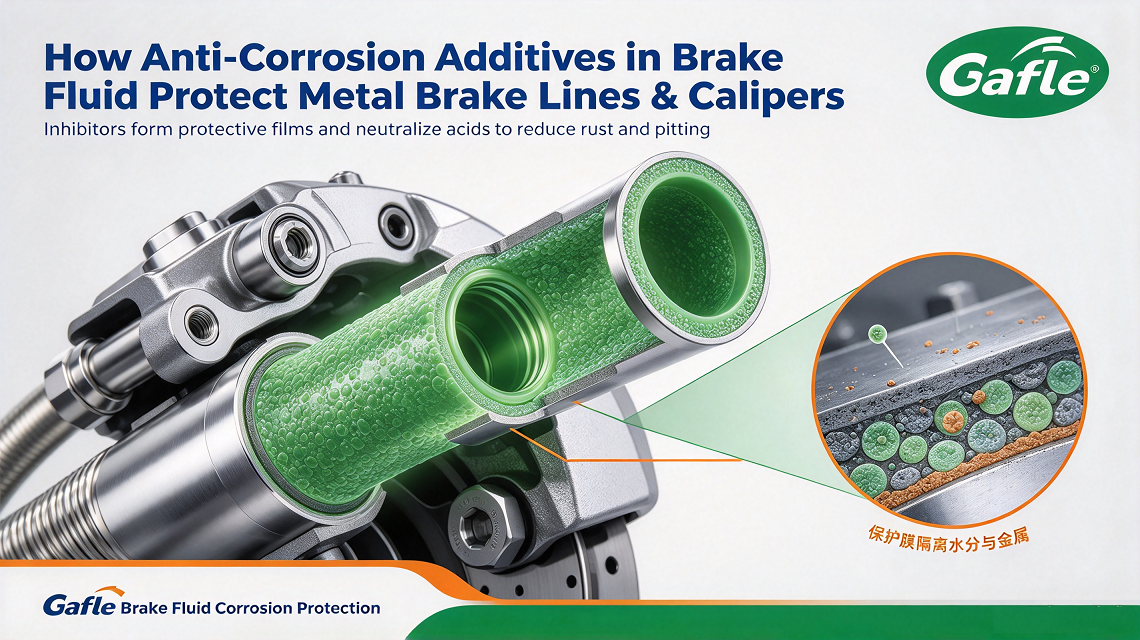
Repetitive, heavy braking cycles generate immense friction at the rotor and caliper interface. While caliper pistons and heat shields deflect some of this energy, severe operating conditions routinely heat local fluid pockets beyond recommended operating thresholds. This thermal cycling oxidizes the corrosion inhibitor package. As rust inhibitors and anti-foaming additives break down chemically, they precipitate out or darken, turning the liquid from golden honey to a murky tea tone.
3. Elastomer Wear and Metal Leaching
When the reservoir reveals a turbid dark brown, graphite, or deep black tone, the problem is rarely just dissolved atmospheric gas. Black discoloration is most frequently caused by the microscopic erosion of internal ethylene propylene diene monomer (EPDM) flexible hoses, master cylinder cup seals, and caliper piston seals. As rubber components age, fine carbon black particles shed into suspension. Simultaneously, dissolved copper leaches from the copper-brazed inner linings of steel hydraulic tubing, giving aged fluid an oxidized, muddy appearance when copper concentrations exceed 200 parts per million.
Visual Reference: Decoding the Fluid Spectrum
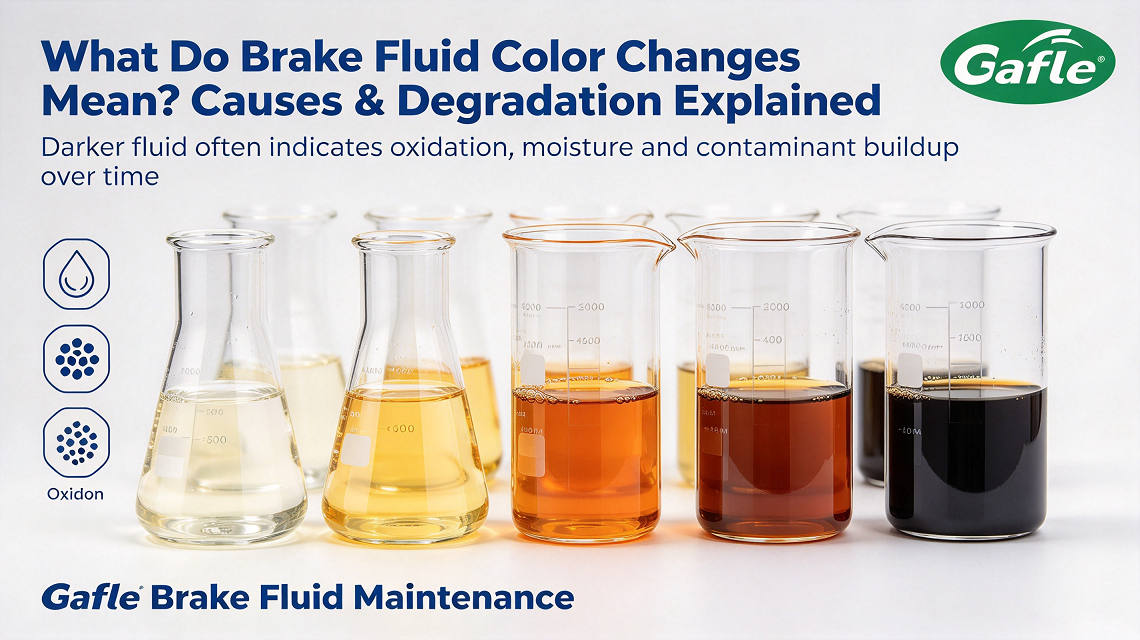
While lab analysis provides absolute certainty, this visual breakdown provides practical guidance for the workshop floor:
- Clear to Pale Amber: Normal baseline. The additive package is active, and water content is typically under 1%. No mechanical flush is required unless service life exceeds manufacturer time limits.
- Deep Amber to Maple: Early-to-moderate oxidation. The fluid is accumulating moisture and heat hours. A scheduled reservoir test or preventative flush should be planned at the next service interval.
- Dark Brown: Moderate-to-severe degradation. Additives are spent, moisture content likely exceeds 3%, and internal corrosion protection is compromised. System flush recommended.
- Opaque Black or Murky Sludge: Severe component degradation. The internal EPDM rubber seals are deteriorating, or heavy particulate matter has settled into the ABS hydraulic control unit and caliper bores. Immediate flush, along with inspection of flexible lines and piston seals, is critical.
Why Visual Inspection Is Only Half the Diagnostic Picture
A common operational mistake is relying exclusively on sight. Clean-looking fluid can still hold dangerous levels of moisture contamination if an open container was recently poured into an old reservoir, while fluid that looks somewhat dark might still possess adequate boiling resistance if the hue is purely due to harmless copper stripping without water intrusion.
For fleet operators and commercial maintenance facilities, optical refractometers, digital boiling point testers, and electrochemical copper test strips represent the true standard of care. Testing actual boiling temperatures takes less than two minutes and eliminates guesswork, preventing both premature fluid disposal and catastrophic vapor-lock during high-load descending.
Frequently Asked Questions
Can I top off dark reservoir fluid with fresh fluid?
Topping off a compromised reservoir with fresh formulation dilutes the visual darkness slightly but does not restore additive packages or remove dissolved water. In fact, introducing fresh fluid into a contaminated circuit can suspend sludge that had previously settled out, potentially lodging it inside sensitive ABS valving.
Does silicone DOT 5 experience the same shade progression?
No. DOT 5 does not absorb atmospheric moisture because silicone is hydrophobic. However, water pools at the lowest points of the hydraulic circuit instead of dissolving. DOT 5 can fade from purple to yellow or clear under UV exposure and thermal stress, but blackening still indicates mechanical seal abrasion.
Next Steps for Fleet and System Health
Routine hydraulic fluid maintenance should be treated as a preventative measure rather than a reactive repair. When inspecting system reservoirs, establish a protocol that pairs visual inspection with digital boiling point tests or strip tests. If your inspection uncovers dark brown or sludged fluid, schedule a complete, pressure-bleeded fluid replacement to preserve ABS valve integrity and ensure predictable stopping distances under load.
Welcome to contact GAFLE for more information & cooperation!
peter
ZHEJIANG GAFLE AUTO CHEMICL CO.,LTD
Tel:86-579-8222 1665
Fax:86-579-8246 4690
Cel/Wechart:86-13335993986
E-mail:peter@gafle.net
Web:www.gafle.net