Understanding the Risk of Boiling Brake Fluid on Long Downhill Grades
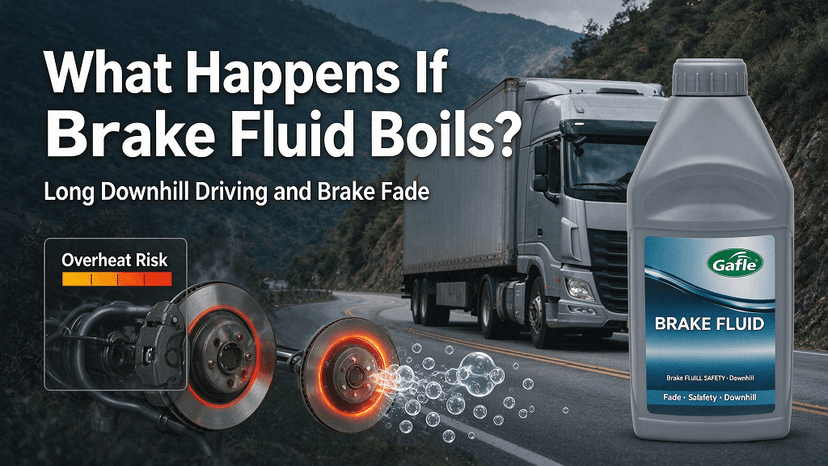
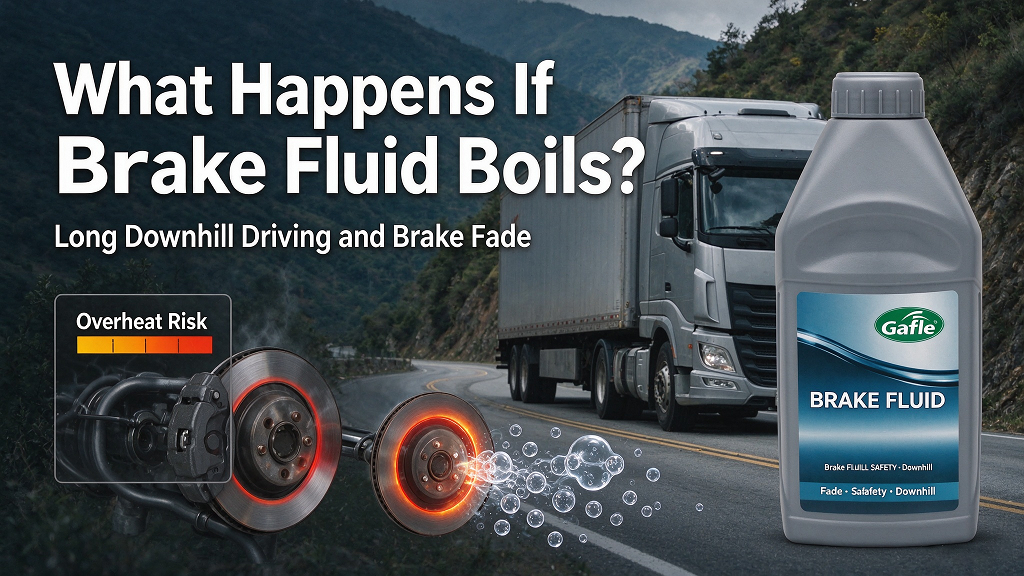
For heavy vehicles, commercial trucks, and even performance passenger cars, the descent is often more treacherous than the climb. The most significant threat in these scenarios is the risk of boiling brake fluid on long downhill stretches. When you are relying on friction to keep your speed in check for an extended period, the heat generated at the rotor and pad interface is substantial. This thermal energy eventually travels through the caliper pistons and into the hydraulic lines, raising the temperature of the brake fluid. If that fluid reaches its boiling point, it vaporizes, creating bubbles in the lines that severely compromise your vehicle's safety.
The Mechanics of Brake Fade Downhill
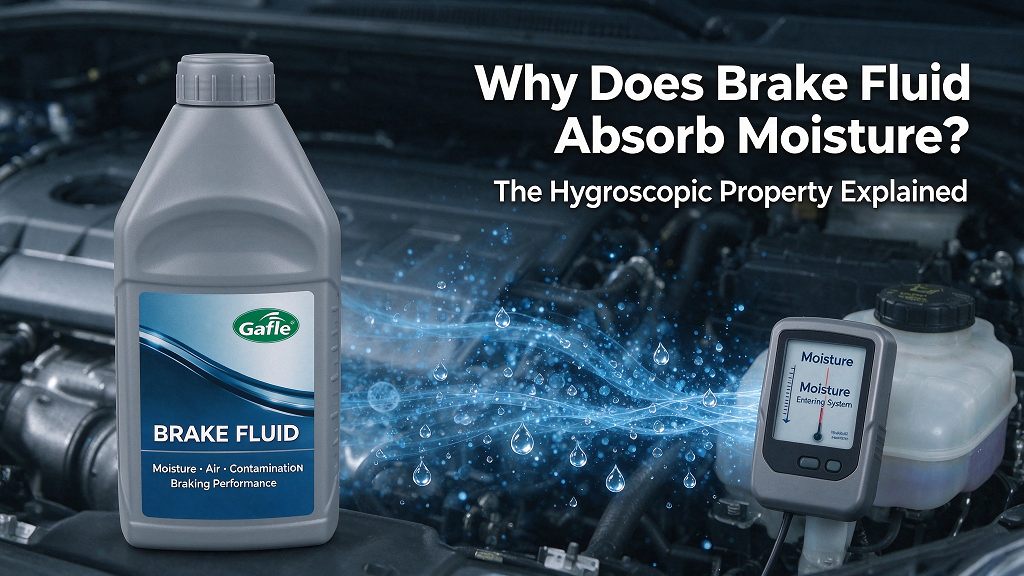
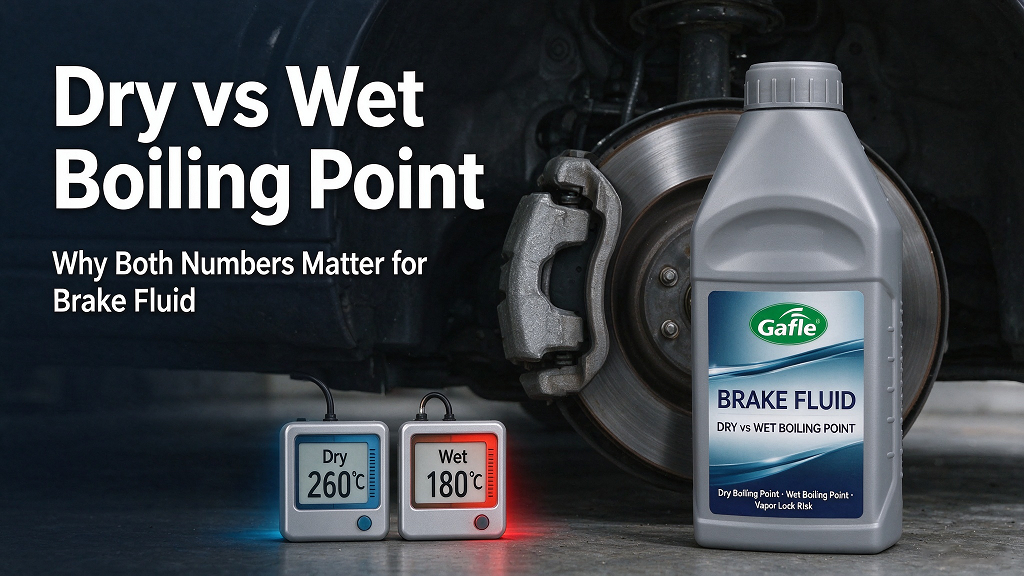
Most drivers are familiar with the term brake fade, but there is a nuance between pad fade and fluid-induced fade. Brake fade downhill often starts with the pads losing their coefficient of friction due to extreme heat, but the more dangerous failure mode is fluid vaporization. Brake fluid, typically glycol-ether based, is hygroscopic, meaning it absorbs moisture over time. As moisture content increases, the boiling point of the fluid drops significantly.
When a driver experiences boiling brake fluid loss of braking power, they often notice a soft or spongy pedal long before total failure occurs. That spongey feel is the direct result of gas bubbles replacing the incompressible liquid in the hydraulic system. Because gas is compressible, the force applied to the brake pedal is no longer transferred directly to the calipers; instead, it simply compresses the air in the lines. This is a critical warning sign that should prompt an immediate stop to allow the system to cool.
Practical Factors in Fluid Selection and Maintenance
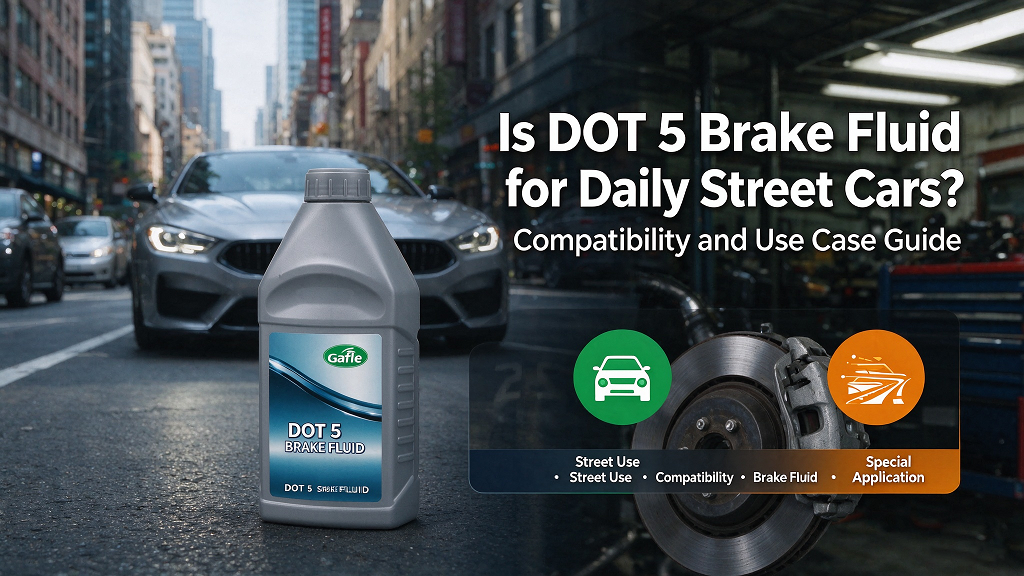
To mitigate the risk of boiling brake fluid, one must look closely at DOT ratings. DOT 3 fluid has a lower boiling point compared to DOT 4 or DOT 5.1, which are designed to handle higher heat loads. For operators navigating mountainous terrain, flushing the system with high-boiling-point fluid is a fundamental maintenance requirement, not an optional luxury.
However, changing the fluid is only half the battle. If you are consistently encountering high temperatures, your technique might be the culprit. Riding the brakes—keeping light pressure on the pedal for the duration of a descent—prevents the brakes from cooling between applications. This constant heat input is a recipe for fluid degradation. Experienced drivers advocate for shorter, firmer applications of the brakes to scrub speed, followed by periods where the brake system is allowed to release and dissipate heat into the airflow.
Common Mistakes and How to Avoid Them
One of the most common mistakes is failing to engine brake. By manually selecting a lower gear, you allow the engine and transmission to handle the bulk of the deceleration, significantly reducing the demand on the friction-based braking system. Many modern automatic transmissions have a sport mode or manual gear selection that is designed specifically for this purpose. Ignoring this function places the entire burden on the pads, rotors, and fluid.
Additionally, never neglect your brake hardware. Worn-out pads that are too thin will not dissipate heat as effectively as fresh ones. The mass of the pad itself acts as a thermal heat sink; once that material is worn away, the heat transfers into the hydraulic system much faster. If you are planning a trip through mountainous terrain, it is prudent to check both the condition of your fluid and the thickness of your friction material before departing.
Summary of Best Practices
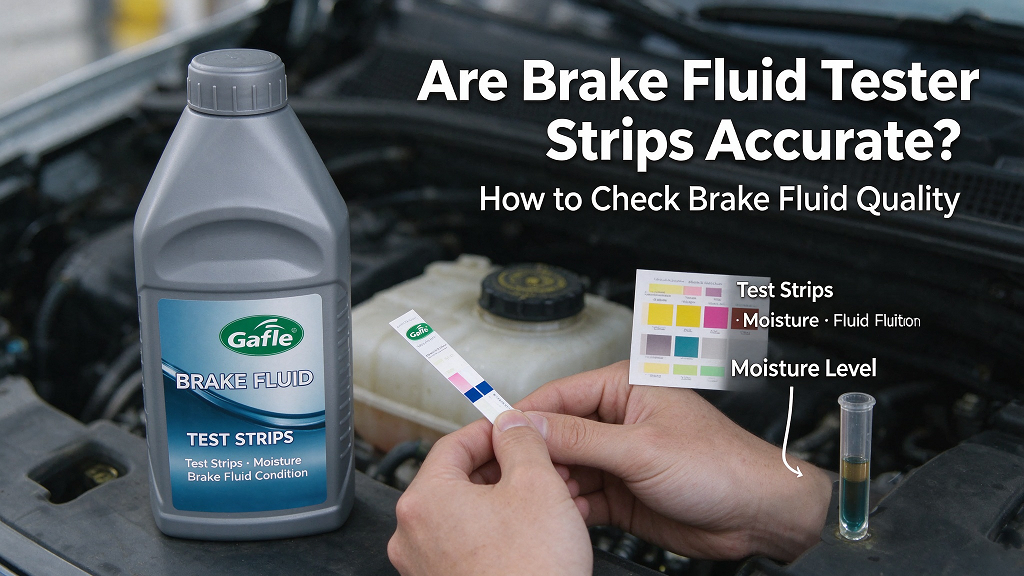
- Check your brake fluid moisture levels; a simple test strip can reveal if your fluid is saturated with water and its boiling point is compromised.
- Utilize engine braking to reduce the workload on your primary hydraulic system during downhill driving.
- Avoid light, continuous pressure on the pedal; use intermittent, firm applications to allow for cooling.
- Ensure your cooling ducts and brake ventilation are not blocked by debris or modifications.
If you have experienced a soft pedal after a long descent, do not assume it will recover indefinitely. The process of boiling can break down the chemical structure of the fluid, meaning it will likely boil at an even lower temperature the next time it gets warm. When in doubt, flush the system with fresh, high-performance fluid to restore your safety margin.
Welcome to contact GAFLE for more information & cooperation!
peter
ZHEJIANG GAFLE AUTO CHEMICL CO.,LTD
Tel:86-579-8222 1665
Fax:86-579-8246 4690
Cel/Wechart:86-13335993986
E-mail:peter@gafle.net
Web:www.gafle.net