logo

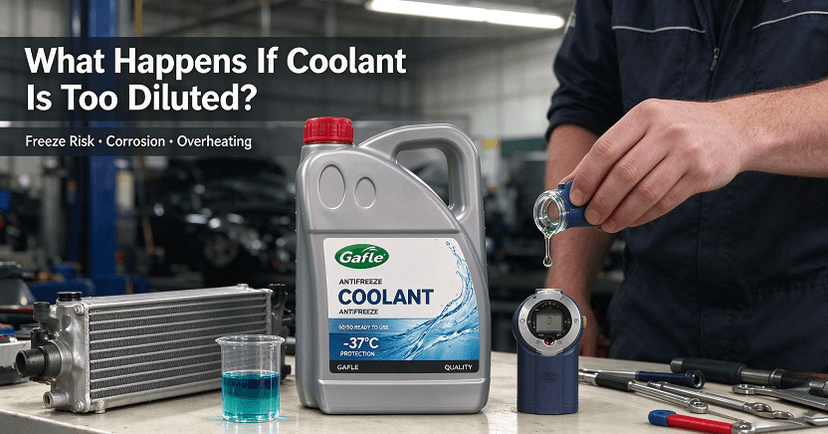
What Happens If Coolant Is Too Diluted?

logo

Published

Oct 30 2026

  • News
  • Antifreeze / Coolant
  • Buying Guide

Follow us

what-happens-if-coolant-is-too-diluted-1

coolant water ratio

Introduction Over-dilution is one of the most common coolant mistakes in auto service and fleet maintenance. Some technicians add excessive tap water or distilled water to antifreeze to cut cost, assuming more water brings better cooling. But antifreeze is not just for heat transfer. Its additives deliver freeze protection, boil protection and corrosion control. Once the water proportion goes far beyond the safe range, these protective functions fail one by one. This article explains all the risks caused by too diluted coolant, how to test the concentration, and how to correct the mixing ratio properly.

Over-diluted coolant has a higher freezing point, which makes it easy to freeze in cold weather and crack engine water jackets or radiators. The core winter function of antifreeze is to lower the freezing point. A standard 50/50 blend of glycol and distilled water freezes around -37°C. If you dilute it to 20% glycol and 80% water, the freezing point rises close to -8°C. When ambient temperature drops below this threshold, the liquid inside the cooling system turns into ice. Ice expands significantly, building huge pressure inside confined channels. This force can split the aluminum radiator core, crack engine cylinder liners and destroy the heater core. The repair cost for this freeze damage is usually very high.

Excess water reduces the boiling point of coolant, leading to boil-over and engine overheating under heavy load. Pure water boils at 100°C. Glycol raises the boiling point of the mixture so coolant can stay liquid under normal engine working pressure. If coolant is too watery, its boiling protection drops sharply. When the vehicle climbs long hills, tows heavy cargo or runs in hot summer weather, the coolant reaches boiling point quickly. Bubbles and steam form inside the circuit, interrupting liquid circulation. The temperature gauge spikes, and steam sprays out from the expansion tank, which is known as boil-over.

Low additive concentration weakens corrosion inhibition, triggering pitting and rust on aluminum, cast iron and copper components inside the cooling circuit. Every qualified antifreeze package contains corrosion inhibitors, pH stabilizers and anti-foam additives. These chemicals protect different metals in the cooling system. When you add too much water, inhibitor levels drop below the effective threshold. Aluminum engine blocks develop pitting corrosion, cast iron surfaces start rusting, and copper radiator tubes suffer from galvanic corrosion. Fine rust particles circulate with the fluid and form abrasive sludge that wears water pump seals.

Minerals from hard water form limescale deposits, gradually blocking radiator tubes and heater cores and hurting heat exchange. Many workshops use untreated tap water for dilution. Tap water carries calcium, magnesium and other mineral salts. When the coolant heats up repeatedly, these minerals precipitate out and stick to the inner wall of cooling passages. The scale layer acts like insulation, slowing heat transfer. Over months and years, the narrow radiator channels get partially blocked. You may notice weak cabin heating in winter and frequent high-temperature alarms in summer, even before obvious overheating failures.

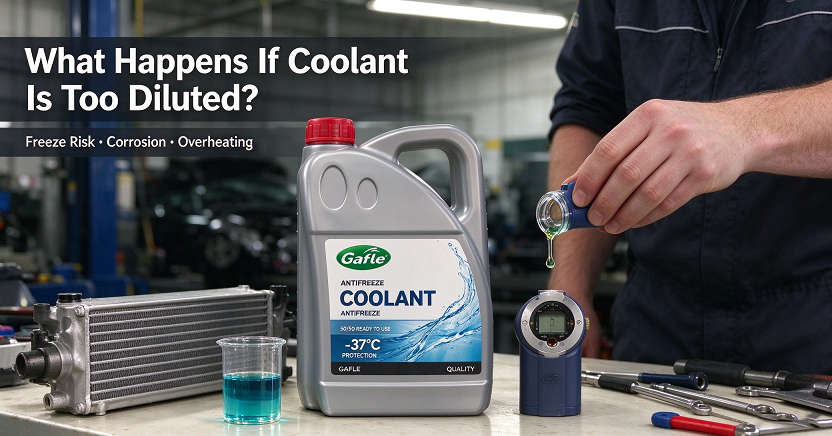
A refractometer is the reliable tool to tell whether coolant is within the recommended concentration range. Visual inspection cannot judge glycol proportion accurately. The only trustworthy way is using a coolant refractometer. You just drop a small sample of coolant on the prism and read the percentage value. For most markets, the safe range is 40% to 60% glycol. Any reading lower than 40% means the coolant is over-diluted and needs adjustment. Refractometers are affordable tools for repair shops and fleet maintenance teams.

You can either partially replace the fluid or fully flush the cooling system to fix severely over-diluted coolant. If the concentration is only slightly low and the coolant is still fresh and clean, drain a portion of diluted coolant and top up with concentrated antifreeze, then retest with the refractometer. If the fluid is old, muddy, full of rust sludge or heavily diluted, partial topping-up will not solve the hidden corrosion risk. The correct operation is to drain all old coolant, flush the whole cooling circuit, and refill with a properly mixed coolant following OEM specifications. Never keep driving with severely diluted antifreeze.

FAQ

Q1: What is the lowest acceptable glycol percentage for coolant?

A1: Generally, 40% glycol is the minimum safe proportion. Anything lower greatly increases freeze and boil failure risks.

Q2: Can I use tap water to dilute antifreeze?

A2: We strongly advise against it. Only distilled or deionized water should be used for mixing coolant.

Q3: What signs show my coolant is over diluted?

A3: Frequent overheating in summer, poor heater output in winter, visible rust in reservoir, and freeze damage in cold seasons.

Q4: Is slightly diluted coolant okay for tropical areas that never freeze?

A4: No. Even without freezing risk, diluted coolant loses boiling protection and anti-corrosion additives.

Q5: How often should I test coolant concentration for fleet vehicles?

A5: It is recommended to test coolant concentration at every seasonal maintenance or every 6 months.

Q6: Can I just add pure antifreeze directly to raise the concentration?

A6: Yes for mild under-concentration, but always test after adding. If the fluid is contaminated, a full flush is better.

Welcome to contact GAFLE for more information & cooperation!
peter
ZHEJIANG GAFLE AUTO CHEMICL CO.,LTD
Tel:86-579-8222 1665
Fax:86-579-8246 4690
Cel/Wechart:86-13335993986
E-mail:peter@gafle.net
Web:www.gafle.net
Featured Blogs
Can You Manufacture Brake Fluid Under My Brand?

Can You Manufacture Brake Fluid Under My Brand?

1. Private label brake fluid OEM lets aftermarket brand owners sell branded brake fluid without operating their own chemical blending factory. 2. Glycol-based DOT 3, DOT 4 and DOT 5.1 are the mainstream brake fluid grades for passenger cars, commercial vehicles and motorcycles. 3. Full custom packaging includes bottle sizes, custom labels, brand logos, hazard warnings and printed outer cartons. 4. All OEM brake fluid follows FMVSS 116 specification; each batch comes with COA test reports and MSDS safety documents. 5. The OEM process covers requirement discussion, sample validation, artwork approval, mass production, quality inspection and delivery. 6. Flexible minimum order quantities support both small test orders and large container shipments for global importers. 7. Brake fluid is classified as a chemical good; we provide labeling guidance and documents to meet GHS and overseas import regulations.

Can you manufacture coolant under my brand?

Can you manufacture coolant under my brand?

1. Private label coolant OEM service enables distributors and workshop chains to launch their own antifreeze brand without building chemical production lines. 2. Multiple coolant chemistries are available for OEM, including IAT, OAT and HOAT formulas for passenger cars, trucks and EV thermal systems. 3. Full packaging customization covers bottle shapes, volumes, custom labels, liquid color and carton printing. 4. All private label coolant can be produced to meet ASTM standards, with complete test reports and MSDS documents for export. 5. The standard OEM cooperation workflow includes requirement confirmation, sample approval, artwork finalization, production, inspection and delivery. 6. Flexible MOQ and lead time options are available to support small startup brands and large bulk importers. 7. The manufacturer can provide supporting export documents and guidance to meet destination country chemical labeling regulations.

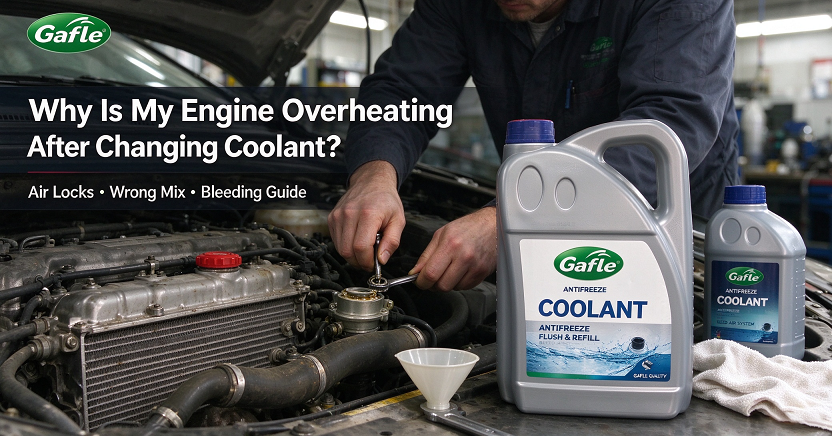
Why Is My Engine Overheating After Changing Coolant?

Why Is My Engine Overheating After Changing Coolant?

1. Air pockets trapped inside the cooling circuit are the top reason for engine overheating immediately after coolant replacement. 2. Mixing incompatible coolant chemistries such as IAT, OAT and HOAT creates sludge and clogs cooling passages. 3. Incorrect mixing ratio, either too diluted or too concentrated, breaks thermal stability and heat transfer performance. 4. Flushing coolant can loosen old scale and sediment, which may clog the radiator core or jam the thermostat. 5. Thermostats can stick closed after debris flows through, preventing coolant from entering the large cooling cycle. 6. Bleeding procedures differ between vehicle models; many cars require dedicated bleed screws to remove trapped air fully.

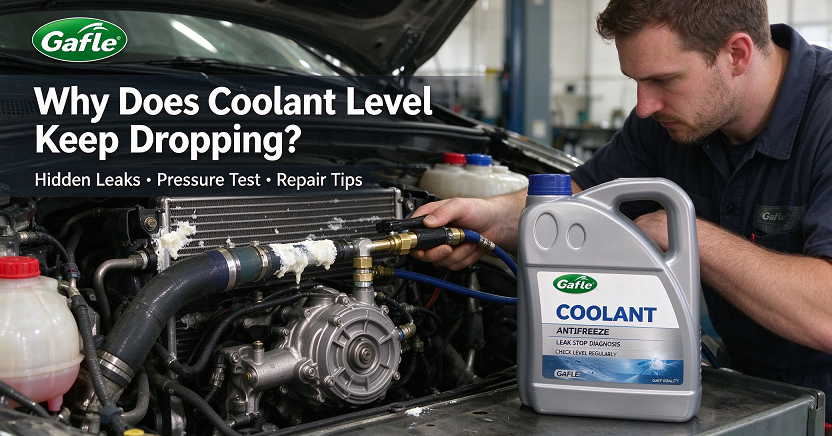
Why Does Coolant Level Keep Dropping?

Why Does Coolant Level Keep Dropping?

1. Visible external leaks from hoses, radiators, heater cores and water pump seals account for most easy-to-detect coolant loss cases. 2. Internal leaks caused by blown head gaskets let coolant enter combustion chambers or oil galleries without obvious dripping marks. 3. A faulty radiator pressure cap fails to maintain system pressure, allowing coolant to escape as vapor at operating temperature. 4. Coolant has natural vapor loss, but improper mixing and aged fluid will greatly accelerate evaporation consumption. 5. Micro-leaks on EV battery cooling plates and thermal management joints are hard to spot during routine visual inspection. 6. Technicians should follow a step-by-step diagnostic workflow and use cooling system pressure testers to locate hidden leaks efficiently.

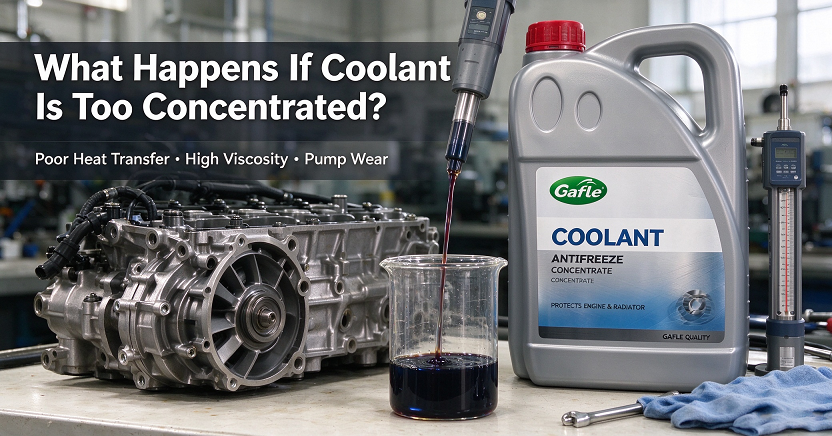
What Happens If Coolant Is Too Concentrated?

What Happens If Coolant Is Too Concentrated?

1. High-concentration coolant has higher viscosity and weaker fluidity, reducing circulation flow and lowering engine heat dissipation efficiency. 2. Freeze protection of glycol coolant peaks at around 60% concentration; further increasing glycol content will not improve freezing resistance. 3. Thick concentrated coolant increases the load on the water pump, accelerating wear of pump bearings and seals and leading to leakage. 4. Excess glycol may form gummy deposits, blocking narrow passages inside radiators and cooling pipelines. 5. The recommended coolant mixing ratio varies according to local climate and vehicle types, including ICE and new energy vehicles. 6. Specific testing and dilution steps are required to safely adjust over-concentrated coolant back to the factory-specified range.

What Happens If Coolant Is Too Diluted?

What Happens If Coolant Is Too Diluted?

1. Over-diluted coolant has a higher freezing point, which makes it easy to freeze in cold weather and crack engine water jackets or radiators. 2. Excess water reduces the boiling point of coolant, leading to boil-over and engine overheating under heavy load. 3. Low additive concentration weakens corrosion inhibition, triggering pitting and rust on aluminum, cast iron and copper components inside the cooling circuit. 4. Minerals from hard water form limescale deposits, gradually blocking radiator tubes and heater cores and hurting heat exchange. 5. A refractometer is the reliable tool to tell whether coolant is within the recommended concentration range. 6. You can either partially replace the fluid or fully flush the cooling system to fix severely over-diluted coolant.