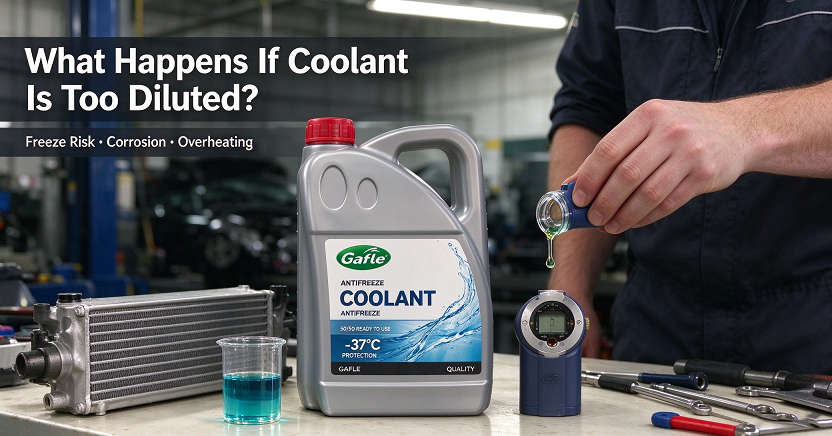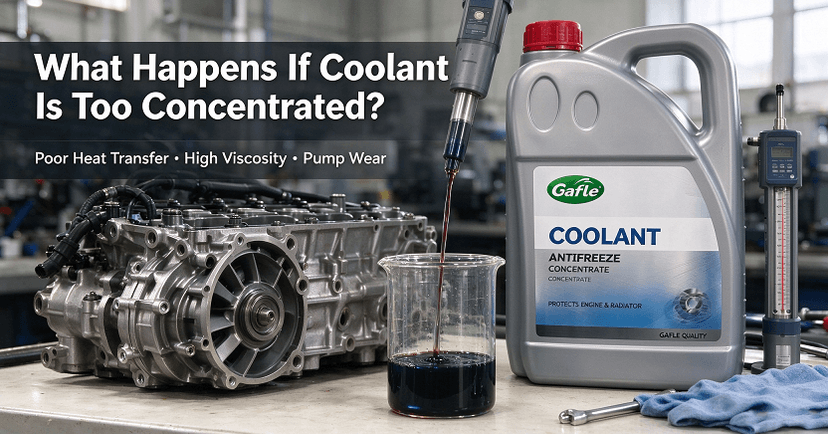
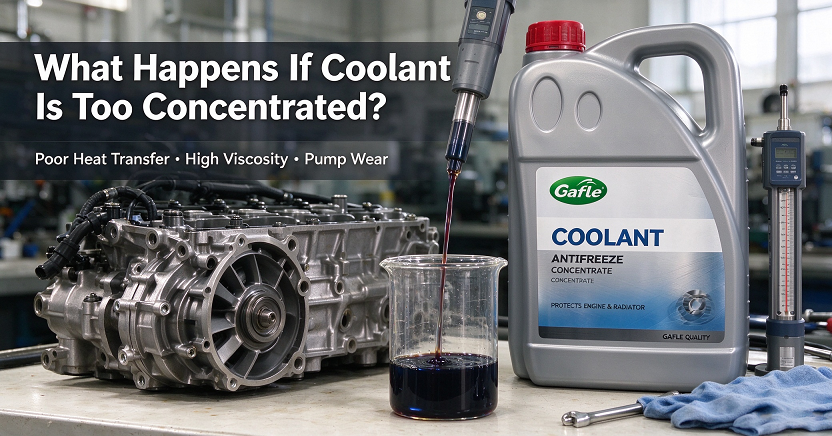
A common misconception in auto service is that pure antifreeze delivers stronger protection. Many technicians choose to pour undiluted coolant directly into the cooling system without mixing distilled water. In fact, ethylene glycol-based antifreeze is a balanced functional fluid. Its cooling, anti-freeze and anti-corrosion performance only works well within a reasonable mixing window. When the proportion of glycol exceeds the upper safe limit, a series of hidden troubles appear, such as insufficient heat dissipation, heavy pump load and internal deposit buildup. This article explains the downsides of overly concentrated coolant and shares reliable mixing standards for workshops and fleet buyers.
High-concentration coolant has higher viscosity and weaker fluidity, reducing circulation flow and lowering engine heat dissipation efficiency. Glycol itself is much thicker than water. When you use coolant with 70% glycol or higher, the fluid becomes sticky. Even if the water pump runs at normal speed, the volume of coolant flowing through engine jackets and radiators drops significantly. Water has superior thermal conductivity compared to glycol. Too much glycol reduces the system’s ability to carry heat away from hot components. Under heavy load, the engine temperature will climb faster and trigger overheating alarms easily.
Freeze protection of glycol coolant peaks at around 60% concentration; further increasing glycol content will not improve freezing resistance. Many people do not know this critical characteristic of ethylene glycol. A 60% glycol mixture provides the lowest freezing point, roughly -48°C. If you keep raising glycol content to 70%, 80% or even 100%, the freezing point rises again. Pure 100% ethylene glycol freezes at about -13°C, which offers far worse winter protection than a standard 50/50 blend. This means running neat antifreeze in cold regions is extremely risky.
Thick concentrated coolant increases the load on the water pump, accelerating wear of pump bearings and seals and leading to leakage. Automotive water pumps are engineered for coolant of standard 40%-60% glycol ratio. Thick fluid creates extra resistance against the impeller. The pump consumes more power and runs hotter. Continuous operation under this condition speeds up aging of shaft seals, bearing surfaces and gaskets. Premature water pump failure and slow coolant leaks are frequent complaints from vehicles running over-concentrated antifreeze. Repairing a failed water pump is a costly service item for vehicle owners.
Excess glycol may form gummy deposits, blocking narrow passages inside radiators and cooling pipelines. Glycol can degrade faster when it runs without enough water. Oxidation products combine with additives and turn into sticky sludge. These soft deposits stick to the thin cooling fins and tiny channels of radiators and heater cores. Partial blockage creates local hot spots inside the engine. Once sludge builds up heavily, a full cooling system flush is mandatory, and in severe cases the radiator needs replacement.
The recommended coolant mixing ratio varies according to local climate and vehicle types, including ICE and new energy vehicles. For most temperate markets, the 50/50 glycol and distilled water mix remains the universal standard. For extremely cold zones, 60% glycol is the maximum safe proportion. For hot tropical regions, 40% glycol is acceptable to prioritize heat transfer. EV battery cooling systems have stricter requirements; operators must follow the fluid specification provided by the vehicle OEM instead of using a random high-glycol blend.
Specific testing and dilution steps are required to safely adjust over-concentrated coolant back to the factory-specified range. First, test the existing concentration with a refractometer to read the current glycol percentage. If it is only slightly above standard, drain a small amount of concentrated coolant and top up with qualified distilled water, then retest. If the fluid is old, discolored or contaminated, drain all the coolant, flush the whole circuit, and refill with correctly proportioned coolant. Never add water blindly without testing, otherwise you may swing the mixture from too strong to too diluted.
FAQ
Q1: Can I use 100% pure antifreeze in my car?
A1: It is not recommended. Pure glycol has poor heat transfer, high viscosity and worse freeze protection than a properly mixed 50/50 coolant.
Q2: What is the maximum safe concentration for ethylene glycol coolant?
A2: 60% glycol is the upper limit. Any concentration higher than 60% brings diminishing returns and extra risks.
Q3: Will concentrated coolant damage electric vehicle cooling systems?
A3: Yes. EV thermal management systems require precise fluid concentration. Over-concentrated coolant affects temperature control and may damage battery packs.
Q4: How can I tell my coolant is too concentrated?
A4: Use a refractometer for accurate measurement. Visible symptoms include frequent high engine temperature and recurring water pump leaks.
Q5: Is it OK to mix tap water to dilute strong antifreeze?
A5: No. Always use distilled or deionized water. Tap water contains minerals that cause limescale and corrosion.
Q6: What ratio should I choose if I live in a hot country with no freezing weather?
A6: 40% glycol and 60% distilled water is a balanced option for warm climates. Do not reduce glycol further.
Welcome to contact GAFLE for more information & cooperation!
peter
ZHEJIANG GAFLE AUTO CHEMICL CO.,LTD
Tel:86-579-8222 1665
Fax:86-579-8246 4690
Cel/Wechart:86-13335993986
E-mail:peter@gafle.net
Web:www.gafle.net