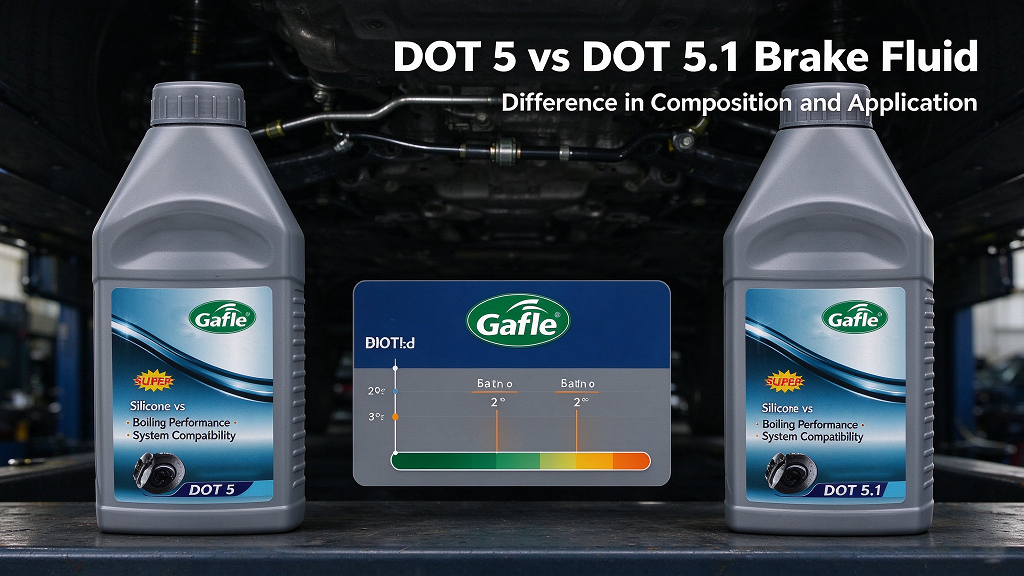
Few nomenclature choices in automotive standards have caused as much recurring headache on the shop floor and in procurement offices as the naming of brake fluids under FMVSS 116. When technicians or component designers ask about the difference between DOT 5 and DOT 5.1 brake fluid, they are usually dealing with a high-stakes question: one is a specialized silicone chemistry, while the other is an advanced glycol ether formulation. Selecting the wrong fluid or assuming numerical parity implies chemical compatibility can degrade seals, introduce vapor lock, or disable anti-lock braking systems (ABS).
Understanding the physical and chemical distinctions between these two grades is essential for anyone sourcing fluids for military, heavy-duty, performance, or specialty industrial applications.
The Root of the Confusion: Chemistry Over Numbers
Most hydraulic brake fluid standards track an evolutionary glycol progression: DOT 3 gave way to DOT 4 with higher wet boiling points, and eventually to DOT 5.1. DOT 5, however, sits outside this continuum entirely.
DOT 5 is formulated from silicone base stocks (specifically polydimethylsiloxane). It was developed primarily for applications where vehicles sit unused for prolonged periods in humid or corrosive environments—such as military reserves, emergency vehicles, and classic motor restorations. Because silicone is hydrophobic, DOT 5 will not absorb atmospheric moisture over time.
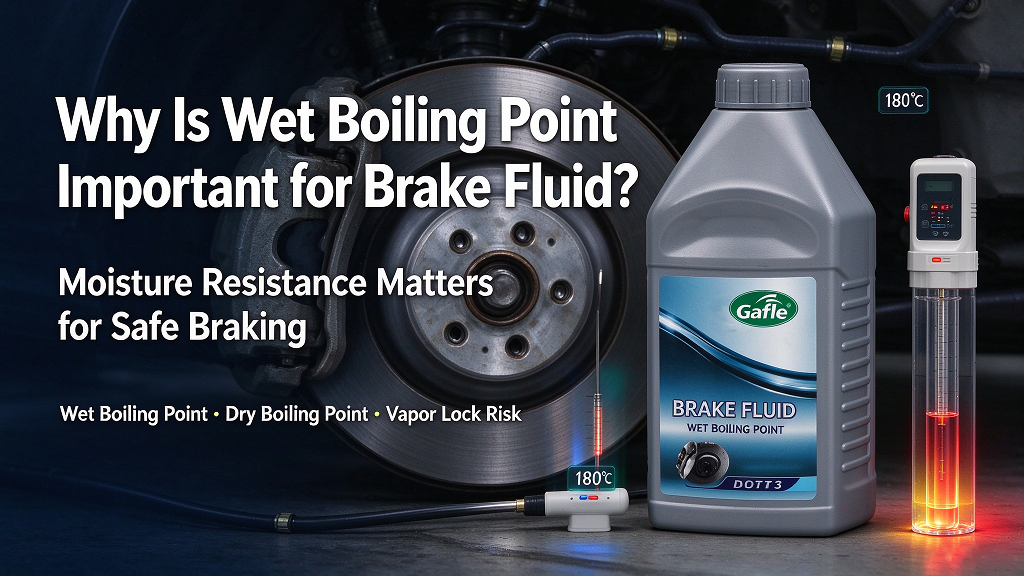
In contrast, DOT 5.1 was developed to provide the high thermal performance associated with the DOT 5 standard (a minimum dry boiling point of 260°C and wet boiling point of 180°C) while retaining a glycol-ether and borate ester base. In simple terms: DOT 5.1 is essentially a high-specification evolution of DOT 4, not an upgraded iteration of DOT 5.
Core Technical Comparison
To evaluate their suitability for modern hydraulic circuits, engineers must look at how chemical properties translate into operational realities:
| Property | DOT 5 | DOT 5.1 |
|---|---|---|
| Base Chemistry | Silicone (Polydimethylsiloxane) | Glycol Ether / Borate Ester |
| Moisture Behavior | Hydrophobic (repels water) | Hygroscopic (absorbs water evenly) |
| Kinematic Viscosity at -40°C | ~900 mm²/s max | ~900 mm²/s max (often lower in modern blends) |
| Compressibility | Slightly compressible (softer lever/pedal feel) | Incompressible (firm, predictable hydraulic transfer) |
| ABS System Suitability | Unsuitable (aerates under rapid valve cycling) | Fully compatible and recommended |
| Effect on Painted Finishes | Inert (will not strip paint) | Corrosive to paint and clear coats |
Can You Mix DOT 5 and DOT 5.1 Brake Fluid?
A frequent field query is straightforward: can you mix DOT 5 and DOT 5.1 brake fluid in an existing hydraulic line? The short answer is an unequivocal no.
Because silicone and glycol ethers are mutually immiscible, combining them does not produce an intermediate blend. Instead, they separate inside master cylinders, hard lines, and calipers into distinct layers. Water entering a system running DOT 5 does not disperse throughout the bulk fluid; it pools at the lowest hydraulic points, typically behind the caliper piston. When temperatures rise during aggressive braking, that localized water boils at just 100°C, causing sudden, catastrophic pedal drop.
Furthermore, elastomers in seals, diaphragms, and hoses are compound-specific. Putting glycol-based fluid into a legacy DOT5 system, or silicone into a system engineered solely for glycol fluids, can cause rapid seal swelling, softening, or structural shrinkage, resulting in internal piston binding or fluid leaks.
ABS and High-Cycle Dynamics
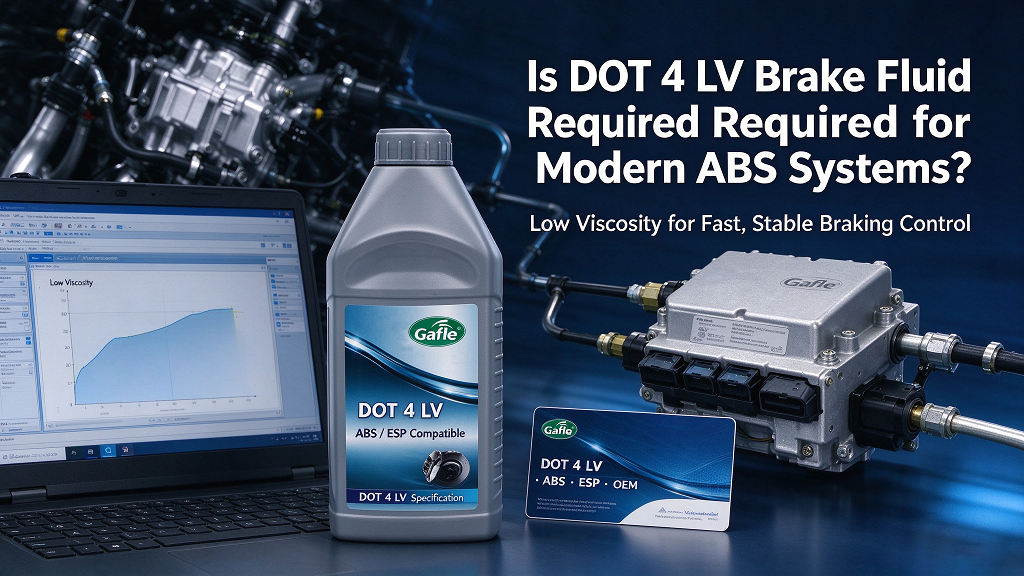
The functional division between these fluids becomes most evident in modern anti-lock brakes and electronic stability control (ESC). During an ABS intervention, solenoid valves cycle dozens of times per second.
Silicone fluids tend to entrain microscopic air bubbles under rapid pressure oscillations. This aeration makes DOT 5 visibly frothy inside high-speed modulator valves, resulting in a spongy lever feel and unpredictable pressure delivery. DOT5.1 remains structurally stable under these shear and pulsing stresses. Its tight viscosity control at sub-zero temperatures ensures rapid valve response even in cold climates, which is why commercial transport fleets operating automated braking systems mandate glycol-based fluids.
Procurement and Sourcing Considerations
When reviewing bids or consulting a brake fluid manufacturer DOT5.1 specification sheet, buyers and quality managers should verify several operational parameters beyond basic boil limits:
- Elastomer Compatibility: Ensure test reports verify compatibility with EPDM, SBR, and natural rubbers per SAE J1703 / J1704 parameters.
- Packaging and Shelf Life: Because DOT 5.1 is hygroscopic, bulk packaging must use nitrogen-purged drums or tin containers with hermetic foil induction seals. Plastic jugs allow water vapor to permeate over multi-year warehouse storage.
- Color Coding Vigilance: Under standard specifications, DOT 5 is typically dyed purple to prevent accidental contamination, while DOT 5.1 is clear to amber. However, field technicians must never rely solely on color, as degraded fluid or non-standard dyes can mislead service personnel.
Frequently Asked Questions
Is DOT 5.1 better than DOT 4?
For high-performance or extreme-cold duty cycles, yes. DOT 5.1 offers higher wet boiling points and significantly lower low-temperature viscosity, enabling faster cycling in contemporary ABS/ESC systems. However, DOT 4 remains the cost-effective standard for everyday commercial and passenger fleets with routine maintenance schedules.
Why does military equipment still use DOT 5?
Military specifications often require vehicles to sit parked in humid tactical staging areas for years without fluid flushing, while remaining instantly operable without corroding internal hard lines. The non-hygroscopic nature of silicone serves that specific non-ABS readiness profile well.
How do you flush a system to switch between DOT 5 and 5.1?
Switching requires a full mechanical teardown. You cannot simply bleed one fluid through behind the other. Lines must be flushed with denatured alcohol or dedicated solvent flushes, blown completely dry with clean dry air, and all elastomer seals must generally be replaced to avoid chemical cross-contamination.
Next Steps for Fleet and Product Teams
If your engineering group is evaluating fluid consolidation or designing a specialized hydraulic braking setup, start by auditing whether high-frequency valve actuation (ABS/stability control) is present. If you require technical specification sheets or compatibility evaluations for bulk procurement, consult your chemical formulator or hydraulic component manufacturer to benchmark exact viscosity and boiling parameters before issuing purchase orders.
Welcome to contact GAFLE for more information & cooperation!
peter
ZHEJIANG GAFLE AUTO CHEMICL CO.,LTD
Tel:86-579-8222 1665
Fax:86-579-8246 4690
Cel/Wechart:86-13335993986
E-mail:peter@gafle.net
Web:www.gafle.net