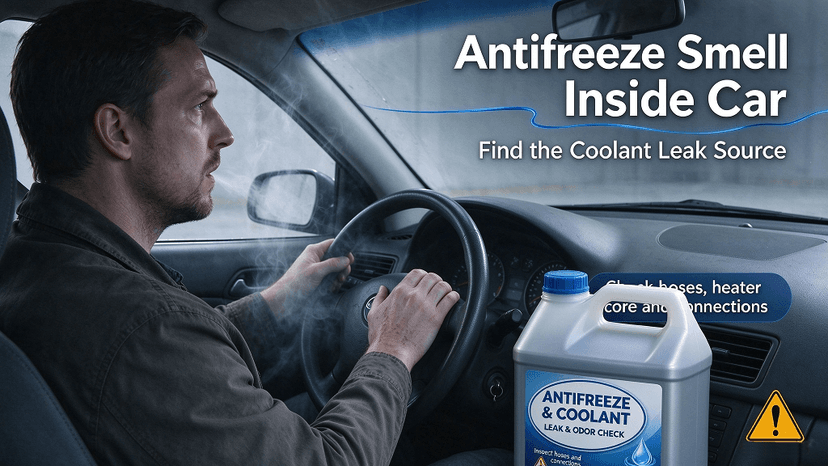
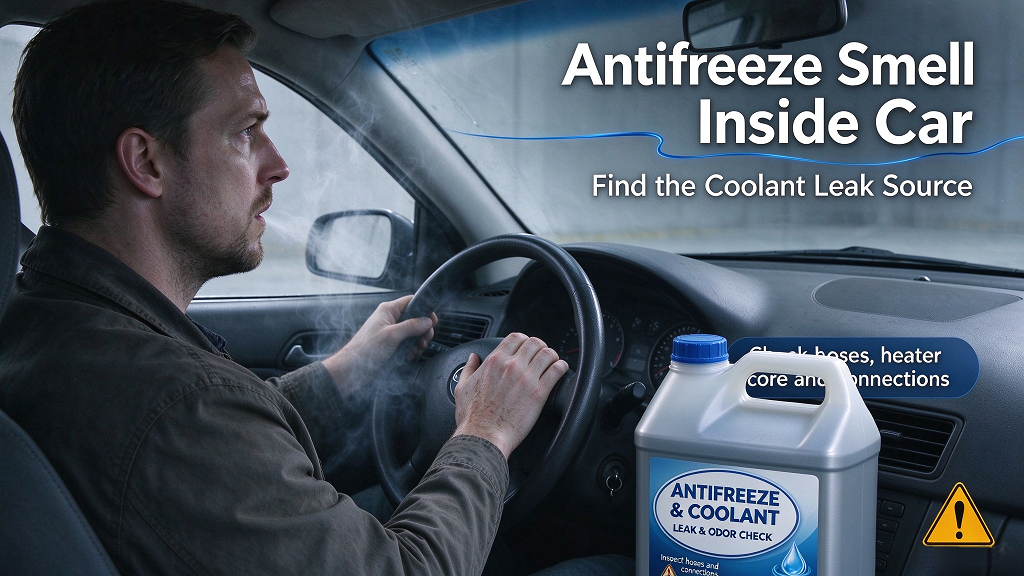
When drivers notice a sharp, sickly sweet syrup scent wafting through the dashboard vents, they are encountering an unmistakable symptom of a breached thermal management system. Understanding why antifreeze smell inside vehicle cabins occurs is critical for fleet operators, service managers, and technicians because it signals that toxic liquid, typically an ethylene glycol mixture, has migrated out of its pressurized circuit and into the passenger environment. A cooling circuit is supposed to be hermetically sealed; when fluid escapes, it compromises both engine thermal stability and interior air quality.
Unlike an exterior radiator leak that dissipates harmlessly into road airflow, cabin-level fumes usually indicate that the fault is either inside the passenger compartment itself or positioned directly at the HVAC cowl intake.
The Primary Mechanism: Heater Core Antifreeze Smell Issues
In nine out of ten cabin odor cases, the heater core is the culprit. Structurally, the heater core is simply a miniature aluminum or copper-brass radiator suspended inside the dashboard plenum box. Pressurized coolant continuously routes through this matrix—even during summer months in many modern vehicle platforms with blend-door-only temp regulation—to supply on-demand thermal energy.
Under hood thermal cycles, engine vibrations, and pressure spikes place intense mechanical stress on the heater core's brazed tank seams and microscopic tube welds. When these microscopic joints fail, heater core antifreeze smell issues manifest rapidly. The leaking fluid does not have to pour onto the carpet immediately; even a micro-fracture that weeps a few drops per hour will atomize against the hot core fins, pushing a concentrated vapor plume directly through the defrost and dash vents the moment the blower motor runs.
External Breaches Infiltrating the HVAC Cowl
If the dashboard matrix checks out clean, the next suspect is an engine-bay breach near the fresh air intake. Modern vehicle cowl designs pull air from the high-pressure pocket at the base of the windshield. If any of the following leak points sit nearby, air currents pull volatile organic compounds straight into the cabin:
- Heater Hose Firewall Couplings: Quick-disconnect plastic fittings and standard worm-drive clamps degrade over thermal cycles. Coolant leaking right at the firewall bulkhead drips directly into insulation or burns onto the hot engine head beneath the cowl seal.
- Degraded Cowl Weatherstripping: A brittle hood-to-cowl rubber seal allows hot underhood vapor from a minor pinhole in an upper radiator hose or reservoir overflow tube to bypass engine-bay aerodynamics and enter the fresh-air plenum.
- Exhaust Heat Shield Evaporation: Coolant sprayed from a weeping water pump onto a hot exhaust downpipe instantly flashes to vapor, creating an overpowering coolant leak odor that penetrates the vehicle chassis through drainage bungs and body seams.
How to Find Coolant Leak Causing Antifreeze Smell
Locating a fluid breach that may only show up at operating temperature and pressure requires a structured diagnostic protocol. Rushing to pull a dashboard before confirming the leak source is a costly diagnostic mistake.
1. Visual and Tactile Inspection of the Cabin
Begin inside the cabin before touching a wrench. Run the defroster on high heat. If a greasy, translucent film quickly forms on the lower center of the windshield that smears rather than evaporates when wiped, atomized glycol is blowing directly out of the plenum. Next, pull back the passenger-side floor mat and press down firmly on the structural under-carpet insulation. Modern vehicle sound deadening can absorb liters of fluid before the top carpet fibers feel noticeably damp.
2. Static Cooling System Pressure Testing
To understand how to find coolant leak causing antifreeze smell without tearing the dash apart, attach a manual pressure tester to the radiator or expansion tank neck with the engine cold. Pump the system to its rated cap pressure (usually 14 to 18 PSI). If the gauge needle slowly drops without any visible exterior puddling under the radiator, oil pan, or water pump, peer up underneath the dashboard near the HVAC drain tube. A steady drip from the condensation drain pipe confirms an internal plenum leak.
3. Ultraviolet (UV) Dye and Borescope Verification
For hairline cracks that only leak during transient pressure pulses, introduce an OEM-approved fluorescent dye into the reservoir and cycle the engine through two full thermostat openings. Remove the cabin air filter or the blower motor resistor pack and feed a lighted articulating borescope directly into the evaporator/heater core chamber. Under UV inspection light, active glycol tracks will illuminate distinctly against the dark plenum plastic.
Root Causes Beyond Simple Mechanical Age
Automotive thermal components rarely fail without external stressors. When evaluating persistent failures across commercial fleets or consumer vehicles, technicians should look for systemic issues:
| Failure Driver | Mechanism | Preventative Action |
|---|---|---|
| Coolant Acidification | Depleted corrosion inhibitors lower pH, stripping core solder and eroding thin aluminum tubes. | Enforce strict hydrometer/refractometer and pH testing intervals. |
| Electrolysis | Stray electrical currents grounded through cooling passages accelerate galvanic pitting. | Check for voltage drop between negative battery post and radiator fluid (should be <0.3V). |
| Cylinder Head Micro-Cracks | Combustion gases pump excess pressure into the system, ballooning the weakest heat exchanger. | Perform a block check (chemical combustion leak test) if multiple cores rupture repeatedly. |
Frequently Asked Questions
Is it safe to drive when an antifreeze odor is present?
No. Inhaling atomized ethylene glycol vapors over extended durations causes dizziness, headaches, and respiratory irritation. Moreover, if the leak rapidly widens while driving at highway speeds, it can instantly coat the windshield interior with an oily mist, blinding the driver while simultaneously risking catastrophic engine overheating.
Can I use commercial radiator stop-leak to fix the smell?
While chemical stop-leak additives might temporarily plug a tiny seam void, they represent a severe risk in modern engines. These compounds cure upon contact with air, which means they frequently plug the ultra-fine passages of the heater core and clog the engine's internal bypass ports, causing worse circulation issues down the line. A physical replacement of the leaking component remains the only reliable engineering solution.
Recommended Action
Do not ignore a sweet interior cabin scent hoping it will self-clear. Begin with a cooling system pressure test and an inspection of the HVAC condensation drain line. Isolating the leak early protects the cabin electronics from fluid contamination and prevents costly roadside overheating events.
Welcome to contact GAFLE for more information & cooperation!
peter
ZHEJIANG GAFLE AUTO CHEMICL CO.,LTD
Tel:86-579-8222 1665
Fax:86-579-8246 4690
Cel/Wechart:86-13335993986
E-mail:peter@gafle.net
Web:www.gafle.net