The Chemistry Behind Moisture Ingress in Hydraulic Systems
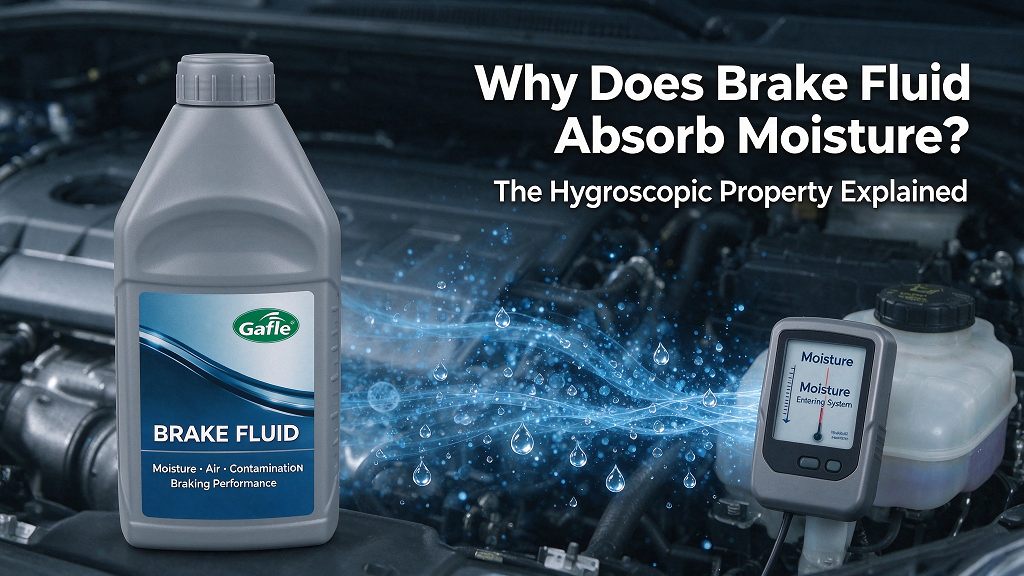
For automotive test engineers and fleet maintenance directors, fluid degradation remains one of the primary failure points in hydraulic actuation. Understanding exactly why brake fluid absorbs water from air comes down to fundamental chemistry: the majority of modern braking systems rely on polyethylene glycol-ether formulations engineered specifically to handle immense friction temperatures. While these glycol bases deliver exceptional thermal stability and remain chemically inert against internal elastomers, their molecular structure contains polar hydroxyl groups (-OH). These groups form spontaneous, high-affinity hydrogen bonds with gaseous water molecules present in atmospheric humidity.
This hygroscopic property is not an accidental manufacturing flaw or an oversight by chemical compounders; it is an intentional trade-off. If a conventional hydraulic fluid were completely hydrophobic—like mineral oil or silicone (DOT 5)—any free water entering the system would pool into separate pockets. Under heavy downhill hauling or severe stop-and-go duty cycles, localized caliper temperatures routinely exceed 150°C. Pure water pockets would instantly vaporize into steam at 100°C, introducing severe vapor lock and causing the pedal to sink straight to the floorboard. By binding water uniformly into solution at a molecular level, the medium prevents localized water separation, albeit at the cost of continuous, passive moisture absorption over its service life.
Ingress Pathways: How Ambient Moisture Breaches a "Closed" Loop
Technicians often assume a hydraulic braking circuit is hermetically sealed against the elements. In production reality, it is dynamic and semi-permeable. Ambient water vapor bypasses the hydraulic barrier via several distinct channels:
Microscopic hose permeation: Reinforced EPDM and synthetic rubber flexible lines connect unsprung suspension components to the chassis. Under sustained pressure and variable outdoor temperatures, moisture vapor slowly diffuses directly through the microscopic pores of the rubber elastomeric matrix.
Reservoir breather vents: Master cylinder plastic reservoirs require atmospheric venting to allow fluid levels to drop smoothly as friction pads wear down. The diaphragm accommodates volume swings, but cyclic thermal expansion repeatedly draws fresh ambient air across rubber seals.
Service and replenishment protocols: Every time a reservoir cap is removed in a non-climate-controlled depot, the exposed glycol greedily pulls moisture from the ambient air column within minutes.
Dry vs. Wet Boiling Points in Commercial Specifications
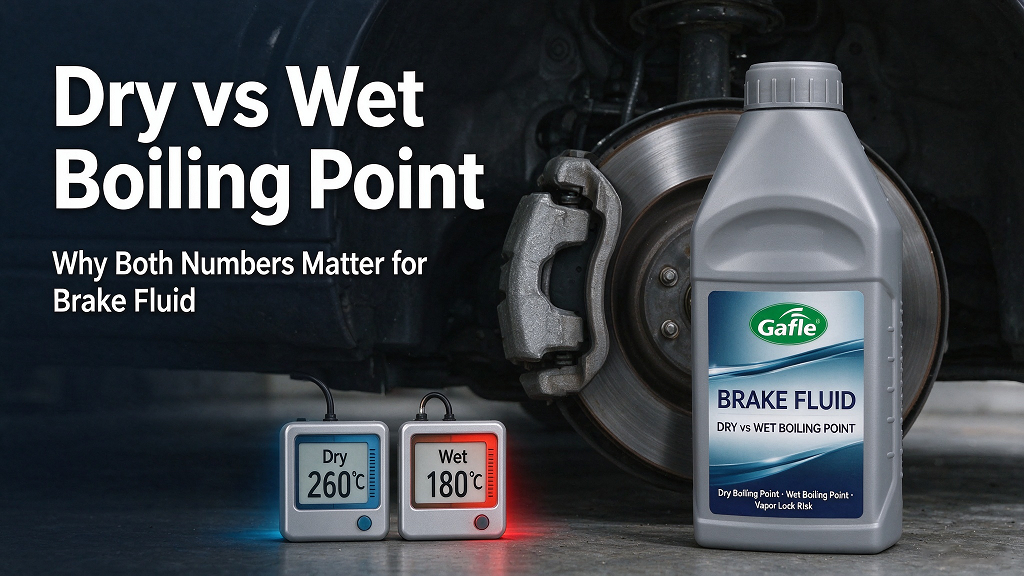
Regulatory standards established by the Department of Transportation (FMVSS 116) classify polyglycol formulations by dry boiling point (pure chemistry) and wet boiling point (typically saturated with roughly 3.7% water content). Over an operational window of 18 to 24 months, standard road operations routinely pull between 2% and 4% water into the circuit. As moisture absorption accumulates, the temperature threshold where the liquid transitions to a compressible gas plummets drastically.
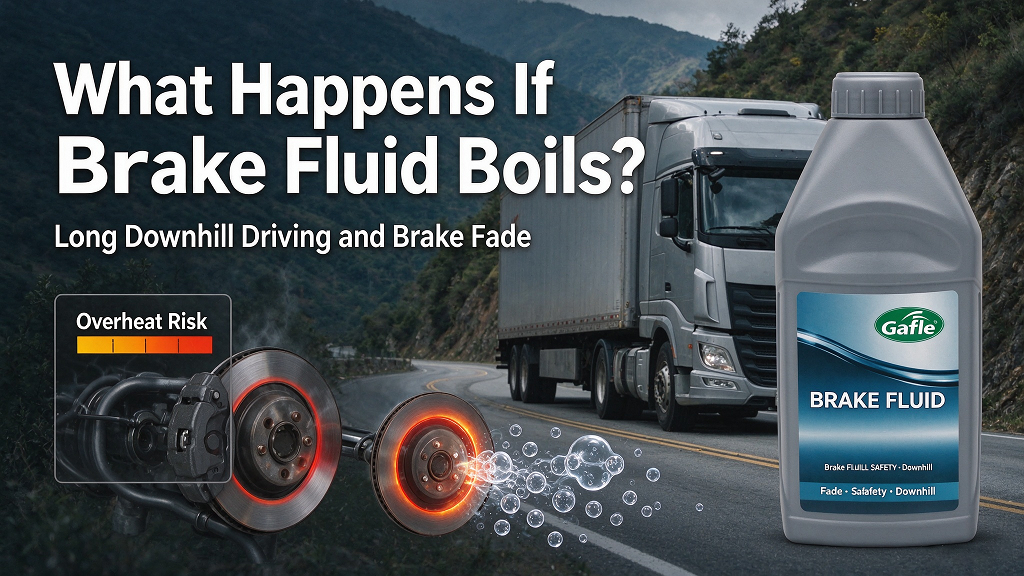
A quality DOT 4 medium, for instance, may leave the packaging facility with a dry boiling point above 230°C. Once ambient relative humidity drives dissolved water up to just 3.5%, the wet boiling threshold can sink below 155°C. For heavy commercial transport, that delta represents the margin between controlled downhill descent and catastrophic mechanical brake fade.
Secondary Repercussions: Corrosion and Viscosity Shifts
Thermal degradation is only half the problem. When dissolved moisture interacts with the corrosion inhibitor package blended into modern glycol, the additives deplete over time. As buffering reserve alkalinity falls, the fluid turns slightly acidic.
This chemical degradation attacks internal steel master cylinder pistons, cast iron caliper bores, and sensitive electro-hydraulic valves inside anti-lock braking (ABS) modules. Microscopic pitting debris circulates through fine metering ports, cutting primary cup seals and generating internal bypass leaks long before an external fluid leak ever appears on an inspection sheet.
Sourcing and Fleet Handling Guidelines
For procurement teams sourcing fluids or designing closed hydraulic circuits, managing this hygroscopic property requires strict operational discipline:
First, specify packaging sizes that match single-service consumption. Bulk 55-gallon drums sitting half-empty in an unconditioned depot act as passive dehumidifiers, ruining thousands of dollars of inventory before it ever touches a vehicle.
Second, mandate low-viscosity (LV) formulations for automated driver assistance setups that demand rapid micro-pulsing at low sub-zero ambient temperatures, while ensuring baseline wet-boiling reserves meet or exceed OEM targets.
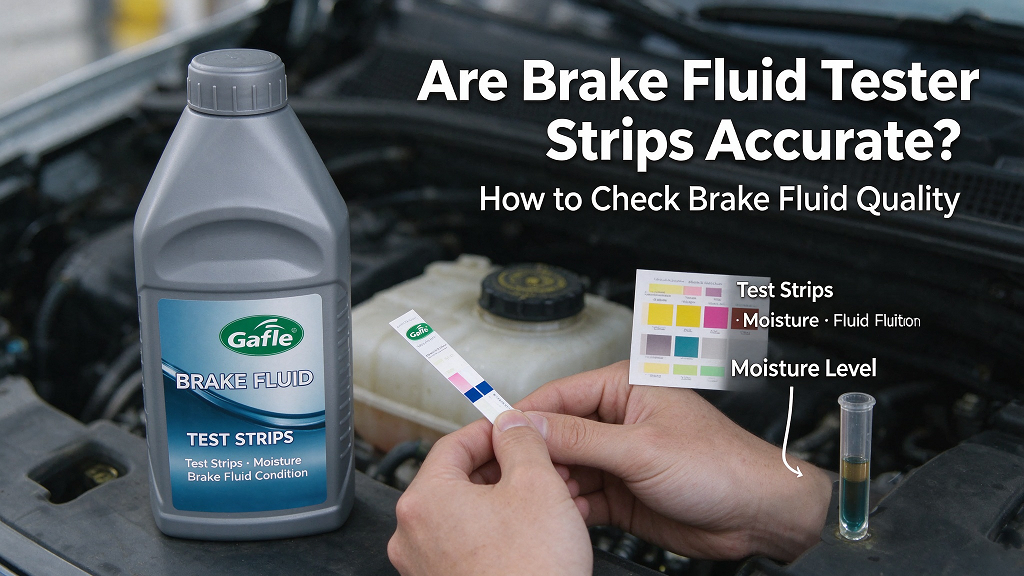
Finally, rely on optical refractometers or dedicated boiling point analyzers rather than simple conductivity test pens, which often yield false readings due to varying corrosion inhibitor packages across different blending batches.
Frequently Asked Questions
Why not replace all fleet vehicles with hydrophobic silicone (DOT 5)?
Silicone does not attract moisture, but any atmospheric water that enters the system collects at the lowest mechanical points—namely, the calipers. During hard stops, this unmixed water boils at 100°C, causing sudden mechanical failure. Furthermore, DOT 5 aerates easily and exhibits higher compressibility, giving an unacceptably spongy pedal feel for precision ABS and stability-control modulation.
How fast does unsealed glycol pull moisture from ambient surroundings?
Under high relative humidity (above 60% RH at room temperature), an open container of fresh glycol fluid can absorb measurable moisture within an hour, noticeably degrading its dry boiling specification in less than a day.
Next Steps for Engineering and Sourcing Teams
Whether you are reviewing fluid validation for new vehicle platforms or standardizing maintenance specs across a national commercial fleet, treat hydraulic fluid as a timed service component rather than a lifetime fill. Contact our technical fluids desk to review bulk specifications, compatibility ratings, and optimal packaging solutions for your operating environment.
Welcome to contact GAFLE for more information & cooperation!
peter
ZHEJIANG GAFLE AUTO CHEMICL CO.,LTD
Tel:86-579-8222 1665
Fax:86-579-8246 4690
Cel/Wechart:86-13335993986
E-mail:peter@gafle.net
Web:www.gafle.net