logo

Brake Fluid Flush vs Brake Fluid Top-Up: Know the Critical Difference

logo

Published

Oct 09 2026

  • Buying Guide

Follow us

brake-fluid-flush-vs-brake-fluid-top-up-know-the-critical-difference
brake fluid flush vs top up difference
Many vehicle owners confuse brake fluid top-up with brake fluid flush, which creates potential safety risks for road vehicles.
Auto repair shops and aftermarket distributors often encounter customers asking only to add new brake fluid into the reservoir, instead of carrying out a full system flush. These two maintenance operations serve completely different purposes. Educating your clients about this distinction is a valuable service that builds professional credibility for your auto business.
Brake fluid top-up is only a temporary supplement measure.
Top-up means adding a small amount of new brake fluid into the brake master cylinder reservoir to compensate for volume loss caused by worn brake pads. As brake pads wear down, pistons extend, and fluid level in the reservoir drops. A top-up only adds liquid to reach the correct level. It does not remove the old, moisture-contaminated brake fluid that stays inside brake lines, calipers and hoses. If the old fluid already contains high water content, topping up new fluid cannot restore boiling point performance.
Brake fluid flush is a complete replacement process for the whole hydraulic circuit.
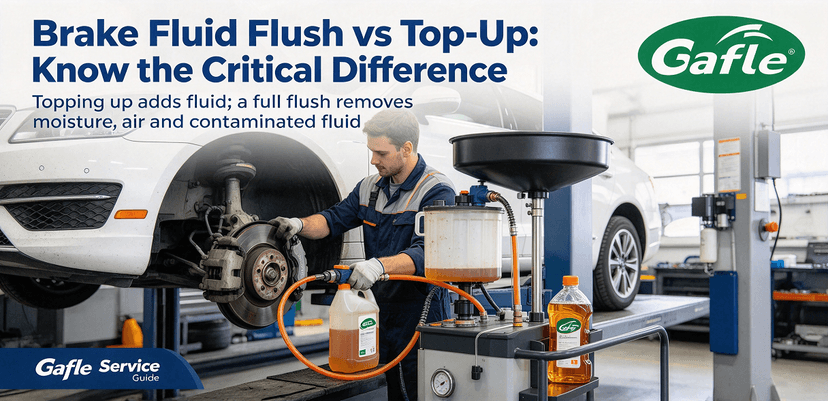
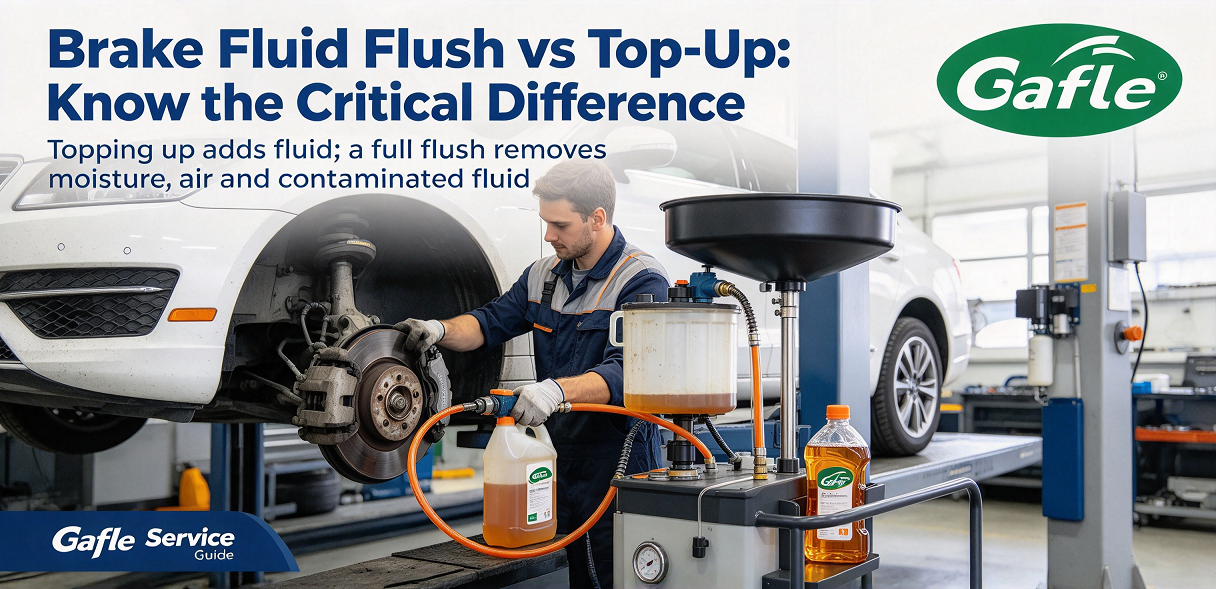
During a brake fluid flush, technicians drain all old brake fluid from master cylinder, brake lines, calipers and wheel cylinders. Then new brake fluid is pumped through the entire system to push out residual old fluid, air and contaminants. A full flush removes moisture, degraded additives and tiny metal particles accumulated inside the brake system. This service restores brake fluid’s original performance and protects brake components.
When to choose top-up and when to schedule a full brake fluid flush.
A simple top-up is only suitable when the fluid level slightly drops due to normal pad wear, and the fluid inside is still fresh with low moisture. If inspection finds dark-colored fluid, high moisture reading, or the vehicle has not replaced brake fluid for more than 2 years, a full flush is mandatory. For racing vehicles and heavy-duty fleets, flush cycles need to be shortened because of heavier braking loads.
For auto aftermarket businesses, recommending correct brake service brings long-term benefits.
Repair shops can reduce brake-related return visits by explaining why top-up cannot replace flushing. Distributors can package brake fluid together with maintenance guide materials for their retail clients. Gafle supplies high-performance brake fluid for both daily vehicle maintenance and racing use. We provide technical support and maintenance brochures for our wholesale partners worldwide.
Welcome to contact GAFLE for more information & cooperation!
peter
ZHEJIANG GAFLE AUTO CHEMICL CO.,LTD
Tel:86-579-8222 1665
Fax:86-579-8246 4690
Cel/Wechart:86-13335993986
E-mail:peter@gafle.net
Web:www.gafle.net
Featured Blogs
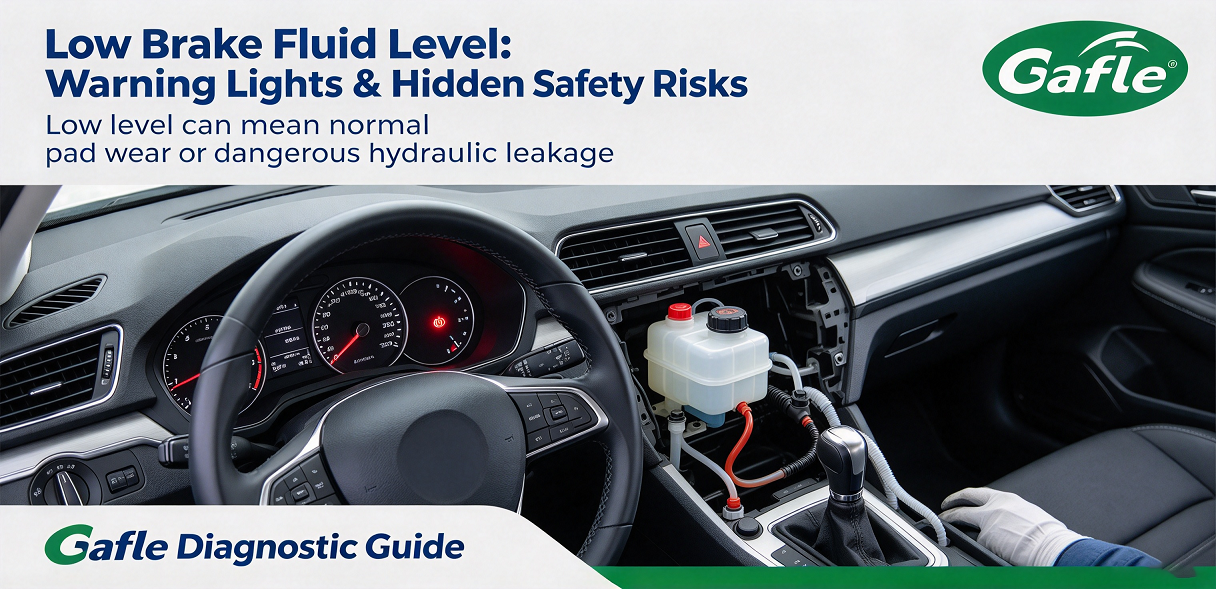
Can Low Brake Fluid Level Trigger Brake Warning Lights & Hidden Safety Risks

Can Low Brake Fluid Level Trigger Brake Warning Lights & Hidden Safety Risks

1. A dashboard brake warning light triggered by low brake fluid level is a signal that vehicle operators must never ignore. 2. Normal brake pad wear is the harmless reason for gradual brake fluid level reduction. 3. Brake fluid leakage is the dangerous cause of sudden brake fluid loss. 4. Other factors that affect brake fluid level and warning lights. 5. Advice for auto aftermarket sellers and fleet managers.

Brake Fluid Flush vs Brake Fluid Top-Up: Know the Critical Difference

Brake Fluid Flush vs Brake Fluid Top-Up: Know the Critical Difference

1. Many vehicle owners confuse brake fluid top-up with brake fluid flush, which creates potential safety risks for road vehicles. 2. Brake fluid top-up is only a temporary supplement measure. 3. Brake fluid flush is a complete replacement process for the whole hydraulic circuit. 4. When to choose top-up and when to schedule a full brake fluid flush. 5. For auto aftermarket businesses, recommending correct brake service brings long-term benefits.

DOT 4 Brake Fluid: Ideal Choice for Modern Passenger Cars & Light Commercial Vehicles

DOT 4 Brake Fluid: Ideal Choice for Modern Passenger Cars & Light Commercial Vehicles

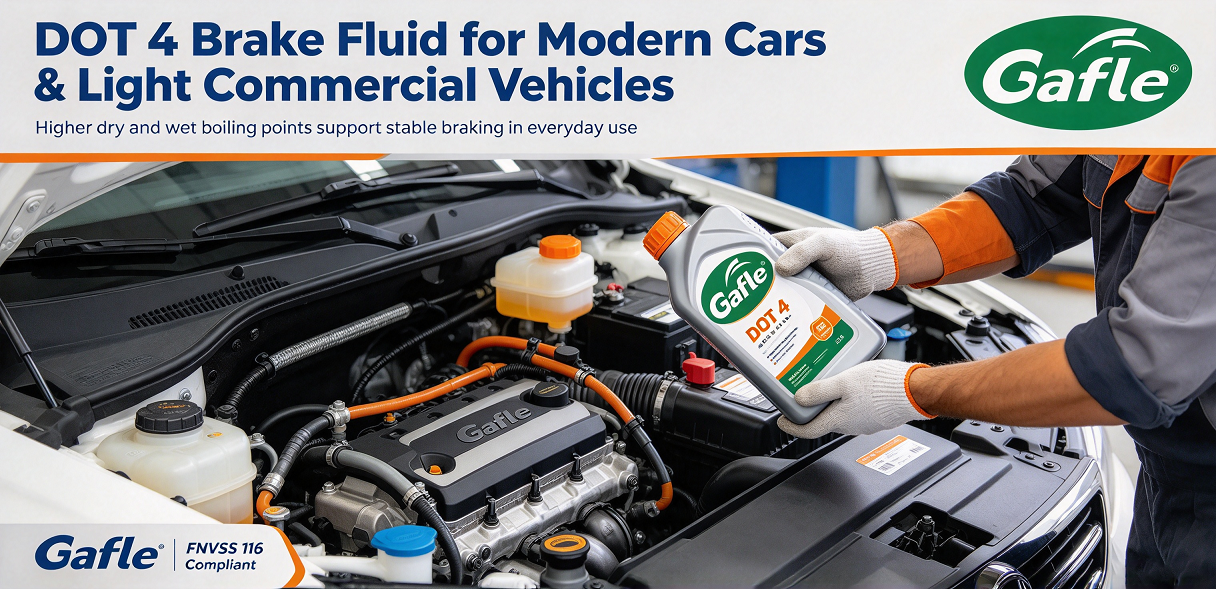
1. DOT 4 brake fluid remains the most widely adopted brake fluid grade for modern passenger vehicles and light commercial fleets around the world. 2. Boiling point parameters define the core performance of DOT 4 brake fluid. 3. DOT4 brake fluid works well for daily driving and occasional heavy load scenarios. 4. Compatibility rules for DOT4 brake fluid. 5. Gafle DOT4 brake fluid is manufactured for aftermarket wholesale and OEM supply.

Brake Fluid Storage Best Practices to Keep Product Performance Stable

Brake Fluid Storage Best Practices to Keep Product Performance Stable

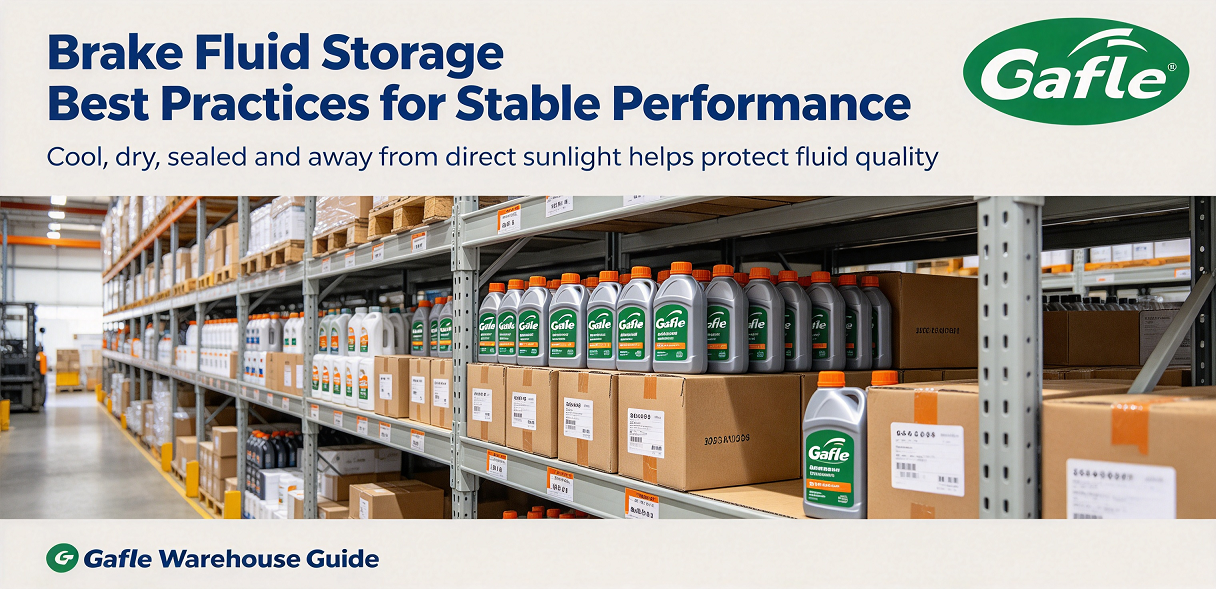
1. Proper brake fluid storage is critical to preserve its original performance, whether you run a large auto parts warehouse or a local retail store. 2. Sealed packaging and environmental control are two core storage principles. 3. Opened brake fluid containers cannot be stored for long periods. 4. Shelf life tracking helps warehouses manage inventory rotation. 5. Common storage mistakes you need to avoid.

Private Label Brake Fluid: What Distributors Need to Know Before Cooperation

Private Label Brake Fluid: What Distributors Need to Know Before Cooperation

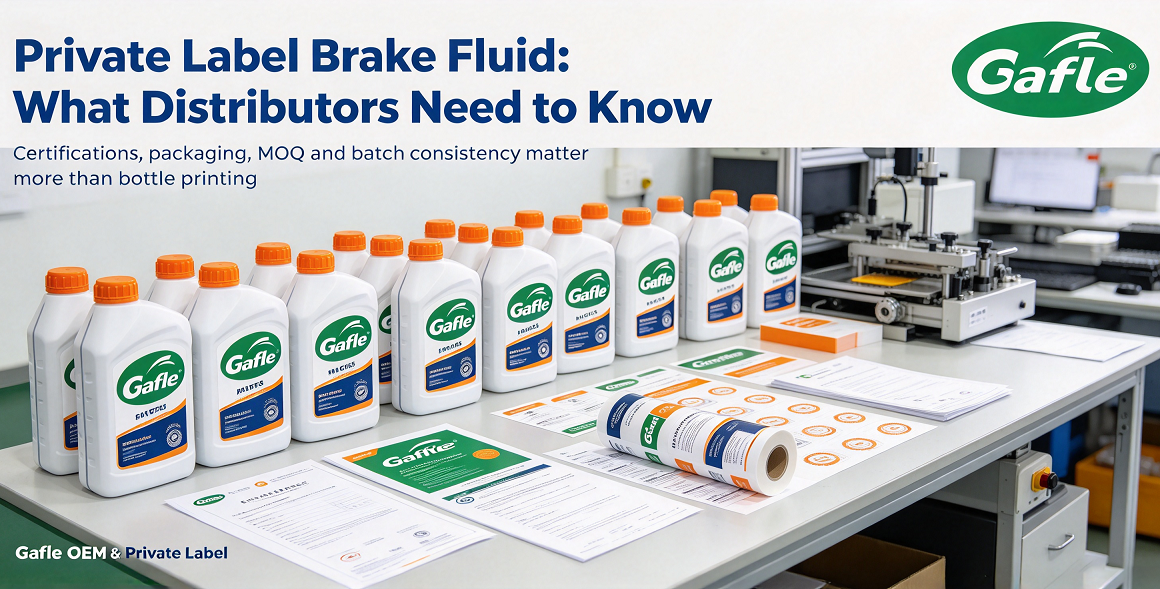
1. Private label brake fluid has become a high-growth profit category for many global auto parts distributors. 2. Product certification compliance is the first priority for cross-border private label business. 3. Customization covers far more than just printed bottle labels. 4. MOQ and production lead time are core factors for wholesalers. 5. Quality control consistency determines your brand reputation.

How Brake Fluid Corrosion Damages Your Vehicle’s Hydraulic Brake System

How Brake Fluid Corrosion Damages Your Vehicle’s Hydraulic Brake System

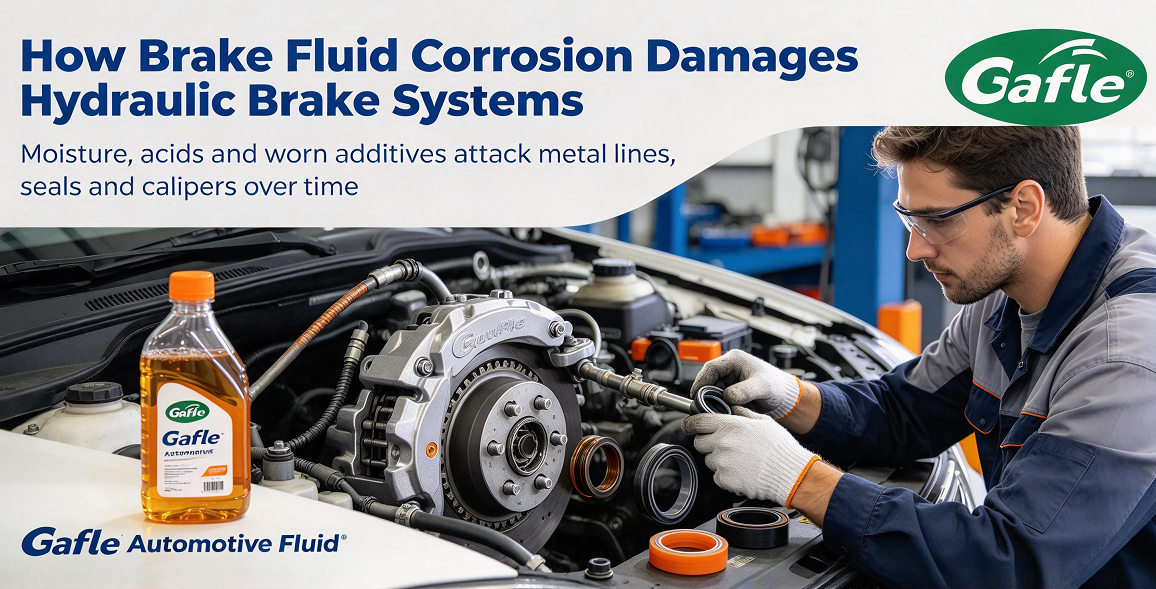
1. Brake fluid is not only a power transfer medium, but also a protective agent for your entire hydraulic brake system. 2. Moisture contamination is the primary trigger of brake fluid corrosion. 3. Corrosion damage rarely shows obvious symptoms in the early stage. 4. Choosing properly-formulated brake fluid is the most effective prevention method. 5. For bulk buyers, stable product quality directly reduces after-sales risks.