logo

How Brake Fluid Corrosion Damages Your Vehicle’s Hydraulic Brake System

logo

Published

Oct 09 2026

  • Buying Guide

Follow us

how-brake-fluid-corrosion-damages-your-vehicles-hydraulic-brake-system
brake fluid corrosion effects on brake system
Brake fluid is not only a power transfer medium, but also a protective agent for your entire hydraulic brake system.
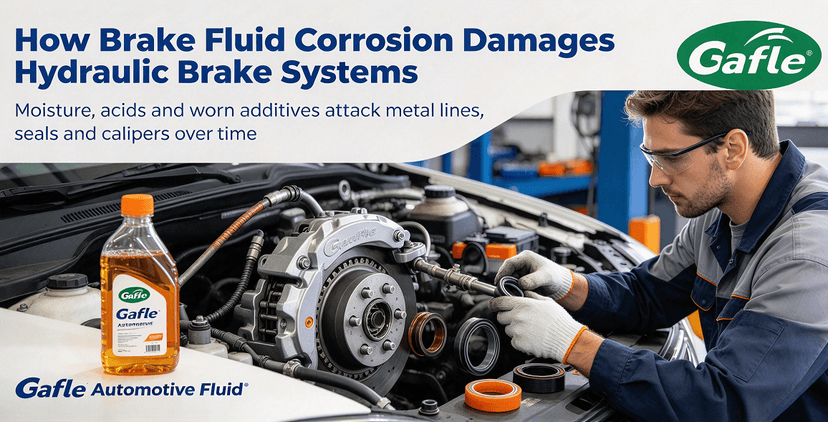
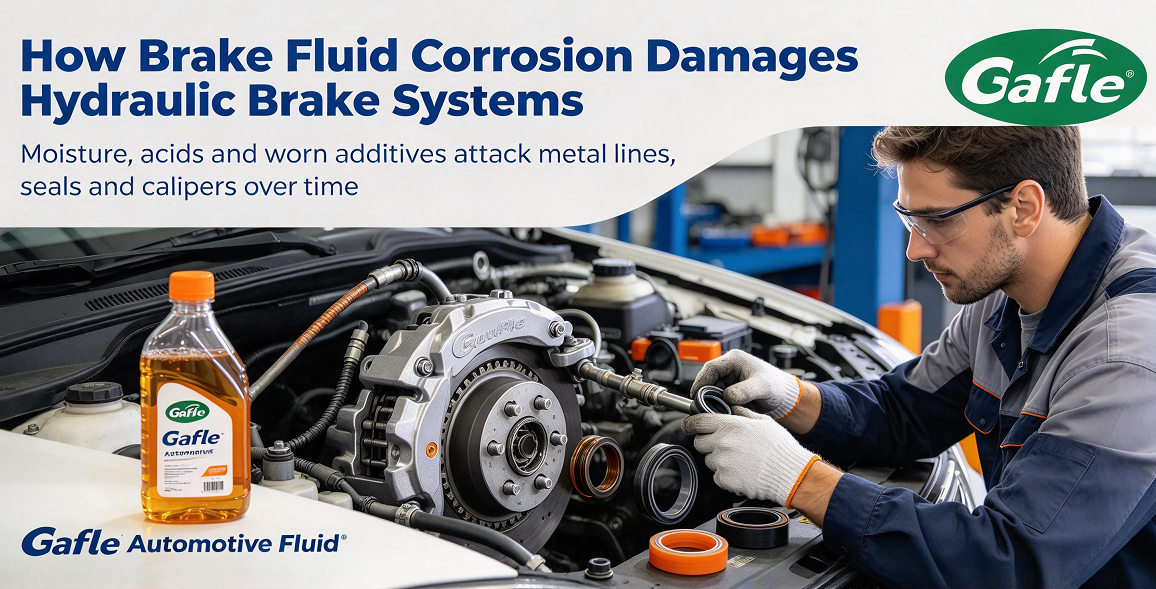
Many vehicle owners and aftermarket buyers underestimate the hidden risk of corrosion brought by degraded brake fluid. Brake systems are assembled with metal pipes, copper washers, rubber seals and aluminum caliper components. When brake fluid absorbs excessive moisture over time, the chemical properties change, forming acidic substances that slowly erode metal surfaces.
Moisture contamination is the primary trigger of brake fluid corrosion.
Fresh, high-performance brake fluid is hygroscopic by nature. As water mixes into the fluid, the boiling point drops sharply, and the mixture creates corrosive ions. These ions will gradually pit the inner wall of steel brake tubes, corrode copper fittings, and cause rubber seals to swell, crack or lose elasticity. For light vehicles, heavy-duty trucks and racing vehicles, the corrosion process works differently. Heavy-duty fleets with frequent braking loads face accelerated corrosion because of repeated high-temperature cycling inside the brake circuit.
Corrosion damage rarely shows obvious symptoms in the early stage.
Drivers may not feel brake pedal softness or leaks until the damage becomes severe. Small corrosion pits on metal lines can develop into tiny leaks under pressure. Swollen rubber plunger seals inside master cylinders will slowly reduce braking efficiency, creating safety hazards that are hard to detect during routine inspections. For aftermarket distributors, educating end customers on this hidden risk helps reduce product complaints and build long-term trust.
Choosing properly-formulated brake fluid is the most effective prevention method.
Gafle DOT3, DOT4 and Racing325 brake fluids adopt balanced anti-corrosion additive packages. Our formulations protect iron, copper, aluminum and rubber components inside brake systems. Besides premium fluid selection, regular brake fluid flush schedules are essential. We recommend wholesale partners to inform their clients to test brake fluid moisture content every 12 months. If the water content exceeds 3%, a full fluid replacement is required immediately.
For bulk buyers, stable product quality directly reduces after-sales risks.
Low-cost generic brake fluids often cut costs by reducing anti-corrosion additives. Such cheap products can cause early brake system corrosion, leading to costly warranty claims for resellers. Gafle’s brake fluid series passes strict metal corrosion tests, supporting OEM and private label orders for global distributors. If you need technical data sheets or bulk pricing for brake fluid, contact our team for support.
Welcome to contact GAFLE for more information & cooperation!
peter
ZHEJIANG GAFLE AUTO CHEMICL CO.,LTD
Tel:86-579-8222 1665
Fax:86-579-8246 4690
Cel/Wechart:86-13335993986
E-mail:peter@gafle.net
Web:www.gafle.net
Featured Blogs
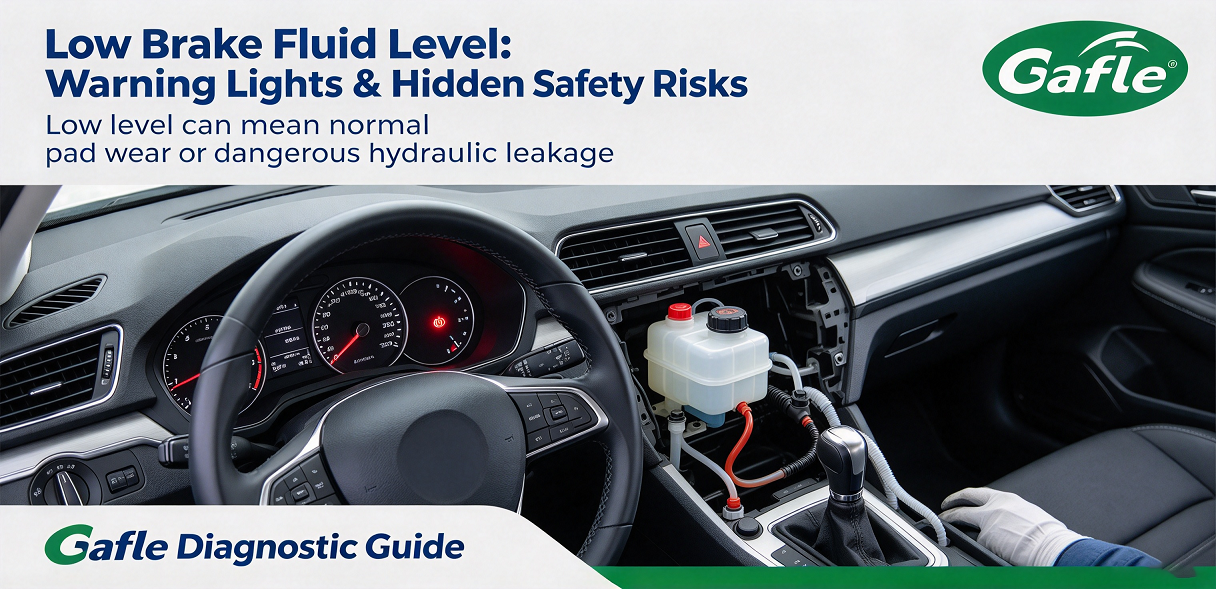
Can Low Brake Fluid Level Trigger Brake Warning Lights & Hidden Safety Risks

Can Low Brake Fluid Level Trigger Brake Warning Lights & Hidden Safety Risks

1. A dashboard brake warning light triggered by low brake fluid level is a signal that vehicle operators must never ignore. 2. Normal brake pad wear is the harmless reason for gradual brake fluid level reduction. 3. Brake fluid leakage is the dangerous cause of sudden brake fluid loss. 4. Other factors that affect brake fluid level and warning lights. 5. Advice for auto aftermarket sellers and fleet managers.

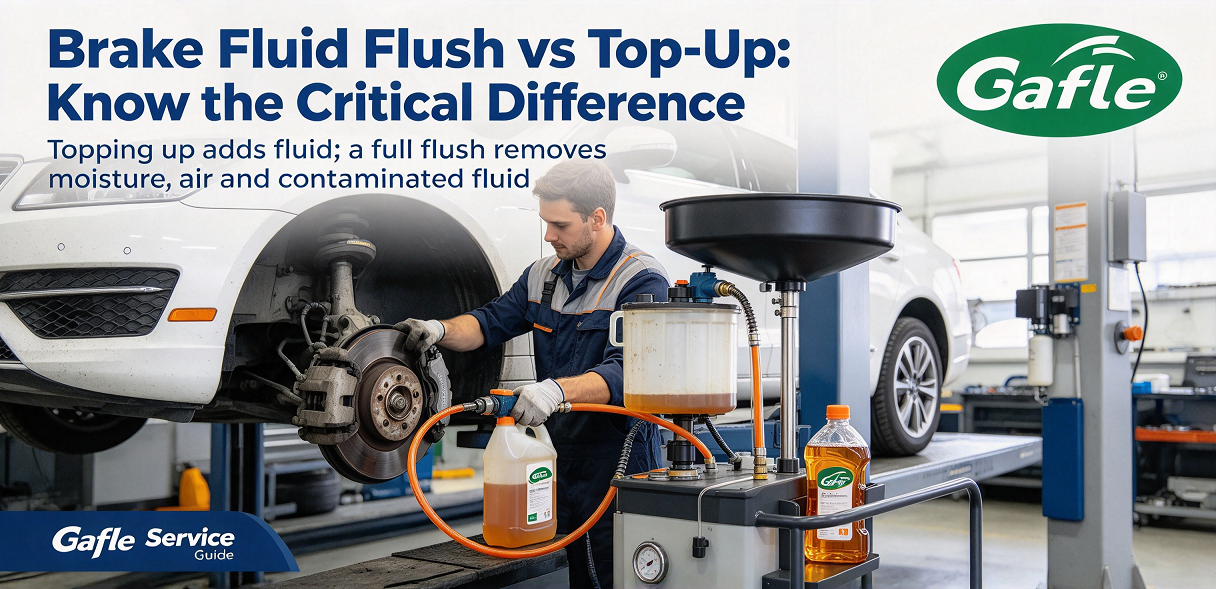
Brake Fluid Flush vs Brake Fluid Top-Up: Know the Critical Difference

Brake Fluid Flush vs Brake Fluid Top-Up: Know the Critical Difference

1. Many vehicle owners confuse brake fluid top-up with brake fluid flush, which creates potential safety risks for road vehicles. 2. Brake fluid top-up is only a temporary supplement measure. 3. Brake fluid flush is a complete replacement process for the whole hydraulic circuit. 4. When to choose top-up and when to schedule a full brake fluid flush. 5. For auto aftermarket businesses, recommending correct brake service brings long-term benefits.

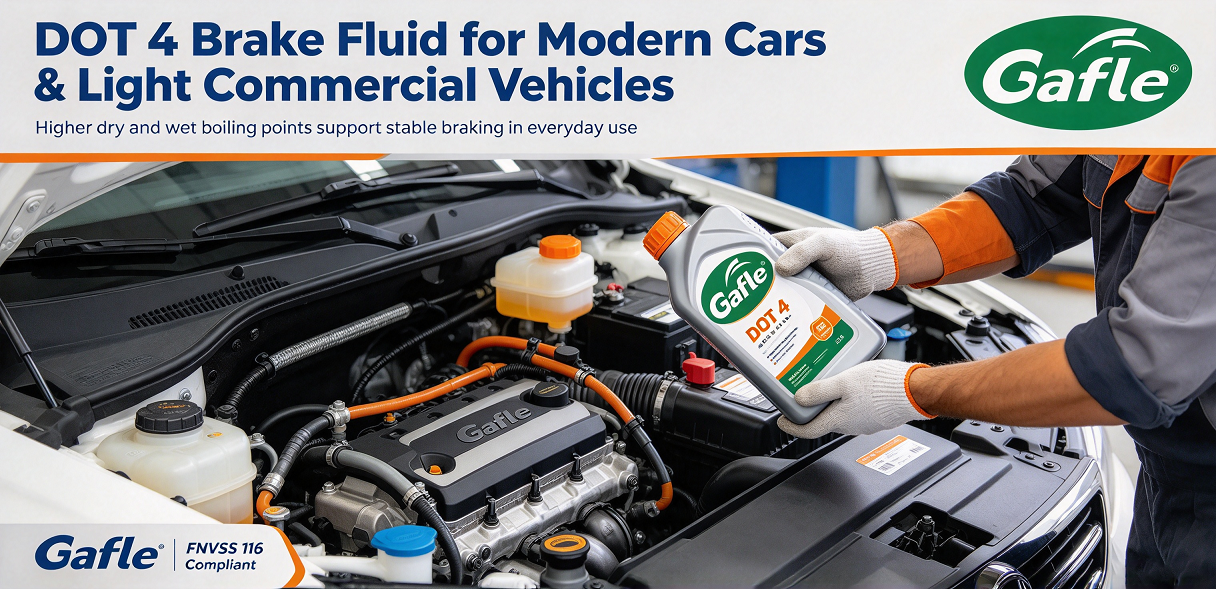
DOT 4 Brake Fluid: Ideal Choice for Modern Passenger Cars & Light Commercial Vehicles

DOT 4 Brake Fluid: Ideal Choice for Modern Passenger Cars & Light Commercial Vehicles

1. DOT 4 brake fluid remains the most widely adopted brake fluid grade for modern passenger vehicles and light commercial fleets around the world. 2. Boiling point parameters define the core performance of DOT 4 brake fluid. 3. DOT4 brake fluid works well for daily driving and occasional heavy load scenarios. 4. Compatibility rules for DOT4 brake fluid. 5. Gafle DOT4 brake fluid is manufactured for aftermarket wholesale and OEM supply.

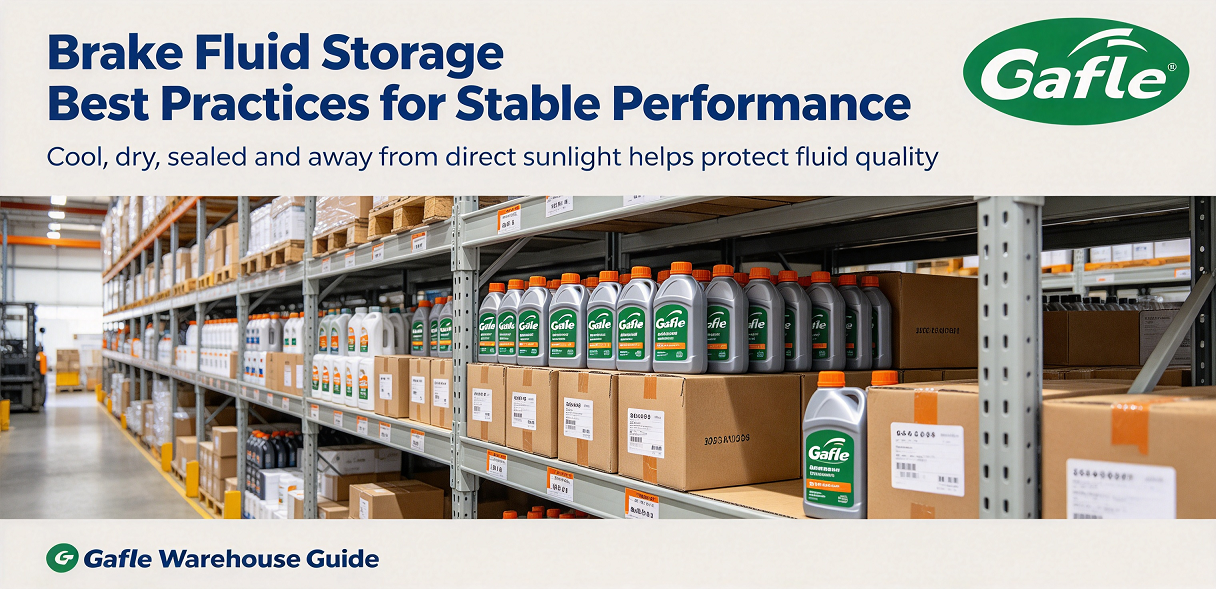
Brake Fluid Storage Best Practices to Keep Product Performance Stable

Brake Fluid Storage Best Practices to Keep Product Performance Stable

1. Proper brake fluid storage is critical to preserve its original performance, whether you run a large auto parts warehouse or a local retail store. 2. Sealed packaging and environmental control are two core storage principles. 3. Opened brake fluid containers cannot be stored for long periods. 4. Shelf life tracking helps warehouses manage inventory rotation. 5. Common storage mistakes you need to avoid.

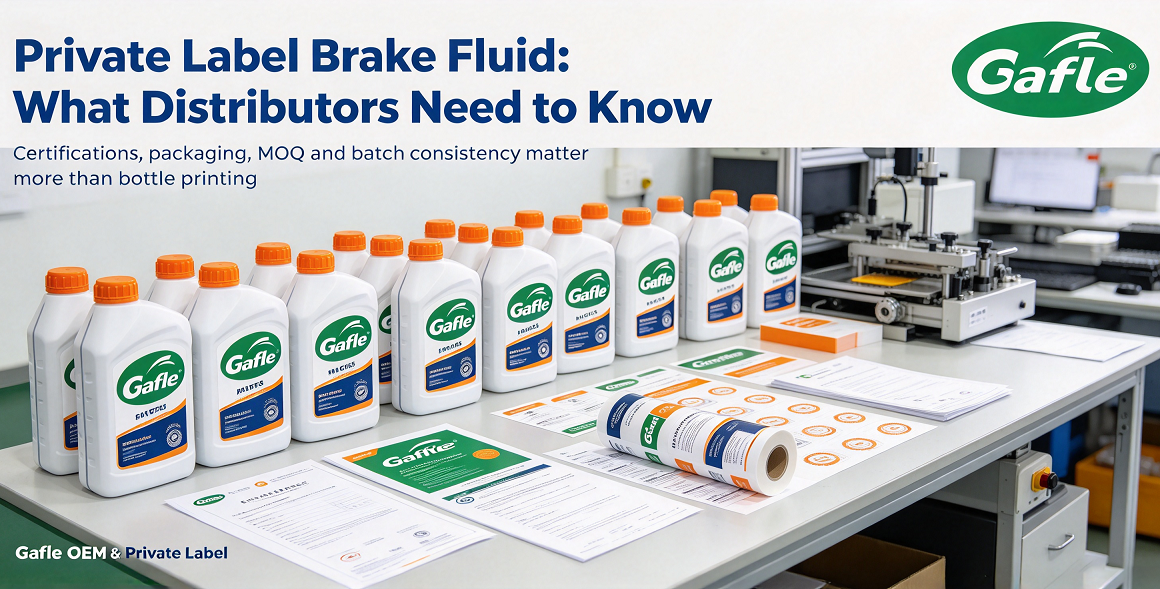
Private Label Brake Fluid: What Distributors Need to Know Before Cooperation

Private Label Brake Fluid: What Distributors Need to Know Before Cooperation

1. Private label brake fluid has become a high-growth profit category for many global auto parts distributors. 2. Product certification compliance is the first priority for cross-border private label business. 3. Customization covers far more than just printed bottle labels. 4. MOQ and production lead time are core factors for wholesalers. 5. Quality control consistency determines your brand reputation.

How Brake Fluid Corrosion Damages Your Vehicle’s Hydraulic Brake System

How Brake Fluid Corrosion Damages Your Vehicle’s Hydraulic Brake System

1. Brake fluid is not only a power transfer medium, but also a protective agent for your entire hydraulic brake system. 2. Moisture contamination is the primary trigger of brake fluid corrosion. 3. Corrosion damage rarely shows obvious symptoms in the early stage. 4. Choosing properly-formulated brake fluid is the most effective prevention method. 5. For bulk buyers, stable product quality directly reduces after-sales risks.