
 How Does Brake Fluid Work in a Vehicle's Braking System?
Every time you press the brake pedal, your vehicle relies on an invisible hydraulic system to safely slow down or stop. At the center of this system is brake fluid—a specially formulated hydraulic fluid that transfers the force from your foot to the braking components at each wheel.
Although brake fluid is often overlooked during routine maintenance, it plays a vital role in braking performance, driving safety, and the longevity of the braking system.
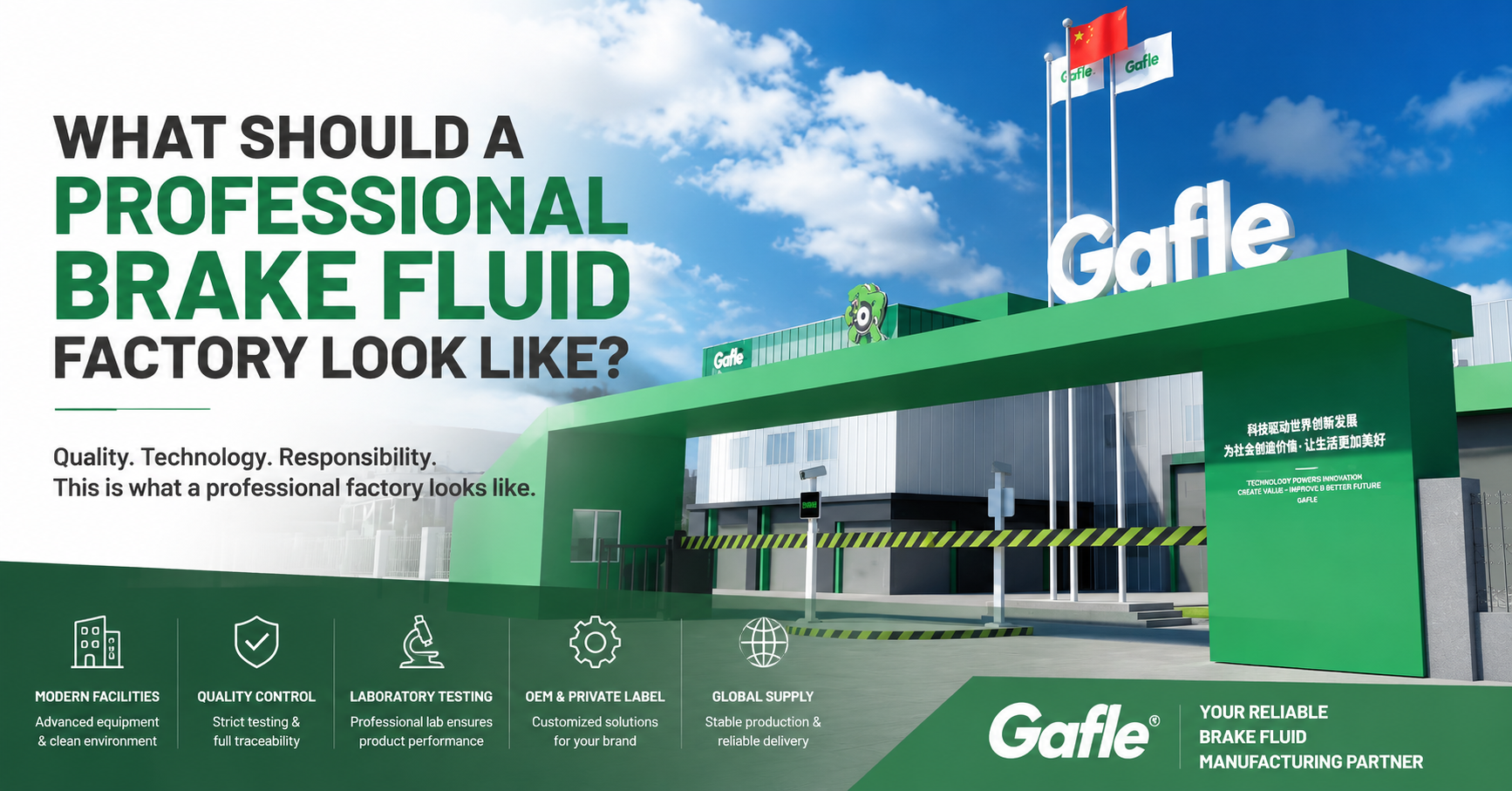
As a professional Brake Fluid Manufacturer, Gafle has more than 20 years of experience developing and manufacturing high-quality brake fluids for global distributors, OEM brands, and automotive professionals. In this guide, we'll explain how brake fluid works, why it is essential, and how to choose a reliable brake fluid supplier.
What Is Brake Fluid?
Brake fluid is a specially engineered hydraulic fluid used in a vehicle's braking system.
Unlike engine oil or coolant, brake fluid's primary job is not lubrication or cooling—it is to transmit hydraulic pressure. When the driver presses the brake pedal, brake fluid carries that force through sealed brake lines to activate the braking components.
A quality brake fluid must provide:
- Stable hydraulic performance
- High boiling point
- Low-temperature fluidity
- Corrosion protection
- Compatibility with brake system materials
Without properly functioning brake fluid, a hydraulic braking system cannot operate efficiently.
How Does Brake Fluid Work?
Understanding How Does Brake Fluid Work begins with the basic operation of a hydraulic braking system.
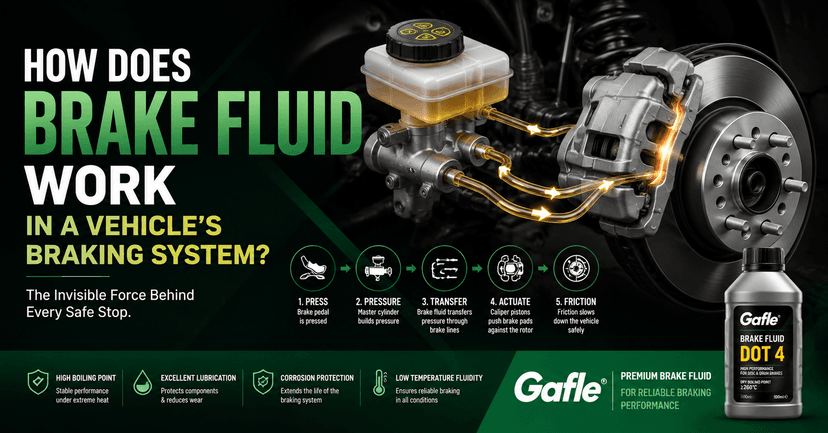
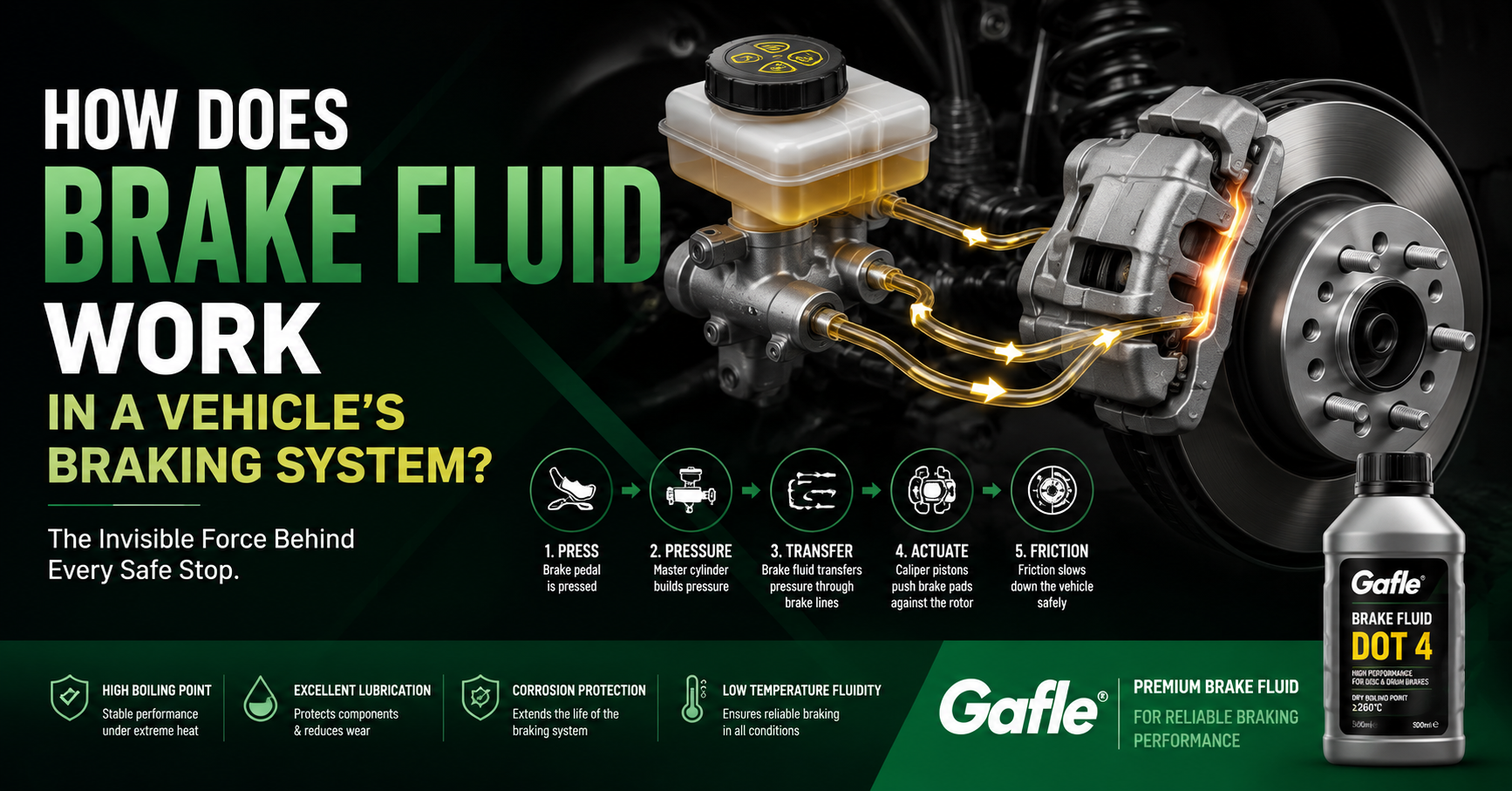
Step 1: The Brake Pedal Is Pressed
When the driver presses the brake pedal, mechanical force is applied to the master cylinder.
Step 2: Hydraulic Pressure Is Created
The master cylinder compresses the brake fluid, creating hydraulic pressure.
Because brake fluid is designed to resist compression under normal operating conditions, it efficiently transfers force throughout the braking system.
Step 3: Pressure Travels Through Brake Lines
The hydraulic pressure moves through sealed brake lines to each wheel.
This allows the braking force to be distributed evenly across the vehicle.
Step 4: Brake Calipers or Wheel Cylinders Activate
The hydraulic pressure pushes pistons inside the brake calipers (or wheel cylinders in drum brake systems).
These pistons press the brake pads or brake shoes against the rotating brake discs or drums.
Step 5: The Vehicle Slows Down
The friction generated between the braking components and the rotating wheels slows the vehicle safely and smoothly.
This entire process happens within fractions of a second every time the brake pedal is pressed.
The Main Functions of Brake Fluid
Understanding the Brake Fluid Function helps explain why regular maintenance is so important.
1. Transfer Hydraulic Force
Brake fluid transfers force from the driver's foot to the braking components.
Without efficient hydraulic transmission, braking performance would be significantly reduced.
2. Resist High Temperatures
Braking generates substantial heat, especially during:
- Mountain driving
- Heavy traffic
- High-speed braking
- Commercial vehicle operation
Brake fluid must maintain stable performance under elevated temperatures to support consistent braking.
3. Protect Internal Components
High-quality brake fluid helps protect metal components within the braking system by reducing the risk of internal corrosion.
This contributes to longer service life for components such as:
- Master cylinders
- Brake lines
- Calipers
- ABS hydraulic units
4. Maintain Consistent Brake Feel
Brake fluid helps deliver predictable and responsive braking under a wide range of driving conditions, giving drivers greater confidence behind the wheel.
Why Brake Fluid Quality Matters
Not all brake fluids are manufactured to the same standards.
High-quality brake fluid should offer:
- Stable hydraulic performance
- Reliable high-temperature resistance
- Good low-temperature flow characteristics
- Consistent manufacturing quality
- Excellent material compatibility
Products manufactured under strict quality management systems help support reliable braking performance and long-term system protection.
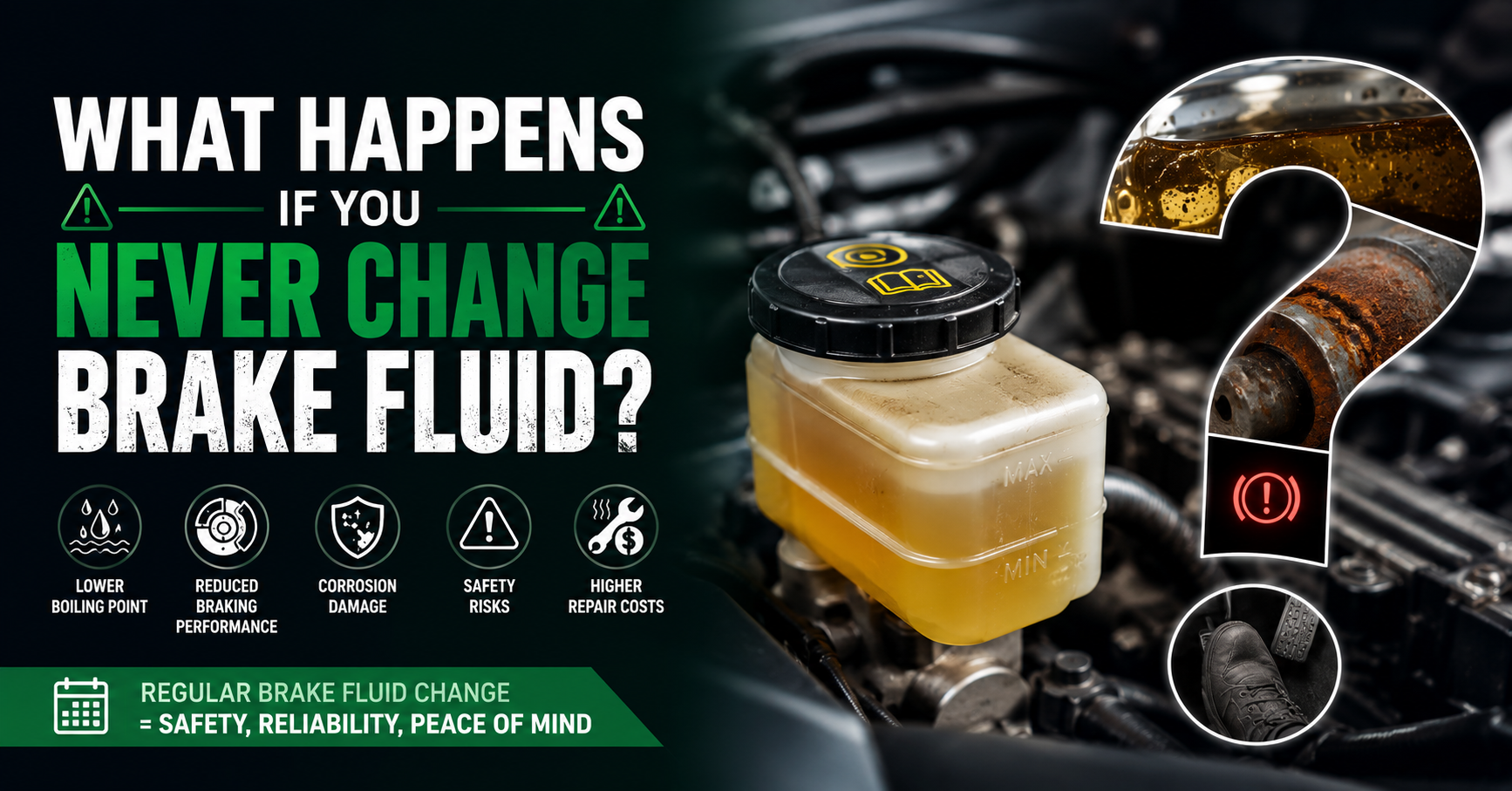
What Happens When Brake Fluid Ages?
Brake fluid naturally absorbs moisture over time.
As moisture content increases, brake fluid may gradually lose some of its original performance characteristics.
Potential effects include:
- Lower boiling point
- Reduced hydraulic efficiency
- Increased risk of internal corrosion
- Reduced braking consistency
- Higher maintenance requirements
For this reason, most vehicle manufacturers recommend replacing brake fluid at regular maintenance intervals.
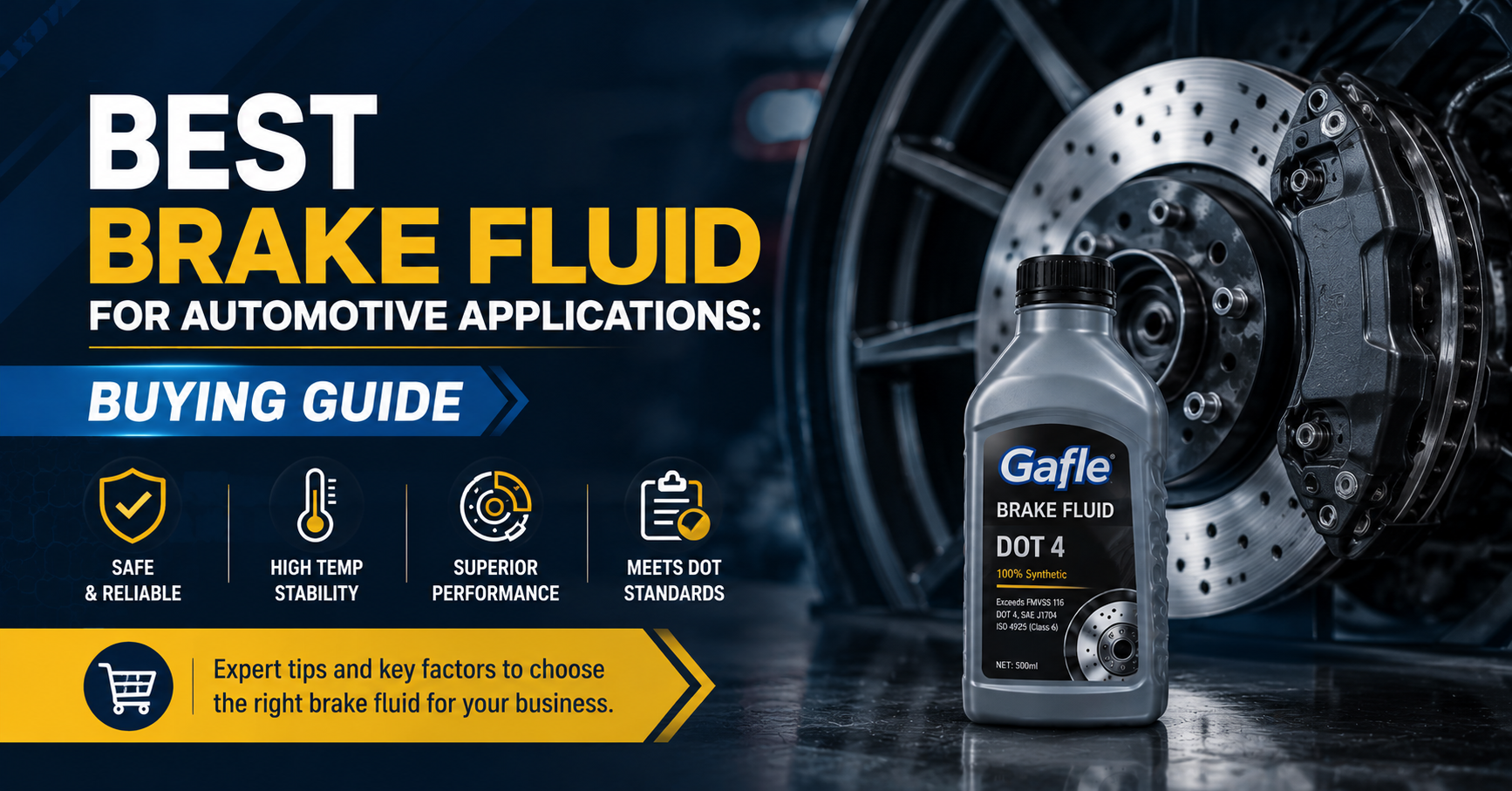
DOT 3 vs. DOT 4 Brake Fluid
The most common brake fluids used in passenger vehicles are DOT 3 and DOT 4.
DOT 3 Brake Fluid
Suitable for many standard passenger vehicles used under normal driving conditions.
DOT 4 Brake Fluid
Designed for applications requiring higher boiling points and improved performance under more demanding braking conditions.
Always follow the brake fluid specification recommended by the vehicle manufacturer.
Choosing High-Quality Brake Fluid
Whether you're a vehicle owner or an automotive distributor, selecting the right brake fluid is essential.
Consider the following factors:
Product Quality
Choose products manufactured under strict quality management systems.
Reliable Manufacturer
Experienced manufacturers generally provide more consistent products and stronger technical support.
Laboratory Testing
Professional testing helps verify product performance before shipment.
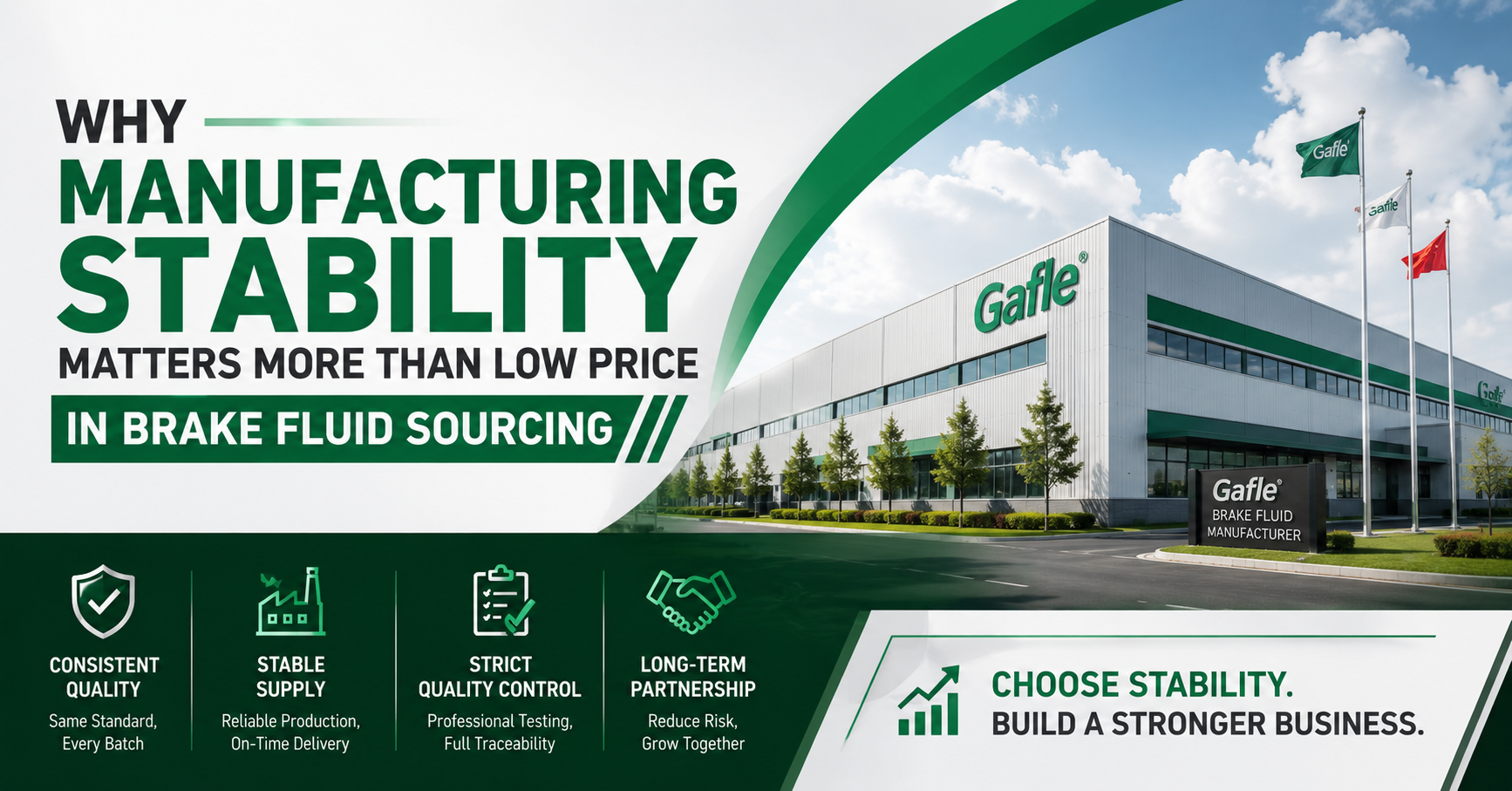
Stable Production
Consistent manufacturing helps ensure reliable quality from batch to batch.
How to Choose the Best Brake Fluid Manufacturer in China
Many global buyers searching for the Best Brake Fluid Manufacturer in China evaluate manufacturers based on much more than price.
Key factors include:
- Manufacturing experience
- Brake Fluid research and development
- Product consistency
- Professional laboratory testing
- OEM manufacturing capability
- Private label support
- Quality management systems
- Stable production capacity
- Global export experience
- Long-term technical support
Choosing a manufacturer with these strengths helps reduce sourcing risks while supporting long-term business success.
Why Global Customers Choose Gafle
As a trusted Brake Fluid Manufacturer, Gafle has built long-term partnerships with distributors, importers, and OEM brands worldwide.
Our strengths include:
- 20+ Years of Dedicated Brake Fluid Manufacturing
- DOT 3 and DOT 4 Brake Fluid Production
- Modern Manufacturing Facilities
- Professional Laboratory Testing
- Strict Quality Management
- IATF 16949 Quality Management System
- OEM Brake Fluid Manufacturing
- Private Label Solutions
- Customized Bottles, Labels, and Cartons
- Stable Production Capacity
- Global Export Experience
- Participation in Drafting China's National Brake Fluid Standards
Our mission is to provide reliable brake fluid solutions that help customers build successful businesses while supporting safer driving worldwide.
Frequently Asked Questions
How does brake fluid work?
Brake fluid transfers hydraulic pressure from the brake pedal through the master cylinder and brake lines to the calipers or wheel cylinders, allowing the vehicle to slow down or stop safely.
What is the main function of brake fluid?
The primary function of brake fluid is to transmit hydraulic force while also providing high-temperature stability and helping protect internal braking system components.
Why is brake fluid important?
Brake fluid is essential because it enables the hydraulic braking system to function efficiently and consistently under various driving conditions.
Does Gafle manufacture DOT 3 and DOT 4 brake fluid?
Yes. Gafle manufactures high-quality DOT 3 and DOT 4 brake fluids and provides OEM and private label solutions for customers worldwide.
How should buyers choose the Best Brake Fluid Manufacturer in China?
Buyers should consider manufacturing experience, product consistency, quality management, laboratory testing, OEM capability, production stability, export experience, and long-term partnership value rather than focusing solely on price.
Conclusion
Brake fluid is the hydraulic link that makes every safe stop possible. By transferring pressure from the brake pedal to the braking components, it allows the braking system to operate smoothly, efficiently, and reliably.
Understanding How Brake Fluid Works also highlights why choosing high-quality brake fluid and maintaining it regularly are essential for both safety and braking performance.
For distributors, OEM brands, and importers searching for the Best Brake Fluid Manufacturer in China, partnering with a manufacturer that combines advanced production technology, strict quality management, professional laboratory testing, and dependable OEM services is a smart long-term investment.
With more than 20 years of manufacturing expertise, Gafle continues to provide premium brake fluid products, flexible private label solutions, and reliable global supply to customers around the world.
At Gafle, we believe that exceptional brake performance begins with exceptional brake fluid—and every bottle we produce reflects our commitment to quality, safety, and long-term partnership.